


Views: 269 Author: Holin Knife Publish Time: 2026-09-11 Origin: Site


Content Menu
● What Makes a Pocket Knife Brand Worth Trusting?
● Leading Pocket Knife Brand Categories
● Why Manufacturer Capability Matters More Than a Famous Name
● How to Evaluate Folding Knife Quality Before Placing an Order
>> 1. Review the Blade Steel and Intended Application
>> 2. Check Heat Treatment and Hardness Control
>> 3. Test the Locking Mechanism
>> 4. Examine Blade Centering and Pivot Action
● A Practical OEM/ODM Sourcing Workflow
>> Step 1: Define the Target User
>> Step 2: Select the Core Configuration
>> Step 3: Create Samples and Conduct Functional Review
>> Step 4: Confirm Packaging and Compliance Needs
>> Step 5: Approve the Production Standard
● Pocket Knife Design Trends Buyers Should Watch
>> Compact Everyday-Carry Designs
>> Utility-Focused Folding Tools
>> Material and Finish Differentiation
● Common Mistakes When Choosing a Knife Supplier
● Choose a Pocket Knife Partner, Not Just a Product
>> What should I look for when choosing a pocket knife manufacturer?
>> What is the difference between OEM and ODM pocket knives?
>> Which lock type is best for a folding knife?
>> How should I choose blade steel for a private-label knife?
>> Can a pocket knife be customized with my brand logo?
>> What information is needed to request a custom knife quotation?
>> Are pocket knives legal to import and sell worldwide?
The best pocket knife brands are not defined by a logo alone. For importers, wholesalers, outdoor retailers, and private-label buyers, a dependable folding knife must combine functional design, consistent materials, controlled production, safe operation, and clear customization capability.
A great pocket knife should feel secure in the hand, open smoothly, cut predictably, and remain reliable through repeated daily use. Whether you are sourcing EDC folding knives, tactical pocket knives, utility knives, outdoor tools, or customized promotional knives, the most important question is not simply, "Which brand is famous?" It is: Which manufacturer can repeatedly deliver the right product specification at the right quality level for your market?
Yangjiang Holin Industrial Co., Ltd. is one example of a manufacturer positioned for this need. With an in-house development team, its own production factory, scalable manufacturing capacity, and one-stop OEM/ODM services, Holin supports global buyers from product concept and development through sample approval and volume production.
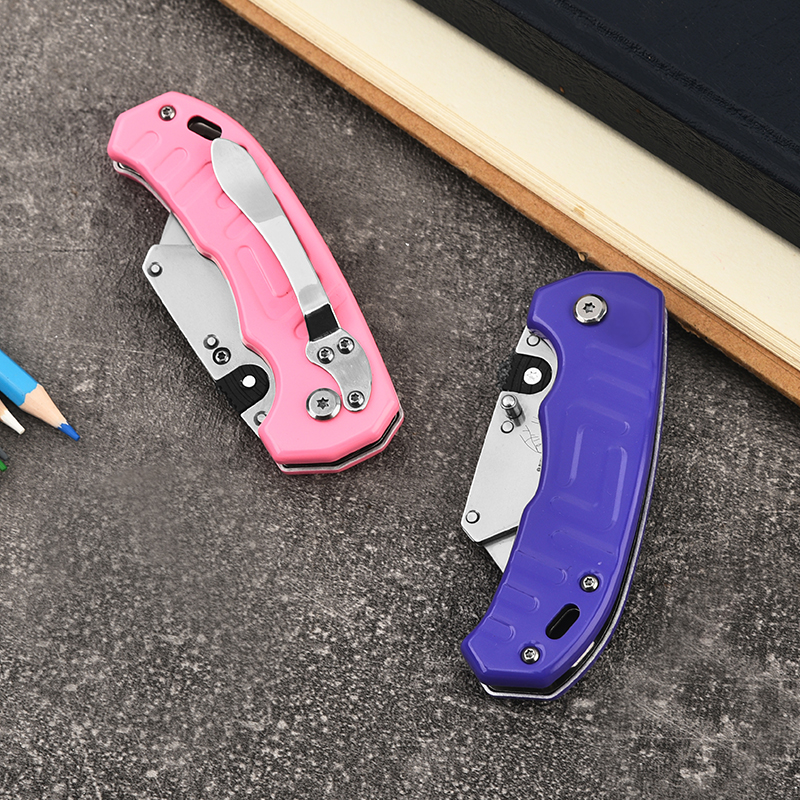
When customers search for the best pocket knife brands, they often compare blade materials, lock systems, handle designs, opening mechanisms, and visual styling. These are all important. However, experienced buyers also evaluate the manufacturing process behind the finished tool.
A pocket knife may look impressive in product photos but perform poorly if its pivot is inconsistent, its blade grind is uneven, its lock engagement is unreliable, or its handle assembly shifts after repeated opening and closing.
The strongest knife brands and suppliers focus on the full product system:
- Blade steel selection based on the intended use and price range
- Heat-treatment control to balance hardness, toughness, edge retention, and resharpening practicality
- Lock design and lock fit for stable blade retention during normal use
- Ergonomic handle construction for grip, comfort, and user confidence
- Consistent assembly tolerances for smooth opening and centered blade alignment
- Quality inspection procedures before packaging and shipment
- Reliable OEM/ODM communication for customized projects
For a consumer, this means choosing a knife that works well. For a purchasing manager, it means reducing returns, complaints, inconsistent batches, and avoidable rework costs.
The pocket knife market includes established heritage brands, premium performance brands, value-oriented outdoor brands, design-driven EDC labels, and factory-backed private-label programs. Each category serves a different buyer profile.
| Brand Category | Typical Buyer Need | Common Product Focus | Purchasing Consideration |
|---|---|---|---|
| Heritage knife brands | Familiarity and long-term reputation | Traditional folders, hunting knives, work knives | Strong brand recognition, often less customization flexibility |
| Premium EDC brands | Materials, precision, collector appeal | Titanium folders, premium steels, refined mechanisms | Higher retail pricing and narrower consumer segment |
| Outdoor and utility brands | Practical daily use | Folding knives, multi-tools, fixed blades, utility knives | Durability, usability, broad market appeal |
| Tactical-oriented brands | Fast deployment and rugged styling | Assisted-opening, locking folders, tactical tools | Local regulations and end-user application matter |
| Private-label knife programs | Brand differentiation | Custom folding knives, utility knives, outdoor tools | Manufacturer capability, quality control, MOQ, lead time |
Well-known companies such as Benchmade, Spyderco, Böker, Kershaw, Zero Tolerance, Gerber, Buck, CRKT, Cold Steel, WE Knife Co., Kizer, Microtech, Pro-Tech, Chris Reeve Knives, and BRS have each developed recognizable positions in the knife market. Some are known for patented mechanisms, some for traditional patterns, some for premium materials, and others for accessible value.
But a retail brand's market position is only one side of the equation. For businesses creating their own knife line, the more practical advantage often comes from working with a manufacturer that can translate a market requirement into a consistent product.
A famous knife brand may offer a proven finished product. A capable manufacturer gives buyers the opportunity to build a differentiated product range around their own brand, audience, packaging, price point, and sales channel.
This is especially important for:
- Outdoor equipment distributors
- Hardware and tool wholesalers
- E-commerce private-label sellers
- Promotional-product companies
- Camping and survival brands
- Hunting and fishing suppliers
- Gift and souvenir distributors
- Retailers seeking exclusive product designs
Yangjiang Holin Industrial Co., Ltd. can support this process through integrated folding knife, pocket knife, utility knife, and outdoor-tool manufacturing. Rather than forcing buyers to select only from existing styles, an OEM/ODM program can be developed around specific commercial needs.
For example, an outdoor retailer may need a compact folding knife with a wood-look handle, a secure liner lock, a corrosion-resistant blade finish, branded packaging, and a mid-range retail target. A hardware distributor may instead need a retractable utility knife designed for carton opening, warehouse tasks, and replacement blade compatibility. These are different product briefs, and they require different material, assembly, packaging, and inspection decisions.
The right manufacturing partner helps turn a product brief into a repeatable production standard.
A well-designed pocket knife should not be judged only by the blade shape or handle color. Buyers should inspect the interaction between materials, structure, finishing, and use case.
Blade steel affects corrosion resistance, edge stability, toughness, sharpening behavior, and total product cost. There is no single "best" steel for every folding knife.
For example:
- Stainless steel is often preferred for everyday carry, humid climates, and general outdoor use because it can provide practical corrosion resistance.
- Carbon steel may offer different cutting characteristics but generally requires more maintenance to prevent corrosion.
- Tool-steel-style materials may be selected for certain heavy-duty applications, depending on the desired toughness and wear resistance.
- Budget-oriented stainless grades can be suitable for high-volume promotional, utility, and entry-level retail programs when the heat treatment and blade geometry are properly controlled.
The key is to match steel selection to the expected user, selling price, maintenance expectations, and operating environment.
A high-end steel is not automatically the best commercial solution. If a target consumer wants an affordable work knife that is easy to maintain and easy to sharpen, a balanced and proven steel choice may create more value than an expensive premium grade.
Heat treatment is one of the most important parts of knife performance. It influences how well a blade resists deformation, maintains an edge, withstands impact, and responds to sharpening.
Hardness is often discussed using the Rockwell C scale, commonly written as HRC. In general, higher hardness can support edge retention, but excessive hardness may reduce toughness and make a blade more vulnerable to chipping under unsuitable use. The ideal balance depends on blade steel, blade thickness, grind geometry, and intended task.
For buyers, useful questions include:
1. What steel grade is used for the blade?
2. What hardness range is targeted after heat treatment?
3. Is hardness verified by testing during production?
4. Is the chosen hardness appropriate for the knife's intended use?
5. How does the supplier control consistency across production batches?
A responsible manufacturer should be able to discuss these points clearly rather than relying only on broad marketing claims.
A folding knife lock should hold the blade in the open position during normal cutting use. Common structures include liner locks, frame locks, lockbacks, crossbar-style locks, button locks, compression-style locks, and slip joints.
Each mechanism offers a different combination of operating feel, manufacturing complexity, visual profile, and user preference.
| Lock Type | Typical Characteristics | Suitable Product Positioning |
|---|---|---|
| Liner lock | Slim, widely used, efficient for many folders | Everyday carry and value-oriented pocket knives |
| Frame lock | Handle frame functions as part of the lock | Heavy-duty, metal-handle, premium-style folders |
| Lockback | Traditional back-mounted locking structure | Outdoor, hunting, and classic folding knives |
| Crossbar-style lock | Ambidextrous operation with a crossbar mechanism | User-friendly EDC and outdoor knives |
| Button lock | Push-button release and modern operation | Contemporary EDC and recreational folding knives |
| Slip joint | Non-locking tension-based mechanism | Traditional carry and markets with non-locking preferences |
During sample evaluation, open and close the knife repeatedly. Check whether the lock engages consistently, whether the blade has unwanted vertical or lateral movement, and whether the release is intuitive without being dangerously easy to disengage.
A lock should be treated as a functional component, not merely a selling feature. Users should always follow safe handling practices: cut away from the body, maintain the blade properly, and close or store the knife when it is not in use.
Blade centering refers to whether a folded blade sits properly between the handle scales without contacting the liners or handle material. Pivot action refers to how smoothly and controllably the blade opens and closes.
A quality check should include:
- Blade alignment when closed
- Consistency of opening resistance
- Smoothness of the pivot movement
- Screw tightness and hardware fit
- Contact between blade and handle interior
- Presence of blade play when locked open
- Pocket clip attachment, if included
- Edge consistency from heel to tip
These details affect customer satisfaction more than many buyers expect. A knife that looks premium but opens roughly or rubs against the handle may quickly damage a brand's reputation.
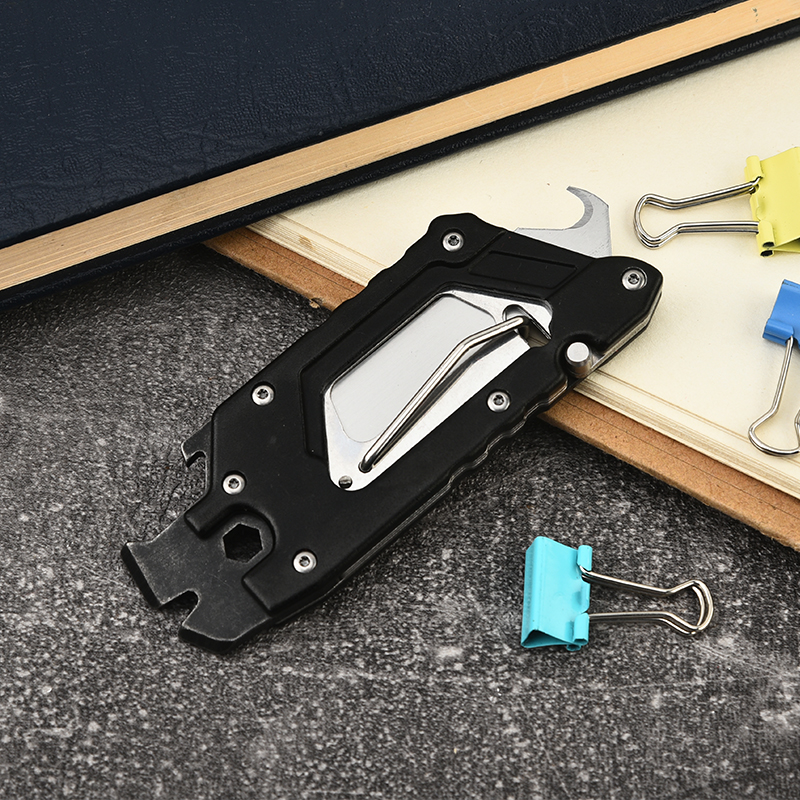
Successful custom knife development begins with a clear product brief. It should not start with a vague request for "a good knife."
Yangjiang Holin Industrial Co., Ltd. can support buyers through a structured OEM/ODM workflow that reduces uncertainty before bulk production.
Clarify who will use the product and where.
Possible user profiles include:
- Everyday carry consumers
- Campers and hikers
- Warehouse and packaging workers
- Hunters and anglers
- Hardware-store customers
- Gift buyers
- Emergency-tool users
- Collectors seeking a distinctive design
A compact EDC knife, a rescue-style tool, and a retractable utility knife should not use the same development brief.
Define the product's technical direction before requesting a quotation.
The specification can include:
- Blade style, such as drop point, clip point, tanto, or utility blade
- Blade material and surface finish
- Lock type or non-locking construction
- Opening method, such as nail nick, thumb stud, flipper, thumb hole, or manual two-hand opening
- Handle material, such as stainless steel, aluminum, G10, wood, plastic, carbon fiber-style composite, or mixed materials
- Pocket clip, lanyard hole, glass breaker, belt cutter, or other tool features
- Logo location and marking method
- Packaging type, including color box, gift box, blister card, pouch, or custom retail display
This stage determines product cost, development time, manufacturing feasibility, and retail positioning.
A sample should be evaluated as a working tool, not only as a visual prototype.
Buyers should test:
- Opening and closing action
- Lock engagement and release
- Handle comfort
- Grip security in dry and controlled conditions
- Blade sharpness and grind consistency
- Fit between blade, liners, screws, and handle scales
- Logo quality and packaging presentation
Keep written feedback and approved reference photos. This makes the final production standard clearer for both the buyer and the manufacturer.
Packaging is part of the product experience and should be considered early. It affects retail presentation, shipping protection, barcode placement, documentation, and customer perception.
Buyers should also confirm applicable import rules, sales-channel policies, local knife restrictions, labeling requirements, and age-related requirements in their destination market. Legal treatment of folding knives, locking knives, blade lengths, automatic-opening products, and carry rules can differ substantially by country, region, and municipality.
A product suitable for one market may not be suitable for another. Buyers should verify current local requirements before importing, marketing, or selling any knife product.
Before mass production, confirm the approved sample, materials, logo artwork, packaging artwork, dimensions, acceptable tolerances, inspection points, and delivery schedule.
The production standard should answer practical questions:
- What constitutes an acceptable blade finish?
- What amount of blade centering variation is acceptable?
- How will logo placement be checked?
- Which packaging components are included?
- How are cartons marked?
- What inspection level is required before shipment?
This preparation supports stable quality and fewer misunderstandings.
The strongest pocket knife products increasingly combine visual identity with practical usefulness. Buyers should not follow trends blindly, but several directions continue to shape product development.
Smaller folders remain attractive because they are easy to carry, easy to gift, and suitable for daily tasks such as opening packages, cutting cord, trimming materials, and handling light outdoor needs.
Popular characteristics include:
- Low-profile handles
- Deep-carry pocket clips
- Lightweight construction
- Neutral blade shapes
- Simple one-hand operation where appropriate
- Minimal branding with clean visual lines
Users increasingly value products that solve practical problems. Folding knives combined with utility functions can appeal to hardware, automotive, warehouse, camping, and emergency-use markets.
Possible additions include replaceable blades, belt cutters, glass breakers, bit drivers, bottle openers, rulers, or compact multi-tool elements. However, every added feature should have a purpose. Overloading a tool can make it bulky, harder to use, and more expensive to produce.
A standard knife can become a distinct branded product through thoughtful material combinations and finishing choices.
Examples include:
- Stonewashed stainless steel with G10-style handle scales
- Satin blades with natural wood handles
- Black-coated blades with textured aluminum handles
- Two-tone blade finishes with engraved logos
- Branded color accents on screws, liners, clips, or thumb studs
For private-label programs, visual differentiation matters because it helps customers recognize the product without relying on a copied market-leading design.
The lowest quotation is not always the lowest total cost. Poor consistency can create expensive returns, delayed listings, negative reviews, and lost retail trust.
Avoid these sourcing mistakes:
- Choosing a supplier based only on unit price
- Approving samples without functional testing
- Failing to specify blade steel, finish, handle material, or lock type
- Ignoring packaging requirements until late in the project
- Assuming all markets have the same knife regulations
- Using generic product descriptions that do not match the actual configuration
- Ordering bulk quantities before approving a production-ready sample
- Neglecting inspection requirements and acceptable quality limits
A reliable supplier relationship depends on precise documentation, honest communication, realistic timelines, and a shared understanding of the end user.
The best pocket knife brands earn customer confidence through thoughtful design, practical performance, and consistent execution. For businesses building a new knife collection, the same principles apply at the manufacturing level.
Yangjiang Holin Industrial Co., Ltd. provides folding knife, pocket knife, utility knife, and outdoor tool buyers with a factory-backed path to customized product development. From concept selection and material recommendations to sampling, branding, packaging, and bulk production, the goal is to help global customers create knife products that fit their market rather than simply selecting an undifferentiated catalog item.
If you are planning a custom folding knife, private-label pocket knife, branded utility knife, or outdoor tool range, prepare your target price, estimated order quantity, preferred materials, logo files, and target market requirements. Then contact Yangjiang Holin Industrial Co., Ltd. to discuss a practical OEM/ODM development plan for your next project.

Look for proven manufacturing capability, clear communication, sample-development support, stable production capacity, material options, quality-control procedures, branding capability, packaging support, and experience with export-oriented orders. A supplier should be able to explain the product structure and production process clearly.
OEM usually means the buyer provides a defined product design, brand, logo, or specification and the factory produces it. ODM usually means the manufacturer provides an existing or adaptable design that the buyer can customize with materials, colors, logos, packaging, and selected structural changes.
There is no universal best lock type. Liner locks are common and efficient, lockbacks have a traditional and secure reputation, frame locks suit many metal-handle designs, and crossbar-style or button locks can offer user-friendly operation. The appropriate choice depends on the target user, intended tasks, design style, and market requirements.
Start with the intended use, retail price, maintenance expectations, environmental exposure, and desired cutting performance. A stainless steel option may suit general everyday carry and outdoor use, while a different steel may be appropriate for specialized performance requirements. Ask the manufacturer how the steel will be heat treated and tested.
Yes. Depending on the product design and order requirements, logos can commonly be added through laser engraving, screen printing, stamping, etching, metal badges, or customized handle inserts. Packaging, instruction cards, labels, pouches, and carton markings can also be branded.
Provide product images or sketches, blade and handle dimensions, materials, preferred lock and opening mechanism, finish, logo artwork, packaging request, estimated order quantity, destination market, and target price level. If details are not finalized, a capable OEM/ODM manufacturer can help refine the specification.
No. Knife rules vary by country, region, and local jurisdiction. Restrictions may concern blade length, lock type, opening method, carry location, age, marketing, or intended use. Buyers should confirm current legal and platform requirements in the destination market before placing an order or selling the product.
- [Blade HQ — Best Pocket Knife Brands]
- [Blade HQ — Knife Lock Types Guide]
- [KnifeCenter — Folding Knife Lock Types]
- [Boy Scouts of America — Knife Safety]
- [Victorinox — Nine Safety Rules]
- [Zero Tolerance — Lock Types]


