


Views: 294 Author: Holin Knife Publish Time: 2026-10-31 Origin: Site


Content Menu
● Folding EDC Knife vs Fixed EDC Knife: Quick Comparison
● What Is a Folding EDC Knife?
>> Folding Knife Locks and Opening Systems
>> Where Folding EDC Knives Work Best
● Folding vs Fixed Blade EDC: Seven Important Differences
>> 1. Carry Comfort and Overall Size
>> 2. Strength and Structural Reliability
>> 4. Deployment and Safe Handling
>> 5. Cleaning and Maintenance
>> 6. Price and Ownership Costs
>> 7. Legal and Workplace Restrictions
● A Better Comparison Method: Separate Format from Blade Performance
● Practical Sample Evaluation for OEM/ODM Buyers
>> Step 1: Define the Intended User
>> Step 2: Test Representative Cutting Tasks
>> Step 3: Assess the Complete Carry System
>> Step 4: Check Consistency Across Samples
>> Step 5: Document the Approved Specification
● Choosing the Right Format for Your Product Line
>> Is a folding EDC knife better for beginners?
>> Can a small fixed blade work for everyday carry?
>> Does a fixed blade hold an edge longer than a folder?
>> Is a locking folding knife as strong as a fixed blade?
>> Which knife is easier to maintain?
>> What should an OEM buyer prioritize first?
The folding EDC knife vs fixed EDC knife decision comes down to one practical question: what must your knife do, and how will you carry it? A folding knife generally offers greater pocket convenience. A compact fixed blade offers simpler construction, easier cleaning, and no folding joint to maintain.
Neither design automatically delivers better cutting performance. Blade geometry, steel selection, heat treatment, handle comfort, and manufacturing consistency all influence the result.
At Yangjiang Holin Industrial Co., Ltd., our perspective combines product development with manufacturing requirements. With an in-house R&D team, our own factory, and OEM/ODM services, we help customers translate intended applications into production-ready knife designs.
This guide compares both formats for everyday users and buyers developing private-label knife collections.
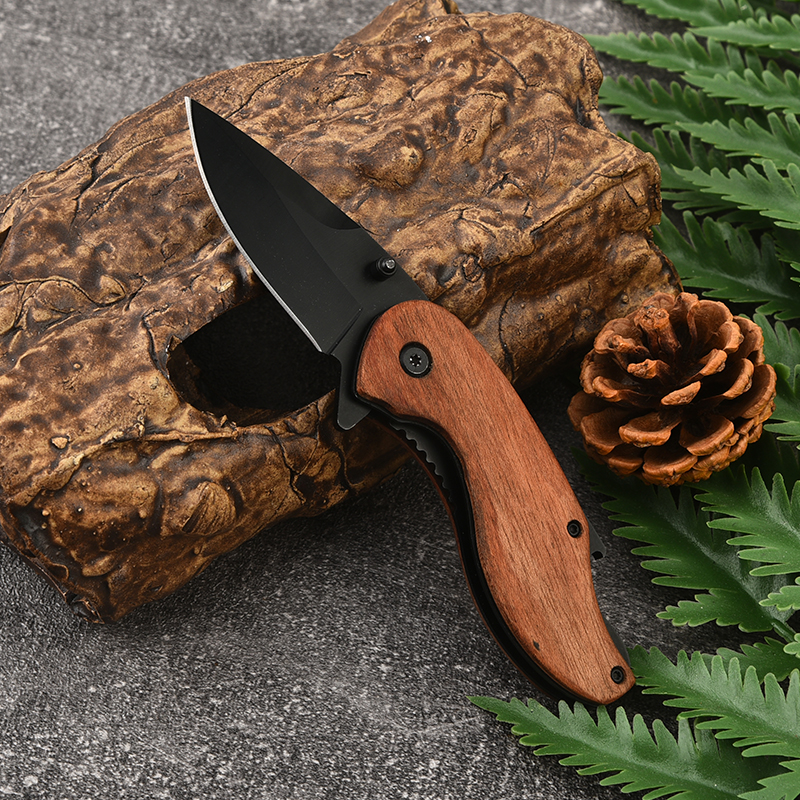
EDC means "everyday carry." An EDC knife is a cutting tool selected for routine tasks, such as opening packaging, cutting cord, or handling light outdoor work.
| Comparison | Folding EDC knife | Fixed EDC knife |
|---|---|---|
| Construction | Blade rotates into the handle | Blade remains permanently extended |
| Carry system | Usually a pocket clip or pocket sheath | Requires a protective sheath |
| Storage footprint | Shorter when closed | Full knife length remains unchanged |
| Structural considerations | Pivot and lock introduce additional interfaces | No pivot or folding lock |
| Cleaning | Debris can collect inside the handle | Blade and handle are generally more accessible |
| Deployment | Requires opening before cutting | Requires safe removal from its sheath |
| Maintenance | Includes pivot, hardware, and lock inspection | Focuses on blade, handle, and sheath |
| Typical priority | Convenient pocket carry | Simplicity and repeated working use |
| Purchasing considerations | Mechanism quality and assembly consistency | Tang construction and sheath quality |
My starting recommendation is simple: choose around the application, not the appearance.
A knife that fits someone's daily routine is usually more useful than a technically impressive design they dislike carrying.
A folding EDC knife stores its blade inside the handle. This reduces its closed length and protects the cutting edge during proper storage.
For people moving between home, commuting, and ordinary workplace tasks, that compact format is often its biggest advantage.
Common locking mechanisms include:
- Liner locks, which use an internal metal liner to secure the open blade.
- Frame locks, which use part of the handle frame.
- Lockbacks, which use a rocker-style locking component.
- Crossbar-style locks, which use a sliding bar to engage the blade.
Some folding pocket knives do not lock. A slipjoint, for example, uses spring resistance rather than a positive locking mechanism.
No mechanism should be judged by its name alone. Materials, component geometry, tolerances, assembly, and proper operation all influence reliability.
Folders are practical for intermittent cutting:
- Opening cartons and parcels.
- Cutting string or light cordage.
- Trimming packaging.
- Completing light campsite chores.
However, convenience brings maintenance responsibilities. Pocket lint, adhesive residue, and dirt can collect around the pivot or locking surfaces.
A fixed EDC knife has a blade that does not fold. Unlike a large camping knife, an everyday-carry fixed blade may use a compact blade and handle paired with a purpose-designed sheath.
Its defining advantage is mechanical simplicity. There is no opening pivot or folding lock between the blade and handle.
The tang is the portion of the blade extending into the handle.
A full-tang knife generally has a metal profile extending through the handle, with handle scales attached to it. A hidden-tang design encloses the tang inside the handle.
Full-tang construction can support a robust working design. However, the label alone does not establish strength. Tang dimensions, transitions, steel condition, and workmanship still matter.
For a small fixed blade, the sheath is part of the product—not merely packaging.
It must cover the edge, retain the knife securely, and support controlled drawing and re-sheathing. Buyers should evaluate sheath fit and attachment hardware alongside the knife itself.
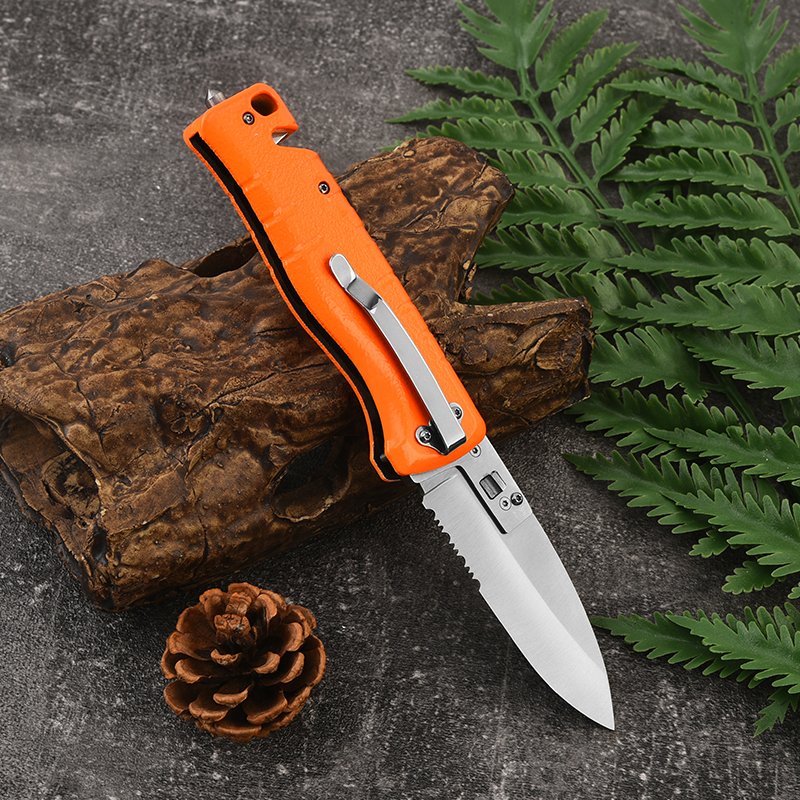
A folder's main advantage is its reduced closed length. A pocket clip can keep it accessible without requiring a separate belt-mounted sheath.
Nevertheless, small dimensions do not guarantee comfort. Handle thickness, clip tension, exposed hardware, and pocket placement all affect daily use.
A compact fixed blade can also carry comfortably, but its sheath adds length and bulk. Compare the complete carry system rather than the bare knife.
A fixed blade eliminates the pivot and locking interfaces that a folder requires. This gives it a structural advantage when comparing otherwise similar, appropriately designed knives.
That does not make every fixed blade stronger than every folder. A thin, poorly manufactured fixed blade may perform worse than a well-engineered folding knife.
Neither format should be treated as a pry bar, screwdriver, or impact tool unless specifically designed and validated for that application.
The ability to cut efficiently is not determined by whether the knife folds.
A thin blade with suitable edge geometry may slice cardboard more easily than a thicker blade with a more robust edge. Steel selection and heat treatment then influence properties such as wear resistance and toughness.
For everyday cutting, evaluate:
- Blade thickness and grind.
- Thickness immediately behind the edge.
- Edge angle and finish.
- Blade shape and usable cutting length.
Comparing only steel names misses much of what users actually experience.
A fixed blade does not require an opening action after it leaves the sheath. A folder must first be opened and, where applicable, securely locked.
However, "faster" is not automatically "safer."
A folder requires controlled opening and closing. A fixed blade requires a clear drawing path and careful re-sheathing. Gloves, hand size, carry position, and training can change which system feels more manageable.
Fixed blades are generally easier to clean because they lack an enclosed pivot mechanism.
Folders require additional attention around moving parts. Avoid soaking them, dry them thoroughly, and follow the manufacturer's lubrication instructions.
For either format:
1. Remove dirt and residue after use.
2. Dry the knife before storage.
3. Inspect the edge and handle.
4. Check accessible hardware.
5. Keep the carry system clean.
Corrosion-resistant steel still needs care, especially after exposure to moisture, salt, or acidic materials.
Neither format is inherently cheaper.
A folder can involve more components and assembly adjustments. A fixed blade may require substantial blade material, handle finishing, and a carefully fitted sheath.
For commercial buyers, compare the finished specification rather than the category alone. Include inspection, accessories, packaging, maintenance expectations, and replacement components.
A lower unit price can lose its advantage if inconsistent assembly or poor sheath fit creates returns.
Do not assume a folding knife is automatically legal to carry.
Rules may distinguish between locking and non-locking blades, opening mechanisms, cutting-edge length, location, and reasons for possession.
For example, UK guidance describes a limited public-carry exception for non-locking folding pocketknives with a cutting edge no longer than three inches. Lock knives do not fall within that exception.
Check current destination-specific rules and workplace policies before purchasing, importing, marketing, or carrying a knife. This overview is not legal advice.
One common comparison mistake is testing two knives with different steels, grinds, dimensions, and handles, then attributing every difference to folding versus fixed construction.
That does not isolate the design variable.
An informative industry example is the standardized knife-testing platform: keeping blade geometry consistent while changing the steel helps reveal material differences more clearly.
The same principle improves purchasing decisions.
When comparing a folding EDC knife with a fixed EDC knife, match the following as closely as practical:
- Cutting-edge length.
- Blade stock and grind.
- Steel and hardness specification.
- Edge angle and sharpening condition.
- Test material and cutting technique.
Then evaluate carry convenience, mechanism behavior, and cleaning separately. This produces more useful conclusions than declaring one format universally superior.
The following is a proposed purchasing workflow, not a report of laboratory testing or Holin production results.
Describe the actual environment: warehouse packaging, outdoor recreation, general household use, or another lawful application.
Specify expected gloves, moisture exposure, maintenance habits, and carry restrictions.
Use repeatable materials and controlled procedures. Record cutting effort, edge condition, and user comfort.
Do not introduce hazardous overload tests as routine user evaluations.
For folders, inspect pocket-clip security, closed-blade retention, and ease of controlled operation.
For fixed blades, inspect sheath retention, edge coverage, attachment stability, and re-sheathing clearance.
One excellent sample does not establish batch consistency.
Agree on measurable acceptance criteria for dimensions, blade finish, edge condition, assembly, and functional inspection. Compare multiple samples before approving production.
Record drawings, materials, finish requirements, packaging, approved samples, and inspection procedures.
This gives the buyer and manufacturer a shared reference when moving from development to volume production.
For a private-label collection, the strongest decision is often a clear product role rather than a universal winner.
| Intended positioning | Practical starting point | Main development priority |
|---|---|---|
| General pocket utility | Folding EDC knife | Comfortable carry and consistent operation |
| Compact outdoor work | Fixed EDC knife | Grip, blade geometry, and sheath security |
| Mixed everyday and recreational use | Evaluate both | User testing under representative conditions |
| Frequent packaging tasks | Folder or dedicated utility knife | Cutting efficiency and edge-maintenance strategy |
These are starting points, not guarantees. Final specifications should follow the buyer's target market and intended tasks.
At Yangjiang Holin Industrial Co., Ltd., we support OEM/ODM projects from design and development through bulk production. Our manufacturing background includes folding knives, pocket knives, utility knives, and outdoor tools.
For your next project, send our team your target market, intended use, preferred format, material requirements, estimated order quantity, and packaging brief. Ask for a development proposal covering design options, sampling, production requirements, and agreed inspection criteria.
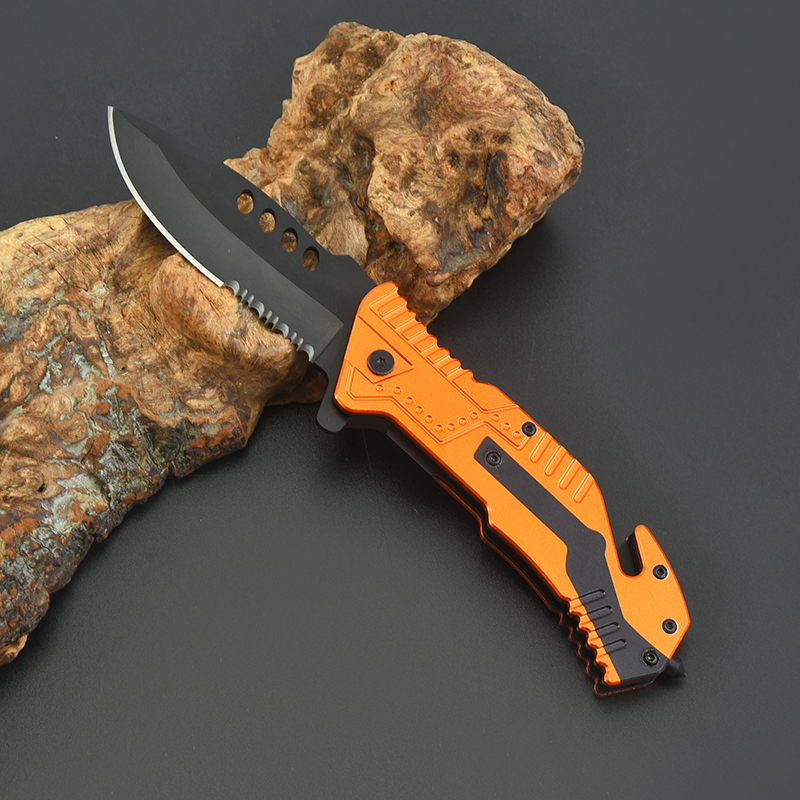
It can be convenient, but suitability depends on the mechanism and the user. Choose a design that allows controlled operation, and learn its opening, locking, and closing procedure before use.
Yes, where lawful and appropriate. Evaluate the complete knife-and-sheath system. Secure retention, comfortable placement, and workplace acceptance matter as much as blade size.
Not simply because it is fixed. Steel properties, heat treatment, edge geometry, cutting material, and technique determine edge wear. Similar blades can perform similarly regardless of handle format.
There is no universal answer across all products. A folder includes a pivot and locking interface, while a fixed blade eliminates those joints. Compare specific designs and validated performance rather than broad labels.
A fixed blade is generally easier to clean because it lacks a folding mechanism. Both still require drying, edge maintenance, and inspection. The fixed blade's sheath also needs attention.
Start with intended use and destination-market requirements. Then define geometry, materials, carry system, target cost, and inspection criteria. Cosmetic customization should follow a workable product specification.
1. Buck Knives — "How to Choose the Right Knife." Manufacturer guidance supporting construction definitions, tang types, locking systems, and format comparisons. [buckknives]
2. Buck Knives — "Liner & Frame Lock Pocket Knives." Supports the explanation that lock reliability depends on construction, materials, tolerances, and use rather than mechanism name alone. [buckknives]
3. Larrin Thomas, Knife Steel Nerds — "13 Myths about Heat Treating Knives." July 13, 2020. Technical discussion supporting the relationship between steel, heat treatment, edge geometry, and cutting performance. [knifesteelnerds]
4. Benchmade — "Knife Care 101: A Guide to Maintaining Your Knife." February 6, 2026. Supports cleaning, lubrication, drying, corrosion prevention, and storage guidance. [benchmade]
5. Spyderco — "Spyderco Mule Team™ Project: Real World Testing." April 15, 2026. Industry example supporting controlled comparisons through consistent blade geometry. [spyderco]
6. UK Government — "Selling, Buying and Carrying Knives and Weapons." Official guidance supporting the specific UK public-carry example; readers should verify current rules before acting. [gov]


