


Views: 298 Author: Holin Knife Publish Time: 2026-11-05 Origin: Site


Content Menu
● G10 vs Micarta EDC Knife: Quick Comparison
>> Why Manufacturers Choose G10 Knife Handles
● What Is a Micarta EDC Knife?
>> Canvas Micarta vs Linen Micarta vs Paper Micarta
● G10 vs Micarta Grip: Surface Finish Matters More Than Reputation
>> Dry Grip and Everyday Comfort
>> Wet Grip and Gloved Handling
● Moisture Resistance: Where G10 Has a Clearer Advantage
>> What These Numbers Mean for Everyday Carry
● Strength, Durability, and Handle Construction
>> Why Construction Can Override Material Differences
● Weight, Pocket Comfort, and Appearance
>> G10 for Consistent Color and Modern Styling
>> Micarta for Texture and Developing Character
● Cleaning G10 and Micarta Knife Handles
● A Practical Sample-Test Plan for G10 vs Micarta Handles
>> Step 1: Control the Knife Design
>> Step 2: Compare Intended Use Conditions
>> Step 3: Record Specific Observations
>> Step 4: Approve a Production Reference
● OEM/ODM Cost and Specification Considerations
>> What Buyers Should Include in a Request
● Which EDC Knife Handle Should You Choose?
● Develop Your Custom EDC Knife with Holin
>> Is G10 Better Than Micarta for an EDC Knife?
>> Does Micarta Always Have Better Wet Grip?
>> Is G10 Heavier Than Micarta?
>> Why Does a Micarta Handle Darken?
>> Can One Knife Design Offer Both Handle Materials?
Choosing between a G10 EDC knife vs Micarta EDC knife is mainly a decision about handle performance—not cutting performance. Both materials make durable everyday carry knife handles, but they differ in moisture absorption, surface feel, appearance, and customization possibilities.
My recommendation is to prioritize fit: choose G10 when low maintenance and appearance consistency matter most; consider Micarta when fabric texture and a handle that develops character appeal to you. Neither choice automatically guarantees better grip or a better knife.
For individual users, the right decision starts with daily tasks. For brands and importers, it also involves material specifications, manufacturing consistency, and customer expectations.

"Handle scales" are the panels attached to a knife's handle structure. The comparison below concerns these panels rather than blade steel, locking mechanisms, or overall knife quality.
| Comparison point | G10 EDC knife | Micarta EDC knife |
|---|---|---|
| Typical composition | Woven glass fabric and epoxy resin | Paper or fabric reinforcement, commonly with phenolic resin |
| Surface feel | Firm; texture depends on finishing | Fabric-based versions can feel more textile-like |
| Moisture absorption | Generally lower in comparable industrial grades | Generally higher; varies by grade and thickness |
| Grip | Strongly influenced by machining and finish | Strongly influenced by weave, machining, and finish |
| Appearance | Broad color choices and layered patterns | Distinctive paper, linen, canvas, and other patterns |
| Appearance changes | Usually preferred for a relatively consistent look | May darken with handling and oils |
| Weight at equal volume | Typically heavier than cotton-phenolic grades | Typically lighter than glass-epoxy grades |
| Best starting point | Low-maintenance, modern utility designs | Texture-focused, heritage-inspired designs |
These are selection tendencies, not guarantees for every finished knife.
A G10 EDC knife uses glass-epoxy laminate for its handle scales. Manufacturers combine woven glass reinforcement with epoxy resin to create a rigid composite.
The resulting sheets can be machined into flat or contoured scales. Surface options include peel-ply texture, milled grooves, and smoother finishes.
G10 offers several useful design characteristics:
- Low moisture absorption in typical industrial grades.
- High stiffness for its thickness.
- Numerous color and layered-pattern options.
- Compatibility with detailed machining and repeatable handle profiles.
However, "G10" does not describe the complete handle specification. Sheet quality, thickness, machining, edge finishing, and hardware all affect the finished product.
A roughly finished G10 scale can feel uncomfortable even when the underlying laminate performs well.
A Micarta EDC knife commonly uses paper- or fabric-reinforced resin laminate for its handle scales. Micarta is a registered brand, although the name is frequently used more broadly in knife discussions.
For accurate purchasing specifications, distinguish genuine branded material from other fabric-resin laminates.
The reinforcement changes the appearance and finishing possibilities.
- Canvas Micarta has a coarser visible weave and suits textured designs.
- Linen Micarta uses a finer weave, supporting finer visual detail and intricate machining.
- Paper Micarta lacks a woven fabric pattern and can suit smooth, understated designs.
These categories do not establish a universal grip ranking. Resin content, exposed reinforcement, contouring, and final surface preparation still matter.
From a product-development perspective, requesting "green Micarta" is incomplete. Buyers should specify the reinforcement, supplier grade, thickness, color reference, and finish.
Grip is the most easily oversimplified part of this comparison.
A heavily textured G10 handle may provide more traction than polished Micarta. A contoured canvas Micarta handle may feel more secure than smooth G10. Neither example proves that one material always grips better.
For office, warehouse, and general utility use, evaluate:
- Whether the handle moves during normal cutting.
- Whether the clip creates a pressure point.
- Whether scale edges press into the palm.
- Whether aggressive texture catches clothing.
- Whether the handle remains comfortable during repeated tasks.
My preferred evaluation order is handle shape first, edge finishing second, and surface texture third. Choosing the roughest surface available can solve one problem while creating another.
Avoid the blanket claim that Micarta always becomes grippier when wet. User reports differ, and polished, lightly finished, and aggressively textured scales behave differently.
Water, oil, and soap also create different conditions. Test the intended finish rather than relying on the material name.
For safe handling comparisons, use a blunt prototype or keep the blade closed. Do not test grip by deliberately attempting to make a live blade slip.
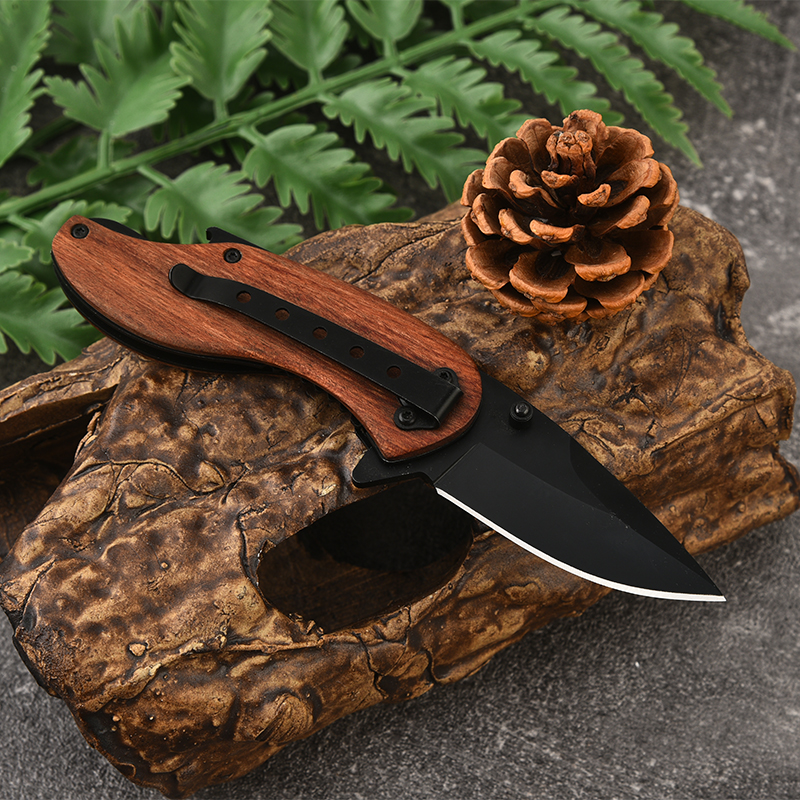
Published industrial laminate data generally show lower water absorption for glass-epoxy material than for cotton-phenolic alternatives.
One comparative supplier datasheet lists the following typical values:
| Property | G10/FR4 glass-epoxy column | Canvas phenolic C/CE | Linen phenolic L/LE |
|---|---|---|---|
| Specific gravity | 1.82 | 1.35 | 1.34 |
| Water absorption, 24 hours, 0.125-inch specimen | 0.15% | 2.5% / 1.6% | 1.6% / 1.3% |
These figures describe specified industrial test specimens—not every decorative knife-handle grade. The supplier groups G10 and FR4 in this table; that grouping does not make the designations interchangeable in a purchase specification.
G10 is a sensible starting point when buyers prioritize low moisture uptake and minimal appearance changes.
Micarta's higher absorption does not mean occasional rain will ruin a properly manufactured handle. However, exposed fabric surfaces can change appearance through handling, moisture, and oils.
Neither material makes the entire knife waterproof. Steel liners, screws, pivots, and internal spaces still require attention after exposure.
Both materials are suitable for durable knife handles when correctly specified and manufactured.
Industrial data generally give glass-epoxy grades higher stiffness and strength values than common cotton-phenolic grades. Nevertheless, those figures do not directly establish how much stronger one complete knife will be.
Finished-handle reliability also depends on:
- Scale thickness and internal pockets.
- Screw placement and remaining material around holes.
- Countersink depth and machining quality.
- Supporting liners or other structural components.
- Assembly tolerances.
A strong laminate cannot compensate for insufficient material around a fastener.
Likewise, a Micarta-scaled knife with suitable support may meet its intended requirements without needing G10's higher stiffness. Linerless designs require particular attention to structural validation.
At equal volume, the representative cotton-phenolic grades in the table are lighter than the glass-epoxy grade.
However, finished knife weight depends on much more than handle material. Blade thickness, steel liners, backspacers, hardware, and internal milling can outweigh the difference between scale materials.
Compare the actual assembled weights rather than assuming every Micarta knife is lighter.
G10 suits bright colors, contrasting layers, and contemporary utility designs. Layered stock can reveal patterns when contoured.
For branded ranges, approve physical samples. Website photographs alone cannot reliably communicate texture, color, or finishing quality.
Micarta offers visible reinforcement patterns and a distinctive tactile identity. Fabric-based scales may darken unevenly where hands contact them.
Some customers appreciate this developing character. Others interpret it as staining.
Product descriptions should explain likely appearance changes before purchase rather than presenting them as either a universal benefit or a defect.
Start with the knife manufacturer's maintenance instructions. A suitable handle-cleaning method must also protect the pivot, lock, blade, and hardware.
A practical routine is:
1. Remove loose dirt with a soft brush.
2. Use mild soap and warm water where permitted.
3. Gently clean textured areas.
4. Rinse away residue.
5. Dry the handle and internal spaces thoroughly.
6. Restore lubrication as directed.
Avoid assuming that aggressive solvents, prolonged soaking, or abrasive scrubbing are appropriate.
If Micarta changes color after handling, cleaning may remove surface contamination, but it may not restore the original shade completely. That distinction matters when setting customer expectations.
For brands evaluating custom EDC knives, controlled samples provide more useful evidence than broad material claims.
The following is a proposed comparison method, not a report of completed factory testing.
Use the same blade, liners, clip, hardware, and handle profile for both versions. Otherwise, a thicker scale or different clip may distort the comparison.
Assess dry handling, lightly damp handling, pocket insertion, and gloved handling where relevant. Keep the blade closed or use blunt prototypes for traction evaluations.
Use a shared evaluation sheet covering:
- Comfort and pressure points.
- Traction and perceived control.
- Pocket-fabric drag.
- Visible marks and color changes.
- Cleaning effort.
- Screw fit and scale alignment.
Repeat comparisons with several evaluators. Record disagreements rather than averaging away meaningful differences in hand size or preferences.
Keep an approved sample, material identification, drawings, and finish specification. These create a clearer acceptance standard than "premium G10" or "high-quality Micarta."
Neither material is universally cheaper.
Finished costs depend on sheet grade, supplier, usable yield, machining time, finishing, inspection, and order quantity. A simple Micarta scale can cost less than a deeply contoured multicolor G10 scale, while another specification may reverse that comparison.
A useful sourcing brief includes:
- Intended customers and daily tasks.
- Exact laminate grade or approved alternative.
- Scale thickness and handle drawings.
- Texture, contour, and edge requirements.
- Color and appearance acceptance limits.
- Branding location and production quantity.
- Packaging and destination-market requirements.
Also confirm whether branded Micarta is required. A generic fabric laminate should not be substituted without approval or marketed as genuine branded material.
This specification discipline helps prevent appearance disputes, inconsistent samples, and misleading product claims.
Choose G10 as your starting point when low moisture absorption, rigid scales, and relatively consistent appearance lead the brief.
Choose Micarta when fabric texture, visible weave, and developing character are central to the product's appeal.
For either option, evaluate the complete knife. Handle material does not determine edge retention, cutting geometry, corrosion resistance of the blade, or lock quality.
For a new product range, comparing matched prototypes is a more defensible decision than selecting a material solely because it sounds more premium.
Yangjiang Holin Industrial Co., Ltd. manufactures folding knives, pocket knives, utility knives, and outdoor tools, supported by an in-house development team and production factory.
Its one-stop OEM/ODM services cover product design, development, and bulk production.
Send Holin your target market, preferred handle material, reference design, expected quantity, and packaging requirements. Request a feasibility review and prototype plan for comparing G10 and Micarta before approving your production specification.
Not universally. G10 generally offers lower moisture absorption and higher stiffness. Micarta offers fabric-based textures and a distinctive appearance. The better choice depends on the finished handle and intended use.
No. Weave, surface preparation, contouring, and contaminants affect traction. Evaluate the actual finished scales under representative conditions instead of assuming all Micarta behaves alike.
Micarta is a resin-bonded composite, but common cotton-phenolic grades absorb some moisture. Occasional exposure does not automatically cause failure, yet the entire knife should still be dried properly.
Typical glass-epoxy laminate is denser than common cotton-phenolic laminate. At equal scale volume, G10 will generally weigh more. Complete knife construction can change the final weight comparison.
Handling oils, moisture, and surface contamination can alter its appearance, especially where reinforcement is exposed. The extent depends on the material and finish; not every grade changes equally.
Potentially, yes. However, the manufacturer should validate thickness, fastener fit, structural support, and assembly tolerances for each material rather than treating the scales as automatically interchangeable.
1. Professional Plastics. "Phenolic G-10/FR4 Data Sheets." Comparative specific gravity, water absorption, stiffness, and mechanical properties for glass-epoxy, canvas-phenolic, and linen-phenolic grades. [professionalplastics]
2. Norplex-Micarta. "Composite Materials for Consumer Goods and Applications." Genuine Micarta reinforcement options, colors, patterns, and G10 offerings. [norplex-micarta]
3. Norplex-Micarta. "Grades." Knife-handle grades, canvas and linen reinforcement characteristics, and material-specific machining considerations. [norplex-micarta]
4. Norplex-Micarta. "KHS300C." Decorative canvas knife-handle and gun-grip grade description. [norplex-micarta]
5. Norplex-Micarta. "KHS900L." Linen knife-handle grade description. [norplex-micarta]
6. Spyderco. "Knife Maintenance: Simple Tips for Better Performance." Cleaning textured scales and thoroughly drying folding-knife components. [spyderco]
7. Spyderco Forum. "Canvas Micarta Scales," page 2. Anecdotal user observations illustrating differing wet-grip experiences; not controlled test evidence. [forum.spyderco]


