


Views: 268 Author: Holin Knife Publish Time: 2026-11-01 Origin: Site


Content Menu
● What Makes a Bowie Knife Worth Collecting?
● Must-Have Bowie Knife Styles: Compare Before You Buy
>> Buck 119 Special: A Traditional Hunting Reference
>> KA-BAR USMC 1217: Heritage With Clear Specifications
>> Compact, Folding, and Oversized Bowies: Add Variety Deliberately
● How to Choose Bowie Knife Steel Without Oversimplifying Performance
>> Toughness and Edge Retention Are Different
>> Stainless Does Not Mean Maintenance-Free
>> Heat Treatment and Geometry Deserve Equal Attention
● Bowie Knife Construction: Look Beyond the Full-Tang Label
>> Handle Comfort Is a Functional Requirement
>> The Sheath Is Part of the Product
● What Real Owner Reviews Reveal—and What They Cannot Prove
● A Five-Step Bowie Knife Sample Evaluation
● Custom Bowie Knife Manufacturing: From Concept to Production
>> What to Include in an OEM/ODM Inquiry
>> Turn Design Preferences Into Acceptance Criteria
● Choose a Collection Piece—or Develop a Better Product Brief
>> What Is the Best Bowie Knife for a Beginner?
>> Are All Bowie Knives Fixed Blades?
>> Is Carbon Steel Better Than Stainless Steel for a Bowie?
>> Does a Full Tang Make a Bowie Knife Unbreakable?
>> Can a Bowie Knife Replace an Axe?
>> Are Bowie Knives Legal to Carry Everywhere?
>> What Should I Prepare Before Requesting Custom Knife Manufacturing?
The must-have Bowie knives for your collection should offer more than an impressive silhouette. Whether you want a traditional display piece, a dependable outdoor knife, or inspiration for a private-label product line, the right choice connects blade design, steel, handle construction, and intended use.
My approach is simple: collect by purpose, not just appearance. A compact clip-point knife and a large outdoor Bowie may share a recognizable profile, yet solve very different problems.
This guide explains how to compare them, interpret owner feedback, and evaluate a custom knife project without relying on exaggerated performance claims.
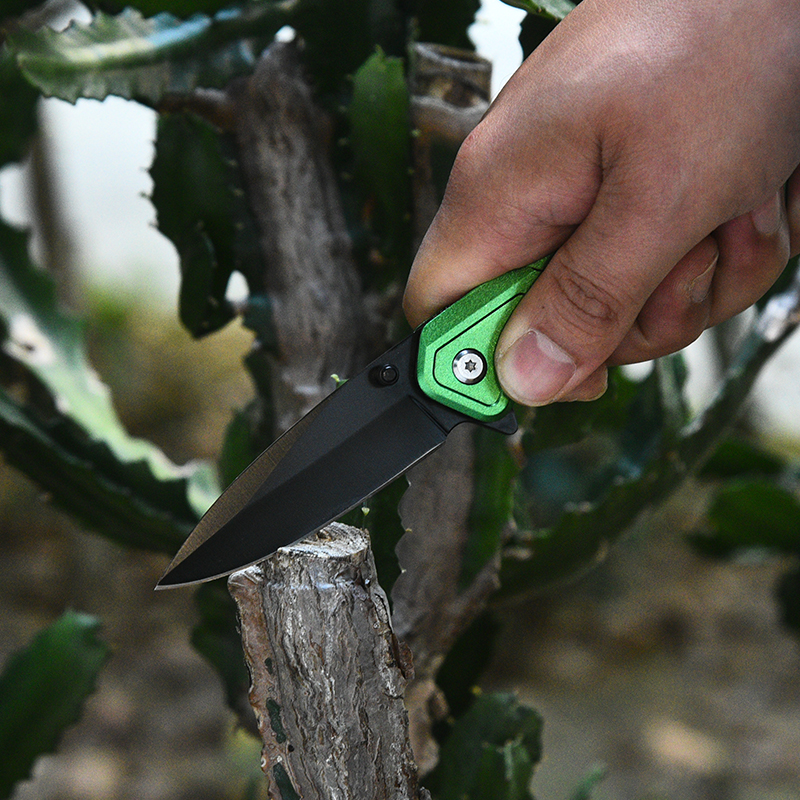
A modern Bowie usually features a clip-point blade, a substantial handle, and a guard. However, the category includes considerable variation. Not every Bowie-inspired knife is a large fixed blade.
The original knife associated with James Bowie is not documented precisely enough to establish one definitive modern replica. Treat claims of an "exact original design" cautiously.
For collectors, three questions provide a useful starting point:
- Does the knife represent a recognizable design tradition?
- Does its construction support its intended function?
- Does it add something meaningfully different to the collection?
A balanced collection might include a traditional hunting knife, a military-associated utility knife, and a compact interpretation. Buying three oversized blades with similar geometry adds less functional variety.
The following categories offer a more useful framework than an unrestricted "best knife" ranking.
| Collection role | Representative example | Main attraction | Important limitation |
|---|---|---|---|
| Traditional hunting style | Buck 119 Special | Established clip-point hunting design | Confirm the exact steel and configuration |
| Military-associated utility style | KA-BAR USMC 1217 | Recognizable heritage and substantial utility blade | Not a substitute for a pry bar or axe |
| Compact Bowie interpretation | CRKT Minimalist Bowie | Bowie styling in a small fixed-blade format | Limited handle and cutting reach |
| Folding Bowie-inspired design | Boker Kalashnikov Bowie variant | Clip-point styling with folding convenience | Mechanism and carry restrictions require checking |
| Oversized traditional style | Svord Von Tempsky Bowie | Strong visual presence and large-blade character | Greater carrying burden and reduced fine-task convenience |
These are reference points, not evidence that one model is universally superior. Check the current product listing before ordering; specifications and availability can change.
The Buck 119 Special belongs on a shortlist for collectors interested in established American hunting designs. Its appeal lies in its recognizable shape and longstanding product identity.
For a practical purchase, identify the exact version rather than assuming every 119 uses the same materials. Standard and customized configurations can differ.
I would evaluate its handle fit and cutting geometry before choosing a decorative upgrade. A visually attractive knife still needs to suit the owner's intended tasks.
The KA-BAR USMC 1217 provides a useful example of why model-specific information matters. Its listed specifications include:
- Blade length: 7 inches.
- Overall length: 11.875 inches.
- Blade steel: 1095 Cro-Van.
- Listed hardness: 56–58 HRC.
- Handle material: leather.
- Blade shape: clip point.
These details make comparison more meaningful than descriptions such as "military tough." Collectors may value its historical association, while outdoor buyers should also consider maintenance, carrying weight, and task suitability.
A compact Bowie-inspired fixed blade offers a different ownership experience from a large traditional model. A folding version introduces additional considerations, including lock operation and opening mechanism.
Oversized Bowies offer presence and reach, but their dimensions deserve careful attention. Compare actual measurements with a familiar knife instead of relying on product photographs.
For a collection, difference should be intentional: heritage, portability, craftsmanship, or a particular cutting role.
"Carbon steel versus stainless steel" is only the beginning of a useful comparison.
Steel selection involves trade-offs between toughness, wear resistance, corrosion resistance, hardness, and manufacturing requirements. Heat treatment and edge geometry also influence the finished knife.
Toughness concerns resistance to fracture, including chipping. Edge retention concerns how well cutting ability lasts under particular conditions.
A blade optimized for abrasive cutting is not automatically ideal for impact-heavy tasks. Likewise, a tough steel does not guarantee excellent slicing performance if the edge is unnecessarily thick.
Ask what the knife must cut before asking which steel is "best."
Corrosion resistance varies between steels and depends partly on processing and surface condition.
D2 illustrates why labels can mislead. Although it contains substantial chromium, some chromium is tied up in carbides rather than contributing to corrosion protection. It should not be treated as equivalent to highly corrosion-resistant stainless grades.
For humid environments, buyers should evaluate both material selection and the maintenance routine they can realistically follow.
A premium steel designation cannot compensate for unsuitable heat treatment or poor geometry.
For custom procurement, request an agreed hardness range and supporting inspection records. Also define blade thickness, edge geometry, and the intended application.
The useful question is not simply "Which steel do you offer?" It is "How will this material and construction meet the product brief?"
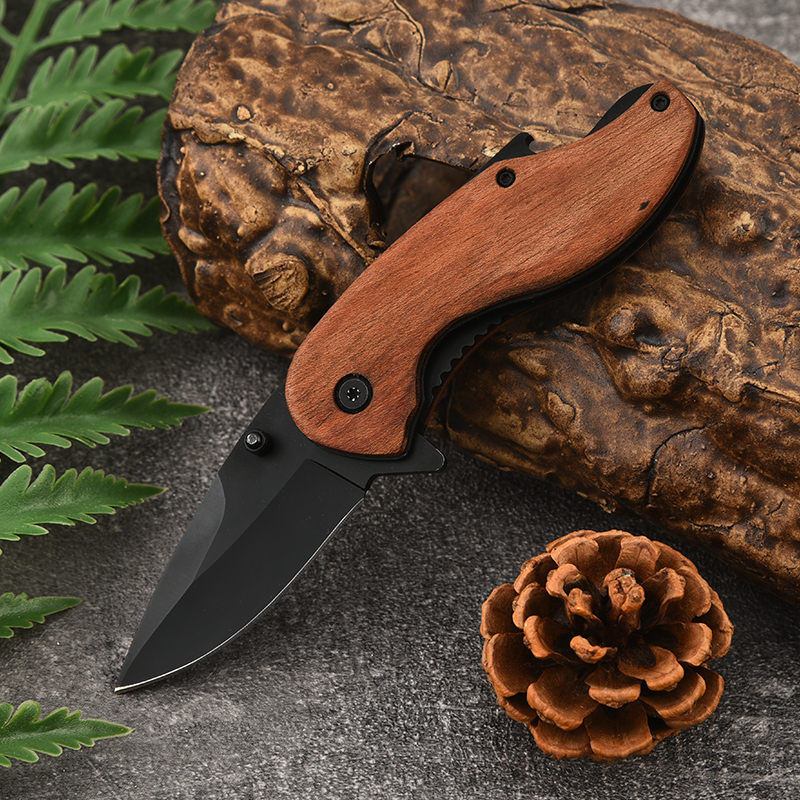
Tang construction describes the portion of the blade extending into the handle. Buyers often focus on whether a knife is full tang, but terminology alone does not establish durability.
A visible, full-width tang makes some aspects of construction easier to inspect. Hidden-tang designs require closer attention to internal dimensions and assembly details.
For a production project, examine:
- Tang width and thickness.
- Transitions between blade and handle.
- Handle attachment method.
- Guard fit and alignment.
- Gaps, movement, and uncomfortable edges.
- Consistency between samples.
Do not infer heavy-duty suitability from a photograph or a single construction label.
A handle can feel secure during a brief inspection yet become uncomfortable during repeated cutting.
Check whether the guard crowds the fingers, whether grooves force an awkward grip, and whether surface texture creates pressure points.
Where practical, assess the sample with the gloves intended for use. An ergonomic claim should relate to the target user, not just the product's appearance.
A Bowie knife's sheath affects storage, carrying security, and everyday usability.
Check retention, attachment points, blade coverage, and whether insertion damages the sheath. Follow the manufacturer's handling instructions.
For private-label orders, approve the knife and sheath together. Treating the sheath as a last-minute accessory can undermine an otherwise well-designed product.
Owner feedback helps identify questions that specifications miss. It does not replace controlled testing.
On the KA-BAR USMC product page, several owners describe long service life and satisfying handling. Other comments raise more specific concerns.
One verified owner, Austin K., found the handle-groove edges somewhat rough. Another reviewer, Grant Davisson, reported receiving a blade that did not match other reviewers' descriptions of initial sharpness.
Josh P. described extensive outdoor use but also reported handle deformation after repeated batoning. That experience illustrates why positive general impressions should not become unrestricted durability claims.
My takeaway is to translate comments into inspection questions:
| Review theme | Practical evaluation question |
|---|---|
| Comfortable handle | Comfortable for which hand sizes and tasks? |
| Sharp on arrival | Is initial sharpness checked consistently? |
| Durable construction | Under what documented conditions? |
| Good sheath | Does retention remain suitable after repeated use? |
| Attractive finish | What cosmetic wear is acceptable? |
These examples are qualitative observations, not a representative defect-rate study.
For distributors and product developers, a repeatable sample review is more valuable than an informal first impression.
The following is a proposed purchasing workflow, not a universal testing standard.
1. Define the application. Separate display, hunting, general outdoor cutting, and everyday utility requirements.
2. Record dimensions. Check blade length, overall length, thickness, and weight against the approved drawing.
3. Inspect assembly. Look for loose components, uneven fit, exposed sharp handle edges, and inconsistent finishing.
4. Assess intended cutting tasks. Use a documented, controlled procedure appropriate to the design. Avoid improvised abuse tests.
5. Review the complete package. Check sheath function, labeling, care instructions, and protective packaging.
Record results against agreed acceptance criteria. A signed-off sample should become a reference for production, not merely a photograph attached to an email.
For brands, a successful custom Bowie knife begins with a clear commercial brief.
Yangjiang Holin Industrial Co., Ltd. manufactures folding knives, pocket knives, utility knives, and outdoor tools. With its own research and development team and production factory, Holin provides one-stop OEM/ODM support covering product design, development, and batch production.
A Bowie-style project should begin with technical feasibility review rather than assumptions about available materials or existing tooling.
Provide:
- Target market and intended application.
- Preferred blade profile and dimensions.
- Steel preferences and maintenance expectations.
- Handle and sheath requirements.
- Branding and packaging needs.
- Expected order quantity and target schedule.
- Inspection and documentation requirements.
Request confirmation of material availability, sample costs, minimum order quantities, tooling needs, and lead times.
Terms such as "premium finish" and "comfortable grip" need clearer definitions.
Specify acceptable finish variation, component fit, marking position, dimensional tolerances, and inspection methods. Where performance claims are planned, agree on relevant testing before printing them on packaging.
This makes supplier comparisons more useful and reduces disagreements between development and bulk delivery.
For individual collectors, choose the Bowie that adds a distinct role and suits the level of maintenance you will provide.
For brands and importers, turn that same reasoning into a documented specification.
Contact Yangjiang Holin Industrial Co., Ltd. with your target market, reference concept, expected quantity, and functional requirements to request a feasibility discussion, sample-development proposal, and quotation.
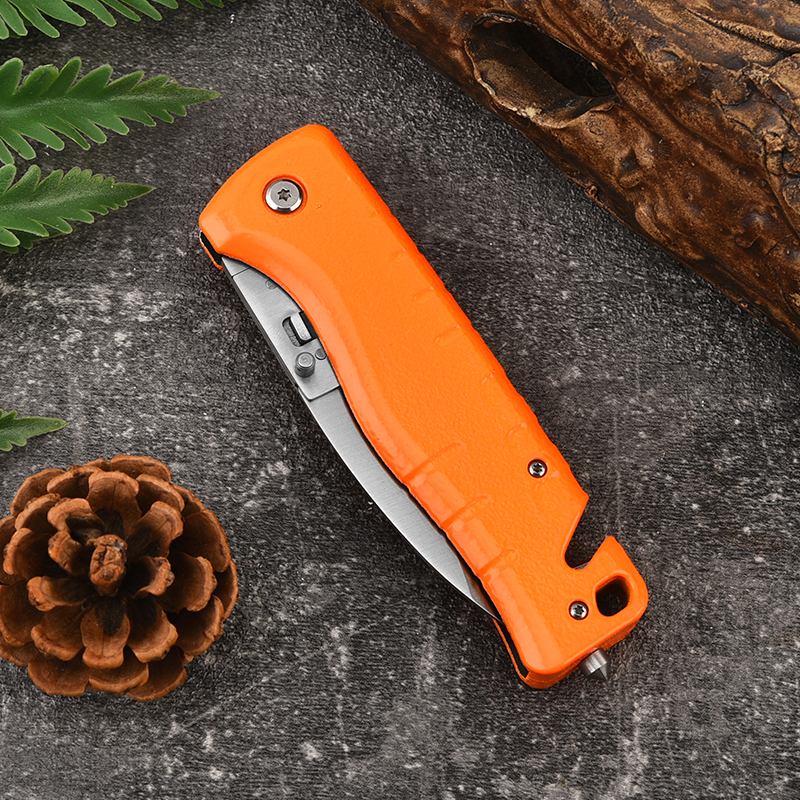
Choose a manageable design with a comfortable handle, secure sheath, and clear care instructions. There is no universal winner; dimensions and intended use matter more than dramatic styling.
No. Traditional Bowies are commonly fixed blades, but Bowie-inspired clip-point designs also appear in folding knives. The blade profile alone does not establish construction or performance.
Not automatically. Compare the particular grades, heat treatment, geometry, and maintenance requirements. Neither category guarantees the best balance for every application.
No. Tang dimensions, transitions, material condition, assembly, and loading all matter. A full-tang label should never justify unlimited abuse.
Do not assume so. Use tools within their intended limits. Heavy splitting and prying can impose loads that a knife was not designed to withstand.
No. Check current official rules for the destination and circumstances, including blade type, opening mechanism, concealment, and restricted locations. Ownership, transport, and public carry may be treated differently.
Prepare an application brief, target dimensions, material preferences, branding requirements, quantity estimate, and inspection expectations. Confirm technical feasibility and commercial terms before approving production.
1. [Blade HQ — "Must-Have Bowie Knives for Your Collection"]. Original editorial reference for the product categories, collection examples, and uncertainty surrounding the original Bowie design. Its historical prices and broad performance claims were not adopted as current facts. [bladehq]
2. [Buck Knives — "119 Special Knife"]. Official product reference for the Buck 119 Special; configuration-specific details should be checked before purchase. [buckknives]
3. [KA-BAR — "USMC, Straight Edge," Item 1217]. Official source for dimensions, materials, hardness, and the owner comments discussed above. Reviews are individual experiences, not controlled comparative test results. [kabar]
4. [Larrin Thomas, Knife Steel Nerds — "Knife Steels Rated by a Metallurgist: Toughness, Edge Retention, and Corrosion Resistance"]. Technical basis for steel-property trade-offs, edge geometry, heat treatment, and corrosion-resistance distinctions. [knifesteelnerds]
5. [Larrin Thomas, Knife Steel Nerds — "All About D2 Steel: Development, Use in Knives, and Properties"]. Supporting discussion of D2 carbide structure, wear resistance, toughness, and corrosion limitations. [knifesteelnerds]


