


Views: 220 Author: Holin Knife Publish Time: 2026-09-22 Origin: Site


Content Menu
● Quick Answer: Wood for Emotion, G10 for Performance
● Why Handle Material Influences Buying Decisions
● Wooden Handle Pocket Knives: Why Customers Still Love Them
>> A Natural Look That Creates Emotional Value
>> Better for Traditional and Gift-Oriented Markets
>> The In-Hand Feeling Is Hard to Replicate
>> Limitations Buyers Should Understand
● G10 Handle Pocket Knives: Why They Lead in Rugged Use
>> Strong Grip Is a Major Selling Point
>> Built for Moisture and Daily Wear
● Customer Segment Comparison: Who Prefers Which?
● Expert Design Insight: The Material Alone Is Not Enough
● Practical Sourcing Checklist for Buyers
>> Choose Wooden Handles When You Need:
>> Choose G10 Handles When You Need:
>> Consider a Hybrid Product Range When You Need:
● Maintenance Advice That Improves Customer Satisfaction
>> Caring for a Wooden Handle Pocket Knife
>> Caring for a G10 Handle Pocket Knife
● Which Handle Should Your Brand Choose?
● FAQ
>> 1. Is G10 better than wood for a pocket knife handle?
>> 2. Are wooden handle pocket knives durable?
>> 3. Does G10 make a pocket knife heavy?
>> 4. Can G10 handles be customized for private-label knives?
>> 5. What is the best wooden handle material for a folding knife?
>> 6. Which handle is better for outdoor knives?
>> 7. Are wood handle knives suitable for corporate gifts?
A pocket knife with a wooden handle and a G10 handle pocket knife can both be compelling products, but they attract customers for very different reasons. Wood wins through warmth, natural beauty, and traditional character; G10 wins through dependable grip, weather resistance, and low-maintenance everyday performance.
For buyers, the better choice depends on how they intend to use the knife. For brands, wholesalers, and importers, the smarter choice depends on the target market, price positioning, sales channel, customization requirements, and expected working environment. At Yangjiang Holin Industrial Co., Ltd., this distinction is central to product development: a handle is not merely decorative—it shapes perceived value, user confidence, product durability, and repeat-purchase potential.

If the question is, "Which handle material appeals to more customers?" the answer is not absolute.
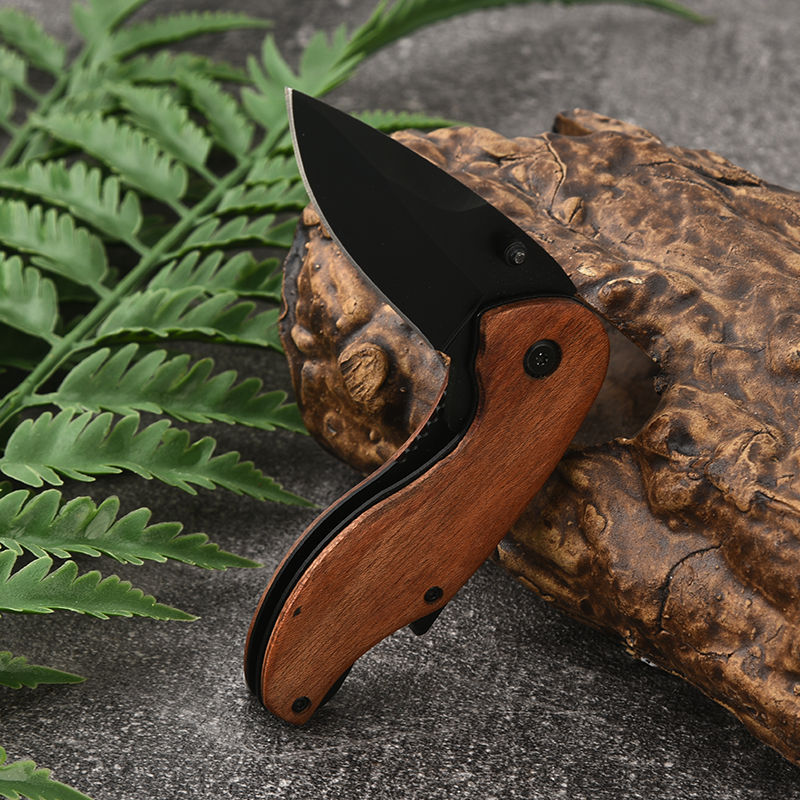
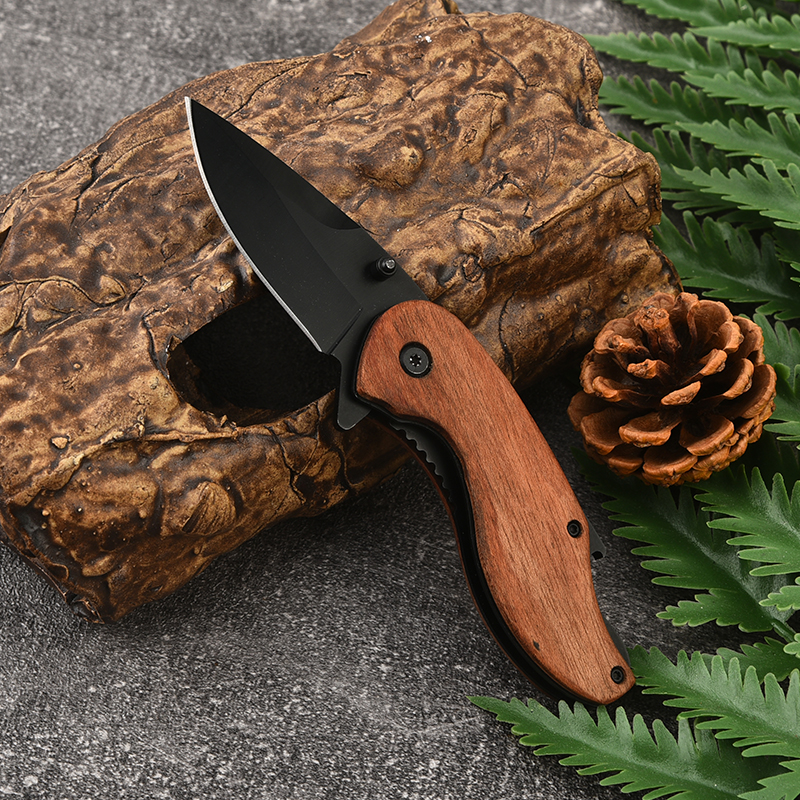
A wooden handle pocket knife often appeals more strongly to buyers who value craftsmanship, giftability, heritage styling, and a warm in-hand feel. It is especially suitable for gentleman's folding knives, traditional hunting knives, collector pieces, promotional gifts, and lifestyle-oriented EDC products.
A G10 handle pocket knife usually appeals more strongly to users who prioritize grip, durability, moisture resistance, tactical styling, outdoor use, and everyday reliability. It is a practical choice for camping knives, work knives, rescue-inspired folders, utility knives, and modern EDC collections.
The best commercial strategy is often not choosing one material over the other. It is creating a focused product range that gives different customer segments a clear reason to buy.
| Comparison Factor | Pocket Knife with Wooden Handle | G10 Handle Pocket Knife |
|---|---|---|
| First impression | Natural, premium, traditional | Modern, rugged, performance-driven |
| Grip in dry use | Comfortable and smooth | Secure, especially with texture |
| Grip in wet use | Can become less secure depending on finish | Usually more reliable when textured |
| Moisture resistance | Varies by wood species and treatment | Very high |
| Maintenance needs | Moderate | Low |
| Design character | Organic and unique | Technical and customizable |
| Best market position | Gift, heritage, lifestyle, collector | Outdoor, tactical, work, EDC |
| Customization appeal | Wood grain, stains, laser engraving | Colors, layers, CNC texture, contours |
| Perceived personality | Warm and refined | Durable and capable |
| Typical buyer motivation | "I like how it looks and feels." | "I need it to work in any condition." |
Many buyers begin by comparing blade steel, blade length, locking mechanism, and opening style. Yet after a pocket knife reaches the hand, the handle becomes the most immediate part of the ownership experience.
The handle affects:
- Comfort during cutting tasks
- Confidence when hands are wet, dirty, or gloved
- The knife's visual identity
- How premium the product feels
- Ease of cleaning and care
- Whether a customer views the knife as a tool, a gift, or a collectible
- The likelihood of a positive review or repeat order
For a manufacturer, this creates an important product-development principle: blade specifications may attract attention, but handle material frequently determines the emotional connection.
A buyer may describe a wooden handle knife as "beautiful," "classic," "warm," or "gift-worthy." The same buyer may describe a G10 folder as "solid," "grippy," "tough," or "ready for outdoor use." Those words reveal two distinctly different customer expectations.
A pocket knife with wooden handle has lasting appeal because every piece of wood has its own grain, color variation, and visual depth. Even when two knives use the same handle shape and blade design, wood can give each unit a more individual appearance.
Wood communicates authenticity. It connects a modern folding knife to classic hunting knives, outdoor traditions, workshop tools, and family heirlooms.
Common handle options include:
- Olive wood, valued for its distinctive grain and warm tone
- Rosewood, often selected for darker, more refined appearance
- Walnut wood, appreciated for its classic brown color
- Beechwood, suitable for clean, affordable traditional designs
- Pakawood, a wood-based engineered material often chosen for better consistency
- Stabilized wood, used when brands want natural beauty with improved durability
For gift retailers and premium promotional buyers, the appearance of wood can be more important than maximum technical performance. A well-finished wooden handle can make a compact folding knife look significantly more expensive than its production cost suggests.
Wooden handle knives are highly suitable for customers who want products with a story. This may include:
- Outdoor and camping gift shops
- Hunting and fishing retailers
- Souvenir and tourism brands
- Corporate gift suppliers
- Heritage-style EDC brands
- Knife collectors
- Lifestyle retailers
- Private-label brands targeting mature buyers
A wooden handle is also highly compatible with personalization. Laser engraving can add names, logos, dates, short messages, or brand marks. This makes it especially useful for anniversary gifts, dealer programs, employee recognition, and branded merchandise.
Many users prefer wood because it feels less industrial than metal, FRN, or glass-filled nylon. It often feels warmer in cold weather and smoother against the palm during light-duty use.
That said, a smooth handle is not always an advantage. For high-output cutting, wet environments, or gloved use, a highly polished wooden surface may offer less traction than a deeply machined G10 handle.
Wood is a natural material. Its quality depends on species, drying process, stabilization, finishing method, thickness, and the environment in which the knife will be used.
Potential concerns include:
- Moisture absorption if untreated or poorly finished
- Expansion and contraction under changing humidity
- Surface scratches from hard daily use
- Possible cracking if exposed to extreme dryness, impact, or long-term neglect
- Variation in grain and color, which can be attractive but may reduce visual uniformity across a large order
These factors do not make wood a poor choice. They simply mean wood should be positioned correctly. It is excellent for refined EDC, light outdoor use, gifts, and heritage-inspired folders. It is less ideal for a knife expected to face repeated immersion, mud, chemicals, or hard industrial work.
G10 is a high-pressure laminate made by combining fiberglass cloth with epoxy resin. The material is compressed and cured to create a rigid, durable composite. It is widely used in knife handles because it offers a practical balance of strength, weight, grip, and resistance to environmental exposure.
A G10 handle pocket knife is designed to feel capable. It tells customers that the knife can handle daily carry, outdoor tasks, wet conditions, and repeated use without requiring much attention.
G10 can be CNC-machined with a wide range of textures, including:
- Fine checkering
- Crosshatch patterns
- Diamond textures
- Contoured grooves
- Peel-ply texture
- Geometric milling
- Finger relief areas
- Raised traction zones
This manufacturing flexibility gives brands a major advantage. The same base knife can be converted into a very different product simply by changing scale color, contour, surface finish, or texture pattern.
Textured G10 can help users maintain control when hands are wet, sweaty, dusty, or gloved. This is particularly valuable for outdoor, utility, rescue, tactical, and work-oriented knife categories.
Unlike untreated natural wood, G10 is non-porous and highly resistant to moisture. It does not normally swell or soften when exposed to humidity, rain, sweat, or water. Its performance consistency makes it attractive for outdoor enthusiasts, fishermen, campers, and users who carry a knife every day.
For importers, this also simplifies customer-service expectations. A G10 handle usually requires less maintenance education than a natural wood handle. Buyers can clean it quickly and return it to use without worrying about oiling or preserving a wood finish.
G10 does not need to look plain. It can be produced in solid colors, layered colors, and multi-tone patterns. Black G10 remains a popular choice for rugged tools, while olive green, desert tan, red, blue, orange, and gray support different brand identities.
For example:
- Black G10 supports a tactical or professional appearance.
- Orange G10 improves visibility for outdoor and hunting use.
- Green or tan G10 works well for camping and field-oriented ranges.
- Blue, red, or layered G10 can create a more lifestyle-driven EDC product.
- Custom CNC patterns can become an identifiable brand signature.
This ability to create consistent color and texture across bulk orders is one reason G10 is attractive for private-label knife programs.
G10 is highly functional, but it does not appeal to every customer.
Some buyers may feel that it is:
- Too tactical or utilitarian
- Less elegant than natural wood
- Rough on pockets if the texture is overly aggressive
- Less suitable for formal gifting
- More common, which can reduce a sense of exclusivity
The solution is not to avoid G10. Instead, brands should match texture intensity with intended use. An aggressive outdoor folder may need deep traction. A slim office EDC knife may benefit from smoother contouring or refined milling that protects clothing and improves pocket comfort.
The strongest product decisions begin with the end customer rather than the handle material alone.
| Customer Type | More Likely Preference | Why |
|---|---|---|
| Traditional knife collector | Wooden handle | Appreciates grain, heritage, and individuality |
| Gift buyer | Wooden handle | Looks warmer, more premium, and easier to personalize |
| Urban EDC user | Depends on style | Wood for refined carry; G10 for practical daily use |
| Camper or hiker | G10 handle | Better moisture resistance and secure grip |
| Fisherman | G10 handle | Handles wet conditions more reliably |
| Hunter | Both | Wood for classic hunting aesthetics; G10 for hard field use |
| Tactical or rescue user | G10 handle | Grip, durability, and functional visual identity |
| Corporate merchandise buyer | Wooden handle | Strong engraving and presentation value |
| Tool distributor | G10 handle | Easier low-maintenance positioning for work applications |
| Boutique lifestyle retailer | Wooden handle | Supports premium storytelling and visual differentiation |
The key lesson is simple: wood sells identity, while G10 sells assurance.
From a manufacturing perspective, customer satisfaction depends on more than whether a knife uses wood or G10. Handle construction, machining quality, ergonomic shape, liner design, fastener placement, edge finishing, and quality control all affect the final user experience.
A poorly contoured G10 handle may feel harsh despite using an advanced material. A well-designed wooden handle with stable construction can feel exceptionally comfortable and refined.
When developing OEM or ODM pocket knives, buyers should assess these points:
1. Handle thickness: A slim handle improves pocket carry, while a fuller handle improves prolonged grip.
2. Edge finishing: Rounded edges prevent hot spots and make the knife more comfortable.
3. Texture placement: Grip should be focused where the thumb and fingers naturally contact the handle.
4. Fastener design: Screws should sit flush and not create discomfort.
5. Liner or frame support: Proper internal construction helps maintain rigidity.
6. Pocket clip compatibility: Clip placement should not interfere with grip or pocket access.
7. Surface consistency: Wood finishing and G10 machining should remain stable across mass production.
This is where a manufacturer with in-house research, development, and factory production becomes valuable. The goal is not merely to source a standard knife. The goal is to develop a product that fits a market position and performs consistently at scale.
Before selecting a wooden handle or G10 handle for a custom pocket knife project, buyers should answer the following questions.
- A classic or premium visual style
- A gift-friendly product
- Laser engraving opportunities
- A natural, warm, handcrafted impression
- A traditional hunting or gentleman's knife concept
- Product differentiation through grain variation
- A higher perceived emotional value
- Strong traction in wet or demanding conditions
- A rugged outdoor, work, tactical, or EDC direction
- Low-maintenance ownership
- Consistent bulk-order appearance
- Color customization and CNC texture options
- High resistance to moisture and daily wear
- A reliable handle for demanding end users
- Broader retailer coverage
- Multiple price tiers
- Different consumer personas under one brand
- Both gift and performance products
- Seasonal product launches
- A stronger catalog for distributors
For example, a brand can use one folding-knife platform with the same blade, lock, clip, and packaging—but introduce a walnut version for gifts and a textured G10 version for outdoor customers. This approach reduces development complexity while expanding audience appeal.
Product instructions can reduce returns and improve reviews. The right maintenance guidance also protects a brand's reputation.
- Wipe the handle dry after exposure to moisture.
- Avoid soaking the knife or placing it in a dishwasher.
- Keep it away from extreme heat and prolonged direct sunlight.
- Use a suitable wood conditioner occasionally if recommended for the specific finish.
- Store the knife in a dry environment.
- Do not use strong chemicals that may damage the protective finish.
- Wipe dirt, oils, and debris away with a damp cloth.
- Use mild soap for deeper cleaning.
- Dry the knife after cleaning, especially around pivots and liners.
- Use a soft brush to clean deeply textured areas.
- Avoid unnecessary abrasive sanding, which may alter the original texture.
- Maintain the blade pivot and locking mechanism according to the product instructions.
A pocket knife with a wooden handle is often the better choice when your brand story centers on craftsmanship, heritage, gifting, natural materials, or refined everyday carry. It can elevate visual appeal and help a product stand out in gift, collector, and lifestyle markets.
A G10 handle pocket knife is often the better choice when the product must communicate durability, secure handling, outdoor readiness, and low-maintenance ownership. It is particularly effective for practical EDC, camping, fishing, rescue, and work-oriented knife lines.
For most commercial buyers, the winning answer is strategic segmentation:
- Use wood to create warmth, distinction, and premium gift value.
- Use G10 to create performance confidence, modern styling, and all-weather utility.
- Use both materials when building a complete catalog for different retail channels and customer profiles.
At Yangjiang Holin Industrial Co., Ltd., we support knife brands, importers, wholesalers, and project buyers with OEM/ODM folding knives, pocket knives, utility knives, outdoor tools, and customized knife solutions. From handle material selection and ergonomic development to logo application, packaging, product design, sampling, and stable bulk manufacturing, our team can help turn a product concept into a market-ready knife program.
Contact our team to discuss your wooden handle pocket knife or G10 handle pocket knife project, request a customized quotation, and develop a product range that matches your market, brand positioning, and volume requirements.
G10 is generally better for wet, rugged, and low-maintenance use because it resists moisture and can be textured for stronger grip. Wood is better for buyers who value a natural appearance, traditional style, and premium gift appeal.
Yes, a well-made wooden handle pocket knife can be durable, especially when it uses properly dried, stabilized, or engineered wood and is assembled with sound construction. However, wood requires more care than G10 in wet or highly demanding environments.
No. G10 is widely valued for combining strength with relatively low weight. Actual knife weight also depends on blade steel, liners, handle thickness, hardware, and overall dimensions.
Yes. G10 can be customized through color selection, layered patterns, CNC machining, contouring, texture design, handle thickness, logo application, and matching packaging. This makes it suitable for OEM and ODM knife projects.
The best option depends on the desired look, cost target, and use environment. Stabilized wood and engineered wood materials such as Pakawood can offer more consistent performance, while natural woods such as olive wood, walnut, and rosewood provide distinctive visual character.
For frequent outdoor exposure to rain, sweat, dirt, and changing weather, G10 is usually the more practical option. Its resistance to moisture and ability to support textured grip patterns make it well suited to demanding outdoor use.
Yes. Wooden handle knives are highly suitable for corporate gifts because they look refined and can often be laser engraved with a company logo, recipient name, event date, or commemorative message.
1. [Colonel Blades: G10 Material—History, Composition, and Applications in Knife Making]
2. [American Knife & Tool Institute: White River Knife & Tool Handle Materials]
3. [Ruike Knives: G10 Knife Guide—Why This Material Excels in Performance]
4. [Leucadia Blade Co.: G10 for Knife Handles—The Perfect Match]
5. [Dauntless Manufacturing: Micarta vs G10—Choosing the Best Knife Handle Material]
6. [ABKT: Knife Handle Materials—Micarta, G10, Bone and Wood Compared]
7. [Montana Knife Company: G10 Handles vs. Micarta, Wood, and More]


