


Views: 215 Author: Holin Knife Publish Time: 2026-10-20 Origin: Site


Content Menu
● Premium EDC Knife vs Budget EDC Knife at a Glance
● Blade Steel: What Does Paying More Actually Change?
>> Edge Retention, Toughness, and Corrosion Resistance
>> A Practical Example: 14C28N and CPM S35VN
● Blade Geometry: Why a Budget Pocket Knife Can Cut Better
● Heat Treatment and Manufacturing Consistency
● Handles, Locks, and Everyday Carry Comfort
>> Handle Material Is Only Part of Ergonomics
>> Evaluate Lock Execution, Not Just Lock Names
● Maintenance, Sharpening, and After-Sales Support
● A Five-Step Sample Comparison for Serious Buyers
>> 1. Define the Intended Work
>> 2. Record the Starting Specification
>> 3. Control the Cutting Comparison
● Total Ownership Cost: A Better Way to Judge Value
● OEM/ODM Strategy: Building Budget and Premium Knife Ranges
● Choose the Knife That Earns Its Price
>> 1. Is a Premium EDC Knife Worth the Money?
>> 2. Can a Budget EDC Knife Be Reliable?
>> 3. Does Premium Steel Always Stay Sharp Longer?
>> 4. Which EDC Knife Is Better for Beginners?
>> 5. Should Brands Offer Both Premium and Budget Knives?
>> 6. What Should Buyers Request Before a Bulk Order?
A premium EDC knife can offer advanced blade steel, refined construction, and valuable after-sales support. A budget EDC knife can handle routine cutting effectively without a large investment. When comparing a premium EDC knife vs budget EDC knife, the real question is not which costs more. It is which delivers the right performance for your tasks.
My starting point is simple: value comes from useful performance, not specifications alone. Blade geometry, heat treatment, comfortable handling, and consistent assembly deserve attention before decorative upgrades.
For individual users, this means buying a knife that fits daily life. For brands and distributors, it means developing a product whose manufacturing cost supports a clear customer benefit.
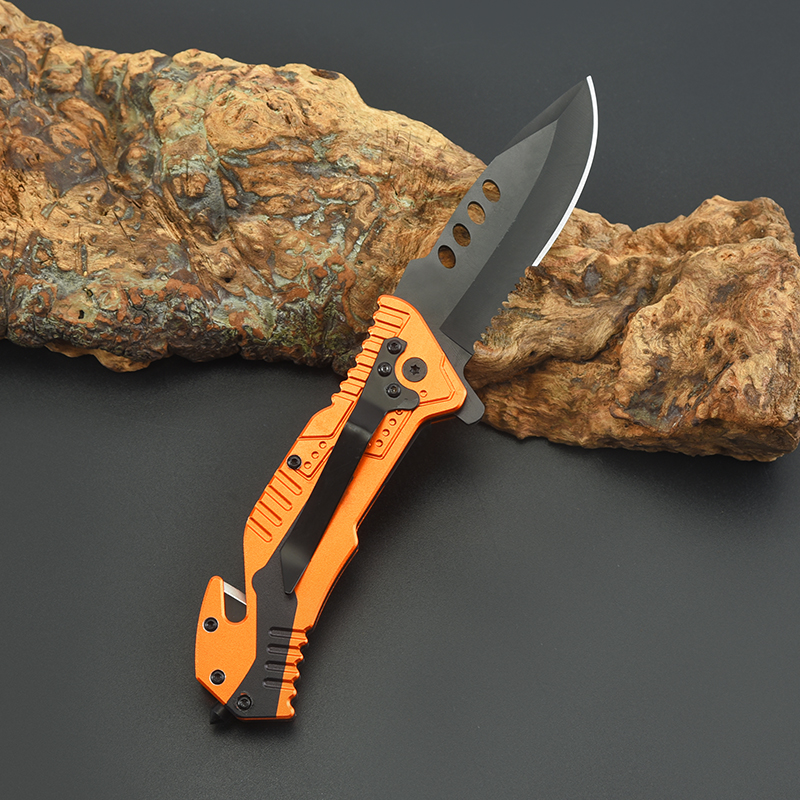
"Premium" and "budget" are commercial categories, not standardized performance grades. Prices vary by market, materials, manufacturing location, distribution, and brand positioning.
The comparison below describes possible product priorities—not guarantees about every knife.
| Comparison factor | Budget EDC knife | Premium EDC knife |
|---|---|---|
| Main objective | Accessible everyday utility | Specialized performance or refined ownership |
| Blade steel | Often selected for cost and practical maintenance | May prioritize wear resistance or specific property combinations |
| Cutting ability | Can be excellent with appropriate geometry | Still depends on geometry and sharpening |
| Handle construction | Often simpler materials and machining | May include titanium, composites, or detailed machining |
| Fit and finish | Functional execution should remain essential | Greater refinement may justify additional cost |
| Maintenance | Depends on steel, mechanism, and design | Advanced materials do not eliminate maintenance |
| Replacement risk | Lower financial exposure | More expensive to lose or damage |
| Best purchasing test | Does it perform reliably? | Do its upgrades solve a meaningful problem? |
Neither category should compromise basic functionality to reach a price point.
Blade steel involves competing priorities:
- Edge retention describes how well a blade maintains cutting performance.
- Toughness describes resistance to fracture, including edge chipping.
- Corrosion resistance describes resistance to chemical attack and rust.
Higher wear resistance does not automatically mean greater toughness. Metallurgical research shows that carbide type, quantity, and size influence these trade-offs.
For frequent abrasive cutting, increased wear resistance may be valuable. For users concerned about accidental edge damage, a tougher steel may provide a better balance.
Avoid treating a steel name as a complete performance report. Hardness, heat treatment, geometry, and sharpening also influence the finished knife.
Alleima recommends 14C28N for applications including pocket knives, with a published hardness range of 55–62 HRC. That broad range illustrates how manufacturers can tune one steel for different requirements.
Crucible developed CPM S35VN to improve toughness over CPM S30V while retaining strong wear resistance. Its technical documentation describes advantages from its carbide composition and powder-metallurgy processing.
These examples explain material choices, not an automatic ranking of finished knives. A well-executed 14C28N blade can be more suitable for a particular user than an expensive blade with unsuitable geometry.
For procurement, request the exact steel designation, intended hardness range, and supporting material documentation.
A useful distinction is sharpness versus cutting ability.
Sharpness concerns the apex—the very tip of the cutting edge. Cutting ability also depends on how easily the rest of the blade moves through material.
Important variables include:
- Thickness immediately behind the edge.
- Edge angle.
- Blade grind.
- Overall blade thickness.
- The material being cut.
A thin, carefully sharpened budget pocket knife may slice packaging more easily than a premium knife with a thick, obtuse edge.
However, thinner geometry is not automatically better for every application. Increasing edge thickness or angle can improve resistance to damage while reducing slicing efficiency.
My recommendation is to define the task first. Packaging, cord, and light utility work do not necessarily require the same geometry.
No folding knife should be evaluated as a substitute for a pry bar.
Premium steel cannot compensate for unsuitable heat treatment.
Alleima's technical guidance for 14C28N specifies cooling requirements and warns that inappropriate tempering conditions can reduce corrosion resistance and cause brittleness. This makes heat treatment a practical purchasing issue, not merely factory terminology.
For an OEM or ODM project, buyers should agree on:
1. Steel grade and traceability expectations.
2. Target hardness and permitted variation.
3. Hardness-testing method and sampling plan.
4. Blade geometry and dimensional tolerances.
5. Inspection records required before shipment.
Hardness is useful evidence, but it does not prove every performance characteristic.
The manufacturing question is whether production knives consistently match the approved specification—not whether one presentation sample looks impressive.
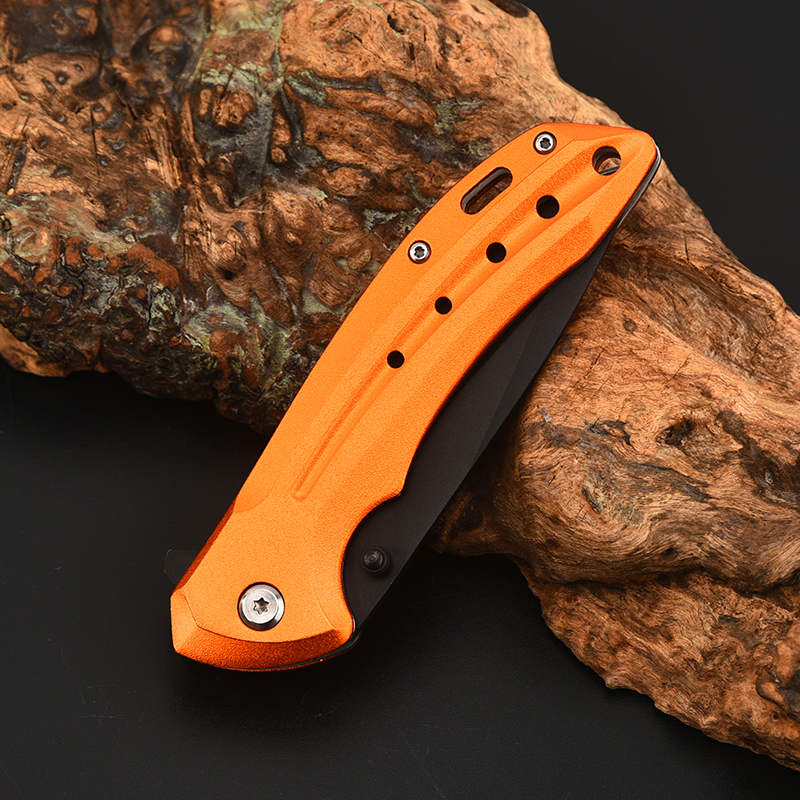
Premium knives may feature expensive materials or complex machining. Those upgrades can improve appearance and tactile refinement, but they do not guarantee comfort.
Evaluate the complete handle:
- Does the shape fit different hand positions?
- Does the pocket clip create pressure during cutting?
- Is the surface secure without being unnecessarily abrasive?
- Can the user reach the opening and closing controls comfortably?
- Does the knife carry conveniently in the intended clothing?
For a daily tool, an uncomplicated handle that fits well may be preferable to a visually elaborate design.
A lock's category does not establish the reliability of an individual knife.
Assembly, engagement, component dimensions, wear, and manufacturing tolerances all deserve evaluation. A higher selling price is not a substitute for inspection.
During sample review, check controlled opening and closing, secure engagement, unintended contact, and abnormal movement. Never place fingers in the blade path during checks.
Potential lock defects require qualified assessment. Buyers should not improvise hazardous impact tests to create convincing demonstration videos.
A premium EDC knife may reduce sharpening frequency if its steel and geometry suit the application. It will not remain sharp indefinitely.
Sharpening difficulty also depends on the steel's wear resistance, edge condition, abrasive selection, and the amount of material being removed.
Before purchasing, consider:
- Available sharpening equipment and skill.
- Cleaning access around the pivot.
- Manufacturer-approved maintenance instructions.
- Replacement components.
- Warranty exclusions and service shipping arrangements.
After-sales support can contribute genuine value. For example, Benchmade advertises lifetime sharpening through its LifeSharp program, alongside cleaning, oiling, and adjustment.
That is a specific company service, not a benefit automatically included with every premium knife. Compare written policies rather than assuming that a high price includes lifetime maintenance.
This proposed workflow helps individuals and sourcing teams compare knives consistently. It is an editorial evaluation framework, not a certification standard or a report of completed testing.
List the materials users actually cut, the operating environment, maintenance expectations, and carrying constraints.
Separate ordinary utility needs from enthusiast preferences.
Document steel, hardness information, blade dimensions, edge condition, weight, mechanism, and handle construction.
Photograph each sample before testing.
Use the same material batch and repeatable cutting technique. Record starting sharpness and geometry differences rather than attributing every result to steel.
A factory-edge comparison evaluates the delivered product. A comparison with matched sharpening conditions answers a different question. Do not mix the two.
Check grip comfort, clip pressure, accessibility, cleaning requirements, and controlled operation.
Record observations from multiple intended users where practical. One person's preferred handle may not suit an entire customer group.
Look for changes in cutting performance, visible edge damage, operating consistency, and component condition.
For bulk procurement, extend evaluation beyond one sample. Agree on pilot-run and shipment inspection requirements before ordering.
Purchase price alone can mislead.
Consider acquisition cost, maintenance, consumables, service shipping, replacement risk, and any measurable disruption caused by an unsuitable tool.
In a hypothetical comparison, a $40 knife replaced once costs $80 in purchases. A $160 knife retained throughout the same period still costs $160 before maintenance or service expenses.
The premium knife does not become cheaper simply because it lasts longer. It must provide enough additional utility, convenience, or enjoyment to justify the difference.
For business buyers, also examine packaging, inspections, freight, duties, returns, and spare-parts support.
Avoid claims that premium knives "always save money." The outcome depends on actual use and documented costs.
For private-label brands, the strongest product strategy is not simply adding a more expensive steel.
Start with a customer segment and define the improvement that segment will recognize.
| Development decision | Budget-focused approach | Premium-focused approach |
|---|---|---|
| Blade design | Prioritize useful geometry and repeatability | Add task-specific material performance |
| Handle | Simplify construction without sacrificing usability | Refine ergonomics, machining, and finish |
| Quality plan | Establish clear functional acceptance criteria | Add tighter specifications where justified |
| Packaging | Protect the product efficiently | Improve presentation and instructions |
| Service | Define realistic support commitments | Develop differentiated support where feasible |
A shared design platform may support multiple tiers, but material or component changes still require validation.
Yangjiang Holin Industrial Co., Ltd. manufactures folding knives, pocket knives, utility knives, and outdoor tools. With its in-house development team and production factory, the company supports OEM/ODM projects from design and development through bulk production.
For a productive inquiry, provide:
- Target market and customer profile.
- Expected retail positioning and purchasing budget.
- Preferred dimensions, materials, and mechanism.
- Branding and packaging requirements.
- Order quantity and delivery expectations.
- Required documentation and sample acceptance criteria.
Confirm technical feasibility, commercial terms, and destination-market requirements before finalizing specifications.
A budget EDC knife makes sense when it delivers dependable utility at an accessible cost. A premium EDC knife earns its position when its additional performance, refinement, or support matters to the customer.
For your next private-label range, send Yangjiang Holin Industrial Co., Ltd. your target market, product brief, expected quantity, and purchasing budget. Request a specification-led OEM/ODM discussion and sample evaluation before moving to bulk production.
Yes, when its improvements match your needs. Better-suited materials, refined handling, or documented service support can justify the cost. Decorative upgrades alone may not improve cutting performance.
Yes. Reliability depends on design, materials, manufacturing, inspection, and appropriate use—not price alone. Evaluate the actual product and supplier rather than assuming every affordable knife performs identically.
No. Heat treatment, hardness, geometry, sharpening, and cutting material affect edge retention. A steel comparison without those details cannot reliably predict every finished knife's performance.
An affordable, well-made knife with manageable maintenance requirements is a sensible starting point. Prioritize comfortable operation, clear instructions, practical geometry, and suitability for the intended tasks.
Potentially. Separate tiers can serve different customers, but each needs a clear purpose. Explain measurable differences and avoid making the budget model feel deliberately compromised.
Request approved drawings, material specifications, agreed tolerances, representative samples, and an inspection plan. Clarify packaging, lead times, warranty responsibilities, and applicable market requirements before authorizing production.
1. [Larrin Thomas, Knife Steel Nerds — "Knife Steels Rated by a Metallurgist: Toughness, Edge Retention, and Corrosion Resistance"]. Published October 19, 2021. Technical basis for the discussion of steel-property trade-offs, carbides, hardness, toughness, and edge retention. [knifesteelnerds]
2. [Alleima — "Alleima® 14C28N Knife Steel"]. Manufacturer information supporting the recommended 55–62 HRC range and suitability for pocket, hunting, and fishing knives. [alleima]
3. [Alleima — "Alleima® 14C28N Strip Steel: Material Datasheet"]. Technical guidance supporting the discussion of heat treatment, cooling requirements, brittleness, and corrosion resistance. [alleima]
4. [Crucible Industries — "CPM S35VN" Technical Datasheet, hosted by ESEE Knives]. Primary technical documentation describing CPM S35VN's design objectives, carbide composition, toughness comparison with CPM S30V, and heat-treatment guidance. [eseeknives]
5. [Larrin Thomas, Knife Steel Nerds — "What Is Edge Stability?"]. Published August 27, 2018. Supports the distinction between apex sharpness, edge angle, thickness behind the edge, and cutting ability. [knifesteelnerds]
6. [Larrin Thomas, Knife Steel Nerds — "How to Design Knives That Do Not Fail"]. Published August 5, 2019. Supports the discussion of geometry, chipping, rolling, and application-specific design compromises. [knifesteelnerds]
7. [Benchmade — "LifeSharp: Free Knife Sharpening for Life"]. Official service information supporting the example of lifetime sharpening, cleaning, oiling, and adjustment. Service conditions should be checked before purchase or shipment. [benchmade]


