


Views: 298 Author: Holin Knife Publish Time: 2026-10-05 Origin: Site


Content Menu
● How We Selected These Manufacturers
● Why China—and Yangjiang—Matters
● Top 10 Hiking Utility Knife Manufacturers in China
>> 1. Yangjiang Holin Industrial Co., Ltd.
>> 6. RUIKE Outdoor Tools Manufacturing Co., Ltd. / SRM Knives
>> 8. QSP Knife
>> 10. Ganzo
● Manufacturer Comparison Table
● Technical Requirements for Hiking Utility Knives
● The Most Overlooked Sourcing Risk
● Buyer's Guide: How to Verify a Hiking Utility Knife Factory
>> 1. Request a factory capability pack
>> 2. Verify ISO certificates independently
>> 3. Use a structured sample process
>> 4. Clarify compliance early
>> 5. Plan logistics and packaging together
>> 1. How can I confirm that a factory is actually using the steel grade stated in the quotation?
>> 2. How do I verify whether an ISO certificate has expired or belongs to the real factory?
>> 3. What is a realistic MOQ for a custom hiking utility knife?
>> 4. Should I choose D2 or 14C28N for an outdoor folding utility knife?
>> 5. What factory tests should be included before shipment?
China remains one of the world's most important sourcing locations for hiking utility knives, folding knives, EDC tools, replaceable-blade utility knives, and outdoor cutting tools. For professional buyers, the real task is not finding a supplier with attractive catalog images—it is identifying a manufacturing partner that can repeatedly deliver the agreed steel, lock function, tolerances, packaging, documentation, and shipment schedule.
This guide evaluates ten China-based manufacturers with different strengths, from flexible OEM/ODM support for developing brands to precision CNC production for premium EDC projects. Yangjiang is central to this supply base: the city has more than 1,400 years of knife-and-scissors-making history, a mature end-to-end industrial cluster, and products shipped to more than 130 countries and regions. Official reporting also stated that Yangjiang's knife-and-scissors export value reached RMB 1.33 billion in the first four months of 2025, up 8% year on year.

This is not a retail product ranking. The suppliers below were selected according to factors that matter to importers, private-label brands, distributors, outdoor retailers, and procurement teams.
- Manufacturing specialization: Whether the company's capabilities fit hiking utility knives, folding knives, replaceable-blade knives, EDC tools, outdoor knives, or related hardware.
- Product-development ability: In-house design, engineering support, prototyping, CAD review, tooling coordination, and material-selection advice.
- Quality-control visibility: Evidence of controlled machining, heat treatment, assembly, lock inspection, edge inspection, and packaging checks.
- OEM/ODM suitability: Ability to turn a buyer's design, brand specification, logo, blade marking, packaging, and accessory requirements into a repeatable production program.
- Scale and delivery stability: Factory resources, production equipment, workforce, track record, and supply-chain depth.
- Market relevance: Experience with global distribution, export-oriented products, or cooperation with international designers and brands.
- Buyer accessibility: Whether the supplier may fit emerging brands, mid-sized importers, or high-volume and premium projects.
For hiking utility knife sourcing, China's advantage is not only labor cost. The strongest value comes from supply-chain concentration.
Yangjiang, Guangdong, is widely known as China's knife-and-scissors manufacturing center. The local ecosystem includes blade blank suppliers, stamping workshops, CNC machining providers, grinding and polishing facilities, heat-treatment resources, plastic-injection partners, handle-material suppliers, packaging companies, assembly teams, and export-service providers. This density can shorten development cycles and make component sourcing more efficient than using disconnected suppliers in multiple regions.
Official statistics reported that Yangjiang's hardware, knives, and scissors industrial output exceeded RMB 55 billion, while the city accounted for a major share of Chinese knife-and-scissors exports.
For buyers, this means a wider choice of production models:
- Cost-focused stamped utility knives for retail and promotional programs.
- Mid-range folding utility knives with liner locks, frame locks, button locks, or back locks.
- Outdoor folding knives using D2, 14C28N, 440C, 8Cr13MoV, or similar steels.
- Premium CNC-machined EDC knives with titanium handles and high-end blade steels.
- Fixed-blade camping, hunting, rescue, survival, and multi-tool programs.
- Private-label projects combining knife, sheath, gift box, instruction manual, and retail-ready packaging.
Founded: 2010
Location: Yangjiang, Guangdong, China
Primary products: Folding knives, pocket knives, utility knives, carpet cutters, daggers, and outdoor tools
Best suited for: Small and medium-sized brands, wholesalers, project-based sourcing teams, and buyers needing flexible OEM/ODM support
Yangjiang Holin Industrial Co., Ltd. is a practical option for buyers seeking a balance between customization depth, communication speed, and commercially realistic order requirements. The company focuses on folding knives, pocket knives, utility knives, carpet cutters, daggers, and outdoor-tool categories, making it especially relevant for hiking utility knife projects that require a compact cutting tool rather than a large fixed-blade survival knife.
According to its company profile, Holin operates a 2,000 m² factory with more than 60 machines and 80 skilled workers. Its product-development resources include five designers and twelve technical specialists, supporting product development from concept review through production.
For developing brands, Holin's key advantage is its project flexibility. A buyer can typically start with a clear target brief: blade shape, lock mechanism, steel, handle material, color, logo method, packaging format, target retail price, and intended market. From there, the supplier can help translate commercial requirements into a manufacturable specification.
Core strengths
- One-stop OEM/ODM support for folding knives, utility knives, and outdoor tools.
- In-house design and technical team for product development.
- Responsive project coordination and 24/7 communication positioning.
- Appropriate for brands that need more customization support than a simple catalog order.
- Cost-conscious sourcing approach without excluding structured quality control.
- Strong relevance for private-label utility knives, EDC folding knives, and outdoor retail programs.
Typical OEM/ODM scope
- Blade geometry and blade-finish selection.
- Folding mechanism and lock-type selection.
- Handle materials such as aluminum, G10, stainless steel, wood, or plastics, subject to design requirements.
- Custom logos through laser engraving, stamping, printing, or blade marking.
- Retail blister packaging, color boxes, gift boxes, and instruction inserts.
- Product-development coordination from prototype to batch production.
Best buyer profile
Holin is particularly suitable for outdoor-tool distributors, e-commerce brands, hardware retailers, promotional-product importers, and emerging knife brands that need a supplier willing to discuss design feasibility before insisting on a large production commitment.
Founded: 2000
Location: Yangjiang, Guangdong, China
Primary products: Premium folding knives, EDC knives, outdoor knives, and precision tools
Best suited for: Premium brands and design-led folding-knife programs
WE Knife began in 2000 as an OEM manufacturer serving established names in the cutlery industry. It later launched its own brand range in 2016 while continuing to leverage its manufacturing background.
The company is relevant when a buyer's project requires high-level visual refinement, premium materials, precise machining, and stronger enthusiast-market positioning. Its profile is more aligned with premium folding and EDC categories than mass-market retractable utility knives.
Core strengths
- Long-term OEM manufacturing background.
- Experience with premium folding-knife construction.
- Strong design-oriented market presence.
- Suitable for projects where fit, finish, action, and high-end materials strongly affect brand value.
Typical OEM/ODM scope
- Premium folding-knife programs.
- Designer collaborations.
- CNC-machined handle structures.
- Titanium, carbon fiber, G10, and premium blade-steel projects.
- Brand-specific packaging and serialized collector editions.
Buyer caution
A premium supplier may not be the right answer for an entry-level hiking utility knife. Before requesting a quote, make sure the target retail price supports the chosen steel, machining level, lock system, and packaging expectations.
Founded: 2016
Location: China
Primary products: Premium folding knives, precision-machined tools, custom knife manufacturing
Best suited for: High-end OEM projects requiring precision machining and intricate details
Reate Knives positions itself as a custom knife manufacturer and one-stop provider for production and customized knife manufacturing. Its documented equipment list includes wire EDM cutting, CNC engraving, milling, CNC grinding, low-temperature tempering furnaces, laser work, and hand finishing.
For buyers developing a premium hiking utility knife, Reate may be relevant when the project includes complex tolerances, machined titanium handles, detailed inlays, proprietary mechanisms, or a high-end collector presentation.
Core strengths
- Precision-oriented CNC and wire-EDM production approach.
- Advanced manufacturing support for premium custom designs.
- Experience working with international designers and knife makers.
- Strong fit for technically demanding projects.
Typical OEM/ODM scope
- Precision folding knives.
- CNC-machined EDC knives.
- Titanium-frame and titanium-handle projects.
- High-end blade steel and finishing requirements.
- Custom mechanisms and design-for-manufacturing review.
Buyer caution
Reate is not normally the first choice for a low-price utility knife program. It is better suited to buyers with a clear premium-market strategy, sufficient forecast volume, and a realistic tooling budget.
Founded: 2013
Location: Guangdong, China
Primary products: EDC knives, folding knives, outdoor knives, OEM/ODM knife projects
Best suited for: Brands requiring structured development support and international designer collaboration
Kizer began in the knife sector in 2013 and has developed a strong profile in EDC and outdoor knives. Its OEM/ODM platform, KiMake, states that it offers product and market research, product design, dedicated project support, and supply-chain services. It also reports an internal R&D team, access to more than 150 designers, and a target delivery time of 45–60 days for selected programs.
Kizer is relevant to buyers that value product development and market presentation alongside manufacturing execution.
Core strengths
- Structured OEM/ODM offering through KiMake.
- Product-design support and international designer network.
- Strong relevance to EDC, outdoor, and branded knife collections.
- Documented ISO 14001 environmental-management certification statement.
Typical OEM/ODM scope
- Folding knife and EDC product development.
- Product-design refinement.
- Packaging concepts and branded collection planning.
- Material sourcing and premium component selection.
- Small-to-mid premium product lines.
Buyer caution
Do not assume the published 45–60-day timing applies to every order. New tooling, special blade steel, custom molds, unique packaging, surface treatments, and pre-production approval can significantly extend lead time.
Founded: Brand launched in 2016–2017; OEM experience predates the brand
Location: Yangjiang, Guangdong, China
Primary products: Folding knives, EDC knives, outdoor knives, fixed blades, utility knives, and tools
Best suited for: Buyers seeking a mix of CNC capability, international design influence, and established OEM experience
Bestech Knives states that it has provided OEM manufacturing to global markets for more than a decade. Its manufacturing description includes CNC grinding, CNC carving, stamping, wire cutting, laser cutting, anodizing, and belt-sanding equipment.
The company is suitable for mid-range to premium hiking utility knives, particularly when the buyer wants modern styling, G10/D2 value programs, titanium models, or access to the broader EDC and outdoor-tool category.
Core strengths
- More than a decade of stated OEM manufacturing experience.
- Wide machining and finishing capabilities.
- Product range covering folding, fixed-blade, hunting, camping, survival, rescue, and utility tools through its brands.
- Collaboration with internal and external designers.
Typical OEM/ODM scope
- Folding knives and outdoor tools.
- D2/G10 value-oriented EDC projects.
- Premium titanium and high-alloy blade-steel projects.
- Branded knife collections and packaging customization.
- Tool and accessory combinations.
Founded: 1998
Location: China
Primary products: Outdoor knives, EDC knives, tactical knives, hunting knives, fixed blades, and folding knives
Best suited for: Buyers seeking established outdoor-tool development and long-term OEM/ODM experience
RUIKE was founded in 1998 by a bladesmith and has provided design and manufacturing support to domestic and overseas knife brands. The company introduced the RUIKE brand in 2016. SRM states that the brand is owned by RUIKE Outdoor Tools Manufacturing and that the factory has provided both OEM and ODM services since 2000.
Its background makes it relevant to hiking utility knife buyers looking for outdoor-oriented construction, practical function, and established development experience.
Core strengths
- Long operating history in knife design and manufacturing.
- Experience serving domestic and overseas brands.
- Outdoor, EDC, tactical, and hunting category coverage.
- Suitable for functional, field-oriented product development.
Typical OEM/ODM scope
- Folding outdoor knives.
- Multi-functional tools.
- Fixed blades and hunting knives.
- EDC folding knives.
- Rescue and utility-oriented cutting tools.
Founded: Brand registered in 2014; knife-and-tool manufacturing factory established in 2017
Location: Yangjiang, Guangdong, China
Primary products: Folding knives, fixed blades, hunting knives, camping knives, EDC knives, and utility knives
Best suited for: Budget-to-mid-range outdoor and EDC brands with a need for transparent capacity discussion
Kubey states that its founder registered the brand in 2014 and that its dedicated knife-and-tool manufacturing factory was established in 2017. The company describes itself as an integrated business covering design, development, production, and trade.
Its OEM page reports a 3,000 m² factory, 22 CNC machines, more than 80 skilled workers, and stated capacity of up to 30,000 budget knives or 6,000 high-end knives per month.
Core strengths
- Clear product relevance for folding, fixed-blade, camping, and utility knife programs.
- Publicly stated factory and capacity information.
- Internal OEM supply-chain positioning.
- Appropriate for practical EDC and outdoor projects.
Typical OEM/ODM scope
- Folding and fixed-blade outdoor knives.
- Utility knives.
- Budget EDC programs.
- Custom handles, blade materials, laser marks, and packaging.
- Designer collaboration.
Buyer caution
Capacity should be matched to complexity. A CNC titanium folding knife and a stamped steel utility knife should never be evaluated with the same unit-per-month assumption.
Founded: 2017
Location: Yangjiang, Guangdong, China
Primary products: Pocket knives, EDC knives, folding knives, fixed blades
Best suited for: Buyers developing practical EDC and outdoor ranges with value and premium tiers
QSP is generally associated with the "Quality, Service, Price" concept and has product lines spanning budget-friendly and premium categories. It has publicly described production processes including water-jet cutting, vacuum heat treatment, CNC machining, and CNC grinding.
For hiking utility knife sourcing, QSP is worth considering for compact folding models, practical EDC-oriented designs, and outdoor product ranges where usable geometry and price discipline matter.
Core strengths
- Outdoor and EDC product positioning.
- Manufacturing processes relevant to folding knives.
- Coverage of budget and premium product directions.
- Recognition within international knife-show channels.
Typical OEM/ODM scope
- Pocket knives and EDC folders.
- Folding outdoor knives.
- Fixed-blade outdoor products.
- Handle and blade material customization.
- Private-label presentation and retail packaging.
Founded: 2011
Location: Yangjiang, Guangdong, China
Primary products: Folding knives, outdoor knives, tactical knives, EDC tools, multi-tools, and utility knives
Best suited for: Buyers needing affordable outdoor-function products and broad tool-category coverage
Flyer, the company behind Harnds and Tonife, was established in Yangjiang in 2011. It states that it has provided OEM services for well-known knife-industry companies and later developed its own brands.
Harnds is a relevant candidate for buyers sourcing functional outdoor tools, compact folding knives, utility knives, and multi-tool concepts at accessible price points.
Core strengths
- Background in OEM services for knife-industry companies.
- Broad outdoor, tactical, and EDC positioning.
- Own-brand experience that can help inform commercially viable product development.
- Strong fit for practical, function-led tool programs.
Typical OEM/ODM scope
- Folding knives.
- Compact utility knives.
- Outdoor and camping tools.
- Multi-tools.
- Tactical-style EDC products.
Founded: More than 20 years ago
Location: Yangjiang, Guangdong, China
Primary products: Knives, multi-tools, sharpeners, and outdoor accessories
Best suited for: Value-focused distributors seeking broad catalog coverage and established international-market familiarity
Ganzo states that it was founded more than 20 years ago in Yangjiang and began as a small group of specialists focused on affordable, quality knives. It has expanded into knives, multi-tools, and sharpeners and reports distribution across markets including the United States, Germany, Italy, Spain, and France.
Ganzo can be relevant for wholesalers and retailers that prioritize price-to-function ratio, repeatable catalog supply, and outdoor-tool category breadth.
Core strengths
- Long history in the Yangjiang knife industry.
- Broad product catalog including knives, multi-tools, and sharpeners.
- Value-market focus.
- International market exposure.
- More than 100 patents claimed for functional details and manufacturing methods.
Typical OEM/ODM scope
- Value-focused folding knives.
- Multi-tools.
- Outdoor utility tools.
- Sharpening accessories.
- Catalog adaptation and private-label packaging.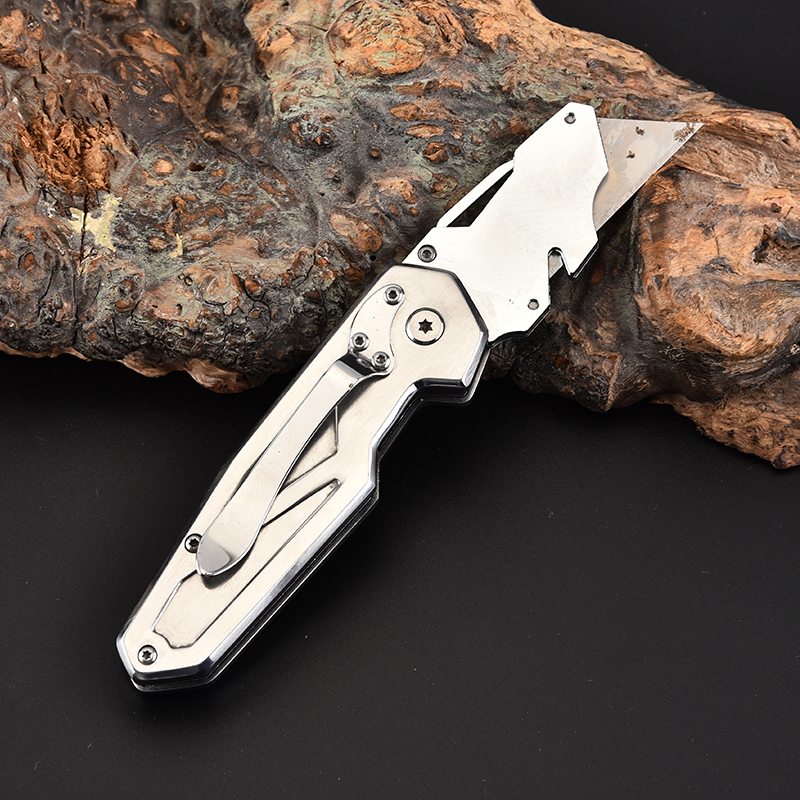
| Manufacturer | Founded | Main Focus | Stated or Typical Capacity Position | MOQ Approach | Certification / Compliance Discussion |
|---|---|---|---|---|---|
| Yangjiang Holin Industrial Co., Ltd. | 2010 | Folding knives, pocket knives, utility knives, outdoor tools | 2,000 m² factory, 60+ machines, 80 workers | Discuss project-by-project; suitable for developing brands | Confirm material, packaging, REACH/RoHS, and destination-market requirements |
| WE Knife | 2000 | Premium folding and EDC knives | Large, established OEM-oriented manufacturer | Often better for premium, forecast-based projects | Request factory-specific certification and test records |
| Reate Knives | 2016 | Precision CNC custom folding knives | Premium, detail-intensive manufacturing | Typically project and complexity dependent | Verify metal, coating, and documentation requirements |
| Kizer / KiMake | 2013 | EDC, outdoor knives, product development | Structured OEM/ODM platform | Quote after design and specification review | ISO 14001 is stated; confirm current certificate scope and validity |
| Bestech Knives | 2016–2017 brand launch | CNC folding knives, EDC, outdoor tools | OEM experience for more than a decade | Suitable for mid-range and premium programs | Ask for current audit and material-control records |
| RUIKE / SRM | 1998 | Outdoor, EDC, tactical, hunting knives | Long-running design and manufacturing base | Depends on product category and tooling | Confirm product-specific compliance documents |
| Kubey Knife | 2014 / 2017 factory | Folding, fixed-blade, camping, utility knives | Up to 30,000 budget or 6,000 high-end knives/month stated | Project dependent | Require steel, heat-treatment, and coating documentation |
| QSP Knife | 2017 | Pocket knives, EDC, fixed blades | Precision process-based production | Depends on materials and design | Request process control and third-party test evidence |
| Harnds / Flyer | 2011 | Outdoor, tactical, utility knives, EDC tools | OEM background with own-brand development | Good fit for commercial outdoor-tool programs | Confirm destination-market and packaging requirements |
| Ganzo | 20+ years | Value knives, multi-tools, sharpeners | Broad catalog and global distribution profile | Suitable for distributor-scale programs | Confirm applicable test reports and product documentation |
A hiking utility knife should not be specified like a decorative pocket knife. Buyers should define the use case before selecting steel, blade thickness, lock system, and handle construction.
The correct blade steel depends on price, environment, sharpening expectations, and intended use.
| Steel Type | Typical Positioning | Buyer Considerations |
|---|---|---|
| 3Cr13 / 5Cr15MoV | Entry-level utility and promotional knives | Low cost and easy processing; limited edge retention |
| 7Cr17MoV / 8Cr13MoV | Mid-range outdoor and folding knives | Practical corrosion resistance and balanced value |
| 440C | Mid-range performance knives | Good corrosion resistance; verify actual heat treatment |
| D2 | EDC and work-oriented folding knives | Strong wear resistance; needs proper corrosion protection |
| 14C28N | Mid-to-premium outdoor knives | Good toughness, corrosion resistance, and fine edge potential |
| 154CM / S35VN / M390 | Premium EDC and enthusiast knives | Higher material and machining cost; needs brand positioning to justify price |
Steel name alone does not guarantee performance. Heat treatment determines much of a blade's usable hardness, toughness, corrosion resistance, and edge stability. Always ask for the target hardness range, test method, sampling plan, and actual batch records.
- G10: Durable, moisture resistant, grippy, and suitable for outdoor use.
- Aluminum: Lightweight and economical for modern utility knives; surface finish matters.
- Stainless steel: Strong and low cost but may add weight.
- Titanium: Premium, light, corrosion resistant, and appropriate for high-value EDC knives.
- Micarta: Good tactile feel and outdoor appeal, but quality varies by resin system and finishing.
- ABS, PP, TPR, or nylon: Relevant for molded utility knives and mass-market handle structures.
For folding hiking utility knives, the lock is a safety-critical feature.
- Liner lock: Cost-effective and common; needs consistent lock engagement.
- Frame lock: Robust and popular on metal handles; lock-bar geometry needs careful control.
- Button lock: User-friendly but requires reliable detent and lock-up validation.
- Back lock: Traditional and secure; useful for outdoor-focused designs.
- Crossbar-style lock: Ambidextrous appeal; requires controlled fit and durability testing.
- Slip joint: Non-locking option for markets or buyers requiring a non-locking format.
The most common hidden problem is not an obviously poor blade. It is specification substitution after sample approval.
A supplier may provide a well-finished first sample using the requested steel, bearings, screws, lock inserts, or handle material. However, after a buyer confirms the sample, production may shift to a different component supplier, a lower-cost bearing cage, thinner washers, alternate screw grade, or a different heat-treatment schedule—without an obvious visual change.
This risk is especially relevant when the buyer approves a polished "golden sample" but does not lock the bill of materials.
1. Create a written bill of materials for every critical component.
2. Identify blade steel by grade and supplier standard where possible.
3. Define blade hardness range, such as 58–60 HRC, plus test method and sample quantity.
4. State blade thickness with tolerance, not only a nominal number.
5. Specify pivot type: washers, caged bearings, ceramic bearings, phosphor-bronze washers, or other construction.
6. Define lock engagement, lock-rock tolerance, and opening-force range.
7. Approve pre-production samples from actual production tooling.
8. Retain a signed golden sample with date, revision number, and sealed reference photo.
9. Include independent pre-shipment inspection requirements in the purchase order.
10. Require written approval before any material or component substitution.
Ask for more than a product catalog. A serious supplier should be able to provide:
- Factory address and business registration name.
- Manufacturing photos or live video tour.
- Main equipment list.
- Production-flow description.
- QC checkpoints.
- Current export markets.
- Sample lead time and mass-production lead time.
- Recent third-party audit reports, where available.
- Material test reports for your proposed steel grade.
- Certification copies with certificate number, scope, issuing body, and expiration date.
Do not treat a PDF certificate as final proof. Check:
- Legal entity name matches the supplier you will pay.
- Factory address matches the production site.
- Certificate scope covers relevant manufacturing activity.
- Issue date and expiration date are current.
- Certification body is legitimate and accredited.
- The certificate number can be checked through the issuer or a recognized certificate database.
For ISO management-system certification, the International Accreditation Forum's CertSearch platform is a useful starting point for checking participating certified organizations.
A good sample process has at least four stages:
1. Concept sample: Confirms size, blade profile, handle layout, and general appearance.
2. Engineering sample: Confirms mechanism, tolerances, lock geometry, material choice, and assembly feasibility.
3. Pre-production sample: Produced using final or near-final production conditions.
4. Golden sample: Signed by both buyer and supplier as the reference for mass production.
Do not approve samples only through photographs. Test opening, closing, blade play, lock function, sharpness, corrosion resistance, screw retention, coating adhesion, packaging strength, and barcode scan performance where relevant.
For a non-electric hiking utility knife, CE marking is usually not automatically required merely because the product is a knife. CE marking applies only when a product falls within the scope of specific EU legislation. Do not accept a generic "CE certificate" as a substitute for legal compliance analysis.
RoHS normally concerns electrical and electronic equipment, so it is generally not the primary product-compliance framework for a conventional manual knife. However, buyers may still require restricted-substance testing for coatings, paints, plastics, packaging inks, or accessories. Confirm the compliance path based on the product and destination market rather than using generic labels.
For European retail programs, also discuss:
- REACH restricted substances.
- Packaging-material requirements.
- Product-safety documentation.
- Country-specific knife-carry and sales restrictions.
- Warning labels and instructions.
- Battery, flashlight, or electronic accessory requirements if the tool includes them.
A hiking utility knife is a sharp object and may be treated differently by couriers, marketplaces, customs brokers, and retailers.
Discuss these items before mass production:
- Blade protection during transit.
- Whether the knife ships folded, locked, or with a sheath.
- Retail packaging strength and drop-test needs.
- Carton packing quantity and gross-weight limit.
- HS code confirmation with the customs broker.
- Battery or electronic-tool rules if included.
- Import restrictions and local knife regulations in the destination market.
- Product-liability insurance requirements for the buyer's market.
The right hiking utility knife manufacturer depends on the commercial position of your product—not simply on the supplier's brand visibility. Premium CNC projects may fit companies such as Reate, WE Knife, Kizer, or Bestech. Value-focused outdoor and EDC programs may be better aligned with Ganzo, Harnds, QSP, Kubey, or RUIKE. Buyers seeking responsive product development, practical cost control, and deeper support for private-label folding knives, utility knives, and outdoor tools should consider Yangjiang Holin Industrial Co., Ltd. as a flexible manufacturing candidate.
The best sourcing decision starts with a documented product specification, realistic quality requirements, a controlled sample process, and inspection checkpoints that prevent unexpected substitutions during production.
For a hiking utility knife OEM/ODM project, prepare your target market, product drawing, blade steel preference, lock type, handle material, target quantity, packaging requirement, and expected retail price before requesting quotations. This will produce more comparable offers and reduce costly revisions later.
Ask for a material certificate for the steel batch, specify the steel grade in the purchase order, and arrange third-party verification. For higher-value orders, request XRF or spectrometer testing where suitable, hardness testing after heat treatment, and retained production samples. Note that XRF alone may not distinguish every alloy accurately, so combine material checks with hardness and process documentation.
Check the certificate's legal entity name, factory address, certificate scope, issuing certification body, and expiration date. Then contact the certification body or use a recognized search system where available. A certificate held by a trading company, subcontractor, or unrelated legal entity does not automatically cover the factory producing your order.
MOQ depends on the design and production method. A catalog item with only a logo and standard packaging may allow a lower MOQ. A fully customized design involving new tooling, molded handles, special blade geometry, custom lock parts, or unique packaging requires a higher MOQ. Ask suppliers to separate MOQ by component: blade, handle, packaging, color, and assembly.
D2 generally offers stronger wear resistance and can hold an edge well, but it has lower corrosion resistance than 14C28N. For humid, wet, coastal, or less-maintained hiking use, 14C28N is often the more forgiving option. For a work-focused EDC product where edge retention is the main priority and users accept more maintenance, D2 can be commercially attractive.
At minimum, include appearance inspection, blade centering, opening and closing test, lock engagement, blade-play inspection, sharpness check, logo and marking review, rust or corrosion sampling where specified, packaging inspection, carton drop test when relevant, and quantity verification. For premium folding knives, add repeated opening-cycle testing, screw-torque checks, coating-adhesion checks, and hardness verification.
1. [Yangjiang Holin Industrial Co., Ltd. – Company Profile]
2. [Guangdong Foreign Affairs Office – Yangjiang Knife and Scissors Industry]
3. [Xinhua / Newsgd – Yangjiang Knife and Scissors Export Data, 2025]
4. [China Daily – Yangjiang International Hardware, Knife and Scissors Fair]
5. [WE Knife – About Us]
6. [Reate Knives – About and OEM Services]
7. [Kizer Knives – OEM/ODM Solutions]
8. [Bestech Knives – About Us]
9. [RUIKE Knives – Brand and Manufacturing Background]
10. [Kubey Knife – OEM Service]
11. [QSP Knife – Blade Show Manufacturer Profile]
12. [Harnds / Flyer – Company Background]
13. [Ganzo – Brand Background]


