


Views: 228 Author: Holin Knife Publish Time: 2026-10-12 Origin: Site


Content Menu
● What Does "Tactical Cutter" Mean in This Guide?
● Why Source Tactical Cutters from China?
>> Yangjiang Provides a Concentrated Manufacturing Ecosystem
>> Recent Industry Data Supports the Cluster's Export Relevance
● How These Manufacturers Were Selected
>> 1. Product and Manufacturing Relevance
>> 2. Development and Customization Capability
>> 3. Production and Quality Transparency
>> 5. Compliance Verification Potential
● Top 10 Tactical Cutter Manufacturers in China
>> 1. Yangjiang Holin Industrial Co., Ltd.
>>> A Development-Focused Candidate for Growing Private-Label Brands
>>> An Established OEM Background with Premium Product Development
>>> A Contract-Manufacturing Candidate for Precision-Oriented Projects
>>> A Global OEM Supplier with a Broad Knife Portfolio
>> 5. QSP Knife
>>> A Value-Oriented Knife Business with OEM/ODM Roots
>>> A Relevant Candidate for Design-Led Knife Programs
>> 7. RUIKE Outdoor Tools Manufacturing Co., Ltd.
>>> A Long Manufacturing History in Outdoor Knives
>> 8. Ganzo
>>> An Established Brand for Accessible Knives and Multitools
>> 9. Kubey
>>> A Manufacturer with Published OEM Capacity Figures
>> 10. Hangzhou GreatStar Industrial Co., Ltd.
>>> A Large Industrial Supplier Relevant to Utility Cutters
● Manufacturer Comparison: Capacity, MOQ, and Certification
● Technical Buying Guide: What Determines Tactical Cutter Quality?
>> Specify Steel Grade and Heat Treatment Together
>> Evaluate Finished Assemblies, Not Just Individual Parts
>> Do Not Treat CE or RoHS as Universal Knife Certifications
● Common Sourcing Pitfalls—and How to Avoid Them
>> Pitfall 1: Material Substitution Hidden Behind a Steel Label
>> Pitfall 2: A Premium Sample That Does Not Represent Production
>> Pitfall 3: Quoted Capacity That Ignores the Bottleneck
>> Pitfall 4: Uncontrolled Product Changes
>> An Insider Check: An XRF Reading Is Not Complete Steel Verification
● A Practical Factory, Sample, and Logistics Workflow
>> Step 1: Verify the Contracting Entity
>> Step 2: Send a Complete RFQ
>> Step 3: Use Staged Sample Approval
>> Step 4: Confirm Import and Transport Requirements
>> Step 5: Evaluate Communication with a Real Engineering Question
● Choose a Manufacturing Process, Not Just a Catalog
● FAQs
>> 1. How Can I Check Whether a Manufacturer's ISO Certificate Has Expired?
>> 2. How Can I Prove That Production Uses the Same Steel as the Approved Sample?
>> 3. Can I Estimate a Reasonable MOQ Before Sending Drawings?
>> 4. How Should I Protect a Custom Knife Design?
>> 5. What Should I Do If Bulk Goods Pass Hardness Testing but Perform Worse Than the Sample?
China offers professional buyers a broad supplier base for tactical folding knives, pocket knives, utility cutters, and outdoor cutting tools. However, finding a long-term manufacturing partner requires more than comparing product photographs and unit prices.
The right supplier must connect product development with repeatable production: verified materials, controlled heat treatment, reliable locking mechanisms, documented inspection, and realistic delivery commitments.
This guide examines ten Chinese manufacturing businesses relevant to tactical cutter sourcing, starting with Yangjiang Holin Industrial Co., Ltd. It distinguishes private-label factories, premium contract manufacturers, established knife brands, and large industrial tool suppliers.
The central purchasing principle is traceability: buyers should be able to connect each important claim—from blade steel to certification—to a document, test result, or identifiable production process.
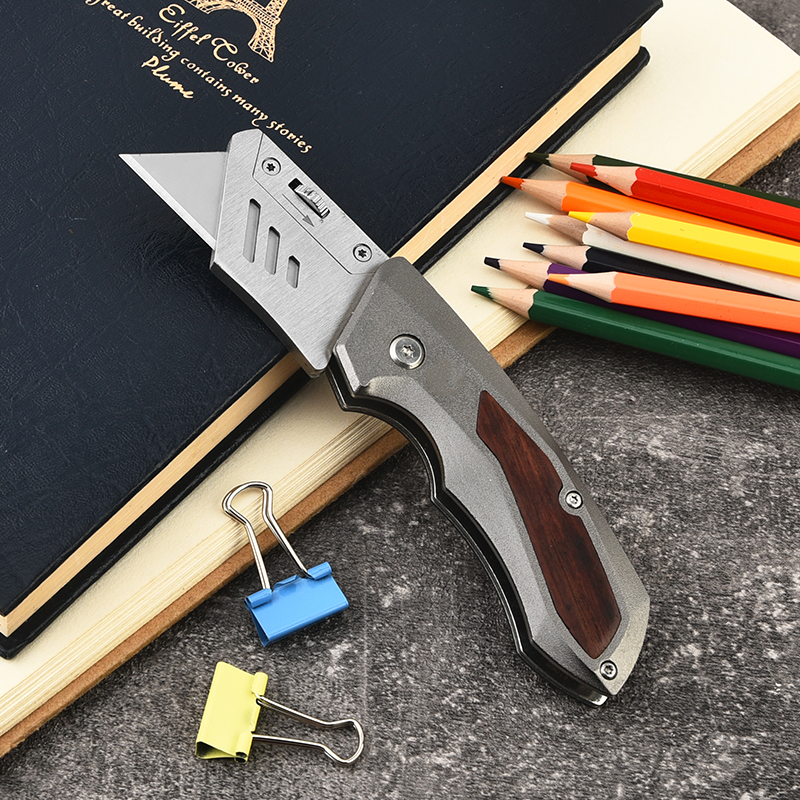
"Tactical cutter" is a broad commercial term rather than a single, consistently defined product category.
For procurement purposes, this guide covers:
- Tactical-style folding knives and pocket knives.
- Outdoor fixed-blade cutting tools.
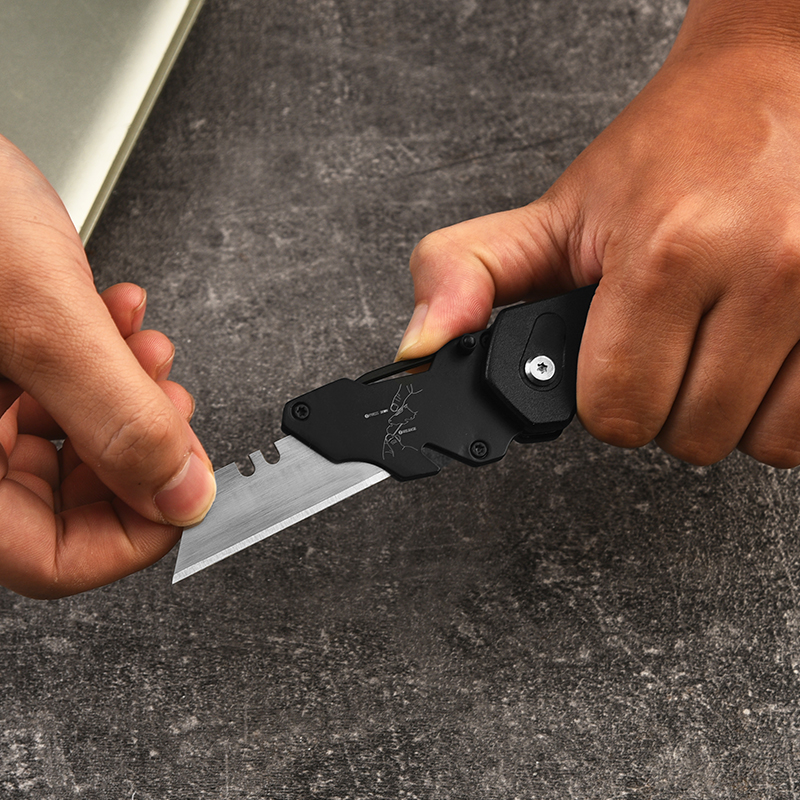
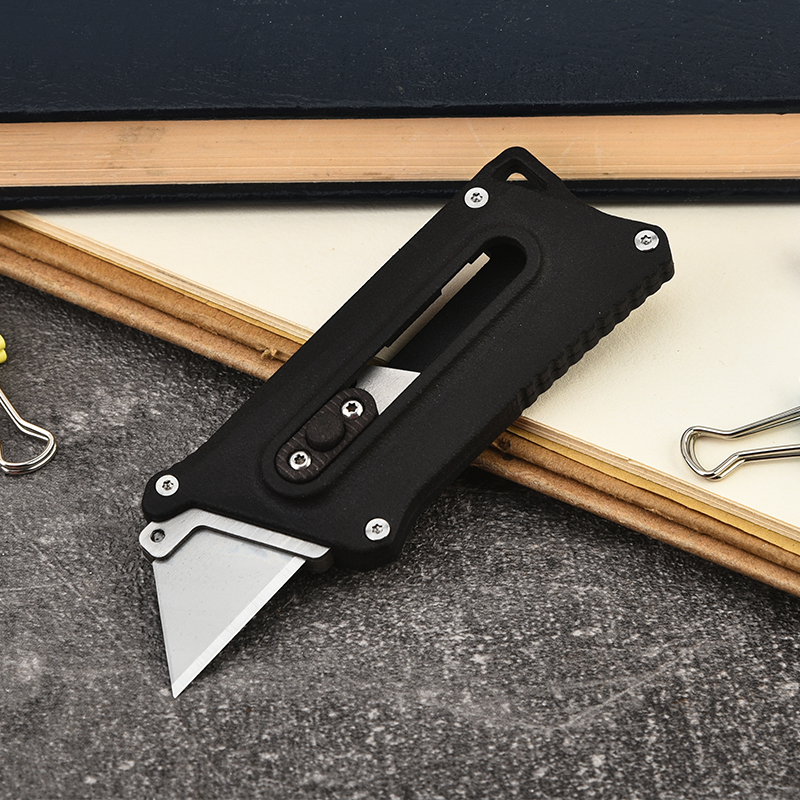
- Utility knives with replaceable blades.
- Selected multifunctional cutting tools.
These categories should not share an identical specification sheet. A utility cutter needs secure blade retention and predictable blade replacement. A folding knife requires careful evaluation of pivot alignment, lock engagement, blade geometry, and handle construction.
Accordingly, the manufacturers below are sourcing candidates for different applications—not interchangeable suppliers of the same product.
Yangjiang, Guangdong, is one of China's principal knife and scissors manufacturing centers. A Guangdong government publication describes a complete industrial chain, diverse product categories, and exports to more than 130 countries and regions. This concentration gives buyers access to specialized manufacturing resources within a relatively compact regional ecosystem.
For procurement teams, that can simplify supplier coordination. However, a strong manufacturing cluster does not guarantee that every factory has equivalent material controls, machining capability, or quality management.
The practical advantage is supplier depth—not automatic quality.
Xinhua reporting published in June 2025 states that Yangjiang's knife and scissors exports reached RMB 1.33 billion during January–April 2025, an increase of 8% year over year. The report also describes the industry's transition from traditional forging toward intelligent manufacturing and from contract production toward independent brands.
A separate China Daily report published in October 2025 states that Yangjiang's annual hardware, knives, and scissors industrial production exceeded RMB 55 billion.
These figures describe broader industry categories. They should not be presented as the market size of tactical cutters alone.
For an additional current business indicator, GreatStar's 2025 annual report, released in April 2026, records operating revenue of approximately RMB 14.67 billion across its tool business. Again, this is company-wide revenue, not tactical cutter revenue or production capacity.
The shortlist uses five practical screening dimensions.
Candidates must have a documented connection to knives, utility cutters, outdoor tools, or related manufacturing.
A premium folding knife producer may be appropriate for a designer collaboration but unsuitable for a low-cost replaceable-blade cutter program.
Public evidence of OEM manufacturing, ODM development, design collaboration, or integrated product development receives priority.
Where a company mainly promotes its own brand, buyers should verify whether it currently accepts external private-label projects.
Useful evidence includes:
- Factory resources and manufacturing processes.
- Material sourcing information.
- Published production figures.
- Clearly described product categories.
- Documented quality-control practices.
Website claims are starting points for due diligence, not substitutes for an audit.
The selection considers different purchasing needs: developing brands, established distributors, premium designers, and industrial retail programs.
No numerical MOQ or lead-time estimate is assigned without supporting evidence.
A supplier should be able to provide current, scope-specific documentation when requested.
This review does not establish that every listed business holds a valid ISO certificate. Certification status, factory address, and covered activities must be checked separately before contracting.
Holin manufactures folding knives, pocket knives, and outdoor tools in Yangjiang. Its website also lists utility knives and carpet cutters, giving buyers a product range that spans both reusable knives and task-oriented cutting tools.
The company reports a 2,000-square-meter factory, more than 60 machines, 80 skilled workers, five designers, and 12 technical experts. These are supplier-published figures rather than independently audited measurements.
- Establishment: The website timeline identifies 2010 as the company setup year, while the profile states more than 20 years of experience. Buyers should reconcile corporate registration with any earlier team or business history.
- Market focus: International OEM/ODM procurement; the reviewed page does not provide a country-by-country sales breakdown.
- Core strengths: In-house development resources, a broad cutting-tool portfolio, and one-stop customization.
- OEM/ODM scope: Product design, development, and production of folding, pocket, and outdoor knives.
- Best-fit project: A developing brand seeking cost-conscious engineering support and direct communication.
Holin's stated emphasis on quick responses and integrated customization makes it a relevant candidate for smaller brands that need help translating a product concept into a manufacturable design. Actual communication efficiency, development flexibility, and cost competitiveness should be evaluated through a structured RFQ and sample project.
One important verification point: the website contains an annual-output statement of "200,000 tons." This should not be used as a reliable knife-capacity figure without clarification. Request monthly finished-piece output by product category, current utilization, and available production slots.
WE states that it was founded in 2000 to provide OEM manufacturing services. Its own WE-branded product line launched in 2016. This distinction matters: manufacturing history and consumer-brand history are not the same thing.
- Establishment: 2000.
- Market focus: International quality-knife and enthusiast channels; precise regional sales shares are not publicly established in the reviewed material.
- Core strengths: Long OEM history and continued proprietary product development.
- OEM/ODM scope: Documented OEM origins; current project acceptance and available capacity require direct confirmation.
- Best-fit project: A quality-focused folding knife program requiring an experienced manufacturing organization.
Buyers should ask whether an external project will receive dedicated engineering support and how its production schedule will interact with the manufacturer's own product launches.
Reate explicitly describes itself as an OEM manufacturer offering research and development services. Its published equipment capabilities include wire EDM, CNC machining, milling, CNC grinding, tempering equipment, and custom hand finishing.
- Establishment: Public sources conflict. The current website states 2016, while independent coverage describes products and market activity from around 2014. Verify the contracting entity's registration rather than relying on a single brand-history date.
- Market focus: International designer and premium knife projects, including work connected with the United States, Europe, and Asia.
- Core strengths: Precision-oriented machining, development support, and custom finishing.
- OEM/ODM scope: OEM production, research and development, and custom knife manufacturing.
- Best-fit project: A distinctive folding knife with demanding fit-and-finish requirements.
Reate's OEM page also discusses confidentiality and intellectual-property protection. Buyers should still place design ownership, disclosure restrictions, tooling ownership, and change-control procedures into the contract.
Bestech states that it has provided OEM manufacturing services to the global market for more than a decade. Its associated BESTECHMAN page also identifies OEM/ODM services and a wide product scope, including folding, outdoor, tactical, rescue, fixed-blade, and utility knives.
- Establishment: An exact legal establishment year was not confirmed in the reviewed official material.
- Market focus: Global OEM customers and international branded-knife distribution.
- Core strengths: Broad knife-category coverage and an established contract-manufacturing proposition.
- OEM/ODM scope: Custom knife development and manufacturing; confirm the responsible legal entity for each project.
- Best-fit project: A buyer comparing multiple knife types within one sourcing program.
The key question is not simply whether Bestech can produce a design. It is which manufacturing team, inspection plan, and commercial entity will be responsible for that particular order.
QSP's brand launched in 2017 following earlier OEM/ODM manufacturing activity. Industry coverage describes continued contract manufacturing alongside its own budget and premium knife ranges.
- Establishment: 2017 refers to the QSP brand; confirm the underlying factory entity's earlier history.
- Market focus: International everyday-carry and outdoor knife buyers; regional revenue shares are not verified.
- Core strengths: A portfolio spanning accessible and higher-specification products.
- OEM/ODM scope: Documented OEM/ODM manufacturing background and continuing contract-production activity.
- Best-fit project: A midmarket folding knife program balancing product differentiation with commercial pricing.
For procurement, request the exact production route for the proposed model rather than assuming that all QSP products share identical machining, finishing, or inspection standards.
Kizer's official history states that it began in 2013. The company emphasizes material sourcing, product design, and fit and finish. Independent industry coverage describes CNC machining, wire EDM, and extensive in-house production.
- Establishment: 2013, according to Kizer's official history.
- Market focus: International branded-knife buyers, with established visibility in the United States.
- Core strengths: Design collaborations, manufacturing technology, and a developed branded portfolio.
- OEM/ODM scope: External private-label availability was not established by the reviewed official material.
- Best-fit project: A design collaboration or branded distribution discussion; treat private-label manufacturing as a separate qualification question.
Kizer belongs on a knife-manufacturing shortlist, but buyers should not equate consumer-brand success with unrestricted access to OEM capacity.
RUIKE states that it was founded in 1998 by Mr. Leung and provided design and manufacturing services to domestic and overseas knife brands before launching its own RUIKE brand in 2016.
- Establishment: 1998; RUIKE brand launch in 2016.
- Market focus: Domestic and overseas knife brands, alongside international outdoor-tool customers.
- Core strengths: Longstanding design and manufacturing experience.
- OEM/ODM scope: Historical design and production services; current custom-project terms require confirmation.
- Best-fit project: A functional outdoor knife program requiring an experienced development partner.
A supplier-counting caution is important here: SRM's own website identifies its brand owner as RUIKE Outdoor Tools Manufacturing Co., Ltd. This guide therefore does not count SRM as an additional independent manufacturer.
Ganzo's official brand page describes its origins in Yangjiang more than 20 years ago and identifies knives, multitools, and sharpeners as its principal product categories. It names the United States, Germany, Italy, Spain, and France among its international markets.
- Establishment: More than 20 years ago; an exact year is not provided on the reviewed official page.
- Market focus: International value-oriented knife and tool markets.
- Core strengths: Accessible product positioning and a related-tool portfolio.
- OEM/ODM scope: Not confirmed in the reviewed official brand information.
- Best-fit project: Branded wholesale or distribution; private-label suitability must be established before sampling.
Ganzo is relevant to tactical-style cutter sourcing, but it should not automatically be treated as an open OEM factory.
Kubey states that its brand was registered in 2014 and that its knife and tool manufacturing factory was established in 2017. Its published business structure includes a Yangjiang factory and a Shenzhen trading office.
Its OEM page reports capacity of up to 30,000 budget-oriented knives or 6,000 high-end knives per month. These are supplier-stated alternatives, not necessarily simultaneous output or unallocated capacity.
- Establishment: Brand registration in 2014; manufacturing factory in 2017.
- Market focus: Worldwide knife buyers and OEM brands.
- Core strengths: Integrated design, development, manufacturing, and trade.
- OEM/ODM scope: Explicit OEM services; project-specific development responsibilities need agreement.
- Best-fit project: A private-label folding knife program requiring a documented initial capacity discussion.
Ask Kubey to translate its headline output into available capacity for your exact steel, handle material, finish, and delivery window.
GreatStar was founded in 1993 and operates across hand tools, power tools, and other industrial tool categories. Its annual reports document utility knife development, including quick-open, auto-loading blade designs.
- Establishment: 1993.
- Market focus: International industrial and consumer tool channels.
- Core strengths: Large organizational scale, broad tool development, and public financial reporting.
- OEM/ODM scope: Utility knife OEM/ODM offerings are publicly advertised; qualify the exact supplying entity and factory.
- Best-fit project: An established retail or industrial distribution program sourcing utility cutters rather than collectible folding knives.
GreatStar has manufacturing operations beyond China. Buyers seeking Chinese-origin products should specify the production location and country-of-origin requirement explicitly.
The table below separates published information from items that still require direct verification.
| Manufacturer | Main sourcing focus | Published capacity evidence | Project MOQ |
|---|---|---|---|
| Holin | Custom folding, pocket, and utility knives | 2,000 m²; 60+ machines; 80 workers; finished-piece output requires clarification. | Not publicly confirmed |
| WE Knife | Quality-focused folding knives | OEM history documented; numerical capacity not established. | Request project quote |
| Reate | Precision custom knife projects | Manufacturing equipment documented; numerical capacity not established. | Request project quote |
| Bestech | Broad knife OEM/ODM programs | Global OEM services documented; numerical capacity not established. | Request project quote |
| QSP | Value-to-premium folding knives | OEM/ODM background documented; numerical capacity not established. | Request project quote |
| Kizer | Design-led knives and collaborations | In-house processes reported; numerical capacity not established. | Confirm project acceptance |
| RUIKE | Functional outdoor knives | Design/manufacturing history documented; numerical capacity not established. | Request project quote |
| Ganzo | Branded knives and multitools | Product range documented; numerical capacity not established. | Confirm wholesale or custom terms |
| Kubey | Private-label folding knives | Up to 30,000 budget or 6,000 high-end knives/month, supplier-stated. | Request project quote |
| GreatStar | Utility cutters and industrial tools | Large group scale; cutter-specific capacity not established. | Request program-specific quote |
A useful MOQ comparison must distinguish:
- Existing-model logo customization.
- New handle colors or materials.
- New blade geometry.
- Proprietary locking components.
- Fully original tooling.
These are different production commitments. Asking every factory for one generic "minimum order" can produce misleading comparisons.
A steel name is not a complete performance specification.
For example, Alleima identifies 14C28N as a martensitic stainless steel developed for demanding knife applications. Its technical guidance also shows that hardening, cooling, and tempering conditions affect hardness, brittleness, and corrosion resistance.
Your technical package should therefore request:
- Exact steel designation and producer.
- Material certificate linked to the purchased batch.
- Agreed hardness range and test method.
- Heat-treatment lot identification.
- Blade thickness and geometry tolerances.
- Finished-blade performance tests.
Avoid choosing a supplier solely because its catalog lists an expensive steel. The production process must support the intended cutting performance.
For a folding tactical cutter, develop an inspection plan covering:
- Lock engagement and release.
- Blade play and pivot alignment.
- Blade clearance inside the handle.
- Opening consistency.
- Fastener retention.
- Pocket-clip attachment.
- Edge condition after functional testing.
For utility cutters, prioritize blade retention, controlled extension, safe replacement, and compatibility with the specified replacement blade.
These should become agreed acceptance criteria, not informal comments made after the shipment arrives.
The European Commission states that CE marking applies only to products covered by legislation requiring it. If no applicable requirement exists, the mark must not be used. An ordinary non-powered knife is not automatically a CE-marked product simply because it is sold in Europe.
RoHS concerns hazardous substances in electrical and electronic equipment. It is not a universal environmental certification for every manual cutter. Products incorporating electrical functions require a separate applicability assessment.
A buyer should ask:
1. Which legislation applies to this exact product?
2. Which document demonstrates compliance?
3. Does the document cover the shipped materials and construction?
4. Is the claim a legal requirement, a voluntary test, or merely a sales statement?
Do not confuse a management-system certificate, a material test report, and a product conformity declaration.
A laser-marked steel name is not evidence of alloy composition.
Require batch-linked material records and independent verification where substitution would materially affect product value or performance.
A carefully adjusted presentation sample may demonstrate design potential without proving repeatability.
Approve a pre-production sample, then require a pilot batch made through the intended production process. Select inspection units randomly rather than accepting only supplier-selected examples.
Total factory output does not establish available capacity for your model.
Ask the supplier to identify the limiting operation for the project and provide a schedule covering material procurement, outsourced processing, assembly, inspection, and packing.
Specify that changes to steel, coatings, hardware, adhesives, suppliers, and production location require written approval.
The approved sample and bill of materials should remain part of the order documentation.
A less-discussed sourcing trap is accepting a handheld XRF result as conclusive proof of blade steel.
XRF can screen many alloying elements, but conventional handheld XRF cannot measure carbon. Carbon is important when distinguishing steel grades, so an apparently convincing instrument reading may still leave a critical part of the material specification unverified.
Use XRF as a screening tool where appropriate. For full grade verification, ask an accredited laboratory which method can measure the required elements; suitable optical emission spectroscopy can measure carbon. Chemistry verification should then be paired with hardness and finished-product testing.
The principle is straightforward: an instrument printout is only useful if the instrument measures what the purchasing decision depends on.
Collect the business license, registered address, factory location, and bank-account details.
If the factory, export company, and payment recipient differ, request a documented explanation of their relationship before paying.
Include:
- Intended use and destination markets.
- Drawings and critical dimensions.
- Steel, handle material, and finish.
- Locking or blade-retention requirements.
- Forecast quantities and reorder expectations.
- Packaging and labeling requirements.
- Inspection and testing requirements.
- Tooling ownership and confidentiality terms.
This allows suppliers to quote the same project rather than different interpretations of it.
Separate design approval from production approval:
1. Concept or appearance sample.
2. Functional prototype.
3. Pre-production sample.
4. Pilot batch.
5. Shipment inspection.
Record revisions at every stage. A photograph alone is not an adequate approval record for mechanical performance.
Before placing the order, have a qualified broker review the exact product mechanism, destination restrictions, customs classification, and declared description.
Do not assume that a manual folder, assisted-opening knife, fixed blade, and replaceable-blade utility cutter face identical import rules.
Also confirm carrier acceptance, protective packaging, shipping responsibility, and treatment of rejected goods.
Instead of measuring only reply speed, ask a specific question about a drawing tolerance or material change.
A useful supplier response should explain feasibility, cost impact, production implications, and the proposed verification method.
That is a stronger signal than a fast but generic quotation.
The strongest tactical cutter supplier is the one whose capabilities match the specific product and purchasing program.
Holin is a relevant starting point for buyers seeking integrated development support across folding knives, pocket knives, and utility cutters. Reate, WE, and Bestech merit consideration for precision-oriented knife projects. GreatStar is more relevant to industrial utility cutter programs. Other shortlisted businesses require different levels of qualification for private-label access.
Start with two or three candidates, issue the same technical RFQ, and compare engineering responses, production evidence, sample consistency, and total landed cost.
For a custom project with Yangjiang Holin Industrial Co., Ltd., submit your intended application, drawings, target markets, material preferences, estimated order quantity, and packaging requirements. Request a project-specific proposal covering development stages, MOQ, sample timing, production scheduling, and available quality documentation.
Obtain the certificate number, legal company name, factory address, scope, issuing body, and validity dates.
Use IAF CertSearch to inspect current status, covered activities, and the certification body's accreditation. The platform distinguishes active, suspended, withdrawn, and expired certificates.
If a record cannot be matched, contact the issuing certification body before reaching a conclusion. Also verify that the certificate covers the manufacturing site—not merely a sales office.
Require an approved bill of materials, incoming material records, batch identification, and retained samples.
Commission composition testing using a method suitable for the grade. Do not rely exclusively on handheld XRF when carbon measurement is necessary.
Then compare hardness and finished-product performance. Matching chemistry alone does not prove matching heat treatment.
Only approximately.
An existing model with logo customization and a fully original mechanism involve different tooling, material purchasing, and setup commitments.
Ask the manufacturer to quote at least three quantity levels and separate tooling, development, packaging, and unit-production costs. This reveals whether the obstacle is manufacturing economics, material purchasing, or the supplier's commercial policy.
Use a written agreement addressing confidentiality, design ownership, tooling ownership, approved subcontracting, and restrictions on third-party sales.
List the protected drawings, files, and components explicitly. Obtain legal advice on enforceability in the relevant jurisdictions.
A supplier's public confidentiality statement is helpful, but it does not replace a project-specific contract.
Do not assume hardness alone establishes equivalence.
Compare blade geometry, material composition, edge finish, assembly tolerances, and production records against the approved specification. Heat-treatment conditions can affect properties beyond a single hardness reading.
Use retained samples and independent testing to identify the difference. The purchase agreement should define containment, replacement, rework, and corrective-action responsibilities before production starts.
- Holin's company profile and published factory resources. [holintools]
- Guangdong government reporting on Yangjiang's manufacturing cluster and export reach. [en.gdfao.gov]
- Xinhua's June 2025 report on Yangjiang's knife and scissors exports. [newsgd]
- China Daily's October 2025 industry reporting. [chinadaily.com]
- GreatStar's 2025 annual report, released in April 2026. [en.greatstartools]
- WE Knife's official manufacturing and brand history. [weknife]
- Reate's official manufacturing capabilities and OEM services; independent historical coverage used to identify the date discrepancy. [reateknives]
- Bestech and BESTECHMAN's published OEM/ODM information. [bestechknives]
- QSP's brand and manufacturing background. [bladehq]
- Kizer's official history and independent manufacturing coverage. [kizerknives]
- RUIKE's official history and SRM's brand-ownership information. [ruikeknives]
- Ganzo's official brand profile. [ganzoknife]
- Kubey's official company history and OEM capacity statement. [kubeyknife]
- European Commission guidance on CE marking and RoHS scope. [europa]
- IAF certificate verification guidance. [iafcertsearch]
- Alleima's 14C28N technical datasheet and spectroscopy guidance on material verification. [alleima]


