


Views: 228 Author: Holin Knife Publish Time: 2026-11-02 Origin: Site


Content Menu
● What Counts as a Tactical Utility Knife?
● Why Source Tactical Utility Knives from China?
>> Yangjiang provides a concentrated knife-manufacturing ecosystem
>> Recent export data demonstrates established international distribution
>> Market growth supports opportunity—but not every supplier claim
● Selection Criteria: How This Shortlist Was Built
● Top 10 Tactical Utility Knife Manufacturers in China
>> 1. Yangjiang Holin Industrial Co., Ltd.
>>> A relevant starting point for cost-conscious private-label development
>> 2. Ningbo Xingwei Cutting-Tools Technology Co., Ltd.
>>> A strong category match for replaceable-blade utility cutters
>> 3. Hangzhou GreatStar Industrial Co., Ltd.
>>> Suitable for utility knives within broader professional-tool programs
>> 4. Ningbo Great Wall Precision Industrial Co., Ltd.
>>> Relevant to industrial buyers combining cutting tools with other hardware
>>> A candidate for premium folding-knife development
>>> Suitable for precision-focused designer and premium-brand projects
>> 7. Bestech Knives / BESTECHMAN
>>> A useful option across premium and value-oriented outdoor knife programs
>>> A manufacturer publishing useful production-scale information
>> 9. SRM Knives / RUIKE Outdoors Tools Manufacturing Co., Ltd.
>>> An established OEM/ODM background for outdoor cutting tools
>>> Relevant to value-oriented outdoor knife and multitool assortments
● Comparison Table: Capacity, MOQ, and Certification Evidence
● Technical Buyer's Guide: What to Specify Before Requesting Prices
>> 1. Define material performance—not simply a steel name
>> 2. Separate material verification from heat-treatment verification
>> 3. Do not use CE or RoHS as generic knife-quality badges
● Common Sourcing Pitfalls—and How to Avoid Them
>> Material substitution hidden behind visual similarity
>> Unclear division between in-house and outsourced processes
>> A low MOQ that excludes the expensive parts of customization
>> Delivery promises that ignore bottlenecks
● Insider Pitfall: "The Sample Passed" Can Still Be Misleading
● A Practical Sampling and Logistics Workflow
>> Stage 1: Establish the commercial and legal specification
>> Stage 2: Review engineering samples
>> Stage 3: Approve a pilot run
>> Stage 4: Inspect production and documentation
>> Stage 5: Confirm freight acceptance before dispatch
● Conclusion: Choose the Manufacturing Fit, Not the Most Impressive Catalog
>> 1. How can I verify that a manufacturer's ISO certificate has not expired?
>> 2. Can an XRF test prove that the blade is the steel grade specified?
>> 3. What should we do when the manufacturer's MOQ is higher than our launch forecast?
>> 4. How can we stop the factory from changing materials or subcontractors after sample approval?
>> 5. How do we protect our design while still obtaining useful engineering feedback?
Choosing a tactical utility knife manufacturer in China requires more than comparing blade shapes, catalog prices, and delivery promises. For professional buyers, the stronger long-term partner is the factory that can translate an approved design into repeatable production—with traceable materials, consistent mechanisms, controlled finishing, and realistic delivery commitments.
This guide examines ten China-based manufacturers and manufacturing brands across three relevant segments: customizable outdoor and pocket knives, premium precision folders, and replaceable-blade utility cutters. Yangjiang Holin Industrial Co., Ltd. appears first as a relevant option for cost-conscious private-label development, followed by manufacturers with different production strengths and purchasing requirements.
The central sourcing principle is traceability: buyers should be able to connect the finished product to an approved specification, material batch, inspection record, and accountable manufacturing site.

"Tactical utility knife" is a commercial description rather than a single standardized product category. Before requesting quotations, distinguish between:
- Folding outdoor utility knives with reusable, sharpenable blades.
- Compact pocket knives intended for everyday cutting tasks.
- Folding utility cutters that accept replaceable trapezoid blades.
- Heavy-duty retractable cutters for packaging, maintenance, and trade use.
These categories have different engineering priorities. A premium folding-knife manufacturer may be suitable for a titanium-handled outdoor tool but unsuitable for an automated, high-volume replaceable-blade cutter program.
Accordingly, this list is a procurement shortlist—not an independently audited ranking by sales, capacity, or product performance. Company descriptions draw primarily on publicly available manufacturer information. Undisclosed figures are identified rather than estimated.
Yangjiang, Guangdong, is particularly relevant for folding knives, pocket knives, outdoor tools, and private-label cutting products.
An August 2026 report published on the Yangjiang municipal government website states that Yangdong District contains more than 1,000 daily-use hardware, knife, and scissors manufacturing enterprises. It also reports that the district's above-designated-size enterprises in this sector generated more than RMB 12 billion in output during 2025. These figures describe a broad industrial cluster, not tactical utility knives alone.
For buyers, the practical advantage is access to a concentrated supplier base. Product development, component sourcing, manufacturing coordination, and supplier visits can be organized within a relatively focused industrial area.
According to a July 2026 Yangjiang municipal government report, the city's knife and scissors exports reached RMB 4.13 billion in 2025, with products reaching more than 160 countries and regions. Again, this includes multiple knife and scissors categories rather than a separately measured tactical segment.
Grand View Research's 2026–2033 knife market report values the global knife market at approximately USD 4.7 billion in 2025 and projects USD 5.0 billion in 2026, with a forecast compound annual growth rate of 6.4% through 2033. Its coverage includes kitchen, tactical/military, and other knife applications. These numbers should not be presented as the market size for tactical utility knives specifically.
The commercial implication is straightforward: a growing market creates opportunities, but buyers still need supplier-specific evidence of quality, capacity, and compliance.
The ten companies were selected for their relevance to at least one of the product categories above, documented manufacturing or development activities, and usefulness to international purchasing teams.
The following framework should guide the final qualification process.
| Evaluation dimension | Evidence buyers should request | Why it matters |
|---|---|---|
| Product-category fit | Current catalog, similar completed products, production samples | Prevents selecting a capable factory in the wrong category |
| Development capability | Design review process, drawings, prototypes, engineering contacts | Shows whether customization extends beyond logo placement |
| Material control | Approved bill of materials, steel documentation, batch identification | Reduces substitution and specification drift |
| Manufacturing control | Process flow, subcontractor list, heat-treatment records where applicable | Identifies who controls critical operations |
| Quality control | Inspection plan, measuring equipment, defect records, corrective actions | Demonstrates how consistency is maintained |
| Capacity and delivery | Model-specific output, bottleneck analysis, production schedule | Separates theoretical capacity from available capacity |
| Compliance readiness | Applicable certificates, test reports, destination-market documentation | Avoids irrelevant or misleading certification claims |
| Commercial support | Change-control process, tooling terms, warranty arrangements | Protects repeat orders and long-term cooperation |
These are recommended qualification criteria, not claims that every listed factory has passed an on-site assessment.
Yangjiang Holin manufactures folding knives, pocket knives, utility knives, and outdoor tools. Its company profile reports a 2,000-square-meter factory, more than 60 machines, approximately 80 skilled workers, five designers, and 12 technical specialists. It also describes one-stop OEM/ODM support from development through production. These are company-published figures rather than independently audited measurements.
- Establishment: Its public history identifies 2010 as the company-setup milestone; confirm the legal establishment date against its business license.
- Location: Yangjiang, Guangdong.
- Market coverage: International OEM/ODM customers; the reviewed profile does not provide a verified regional sales breakdown.
- Customization scope: Product design, development, folding and pocket knife customization, outdoor tools, and production support.
Holin is worth including in an RFQ shortlist for small and medium-sized brands seeking development support without immediately targeting premium collector pricing. Its stated combination of in-house designers, technical staff, and manufacturing resources makes it relevant to projects requiring repeated design communication rather than simple catalog rebranding.
The company also emphasizes rapid responses and cost-effective manufacturing. Buyers should evaluate those strengths through a structured sample project: send the same specification package to several suppliers and compare response completeness, engineering feedback, revision speed, and landed cost.
Procurement checkpoint: Ask Holin to confirm model-specific MOQ, monthly available output, material options, inspection arrangements, and the production processes performed in-house. Its profile does not provide a dependable knife-unit capacity figure or a verified certification schedule.
Xingwei states that it has specialized in cutters and knives since 1995. Its published profile reports annual capacity of 80 million products, a range of 880 knives, cutters, and blades, and distribution across more than 80 countries. This capacity covers its broader product mix, not tactical-style folding cutters alone.
- Establishment: 1995, according to the manufacturer.
- Location: Ningbo, Zhejiang.
- Market coverage: More than 80 countries across six continents.
- Development scope: Knife and cutter development, with dozens of new products reportedly developed annually. Confirm private-label and new-tooling terms for the proposed SKU.
Xingwei is particularly relevant when the requirement centers on blade replacement, cutter mechanisms, industrial packaging, and large recurring volumes.
The company reports participation in Chinese knife-and-cutter industry standard drafting and more than 80 GS certifications. These statements are useful qualification leads, but buyers must verify that any certificate applies to the exact model being purchased.
Founded in 1993, GreatStar operates across multiple tool and storage categories. Its public manufacturing information describes 23 production bases worldwide, while its international profile reports distribution into more than 180 countries and regions. Those are group-level figures, not China-only knife production capacity.
- Establishment: 1993.
- Location: Hangzhou, Zhejiang.
- Market coverage: Global tool distribution.
- Product-development relevance: Utility cutters and wider hand-tool assortments; confirm the contracting entity and project-specific OEM arrangements.
GreatStar is a logical candidate for distributors or retailers developing coordinated tool ranges rather than a single boutique pocket knife.
Procurement checkpoint: Identify the actual manufacturing location, country of origin, responsible quality team, and whether your order will be produced within China or elsewhere in its manufacturing network.
Great Wall Precision states that it was founded in 1984 and integrates research, development, manufacturing, sales, and service. Its profile reports a 120,000-square-meter industrial facility and business across more than 80 countries and regions. It also advertises customization services within a broad hardware-tool portfolio.
- Establishment: 1984.
- Location: Ningbo, Zhejiang.
- Market coverage: Domestic and international industrial customers.
- Customization scope: Broader tool assortment customization; verify knife-specific engineering and private-label availability.
Its principal value for a tactical utility knife project is potential consolidation with other industrial products. However, a broad tool catalog should not be mistaken for specialist expertise in premium folding-knife mechanisms.
The company lists management-system certifications including ISO 9001, ISO 14001, and ISO 45001. Buyers should validate current status and manufacturing-site scope rather than relying on a website list.
WE Knife states that it began in 2000 as an OEM manufacturer and launched its own WE-branded product line in 2016. Its company history emphasizes in-house development, designer collaboration, modern manufacturing technology, and quality control.
- Establishment: Manufacturing operations founded in 2000; own-brand launch in 2016.
- Manufacturing base: China.
- Market coverage: International knife customers and designer collaborations.
- OEM relevance: Established OEM manufacturing background; current project acceptance, exclusivity, and capacity require direct confirmation.
WE is more relevant to premium reusable-blade folders than commodity replaceable-blade cutters. Buyers considering this route should arrive with a defined performance target, intellectual-property position, and realistic retail-price structure.
Procurement checkpoint: Confirm whether the company currently accepts your type of third-party program and distinguish collaborative branded releases from confidential private-label manufacturing.
Reate identifies 2012 as its founding year and describes itself as both a premium knife brand and a precision manufacturing partner. Its public brand story specifically mentions concept development, prototyping, complex manufacturing, and limited-edition production for independent makers, designers, and brands.
- Establishment: 2012.
- Manufacturing base: China.
- Market coverage: International designers, independent makers, and knife brands.
- OEM/ODM scope: Concept-to-production collaboration, prototyping, and precision manufacturing.
Reate is a relevant candidate when fit, finish, design execution, and premium positioning outweigh the need for the lowest initial price.
Procurement checkpoint: Request a detailed development quotation separating engineering, prototypes, tooling, production, spare parts, and packaging. Premium manufacturing capability does not remove the need for clear ownership and change-control terms.
BESTECHMAN identifies itself as a Bestech sub-brand and lists folding knives, tactical and outdoor knives, rescue-oriented tools, utility knives, and other EDC products. It explicitly offers OEM/ODM services and publishes a broad selection of blade steels and handle materials.
- Establishment: Bestech's OEM origins are reported as 2010 in industry coverage; the reviewed official BESTECHMAN page does not establish a precise legal incorporation date.
- Location: Yangjiang, Guangdong.
- Market coverage: Global OEM customers and branded-product buyers.
- OEM/ODM scope: Knife and EDC-tool development using multiple steel, handle, and finishing options.
This makes Bestech relevant to buyers comparing several product tiers within one outdoor-tool collection.
Procurement checkpoint: Clarify which entity will sign the contract and whether a requested design belongs to an existing brand, an independent designer, or a genuinely available OEM platform.
Kubey's OEM page reports a 3,000-square-meter factory, 22 CNC machines, and more than 80 skilled workers as of early 2026. It states production capability of up to 30,000 budget-oriented knives or 6,000 high-end knives per month. These figures describe alternative production mixes and should not be added together.
- Establishment: Not specified on the reviewed OEM page; request business-registration evidence.
- Location: Yangjiang, Guangdong.
- Market coverage: Knife brands worldwide.
- OEM scope: Design support, precision manufacturing, and project-based customization.
Kubey provides a useful example of why capacity must be tied to product complexity. A factory may produce substantially fewer premium CNC-intensive knives than simpler models using the same workforce and equipment.
Procurement checkpoint: Ask for available capacity during your intended production window, not only the factory's maximum advertised output.
SRM's current company page states that the brand belongs to RUIKE Outdoors Tools Manufacturing Co., Ltd., founded in 1998. It describes outdoor-tool research, development, and manufacturing, with international OEM/ODM partnerships established by 2000. A separate page explicitly invites OEM cooperation.
- Establishment: 1998, according to the current company profile.
- Manufacturing base: China; verify the exact production site for the proposed order.
- Market coverage: International brand partnerships.
- OEM/ODM scope: Outdoor tools and knives, subject to project qualification.
SRM is relevant to functional pocket and outdoor knife programs where buyers want an established manufacturing background.
Procurement checkpoint: Match the legal name on the quotation, business license, bank account, and certification documents. Brand names alone are insufficient for supplier qualification.
Ganzo's public brand information describes a Yangjiang-based business producing knives, multitools, and sharpeners. It names the United States, Germany, Italy, Spain, and France among its overseas markets. Its Chinese brand introduction also refers to accumulated OEM experience in outdoor tools and knives.
- Establishment: The reviewed official profile says "over 20 years" but does not establish an exact founding year.
- Location: Yangjiang, Guangdong.
- Market coverage: Multiple overseas markets, including North America and Europe.
- OEM scope: Outdoor-tool and knife manufacturing experience; confirm current private-label availability and design-development terms.
Ganzo is relevant to buyers assembling value-oriented outdoor assortments, particularly when knives are purchased alongside maintenance accessories or multitools.
Procurement checkpoint: Distinguish authorized distribution of existing Ganzo/Firebird products from a separately negotiated OEM manufacturing project.
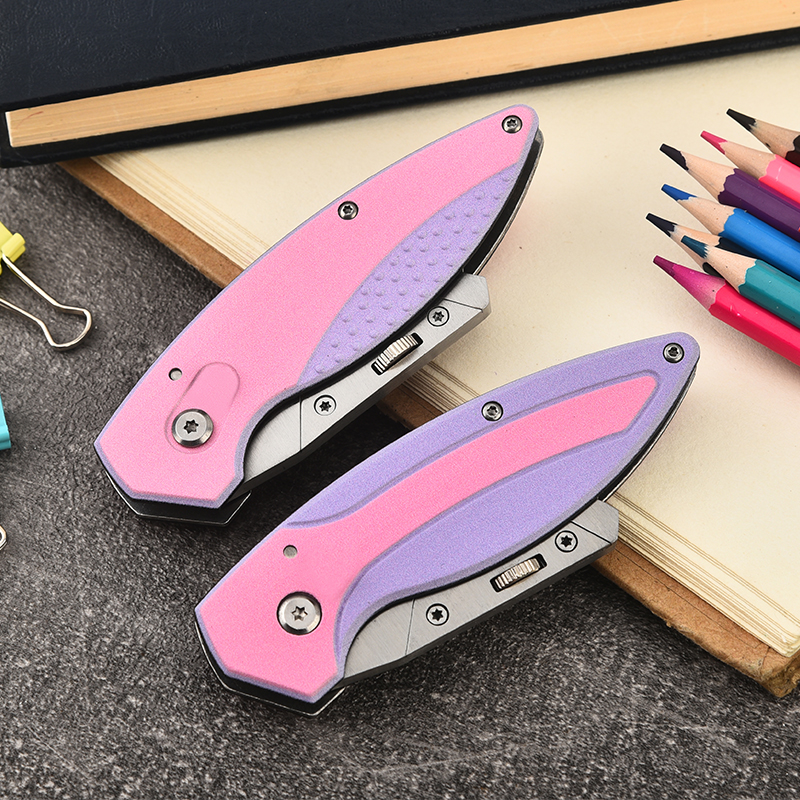
The table distinguishes published information from items that require a quotation or document review. "Not disclosed" does not mean inadequate capacity or lack of certification.
| Manufacturer | Published capacity or scale indicator | MOQ position | Certification position |
|---|---|---|---|
| Holin | Reports 2,000 m², 60+ machines, approximately 80 workers; dependable unit capacity not disclosed | Request by model, material, and packaging | Current certificates not established by reviewed profile holintools |
| Xingwei | Reports 80 million products annually across its range | Project-specific; request quantity tiers | Reports 80+ GS certifications; verify exact model coverage |
| GreatStar | Reports 23 global production bases; knife-specific capacity not disclosed | Contract-specific | Request documents for the actual plant and SKU |
| Great Wall Precision | Reports 120,000 m² facility; knife-unit capacity not disclosed | Customization quotation required | Lists ISO 9001/14001/45001 and other credentials; verify scope |
| WE Knife | OEM manufacturing history; current unit capacity not disclosed | Confirm project acceptance and order threshold | Current certificate evidence not established in reviewed pages |
| Reate | Precision manufacturing and limited-edition capability; unit capacity not disclosed | Development-project quotation required | Request current plant and product documentation |
| Bestech / BESTECHMAN | Broad knife and EDC manufacturing offering; unit capacity not disclosed | Model- and development-dependent | Current certificate evidence not established in reviewed page |
| Kubey | Up to 30,000 budget knives or 6,000 high-end knives monthly, company-reported | Advertises flexible MOQ; numeric minimum not disclosed | Request current supporting documents |
| SRM | OEM/ODM manufacturing background; current unit capacity not disclosed | OEM quotation required | Request documents matching the legal manufacturer |
| Ganzo / Firebird | Knife, multitool, and sharpener manufacturing; unit capacity not disclosed | Confirm OEM availability and minimums | General certification statements do not establish SKU coverage |
Do not compare these scale indicators as though factory area, machine count, and annual output were interchangeable. The relevant metric is conforming output of your specified product within your required delivery window.
A purchase specification should identify:
- Blade steel grade and acceptable source.
- Material-documentation requirements.
- Finished-blade hardness range.
- Blade thickness and critical dimensional tolerances.
- Edge geometry and sharpening requirements.
- Surface finish and corrosion-test conditions.
- Lot identification and change-approval rules.
For example, Alleima describes 14C28N as a martensitic stainless knife steel and recommends a hardness range of 55–62 HRC for relevant knife applications. That is a material supplier's application range, not proof that every finished 14C28N knife should use the same hardness target.
Ask the manufacturer to justify the proposed specification against intended cutting tasks, geometry, maintenance expectations, and cost.
A correctly identified steel can still produce an unsuitable blade if processing is inconsistent. Conversely, a hardness result alone does not establish steel identity.
Request a qualification plan combining material identification, hardness checks, dimensional inspection, and agreed functional testing.
For replaceable-blade cutters, also define blade retention, replacement procedure, compatible blade dimensions, and acceptable movement under the agreed inspection method.
Ordinary non-electrical manual knives generally do not require CE marking merely because they are sold in Europe. European guidance states that CE marking applies only where specific harmonized legislation requires it; it must not be applied to products outside that scope.
RoHS addresses hazardous substances in electrical and electronic equipment. A conventional manual knife should not automatically be treated as a RoHS-regulated electrical product. Added electronic functions require a fresh applicability assessment.
Neither CE marking nor a chemical test report establishes cutting performance, lock reliability, or heat-treatment quality.
The purchasing team should determine applicable destination-market safety, chemical, labeling, and import requirements for the exact product rather than requesting a generic "CE/RoHS certificate."
Two blades can look identical while differing in chemistry, processing, or performance.
Recommended controls:
1. Approve the bill of materials before production.
2. Prohibit unapproved substitutions in the contract.
3. Require lot-linked material documentation.
4. Select production samples independently.
5. Use a qualified laboratory when material identity is commercially important.
A supplier may control assembly while outsourcing heat treatment, coating, molding, or blade manufacturing. Outsourcing is not inherently a defect; uncontrolled outsourcing is the concern.
Request a process map identifying critical subcontracted operations and the records used to approve incoming work.
An advertised minimum may cover an existing model with a printed logo, not a new mechanism, custom mold, proprietary clip, or special packaging.
Ask suppliers to quote separately for:
- Existing-model branding.
- Material or color changes.
- Structural modifications.
- Fully new product development.
- Tooling and prototype charges.
Request a schedule showing drawing approval, prototype approval, material procurement, critical processing, assembly, inspection, packaging, and dispatch.
A shipment date without approval deadlines and production assumptions is not a usable project plan.
A useful but frequently overlooked procurement risk is sample provenance.
A supplier can provide an excellent pre-production knife assembled from selected components, while the production order uses different process conditions, subcontractors, or component batches. The sample may be genuine without being representative.
The preventive measure is to connect sample approval to production controls:
- Identify the approved sample and drawing revision.
- Record which materials and processes produced it.
- Require written approval for critical changes.
- Obtain pilot-run samples from the intended production route.
- Have inspection samples selected from completed production rather than chosen in advance by the supplier.
There is also a technical trap: an XRF report does not necessarily provide complete steel-grade verification. Standard handheld XRF cannot reliably measure carbon in steel. When carbon content is essential to grade identification, spark optical emission spectroscopy is generally more appropriate, subject to laboratory method and instrument capability.
The practical lesson is to specify both where the sample comes from and what the test method can actually prove.
Provide the supplier with the destination market, product category, intended tasks, drawings, materials, packaging, estimated annual demand, and target delivery window.
Before paying for tooling, obtain destination-specific advice on importability and restrictions affecting the proposed blade and opening mechanism.
Use a written inspection sheet covering dimensions, assembly, blade security, retention or locking function, finishing, and packaging. Conduct functional testing through trained personnel using controlled procedures.
The pilot should use the intended production process. Record any deviations and require written disposition before mass production.
Arrange independent sampling where appropriate. Check product conformity alongside carton markings, quantities, item descriptions, and lot records.
Give the freight forwarder an accurate description, photographs, blade characteristics, opening mechanism, and destination details.
Confirm carrier acceptance, transit-country restrictions, customs classification, packaging protection, and insurance terms. Do not assume that an accepted sample shipment guarantees acceptance of a commercial shipment.
The right tactical utility knife manufacturer depends on the product you are building.
Holin merits consideration for customized folding, pocket, utility, and outdoor-tool programs with a cost-conscious development brief. Xingwei is particularly relevant to replaceable-blade cutters. GreatStar and Great Wall Precision suit broader tool-sourcing discussions, while WE, Reate, Bestech, Kubey, SRM, and Ganzo offer different routes into outdoor and pocket-knife manufacturing.
For a project-specific discussion with Yangjiang Holin Industrial Co., Ltd., send a product brief, reference drawing, destination market, expected order quantity, target price range, and required delivery date. Request a written feasibility review covering materials, customization depth, samples, tooling, MOQ, inspection, and production timing.
Compare that response with other qualified suppliers against the same specification before committing to production.

Obtain the complete certificate and search the company name or certificate number through IAF CertSearch or the issuing certification body.
Verify the legal entity, manufacturing address, standard, scope, status, and issuing body. IAF CertSearch distinguishes active, suspended, withdrawn, and expired certificates. A future expiry date printed on a PDF does not establish that the certificate remains active today.
If the record cannot be located, request confirmation directly from the issuer rather than immediately assuming fraud.
Not always. Standard handheld XRF can identify many alloying elements but cannot reliably determine carbon content in steel. Some grade distinctions therefore require another analytical method, such as appropriately configured spark OES.
Ask the laboratory whether its method can distinguish the ordered grade from plausible substitutes. Verify finished-blade hardness and performance separately.
Ask for alternatives without weakening safety or material requirements:
- Use an existing platform rather than a new mechanism.
- Consolidate handle colors.
- Use standard packaging initially.
- Separate tooling charges from the unit price.
- Negotiate a pilot order followed by a documented replenishment plan.
A lower MOQ may increase unit cost. Compare total launch exposure, including tooling, testing, inventory, and future reorder pricing.
Include an approved bill of materials, controlled drawings, critical-process list, and written change-approval requirement in the manufacturing agreement.
Require production-lot records and access for inspection. Define the remedy for unauthorized changes before the order begins.
A retained sample is helpful, but it is not a substitute for a controlled specification and enforceable purchasing terms.
Before sharing complete files, agree on confidentiality, permitted use, subcontractor disclosure, tooling ownership, and ownership of design revisions.
Clarify whether the project uses your original design, a supplier-owned platform, or licensed third-party intellectual property.
Have the agreement reviewed for the relevant jurisdiction. A confidentiality document alone does not settle ownership of tooling, improvements, or existing design rights.
- Yangjiang Municipal Government — July 2026 foreign-trade report, including 2025 knife and scissors exports of RMB 4.13 billion. [yangjiang.gov]
- Yangjiang Municipal Government — August 2026 Yangdong industrial-cluster report, including enterprise numbers and 2025 output. [yangjiang.gov]
- Grand View Research — *Knife Market Size, Share & Growth Report, 2026–2033*. [grandviewresearch]
- Yangjiang Holin Industrial Co., Ltd. — Company profile, factory resources, development team, and OEM/ODM services. [holintools]
- Ningbo Xingwei — Company history, product range, reported capacity, and certification claims. [ningbocutter]
- GreatStar — Company background and global manufacturing information. [en.greatstartools]
- Great Wall Precision — Company history, facility information, customization, and listed credentials. [gwpstools]
- WE Knife — Manufacturing history and development background. [weknife]
- Reate — Brand story and manufacturing partnerships. [reateknives]
- BESTECHMAN — Product categories, materials, and OEM/ODM services. [bestechman]
- Kubey — OEM factory resources and published production capability. [kubeyknife]
- SRM — Company and factory background; OEM cooperation. [srmknives]
- Ganzo / Firebird — Brand background, overseas markets, and manufacturing experience. [ganzoknife]
- European Union — CE-marking applicability and restrictions. [europa]
- European Commission — RoHS Directive guidance. [environment.ec.europa]
- IAF CertSearch — Certificate search and validity checks. [iafcertsearch]
- Alleima — 14C28N knife-steel technical information. [alleima]
- Hitachi High-Tech — XRF, LIBS, and OES limitations for steel verification. [hha.hitachi-hightech]


