


Views: 268 Author: Holin Knife Publish Time: 2026-11-22 Origin: Site


Content Menu
● Understand Your Automatic Knife Before Using It
● Essential Switchblade Safety Tips Before Every Use
>> Check the Knife's Condition
>> Establish a Clear Working Area
● How to Handle Side-Opening Automatic Knives Safely
● OTF Knife Safety: Respect the Front Opening
>> Treat Incomplete Deployment as a Stop Signal
● Safe Cutting, Carrying, and Storage
>> Choose an Appropriate Cutting Task
● Automatic Knife Maintenance Without Guesswork
>> Remove Contamination Carefully
>> Lubricate Only as Specified
>> Know When Maintenance Becomes Repair
● A Manufacturer's Perspective: Safety Starts Before Production
>> Define the Intended User and Application
>> Evaluate More Than Opening Speed
>> Agree on Acceptance Criteria
● Check Knife Laws Before Purchase, Carry, or Import
● Develop Your Next Knife Project with Holin
>> Are switchblades safer than manual folding knives?
>> Can an OTF knife open accidentally in a pocket?
>> What should I do if my automatic knife does not fully open?
>> How often should I clean an automatic knife?
>> Can I use any oil on an OTF knife?
>> What should buyers request before a bulk knife order?
Switchblade safety tips should cover more than keeping your fingers away from the blade. Safe automatic knife use starts with understanding the mechanism, checking its condition, controlling the opening path, and recognizing when something is wrong. For brands and distributors, it also begins with product design and clear instructions.
At Yangjiang Holin Industrial Co., Ltd., we manufacture folding knives, pocket knives, utility knives, and outdoor tools. Our perspective is straightforward: a useful knife must be understandable, controllable, and appropriate for its intended task.
This guide explains practical automatic knife safety, maintenance, and purchasing considerations. Always follow the instructions for your exact model. General guidance cannot replace a product manual or professional repair assessment.

"Switchblade" commonly describes a knife that opens automatically through a button, switch, or similar handle-mounted control. Legal definitions can be broader and differ between jurisdictions.
Do not assume that automatic knives, assisted-opening knives, and butterfly knives operate alike—or receive the same legal treatment.
| Knife type | Typical operation | Main handling consideration |
|---|---|---|
| Side-opening automatic | A spring rotates the blade out of the handle | Keep the entire opening arc clear |
| Single-action OTF | The blade deploys forward; retraction requires a separate manual operation | Understand the model-specific retraction procedure |
| Double-action OTF | A control deploys and retracts the blade | Keep the front opening clear in both directions |
| Assisted-opening folder | The user starts blade movement before assistance takes over | Understand how opening begins and how the lock releases |
| Butterfly knife | Two handles rotate around the blade | Handle movement and exposed edges create different risks |
An OTF knife, or out-the-front knife, requires particular attention to the handle opening. Never point it toward your hand, body, another person, or an object while activating it.
A butterfly knife belongs in a separate handling discussion, not under a universal automatic knife procedure.
A brief inspection can reveal problems before they become harder to control.
Before use, look for:
- Visible blade damage, chips, or a bent tip.
- Loose, missing, or damaged external hardware.
- Debris around the pivot, control, or blade opening.
- A blade that does not remain securely closed.
- Unusual resistance or inconsistent control movement.
- Cracks, sharp handle damage, or an insecure pocket clip.
Do not tighten unfamiliar screws simply because something feels loose. Fasteners may require specific tools, settings, or service procedures.
If the knife behaves differently from normal, stop and investigate rather than repeatedly activating it.
Check the deployment path and the space around your intended cut.
Keep people, pets, clothing, cords, and your free hand outside that area. Use stable footing and avoid opening a knife while distracted, walking, or handling another object.
Never try to catch a falling knife. Step back and retrieve it only after it has stopped moving.
Hold the handle securely without placing fingers in the opening path or over moving parts.
If your hands are wet, oily, cold, or fatigued, restore control before proceeding. Gloves can change grip and control access; confirm compatibility with the manufacturer's guidance rather than assuming thicker gloves are safer.
Side-opening automatics expose a rotating blade. The hazardous area includes the full sweep between the closed and open positions.
Before opening:
1. Identify the blade's exit side.
2. Keep fingers and nearby objects outside the opening arc.
3. Establish a stable grip.
4. Operate the control according to the manual.
5. Confirm full opening and lock engagement before cutting.
Do not treat a loud click as the only evidence that the knife is ready. If deployment appears incomplete or uncertain, stop using it.
Closing procedures vary. Follow the specified lock-release method and keep fingers outside the closing path. Do not improvise a one-handed technique for convenience.
If a secondary safety is fitted, use it as instructed. A safety supplements careful handling; it does not replace secure storage or a clear blade path.

OTF knives move the blade along the handle's length rather than around a pivot. That changes the clearance required, not the need for caution.
Never test deployment against skin, clothing, packaging, or another surface. Obstruction behavior is not a safety guarantee.
Some OTF blades have two sharpened edges. Do not assume there is a safe spine for thumb pressure. Check the blade geometry before adopting any grip.
Keep the front opening clear during retraction as well as deployment.
A blade that stops short, moves unexpectedly, or fails to lock should not be used for cutting.
Possible causes include contamination, an obstruction, wear, or component damage. Appearance alone cannot establish the cause.
Some double-action designs have model-specific reset procedures. Do not assume an online method applies to your knife, and do not grab an exposed blade to experiment.
Secure the knife against unintended access and contact the manufacturer if the approved procedure is unavailable or unsuccessful.
Opening safely is only the beginning. Most practical tasks require sustained control after deployment.
Use the knife for tasks within its intended design. Do not substitute it for a pry bar, screwdriver, or striking tool.
For routine cutting:
- Support the material on a suitable surface.
- Keep your free hand out of the likely slip path.
- Use controlled pressure.
- Reposition the work rather than reaching awkwardly.
- Stop if the blade binds or requires unexpected force.
Maintain a serviceable edge. A dull blade can encourage excessive pressure, but a sharp blade still demands careful handling.
For repetitive packaging work, a purpose-designed utility knife may offer a more suitable combination of blade exposure, replacement options, and workplace compatibility.
Before carrying, confirm that the blade is fully closed and retained as intended.
Use the recommended clip, sheath, or carry arrangement. Keep loose objects away from activation controls and inspect damaged clips before further use.
Store knives dry and secured against unauthorized access, especially by children. A pocket clip or safety switch is not a substitute for controlled storage.
When handing a knife to another person, close it first whenever possible and explain the mechanism before they operate it.
Maintenance advice should be specific to the mechanism, materials, and manufacturer's instructions.
More oil, stronger cleaners, and frequent disassembly do not automatically improve reliability.
Wipe away dirt, moisture, and cutting residue before storage. Adhesive left on a blade can be carried into the mechanism during closing.
Use compatible cleaning products and keep your hands clear of the cutting edge. Avoid soaking the assembly unless expressly permitted.
Where approved, compressed or canned air can remove loose lint. Follow the equipment's instructions and avoid directing debris toward yourself or others.
Use the recommended lubricant in the specified quantity and locations.
Excess lubricant can attract contamination and contribute to buildup. Wipe away surplus product when instructed.
Maintenance frequency depends on use and exposure. Pocket lint, dust, moisture, and adhesive contamination may justify attention sooner than a calendar reminder.
Stop using the knife if you notice:
- Repeated incomplete deployment.
- Failure to remain securely open or closed.
- Unexpected blade movement.
- A cracked handle or visibly damaged blade.
- Persistent grinding or abnormal control resistance.
- A significant change after impact.
Cleaning cannot establish that damaged components are safe.
Do not adjust spring tension, modify locks, or dismantle an unfamiliar automatic mechanism. Ask the manufacturer about authorized service and warranty conditions.
For private-label brands and distributors, automatic knife safety is also a specification and documentation issue.
A visually attractive sample does not prove that a product will remain consistent across production.
Begin with the actual task:
- What materials will customers cut?
- Will they work indoors, outdoors, or around moisture?
- Are gloves expected?
- What maintenance can users realistically perform?
- Which markets will receive the product?
- Is an automatic mechanism appropriate and legally viable?
The answers influence mechanism selection, handle design, instructions, and the suitability of alternative knife types.
A useful sample review should examine control, retention, usability, and documentation—not simply deployment force or speed.
| Review area | Question for the buyer |
|---|---|
| Handle ergonomics | Can intended users maintain a stable grip? |
| Activation control | Is its location understandable and protected during intended carry? |
| Blade retention | Does the sample remain securely open and closed as designed? |
| Assembly consistency | Are samples consistent in fit, finish, and operation? |
| Instructions | Do they explain handling, care, warnings, and service limits? |
| Traceability | Can the supplier identify the relevant product and production batch? |
These are purchasing checkpoints, not evidence that a particular product has passed a recognized test.
Before approving production, document the specification and inspection requirements.
Define how functional consistency, visible defects, packaging, instructions, and nonconforming products will be assessed. Where testing is required, agree on methods, conditions, sampling, and acceptance limits.
Avoid vague requirements such as "premium quality" or "strong spring." Measurable expectations create a clearer basis for approval and corrective action.
Mechanical operation and legal classification are different questions.
Before purchasing or distributing an automatic knife, verify the rules governing ownership, carry, blade configuration, restricted locations, transport, importation, and commercial supply.
For international buyers, destination-market permission to possess a knife does not automatically establish permission to import it.
In the United States, state-level rules and federal commerce restrictions address different issues. Do not treat a general legality map as complete transaction approval.
Obtain current advice from relevant authorities, customs specialists, or qualified counsel. This guide provides handling information, not legal clearance.
At Yangjiang Holin Industrial Co., Ltd., our in-house development team and production factory support product design, development, and scalable manufacturing for folding knives, pocket knives, utility knives, and outdoor tools.
Our one-stop OEM/ODM services help global customers develop products around their purchasing requirements.
Send us your target market, intended application, preferred mechanism, material requirements, estimated order quantity, and packaging needs. We can discuss a suitable development brief and production approach, with market-specific requirements identified before specifications are finalized.
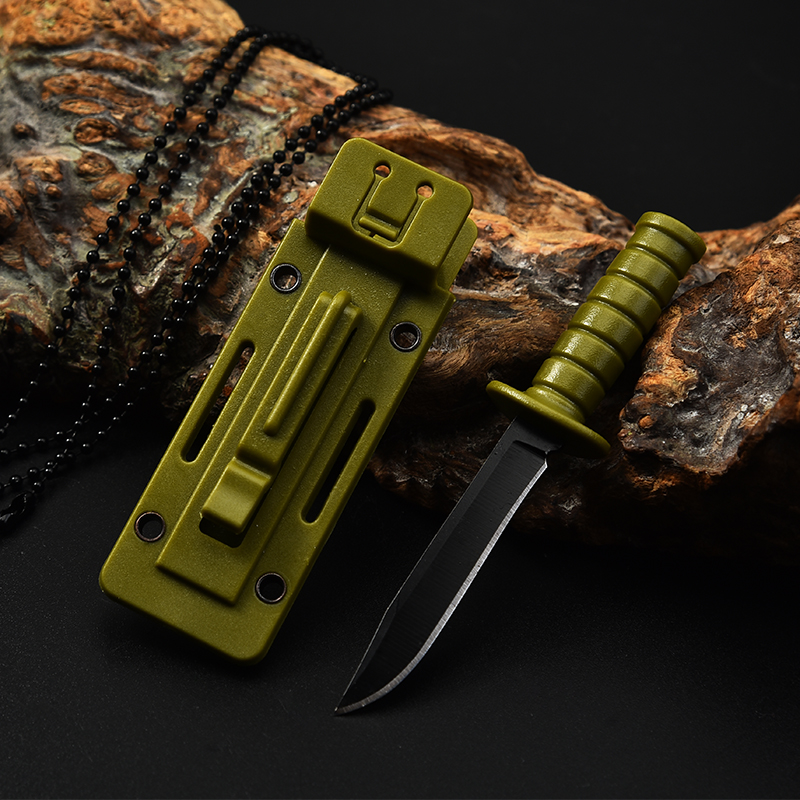
Neither mechanism alone determines safety. Product condition, design, task suitability, instructions, and handling all matter. Automatic knives add a powered deployment path that users must keep clear.
Unintended activation is a risk that deserves attention. Follow the approved carry method, protect the control from loose objects, and stop carrying a knife that does not remain securely closed.
Stop using it. Keep the blade away from people and follow the exact manufacturer's troubleshooting instructions. If the cause remains uncertain, arrange service rather than forcing or modifying the mechanism.
Follow the product manual and adjust attention to actual exposure. Clean visible contamination promptly. Dusty work, pocket lint, moisture, and adhesive residue can require more frequent care.
No. Lubricant compatibility and quantity matter. Use the manufacturer's recommended product and application method. Excess oil can collect contamination, while unsuitable products may affect materials or performance.
Request representative samples, a written specification, agreed inspection criteria, care instructions, packaging requirements, and a service process. Confirm destination-market requirements separately before committing to production or shipment.
1. Blade HQ. ["Switchblade Safety Tips."] Original article reviewed for topic coverage, mechanism descriptions, and handling guidance. [bladehq]
2. Benchmade. ["Understanding Knife Mechanisms: A Complete Guide."] Reference for distinctions between assisted-opening, automatic, and OTF mechanisms. [benchmade]
3. Benchmade. ["Knife Care 101: A Guide to Maintaining Your Knife."] Reference for cleaning, drying, edge maintenance, and controlled lubrication. [benchmade]
4. Microtech Knives Support System. ["Maintenance Quick Guide."] Updated September 16, 2025. Reference for lint removal, adhesive residue, light lubrication, and avoiding excess oil. Instructions remain manufacturer-specific. [support.microtechknives]
5. Microtech Knives. ["OTF Product Manual."] Reference for model-family maintenance guidance and the importance of regular care. [microtechknives]
6. American Knife & Tool Institute. ["Federal Switchblade Act."] Reference for the distinction between federal commerce restrictions and state-level rules. [akti]
7. American Knife & Tool Institute. ["State Knife Laws."] Reference for jurisdiction-specific differences and the limitations of general legal summaries. [akti]


