


Views: 299 Author: Holin Knife Publish Time: 2026-11-24 Origin: Site


Content Menu
● Utility Knife OEM Manufacturing vs Generic Wholesale Products: Key Differences
● 1. Product Design: Functional Customization vs Cosmetic Branding
>> What Custom Utility Knife Manufacturing Can Change
>> Where Wholesale Utility Knives Make Sense
● 2. Blade Systems and Safety: Compare Mechanisms, Not Labels
>> Questions to Ask Before Approving a Knife
● 3. Materials and Quality Control: What Buyers Should Actually Verify
>> Define Materials Beyond Marketing Descriptions
>> Establish a Written Inspection Plan
● 4. Pricing: Compare Total Cost, Not Just the Quotation
>> Illustrative Break-Even Example
● 5. Minimum Orders, Lead Times, and Inventory Exposure
● 6. Brand Ownership, Documentation, and Supply Continuity
>> Agree on Ownership Before Paying for Development
>> Build Documentation Around the Destination Market
● 7. A Practical Supplier Validation Workflow
>> Step 1: Write a One-Page Use Specification
>> Step 2: Evaluate Comparable Samples
>> Step 3: Approve a Controlled Reference Sample
>> Step 4: Validate Production Before Scaling
>> Step 5: Control Future Changes
● 8. Which Sourcing Route Fits Your Business?
● Develop Your Utility Knife Program With Holin
>> Is OEM Utility Knife Manufacturing Always Better Than Wholesale?
>> Can Generic Wholesale Utility Knives Carry My Brand?
>> What Determines the Minimum Order for Custom Utility Knives?
>> How Should I Compare Utility Knife Manufacturers?
>> Who Owns the Mold in an OEM Knife Project?
>> Does an Auto-Lock Utility Knife Automatically Retract?
Utility knife OEM manufacturing vs generic wholesale products is a sourcing decision about more than price. It determines how much control you have over product specifications, brand differentiation, quality consistency, and future supply. For importers, tool brands, and distributors, the right choice depends on what customers need—and what your business can realistically support.
At Yangjiang Holin Industrial Co., Ltd., our manufacturing perspective starts with a practical question: are you buying an available product, or developing a product program? With our own R&D team, production factory, and OEM/ODM capabilities, we support customized development and volume production. However, custom manufacturing is not automatically the best starting point for every buyer.
This guide compares both approaches and explains how to choose using specifications, risk, and commercial economics rather than assumptions.
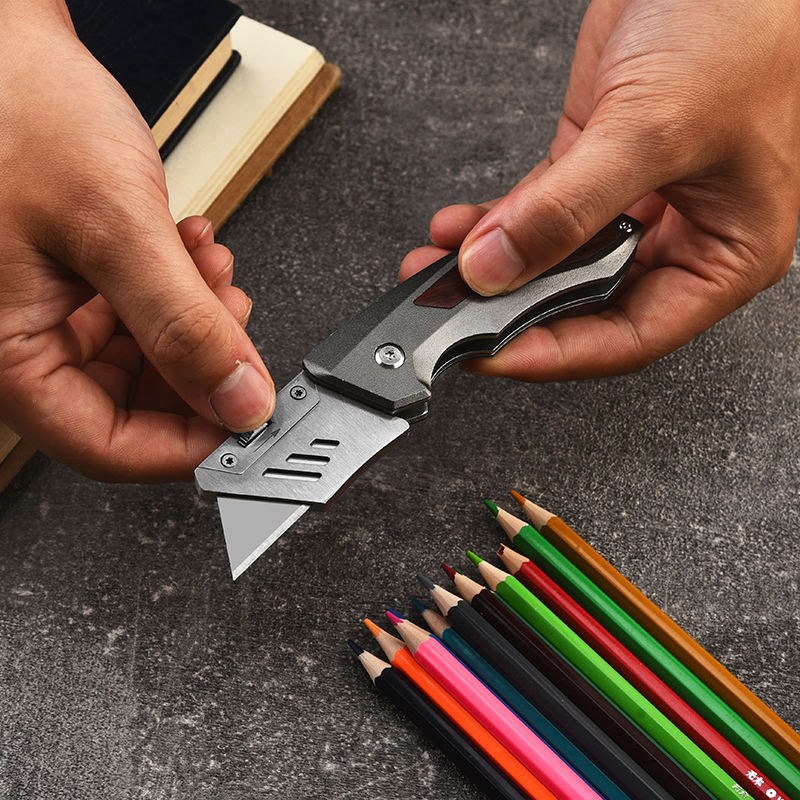
OEM manufacturing means a manufacturer produces knives against an agreed customer specification. Depending on the project, this may involve an existing platform, modified components, or a new design.
ODM generally starts with a manufacturer-developed design that a buyer selects or adapts. Commercial terminology varies, so the contract should define deliverables and ownership.
Generic wholesale means purchasing an existing product with limited changes. Some suppliers offer logo printing or packaging options, but these do not necessarily provide control over the underlying construction.
| Purchasing factor | Utility knife OEM manufacturing | Generic wholesale products |
|---|---|---|
| Product design | Defined through an agreed specification | Usually an existing catalog design |
| Customization | Potentially structural, functional, and visual | Usually limited to available options |
| Initial investment | May include engineering, samples, and tooling | Often lower when buying existing stock |
| Launch timing | Includes development and approval stages | Potentially faster if stock is confirmed |
| Order quantity | Depends on components and production setup | Depends on inventory and supplier terms |
| Quality control | Can be contractually tailored | Depends on supplier controls and inspection |
| Differentiation | Greater potential for distinct features | More likely to overlap with competitors |
| Best fit | Established demand or specific requirements | Market testing and straightforward procurement |
Neither route guarantees quality. A well-controlled standard product can outperform a poorly managed custom project.
A useful custom utility knife solves a defined problem. Relevant development options may include:
- Handle geometry for gloved operation.
- Blade exposure suited to the cutting task.
- Blade-change access and retention.
- Pocket-clip placement or carrying features.
- Housing materials and surface texture.
- Packaging, instructions, and replacement-blade presentation.
Feasibility depends on engineering review, tooling, quantities, and validation. Buyers should distinguish between a requested feature and a confirmed manufacturing capability.
My recommendation is to start with the cutting task, not the logo. A warehouse operator opening cartons has different priorities from a flooring installer cutting dense sheet material.
An existing utility knife may already meet the requirement. If its grip, blade system, durability, and packaging are suitable, redesign adds cost without necessarily adding customer value.
Private labeling can therefore be a sensible middle ground. Just clarify whether you are purchasing a branded catalog item, a modified platform, or an exclusive design.
A logo changes presentation. It does not, by itself, change performance or establish design ownership.
Terms such as "retractable," "auto-lock," and "automatic" can describe different functions.
An auto-lock mechanism holds an extended blade in position. It should not be confused with automatic blade retraction.
Industry product guidance distinguishes semi-automatic systems, which depend on releasing the slider, from fully automatic designs that retract or shield the blade even while the slider remains engaged. Concealed-blade designs use a recessed cutting channel instead. Suitability still depends on the material and task.
For either sourcing route, establish:
1. What causes the blade to retract or become protected?
2. Can normal hand positioning interfere with that function?
3. What blade exposure is necessary?
4. How is the blade retained during cutting?
5. What happens after debris enters the mechanism?
6. How are replacement blades installed and discarded?
Avoid accepting "safety knife" as a complete specification. Ask for a demonstration, written operating instructions, and an agreed validation method.
In U.S. construction, OSHA prohibits employers from issuing or permitting unsafe hand tools. This workplace requirement is not a product certification or an endorsement of any particular knife.
OEM sourcing creates an opportunity to define quality more precisely. It does not guarantee that the opportunity will be used.
"Premium blade" and "heavy-duty housing" are incomplete purchasing specifications.
Where relevant, request:
- Blade material designation and thickness.
- Agreed hardness range and verification method.
- Housing material and finish.
- Blade-channel dimensions and tolerances.
- Spring, fastener, and retention-component specifications.
- Replacement-blade compatibility.
Material selection should follow intended use. A heavier housing is not automatically more durable, and a harder blade is not automatically better for every cutting application.
A practical plan can combine incoming-material checks, in-process checks, and finished-product inspection.
For utility knives, proposed checkpoints include blade retention, mechanism operation, housing integrity, blade alignment, replacement access, and packaging accuracy.
Define the test method, sample quantity, acceptance criteria, and reporting format before production. Any destructive or force-based testing should use a controlled fixture and trained personnel.
A supplier's willingness to document requirements matters more than broad assurances of "strict quality."
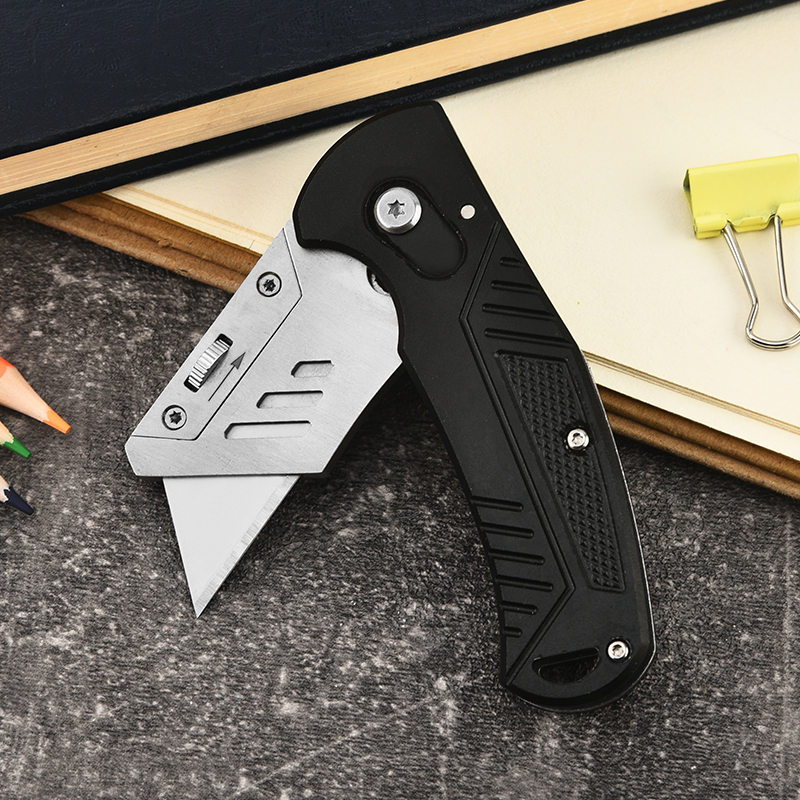
Wholesale products often require less development expenditure. OEM projects may introduce engineering, tooling, validation, and packaging setup costs.
However, the lowest purchase price is not necessarily the lowest commercial cost.
Compare:
- Product and packaging costs.
- Tooling and development charges.
- Inspection and testing.
- Freight, duties, and handling.
- Inventory financing and storage.
- Expected returns and replacements.
- Blade availability and after-sales support.
Use identical delivery terms and packaging assumptions when comparing quotations.
Assume two hypothetical offers:
| Cost element | Generic wholesale | OEM project |
|---|---|---|
| Unit purchase price | $2.40 | $2.10 |
| One-time development cost | $0 | $3,000 |
The OEM option saves $0.30 per unit before other differences. Recovering $3,000 therefore requires 10,000 units.
This is an illustrative calculation, not a Holin quotation or market benchmark. It assumes equivalent performance and excludes freight, financing, defects, and inventory risk.
If customization adds cost rather than reducing it, the business case must come from measurable value: a justified selling-price premium, better customer fit, or another defensible benefit.
Custom development usually involves more approval stages than purchasing finished stock. However, wholesale is only faster when the required inventory genuinely exists and is ready for shipment.
For either route, separate:
- Sample availability.
- Development and revision time.
- Tooling completion.
- Production scheduling.
- Packaging readiness.
- Inspection and release.
- Transportation.
Ask what starts the lead-time clock. Deposit receipt, drawing approval, and final sample approval are different milestones.
For custom utility knives, order quantity may be driven by a special component rather than final assembly. Ask suppliers to explain the constraint.
A modified existing platform can sometimes reduce development exposure compared with a completely new design. Whether it does depends on the changes requested.
A custom appearance does not automatically mean exclusive rights.
Contracts should address:
- Ownership and permitted use of drawings.
- Tooling ownership, maintenance, and storage.
- Design exclusivity, if negotiated.
- Restrictions on selling the same configuration.
- Responsibility for third-party intellectual-property review.
- Access to replacement components.
OEM describes a production relationship, not a complete intellectual-property arrangement.
Ask which product-safety, labeling, packaging, chemical, and import requirements apply to the intended market and sales channel.
Do not assume a generic certificate covers the exact model, materials, or destination.
Likewise, do not treat a supplier's documentation as a substitute for the buyer's own obligations. Responsibility should be reviewed with appropriately qualified compliance specialists.
For repeat orders, retain approved specifications, sample identifiers, packaging files, and change records. Require written approval before material or component substitutions.
The strongest purchasing process connects user needs with production evidence.
State the materials to be cut, working conditions, user profile, replacement-blade needs, target market, and intended price position.
"Suitable for warehouse carton opening with gloves" gives a supplier more direction than "high quality."
Give suppliers the same brief. Assess samples against the same criteria rather than comparing appearance alone.
Record usability observations and distinguish subjective preferences from pass-or-fail requirements.
Record the model, revision, materials, packaging, and acceptance criteria. Keep matching buyer and supplier samples where practical.
An attractive sample without a linked specification is a weak production reference.
For a new design, consider a pilot run to assess assembly consistency, packaging, and inspection methods.
Agree how failed checks will be corrected and when repeat approval is necessary.
Require notification and approval for changes affecting fit, function, safety, appearance, or claimed performance.
Consistency means controlling later orders—not merely accepting the first shipment.
Choose generic wholesale utility knives when demand is uncertain, available designs meet requirements, and launch speed matters more than exclusivity.
Consider OEM manufacturing when you can identify a specific product gap, support development work, and forecast enough demand to justify the investment.
A hybrid strategy can be practical:
1. Validate the customer segment with a suitable existing product.
2. Collect structured feedback.
3. Identify recurring shortcomings.
4. Develop only the modifications customers value.
This avoids tooling a product around untested assumptions.
The decisive question is not "Which route looks more professional?" It is "Which route gives us sufficient control at an acceptable level of risk?"
Yangjiang Holin Industrial Co., Ltd. manufactures folding knives, pocket knives, utility knives, and outdoor tools. Our own R&D team and production factory support product design, development, and volume manufacturing through one-stop OEM/ODM services.
For a focused project discussion, send your target market, cutting application, estimated quantity, preferred blade format, branding requirements, and launch schedule. Include drawings or reference samples when available.
Ask Holin to review whether an existing platform, a modified design, or a new development best fits your commercial brief. Confirm specifications, sampling, tooling, inspection, and delivery milestones before committing to production.
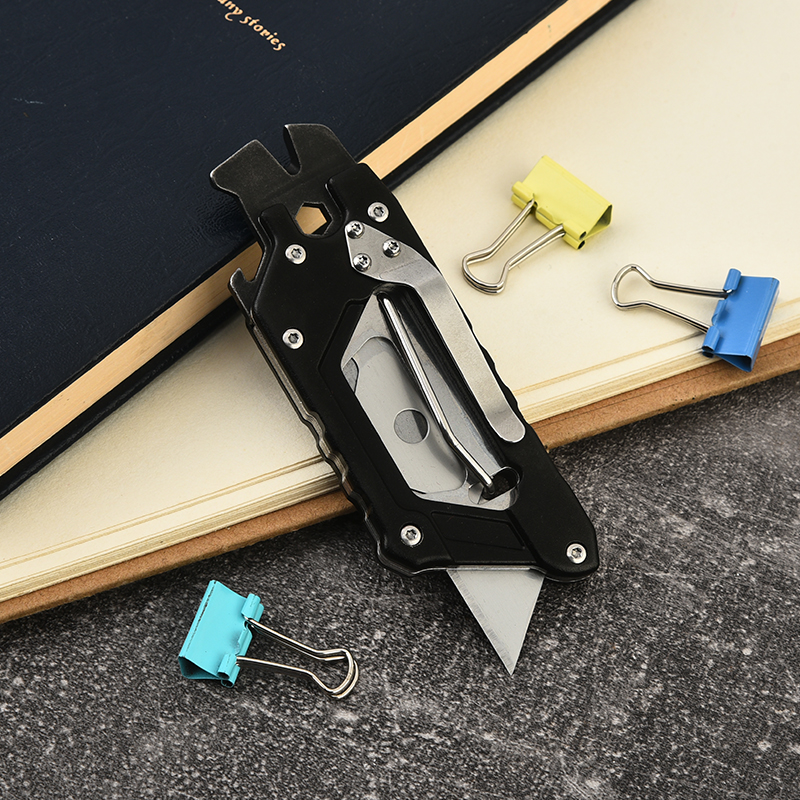
No. OEM offers greater potential control, but also introduces development decisions and costs. Wholesale can be the better choice when an existing knife meets the application and demand remains uncertain.
Sometimes. Suppliers may offer logo application and customized packaging. Confirm the available options, minimum quantities, artwork charges, and whether the underlying design remains available to other buyers.
Order quantities depend on materials, special components, production setup, packaging, and supplier economics. Request a project-specific explanation rather than assuming one minimum applies to every model.
Compare specification clarity, sample performance, inspection methods, engineering communication, change control, and commercial terms. Price matters, but it should be assessed alongside documented capability and supply reliability.
Ownership depends on the agreement. Specify who pays, who owns the tooling, where it is stored, who maintains it, and whether it can be transferred or used for other customers.
Not necessarily. Auto-lock commonly refers to holding the blade at a selected extension. Automatic retraction is a different function. Confirm the mechanism through product documentation and sample evaluation.
1. Occupational Safety and Health Administration (OSHA). "1926.301 — Hand Tools." U.S. Department of Labor. Regulatory requirements concerning unsafe hand tools in construction workplaces.
[https://www.osha.gov/laws-regs/regulations/standardnumber/1926/1926.301]
2. OLFA. "Anatomy of an OLFA Utility Knife 1.1." January 20, 2022. Background on utility knife components, blade-position controls, and operating features.
[https://olfa.com/blogs/professional/anatomy-of-an-olfa-utility-knife-1-1]
3. OLFA. "The Ultimate Guide to Work Safety." February 1, 2022. Industry guidance on workplace cutting tools, ergonomic considerations, and safety features.
[https://olfa.com/blogs/professional/the-ultimate-guide-to-work-safety]


