


Views: 218 Author: Holin Knife Publish Time: 2026-08-28 Origin: Site


Content Menu
● Start With the Right Sharpening Goal
● Choose the Best Sharpener for Your Knife
● Understand Pocket Knife Sharpening Angles
>> Use the Marker Test Before You Grind
● How to Sharpen a Folding Knife Step by Step
>> 1. Prepare a Safe Work Area
>> 2. Clean and Inspect the Blade
>> 3. Match the Existing Bevel Angle
>> 4. Sharpen From Heel to Tip
● Select the Right Grit for the Job
● Common Sharpening Mistakes That Shorten Blade Life
● Folding Knife Care Beyond Sharpening
● When to Seek Professional Sharpening
● Build Better Knives With Holin
● FAQ
>> How often should I sharpen a pocket knife?
>> What is the best sharpening angle for a folding knife?
>> Can I sharpen a folding knife with a whetstone?
>> Should I use a pull-through sharpener on a pocket knife?
>> How do I know if my knife is sharp enough?
>> Can a serrated knife be sharpened at home?
>> Why does my knife feel dull again soon after sharpening?
A sharp folding knife is easier to control, cleaner in use, and more dependable when you need it. Whether you carry a pocket knife for daily tasks, use a utility knife at work, or rely on an outdoor folding knife in the field, learning how to sharpen a knife at home helps you protect its cutting performance without removing unnecessary steel.
At Yangjiang Holin Industrial Co., Ltd., our product-development and manufacturing teams work with folding knives, pocket knives, utility knives, and outdoor tools throughout the design and production process. One lesson remains consistent: the best sharpening method is not the most aggressive one—it is the one that preserves the blade's intended edge geometry while restoring a clean, stable cutting edge.

Sharpening does not simply mean making a blade "more pointed." It means removing a controlled amount of metal until the two sides of the edge meet again at a fine apex.
For most folding knives, the goal is edge maintenance, not complete reprofiling. If a blade still cuts but requires extra pressure, a few careful passes on a ceramic rod, guided sharpener, or fine stone may be enough. If it has chips, a visibly rolled edge, or cannot slice paper cleanly, it may need more substantial work.
Before sharpening, inspect the knife under good lighting.
- Look for chips, flat spots, corrosion, or a rolled edge.
- Open the folding knife fully and make sure the lock is securely engaged.
- Clean adhesive, dirt, tape residue, and moisture from the blade.
- Check whether the blade has a plain edge, serrated edge, recurved edge, or specialty grind.
- Identify the manufacturer's recommended edge angle if that information is available.
Do not sharpen a dirty blade. Residue can interfere with contact on the sharpening surface and may scratch the blade finish.
There is no single best knife sharpener for every pocket knife. The right choice depends on the edge condition, blade shape, steel type, your skill level, and the amount of metal you are willing to remove.
| Sharpening tool | Best for | Main advantage | Watch out for |
|---|---|---|---|
| Ceramic rods | Routine edge maintenance | Simple, controlled, low material removal | Not ideal for chips or severely dull blades |
| Guided sharpening system | Beginners and repeatable angles | Helps maintain consistent geometry | May require blade-specific clamp setup |
| Whetstone | Users seeking maximum control | Flexible and effective for many blade types | Requires practice to hold a stable angle |
| Diamond plate | Hard steels and fast material removal | Durable, fast-cutting surface | Can remove steel quickly if used aggressively |
| Pull-through sharpener | Quick household touch-ups | Convenient and fast | Can create a rough edge or alter the original bevel |
| Leather strop | Final edge refinement | Removes a light burr and improves cutting feel | Does not replace real sharpening |
For many everyday folding knives, a fine ceramic system or guided sharpener offers a practical balance between speed, consistency, and edge preservation. A whetstone is an excellent choice when you want to repair an edge, refine a custom bevel, or develop more advanced sharpening skills.
The sharpening angle affects cutting performance, edge durability, and ease of maintenance. A smaller angle can feel sharper during light cutting, but it may be more vulnerable to rolling or chipping. A wider angle usually sacrifices some slicing efficiency for greater support behind the edge.
For general folding knife use, many manufacturers use an edge angle of approximately 15° to 20° per side. Chris Reeve Knives, for example, states that its folding knives are sharpened at 18° to 20° per side and recommends a 40° inclusive setting on the Spyderco Triangle Sharpmaker for maintenance.
| Knife use | Typical angle per side | Practical result |
|---|---|---|
| Fine slicing and light detail work | 15°–17° | Very efficient cutting, lower edge stability |
| Everyday pocket knife use | 17°–20° | Balanced sharpness and durability |
| Utility and harder cutting tasks | 20°–25° | Stronger edge with more resistance to damage |
| Outdoor or demanding work knives | 20°+ | Greater durability for tougher materials |
Consistency matters more than chasing a perfect number. Keeping both sides of the blade at a stable, repeatable angle produces a better result than changing angles during every pass.
A simple marker test can prevent unnecessary reshaping. Color the existing bevel with a permanent marker. Make one or two very light passes on your sharpening surface, then inspect where the marker has been removed.
- Marker removed at the top of the bevel: your angle is too high.
- Marker remains near the cutting edge: your angle is too low.
- Marker removed evenly across the bevel: you are matching the existing edge.
This method is especially useful for OEM knife buyers, brand owners, and outdoor-tool distributors evaluating a new blade design. It quickly reveals whether the production edge angle matches the intended sharpening system.
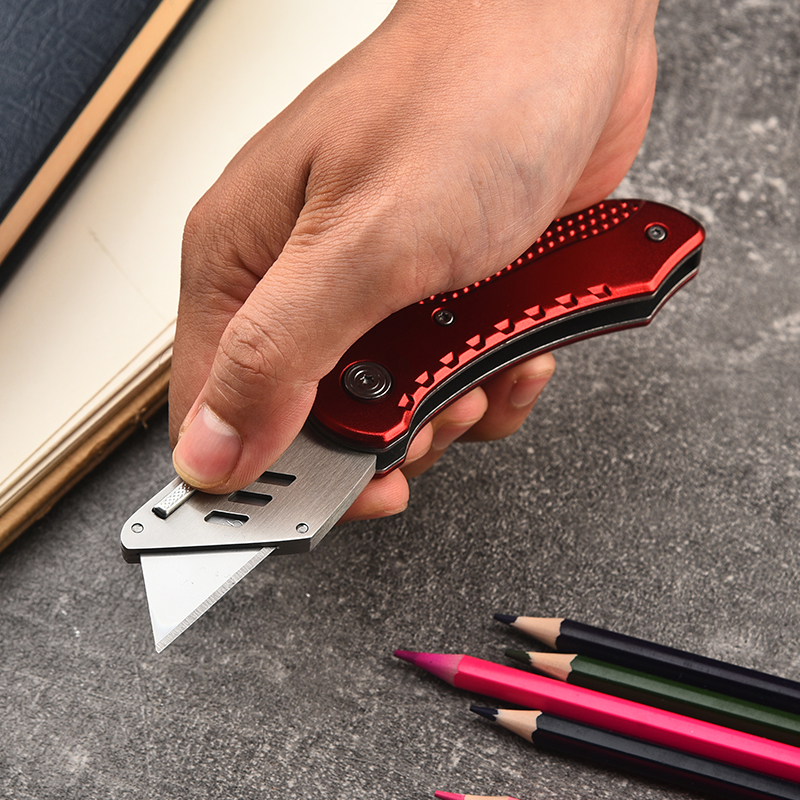
The following method works well with a ceramic rod system, guided sharpener, or whetstone. Always adapt the motion to your tool's instructions and the blade's geometry.
Place the sharpener on a stable, non-slip surface. Ensure there is enough light to see the edge clearly. Keep your hands dry and remove loose items from the work area.
For folding knives, confirm that the blade is fully opened and locked. Keep the cutting edge pointed away from your body at all times.
Wipe the blade with a soft cloth. Remove tape adhesive, food residue, dust, sap, or moisture. If needed, use a suitable knife-safe cleaner, then dry the blade completely.
Inspect the edge from heel to tip. If there are major chips, cracks, or significant corrosion, do not try to solve the problem with heavy pressure and dozens of fast passes. Controlled repair is safer and preserves more blade material.
Set your guided system to the closest available angle, or use the marker test when sharpening freehand. For a typical EDC pocket knife, start around 17° to 20° per side unless the manufacturer specifies otherwise.
Use light pressure. Excess pressure can create uneven bevels, raise a large burr, and wear the edge faster than necessary.
Work along the full length of the edge. On a stone, keep the bevel in contact with the surface and move steadily from the heel toward the tip. On upright ceramic rods, move the blade downward while following the curve of the cutting edge.
When sharpening a blade with a belly, rotate your wrist gently as you approach the tip. This rolling motion helps maintain contact with the entire edge and avoids creating a thick, blunt, or uneven tip. Chris Reeve Knives specifically cautions against a purely vertical motion because it can shorten the blade and disrupt its geometry over time.
Use the same number of passes on each side. For a slightly dull knife, try five light passes per side, then reassess. For a duller knife, use a controlled sequence such as:
1. Ten passes per side
2. Five passes per side
3. Three passes per side
4. One alternating pass per side
Avoid trying to "win" by sharpening longer. Check progress frequently.
A burr is a tiny fold of steel created at the edge during sharpening. Carefully move your fingertip away from the edge, never across it, to feel for a slight catch on the opposite side.
Once you can detect a light, consistent burr along the blade, switch sides and repeat. Then reduce pressure and use alternating strokes to minimize it.
Finish with a leather strop or a fine sharpening surface. Use very light passes at the same angle or slightly lower. Stropping can remove a remaining burr and make the edge feel cleaner in use.
Test the knife on ordinary paper. A properly sharpened edge should slice smoothly without snagging or tearing. You can also test it on a tomato, cardboard, or cordage relevant to the knife's intended use.
Never test sharpness by running your thumb along the edge.
Grit selection should match the condition of the knife. Starting with a coarse abrasive when the knife only needs a touch-up wastes blade material.
| Blade condition | Suggested grit range | Recommended approach |
|---|---|---|
| Lightly dull, no damage | 1,000–3,000 | Refine the existing edge with light passes |
| Regularly used EDC knife | 600–1,200 | Restore sharpness, then finish finer |
| Very dull edge | 400–800 | Rebuild the edge gradually before refining |
| Chips or visible damage | Below 400 | Repair carefully, then progress to finer grits |
| Final refinement | 3,000+ or strop | Remove a light burr and improve edge feel |
Industry guidance commonly places coarse abrasives below roughly 300 grit for repair work, while finer grits are used for sharpening and polishing. For everyday maintenance, begin with the finest abrasive that can solve the actual problem.
Even good knife steel can perform poorly after incorrect maintenance. Avoid these common errors.
- Using heavy pressure: Let the abrasive do the work.
- Changing the angle repeatedly: This creates a rounded, inconsistent edge.
- Ignoring the tip: A curved tip needs a controlled rolling motion.
- Overusing pull-through sharpeners: They may remove more steel than needed.
- Using a steel rod as a repair tool: Honing and sharpening are not the same process.
- Sharpening serrations like a plain edge: Serrated blades need individual attention.
- Leaving moisture in the pivot area: This can contribute to corrosion and poor action.
- Testing the edge unsafely: Use paper or a controlled cutting task instead.
A sharp edge is only one part of reliable knife performance. Folding knives also need routine care around the pivot, lock, handle, and storage environment.
After use, clean the blade with a soft cloth and dry it fully. For a folding knife used around food, outdoor materials, moisture, or adhesive, clean the pivot area carefully according to the product's maintenance instructions. Use an appropriate lubricant sparingly; excess oil attracts dust and debris.
For brand owners sourcing custom folding knives, sharpening performance should be planned during product development—not added after production. Blade steel, heat treatment, edge thickness, primary grind, coating, intended user, and sharpening angle all influence the final cutting experience.
At Holin, an effective OEM/ODM knife project can include early alignment on:
- Blade profile and functional use
- Plain, serrated, or combination edge configuration
- Target edge angle and bevel style
- Steel selection and heat-treatment requirements
- Handle material, lock style, and opening mechanism
- Surface finish, coating, logo placement, and packaging
- Quality-control criteria for sharpness, fit, finish, and locking function
This approach helps importers and private-label brands develop knives that are not only visually distinctive, but also easier for end users to maintain correctly.
Home sharpening works well for regular maintenance. However, professional service may be the better choice when a blade has deep chips, a broken tip, severe corrosion, extensive recurve geometry, valuable custom finishes, or a damaged serrated edge.
It is also worth seeking expert assistance if repeated home sharpening has made the bevel overly wide or the blade noticeably thicker behind the edge. Restoring correct geometry may require material removal and equipment beyond a basic home setup.
A well-maintained folding knife should not need aggressive sharpening every week. Use a fine abrasive or strop for regular touch-ups, and reserve coarse grinding for actual repair work.
Need a folding knife, pocket knife, utility knife, or outdoor tool developed for your market? Yangjiang Holin Industrial Co., Ltd. provides integrated OEM/ODM support from product concept and blade design through sampling, mass production, quality control, and export-ready packaging.
Share your target market, intended application, preferred materials, branding requirements, and expected order volume. Our product and manufacturing teams can help turn your knife concept into a scalable, market-ready product line.
Sharpen when cutting performance declines rather than following a fixed schedule. Light users may need only occasional touch-ups, while frequent cardboard, rope, packaging, or outdoor use may require more regular edge maintenance.
For many everyday folding knives, 17° to 20° per side provides a useful balance between sharpness and durability. Follow the knife manufacturer's recommendation when available.
Yes. A whetstone can produce an excellent edge when you maintain a consistent angle, use light pressure, and work evenly from heel to tip. It requires more practice than a guided sharpening system.
It can provide a quick result, but it is often less precise and may remove more metal than necessary. A ceramic rod, whetstone, or guided system generally gives better control for quality folding knives.
A sharp knife should slice cleanly through paper with little pressure and cut common materials without snagging. Do not test sharpness by touching or sliding a finger along the edge.
Yes, but it requires a tapered ceramic rod, diamond rod, or a tool sized for the serrations. Sharpen each serration individually from the beveled side, then remove the burr lightly from the flat side.
The most common causes are an unstable edge angle, a remaining burr, excessive sharpening pressure, or an edge that is too thin for the knife's actual task. Reduce pressure, finish with alternating strokes, and match the angle to intended use.
- [Chris Reeve Knives — How to Sharpen a Knife at Home]
- [American Knife & Tool Institute — Knife Safety, Sharpening and Maintenance]
- [Work Sharp — What Is the Best Knife Angle?]
- [Tyrolit Life — Which Whetstone Grit for Knife Sharpening?]
- [Mossy Oak — Expert Knife Sharpening Tips]
- [New West KnifeWorks — Knife Maintenance and Sharpening 101]


