


Views: 268 Author: Holin Knife Publish Time: 2026-11-15 Origin: Site


Content Menu
● What You Need to Clean a Pocket Knife
● How to Clean a Folding Knife Without Taking It Apart
>> 1. Wipe the blade before folding it away
>> 2. Clear out loose lint and grit
>> 3. Use moisture only where needed, then dry thoroughly
● How to Oil a Pocket Knife Without Over-Lubricating It
>> Lubricate a clean pivot, not a dirty one
>> Keep pivot lubricant and blade protectant separate
● Rust Prevention: Match Your Care Routine to the Exposure
>> Tell surface staining from damage that needs service
● Troubleshooting: When Cleaning Isn't Enough
>> Check service terms before removing screws
● What Buyers Should Specify for an OEM/ODM Folding Knife
>> Discuss your custom folding knife project
● FAQs
>> How often should I clean my pocket knife?
>> Can I wash a folding knife under running water?
>> Can I use rubbing alcohol to remove tape residue?
>> Can I use cooking oil on my folding knife?
>> Do I need to disassemble my knife to clean the pivot?
Pocket knife maintenance starts with three habits: remove dirt before it reaches the handle, dry the knife completely, and use lubricant sparingly. For most folding knives used to open cartons, cut cord, or handle everyday outdoor chores, routine cleaning does not require disassembly. The important distinction is between a knife that needs cleaning and one that needs service. Pocket lint and tape residue are usually manageable at home; an unreliable lock, unexpected blade movement, or deep corrosion is a reason to stop using the knife.


Start with a soft cloth, a soft nylon brush, and the care instructions for your model. Add mild dish soap if the manufacturer permits damp cleaning. Keep a separate dry cloth handy so you can remove moisture without wiping it back onto the blade. For lubrication, choose a product suitable for your knife's pivot rather than assuming that anything labeled "oil" will work.
| Item | What it's for | What to watch for |
|---|---|---|
| Soft, lint-free cloth | Wiping the blade and handle | Keep your fingers behind the cutting edge. |
| Soft nylon brush | Lifting loose debris from accessible recesses | Don't push debris farther into the handle. |
| Mild dish soap | Removing ordinary grime when damp cleaning is permitted | Don't soak a folding knife or put it in a dishwasher. |
| Model-compatible lubricant | Lubricating the pivot, where the blade rotates | Use a small amount and wipe off excess. |
| Compatible blade protectant | Leaving a light protective film on corrosion-prone steel | Use a food-grade product suitable for blade contact if the knife also handles food. |
Work on a stable, well-lit surface. Handle the knife from the spine side and keep your fingers away from the edge and the blade's closing path. Wipe the blade faces with a soft cloth. After cutting shipping tape, remove visible adhesive before closing the blade so it doesn't transfer into the handle or lock area.
For residue that won't wipe away, check the manufacturer's instructions before using a solvent. A cleaner recommended for a bare steel blade isn't necessarily suitable for its coating, printed markings, or handle material. Apply an approved cleaner to the cloth rather than flooding the pivot.
Use a soft brush on accessible areas of the handle. Work debris outward rather than packing it into a blind recess. If a particle is wedged near the lock and you can't reach it without putting a finger or tool in the blade's path, stop. A spot you can see isn't always a spot you can safely clean.
If your model permits damp cleaning, wipe dirty surfaces with a cloth lightly moistened with warm, soapy water. Remove any soap residue and dry the blade, handle, and accessible recesses before storage. Pay particular attention to the base of the blade, where moisture is easier to miss than on the exposed blade faces.
Follow model-specific guidance if it differs from this routine. Some manufacturers describe rinsing as an option for a heavily soiled folder; others emphasize cleaning only the parts that need it. Neither approach makes soaking a good default.
If the manufacturer recommends oiling, apply a small amount of the specified lubricant to the clean, dry pivot. Move the blade slowly through its normal range, keeping your fingers out of the closing path, then wipe away anything that seeps out. Don't use smooth movement alone as proof that the lock is working correctly. If the blade moves unexpectedly or the lock doesn't engage consistently, stop and seek service.
Avoid adding more oil each time the knife feels gritty. If grit is the cause, oil doesn't remove it. Recheck the accessible areas for debris. If the knife still feels rough after cleaning, describe when the resistance occurs rather than repeatedly oiling or adjusting it. That gives the service team a more useful starting point.
Pivot lubricant reduces friction where parts move. Blade protectant leaves a thin film on exposed metal. A product may serve both purposes, but don't assume that a pivot lubricant is suitable for food contact. For a knife occasionally used to slice fruit, use a suitable food-grade blade protectant, such as food-grade mineral oil, where recommended, and follow the product's instructions.
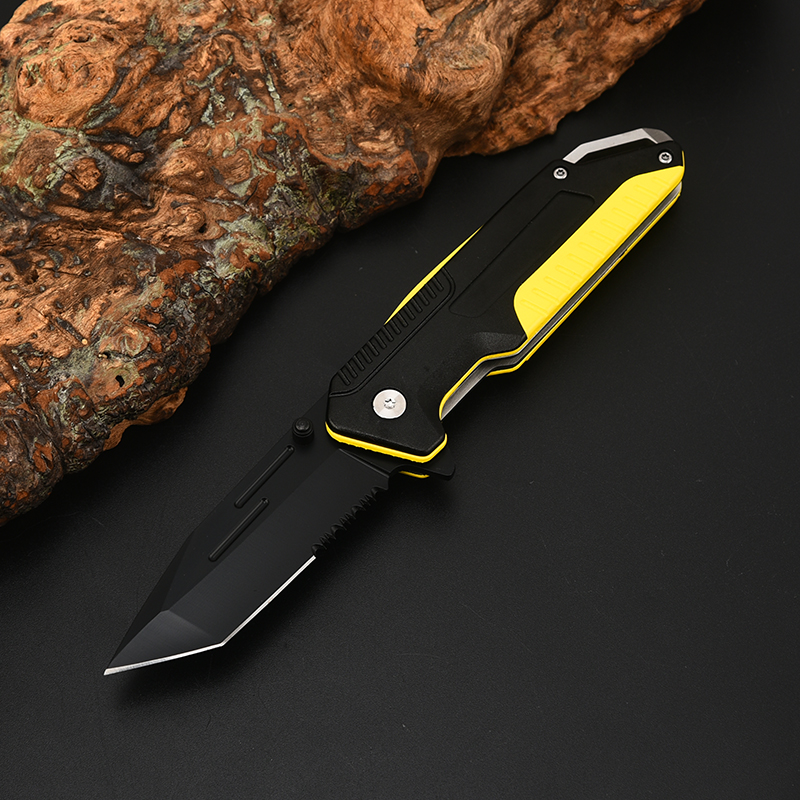
Stainless steel resists corrosion; it isn't rustproof. Non-stainless tool steels generally need closer attention, but the conditions matter as much as the label on the blade. A stainless folder put away wet after a coastal outing deserves more immediate attention than a dry tool-steel knife sitting in a cabinet.
| What the knife encountered | What to do next |
|---|---|
| Dry cartons and pocket lint | Wipe off adhesive or dust and check the handle opening for buildup. |
| Rain, sweat, or damp gear | Clean and dry the knife after use; inspect the blade base and accessible handle recesses before storing it. |
| Salt spray or acidic food residue | Remove residue promptly using the model-approved method, then dry the knife completely. |
| Long periods in storage | Put the knife away clean, dry, and closed; check it periodically if the storage area is humid. |
On some non-stainless steels, a gray or dark patina is a surface color change and isn't necessarily a defect. Fresh orange-brown spotting deserves a closer look. For a small spot on an exposed blade face, use the gentlest finish-compatible method the maker recommends. Don't assume a polish that works on bare steel will preserve a matte, coated, or printed finish. If you see deep pits or corrosion around the pivot or lock, set the knife aside and ask the manufacturer to assess it.
The most useful question is not "Which tool should I buy?" but "What changed, and when?" A knife that feels sticky after cutting tape presents a different problem from one that starts binding after a drop. Use the circumstances to decide whether routine care is appropriate or the knife needs inspection.
| Symptom | First decision |
|---|---|
| Sticky blade after cutting packing tape | Clean the blade with a finish-compatible method before folding it away. |
| Gritty movement after dusty work | Remove accessible debris. If roughness remains, ask about model-specific service. |
| Blade rubs the handle after a drop | Stop using it and report the impact and rub location. Don't treat it as a lubrication issue. |
| Lock no longer engages consistently | Take the knife out of use. Don't test the lock by striking the blade or forcing it closed. |
| Clean blade tears cardboard instead of cutting smoothly | Check for residue first. If the edge is dull or damaged, follow the maker's sharpening guidance or use its service rather than assuming one edge angle fits every model. |
A screwdriver isn't part of the default cleaning kit. Before opening the handle, check the exact model's service policy and whether the manufacturer provides owner-service instructions. Don't assume that a video for a similar-looking knife applies to yours. If you contact support, include the model identifier, what happened before the change, and any cleaning or maintenance you already tried. Photograph visible damage only when you can do so without handling an unreliable blade.
A folding knife's care instructions are worth reviewing before a production order, not after customers start asking how to clean it. At Yangjiang Holin Industrial Co., Ltd., we develop and manufacture folding knives, pocket knives, utility knives, and outdoor tools. For a private-label program, use sample approval to check that the proposed care instructions match the actual steel, finish, handle, and mechanism. The following points are procurement recommendations, not claims about test results.
1. Document the configuration. Record the blade steel and finish, handle material, pivot design, and intended use for the approved sample. If a component changes, check whether the care instructions need to change with it.
2. Review the care card against the sample. Confirm that the card names compatible cleaners, identifies whether and where lubrication is recommended, and tells the owner which symptoms require service. Decide which parts, if any, the owner may replace.
3. Test against the intended use. A warehouse folder that regularly contacts carton dust and tape adhesive calls for a different sample review than an outdoor tool marketed for damp conditions. Agree in advance on what to inspect, what counts as an unacceptable result, and who records it.
4. Define the after-sales process. Give buyers and support teams a way to identify the model or production lot. Agree on what information to collect for corrosion, blade rub, or lock complaints before deciding whether a return or inspection is needed.
Send Yangjiang Holin your target application, preferred blade and handle materials, estimated order volume, and packaging or care-card requirements. Our in-house R&D team and factory can support product design, development, and volume production through a single OEM/ODM program. If you're revising an existing product, include the care or service issues you want the next version to address.

Clean it whenever you see adhesive, lint, or dirt, and dry it promptly after wet or salty exposure. For a knife used daily, a weekly inspection is a reasonable starting point. A lightly used knife stored dry may need only a periodic check. Actual exposure matters more than the calendar.
Check your model's instructions. Some manufacturers allow a brief rinse for heavy contamination, while others recommend wiping only the areas that need cleaning. For ordinary dirt, start with the least moisture needed. Don't soak the knife or put it in the dishwasher, and dry it completely before storing it.
Only if it's compatible with the affected surface. Some manufacturers recommend alcohol for certain blade-cleaning tasks, but that doesn't make it suitable for every coating, handle scale, or printed mark. Use a small amount on a cloth where approved rather than pouring it into the mechanism.
Avoid kitchen cooking oil as a substitute for pivot lubricant or blade protectant. Use the lubricant recommended for the mechanism. For a blade that contacts food, choose a suitable food-grade protectant and follow the product directions.
Not for routine cleaning. Start by removing accessible debris without taking the knife apart. If contamination remains trapped or the blade still binds, consult the maker's service instructions before removing hardware. A mechanical problem may need inspection rather than deeper cleaning.
- Blade HQ's *Pocket Knife Maintenance* informed the coverage of common maintenance tasks and the distinction between routine care and sharpening. [bladehq]
- Spyderco's *Knife Maintenance: Simple Tips for Better Performance* informed the advice on adhesive, debris, patina, and corrosion. [spyderco]
- Benchmade's *Use and Care*, *Knife Care 101*, and dealer care guidance informed the model-specific approach to cleaning, lubrication, storage, and service. [benchmade]


