


Views: 257 Author: Holin Knife Publish Time: 2026-11-18 Origin: Site


Content Menu
● What Are Star Wars Knives? Three Categories Buyers Should Know
>> Officially licensed collectibles
>> Independently themed pocket knives
>> Folding utility knives and box cutters
● From Tatooine to Naboo: Turning Filming Locations Into Original Design Ideas
>> What fan accounts add to the design discussion
● How to Compare a Collectible, a Folding Pocket Knife, and a Box Cutter
● Three Checks Before Approving an OEM or ODM Utility Knife
>> 1. Define the job before choosing the appearance
>> 2. Approve a sample that production can match
>> 3. Review rights and destination requirements before printing
● Request an OEM/ODM Quote for a Folding Utility Knife or Box Cutter
>> Are all Star Wars knives officially licensed?
>> Does a sci-fi colorway tell me anything about performance?
>> Is a folding utility knife the same as a retractable box cutter?
>> Can I use a Star Wars character name on private-label packaging?
>> What should I send a manufacturer to get a useful quote?
>> How can I check whether a bulk order matches the approved sample?
Star Wars knives can mean three different things: officially licensed collectibles, independently designed pocket knives with a science-fiction look, or ordinary utility tools styled around a fictional landscape. Those categories can overlap visually, but they answer different questions. A collector wants to know who authorized an edition. A utility buyer wants to know what the tool is designed to cut. A retailer commissioning a custom run needs to know what can be produced consistently and what can be sold under its own brand.
A desert-tan finish can evoke Tatooine without making a knife an official tie-in. Likewise, a folding utility knife can be a better fit for a packaging team than a visually striking collectible. This guide uses the films' locations as a starting point, then takes a manufacturer's view of product descriptions, sample approval, and OEM/ODM sourcing.
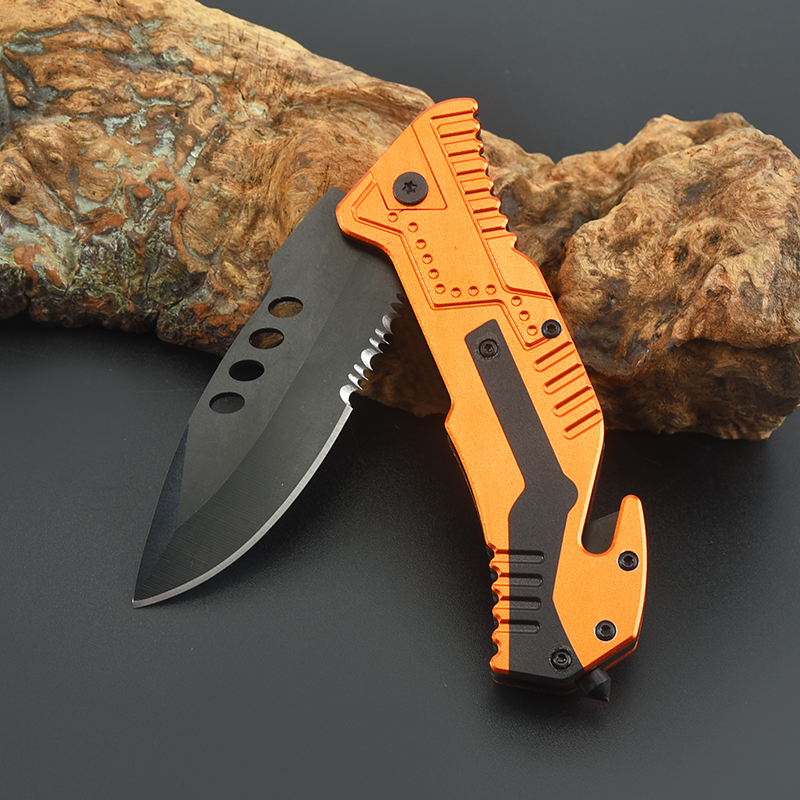
If your reason for buying is the franchise connection, start by verifying the exact edition. Look for a manufacturer or authorized seller that identifies the model, states its licensing status, and shows the packaging supplied with that version. A product photo, a character nickname, or a reseller's headline is not enough on its own to establish authorization.
Keep the exact model or SKU with your purchase records. That matters when several variants share the same base product name: a listing for one finish does not establish the origin or licensing status of every other finish.
An independent design can use desert tones, forest greens, or a restrained metallic palette without presenting itself as franchise merchandise. Its appeal comes from the product's own design. An accurate listing should identify the maker, describe the actual finish, and say what comes in the box. It should not rely on an implied character association to explain what the buyer is getting.
For retailers, this distinction also affects packaging and photography. An original name, original graphics, and a clearly identified manufacturer give the product an identity that does not depend on a film reference.
A practical cutting tool starts with a specific job: opening taped cartons, trimming labels, or cutting approved packaging materials. Buyers should compare blade exposure, storage position, replacement-blade availability where applicable, and the materials the supplier says the tool is designed to cut. Treat color as a separate decision. It can contribute to a coordinated product line, but it tells you nothing about how the tool will perform at a packing bench.
Blade HQ's planet-by-planet article gives readers a memorable reason to explore different knife designs. The useful distinction is that a filming location can explain an aesthetic choice, but it cannot establish that a tool is suitable for that environment. A product styled after Hoth is not necessarily tested for cold-weather use, just as a desert-colored handle says nothing about how the mechanism responds to grit.
| Fictional setting | Real-world filming connection | Original design direction | What the buyer should verify |
|---|---|---|---|
| Tatooine | Tunisia and Death Valley, California, were among the locations used | Sand, warm gray, and muted earth tones | Whether the approved finish matches the production sample |
| Endor | Northern California's redwood region supplied forest scenery | Deep greens and low-gloss surfaces | Whether the finish and texture match the product description |
| Hoth | Finse and the nearby Hardangerjøkulen Glacier in Norway supplied snowy scenery | Pale gray and subdued blue accents | Whether any cold-weather claim has documented test conditions |
| Naboo | Villa del Balbianello on Lake Como appears in Attack of the Clones | Restrained metallic accents and understated presentation | Whether the retail packaging matches the agreed artwork |
Published fan accounts offer something a product page cannot: a sense of which details made the locations recognizable. One visitor to the redwoods described how seeing the forest helped him understand the conditions in which the scenes were filmed. Visitors to Villa del Balbianello recalled the ivy, red geraniums, and sunny weather that made the setting feel familiar from the screen.
These were travel accounts, not knife reviews. The design lesson is that atmosphere often comes from a few well-chosen details. A muted finish or a distinct accent may communicate the idea more clearly than adding several decorative elements. It also gives a buyer something specific to approve on a physical sample.
Start with what the buyer will do after opening the package. For display, edition history, condition, and packaging matter. For routine utility use, the buyer needs to know what the tool is intended to cut, how it is stored, and what maintenance or replacement parts it requires. A warehouse buyer should specify the packaging material and expected work pattern before comparing tools.
A folding format and a retracting blade are not the same feature. Folding describes how a tool closes for storage. Retraction describes how the blade moves back into its housing. Some cutters retract when the operator releases a control; others are designed to retract when the blade leaves the material. A concealed-blade cutter limits access to the edge through its housing, but the opening must still suit the material being cut.
For a packaging trial, give the supplier the actual materials or an accurate description of them. Carton tape, plastic film, and multilayer corrugated board are different test materials. Evaluate each separately instead of asking whether the tool "cuts packaging." Agree on what a satisfactory result looks like, such as opening a taped seam without visibly marking the contents below. This makes sample feedback actionable: "the cut went too deep on this carton" tells the supplier more than "the blade needs improvement."

Give the supplier a short brief that names the user, work setting, material, and expected task. "Open taped corrugated cartons at a packing station" is more useful than "make a premium outdoor-style cutter." The first describes a task that can be demonstrated. The second leaves the supplier guessing about the job, product category, and acceptance standard.
Separate requirements from preferences. The intended application and required labeling belong in the requirements. A particular shade or surface finish may be a preference unless it must match an existing product line. Use OEM to discuss production to a buyer's specification and ODM to discuss supplier participation in product design and development, but spell out the actual deliverables. Ask who supplies the drawings, who owns tooling or artwork, and who may reuse a design.
A sample should help answer one question: what exactly has the buyer approved? Record the sample revision, dimensions, finish reference, branding placement, packaging artwork, and agreed checks. Keep an approved physical sample where practical, especially if the finish is important. A screen image can communicate a design direction, but it is a poor substitute for comparing color and texture side by side.
Ask which parts of the sample represent the planned production process. If a prototype has a hand-applied finish or mock-up packaging, mark those differences as open items rather than treating the whole sample as final. Before release, agree on what happens when a material, finish, or packaging component changes. The purchase order and inspection checklist should refer to the same approved revision so the factory, buyer, and inspector are working from the same specification.
A franchise-themed editorial article is not permission to put franchise imagery on a product. If artwork, logos, character names, or other franchise identifiers are part of the brief, have the rights reviewed before paying for printed packaging or commissioning a production run. A plain-language disclaimer is not a substitute for that review.
Keep product classification separate from artwork clearance. Identify the destination market, intended use, retail channel, and exact product configuration before finalizing the label. Ask whoever is responsible for compliance to document the requirements that apply to that specific product. If the project changes from an independently branded utility cutter to a licensed collectible, reopen both reviews instead of assuming the old approvals still apply.
Yangjiang Holin Industrial Co., Ltd. develops and manufactures folding knives, pocket knives, utility knives, and outdoor tools. Its in-house R&D team and production factory support projects from product design and development through batch manufacturing.
For an independently branded folding utility knife or box cutter, send Holin a brief with the intended application, materials to be cut, destination market, estimated order quantity, target delivery window, and any packaging or artwork requirements. Include a product drawing or reference photo if you have one, and distinguish features you need from details you are willing to change. Ask the team to confirm which requirements can be evaluated on the first sample and which need to be checked on a production-representative unit.
No. The phrase can describe officially licensed merchandise, independently themed designs, or editorial comparisons. Check the exact edition and ask for documentation if the licensing status affects your purchase or resale decision.
Not on its own. Color describes appearance. Claims about material compatibility, corrosion resistance, or temperature performance should be supported by documentation or testing relevant to the intended use.
No. Folding and retracting describe different mechanisms. A folding tool closes at a pivot; a retractable cutter draws its blade into a housing. Ask the supplier to explain how the specific model exposes, retracts, and stores the blade.
Do not assume that an editorial reference or a similar product listing gives you commercial rights. Have the proposed name and artwork reviewed for your target markets before printing packaging or publishing a listing.
Send the intended application, target market, estimated quantity, delivery window, branding files, and packaging requirements. For a cutter intended for packing stations, also send representative materials or describe the carton, tape, or film in enough detail for a sample trial.
Reference the approved sample revision in the purchase order and inspection checklist. Specify what to check, including dimensions, finish, branding, packaging, and performance on the agreed materials. Decide in advance how deviations will be documented and resolved.
- [Blade HQ — "Star Wars Knives – Real Knives for Real Places"]: Original planet-by-planet concept and product pairings analyzed for this rewrite. [bladehq]
- [StarWars.com — "Fully Operational Fandom: Visiting Star Wars Filming Locations"]: Filming-location context and published fan accounts from the redwoods and Villa del Balbianello. [starwars]
- [AFAR — "15 Star Wars Filming Locations Worth a Visit"]: Additional location context, particularly Finse and the Hardangerjøkulen Glacier. [afar]
- [OSHAcademy — "301 Utility Knife Safety"]: Background on retractable, self-retracting, and concealed-blade utility cutters. [oshacademy]
- [U.S. Patent and Trademark Office — "Trademark Rules and Statutes"]: U.S. statutory background on likelihood of confusion; not a clearance opinion for any proposed product. [uspto]
- Yangjiang Holin Industrial Co., Ltd. — Company profile provided for this article. The sourcing checklist and sample-approval examples are editorial recommendations, not claims about completed tests or past customer projects.


