


Views: 241 Author: Holin Knife Publish Time: 2026-09-13 Origin: Site


Content Menu
● What Is a Short Blade Pocket Knife?
● Why Compact Pocket Knives Remain Popular
● The Most Important Features in a Short Blade Knife
>> Blade Shape and Cutting Performance
>> Handle Ergonomics Matter More on Small Knives
>> Locking and Opening Mechanisms
● How to Choose the Right Short Blade Knife
>> Start With the Intended Task
>> Use a Practical Selection Checklist
● Short Blade Knife Safety and Responsible Use
● Custom Short Blade Knife Manufacturing for Brands
>> From Concept to Batch Production
>> What blade length is best for a short blade pocket knife?
>> Are short blade pocket knives good for everyday carry?
>> Which blade shape is best for opening boxes?
>> What is the best handle material for a compact folding knife?
>> Can I customize a short blade pocket knife with my logo?
>> What should I inspect before approving a knife sample?
>> Are automatic short blade knives allowed everywhere?
A well-designed short blade pocket knife proves that everyday usefulness does not depend on blade length alone. For opening cartons, cutting cord, trimming packaging, preparing gear, handling light workshop tasks, or carrying a compact backup tool, a small folding knife can offer excellent control, easy pocket carry, and a lower-profile experience than a larger knife.
For buyers, distributors, and private-label brands, the strongest compact knives combine practical blade geometry, dependable opening and locking systems, ergonomic handles, consistent manufacturing quality, and compliant product specifications. At Yangjiang Holin Industrial Co., Ltd., our product development and manufacturing teams work with global customers to create folding knives, pocket knives, utility knives, and outdoor tools that balance compact dimensions with real-world performance.
This guide explains how to evaluate short blade knives, which features matter most, and how brands can develop customized compact EDC knife programs for different markets.

A short blade pocket knife is generally a compact folding knife with a blade designed for controlled, everyday cutting rather than heavy chopping, prying, or survival use. Many popular compact designs use blades below approximately 2.5 inches, although the ideal size depends on the intended market, local rules, user preference, and the product's specific task.
The appeal is simple: smaller knives are easier to carry, easier to control, and often less intrusive in daily environments.
A short blade does not need to feel limited. When the blade profile, edge geometry, handle shape, and pivot action are properly engineered, a compact pocket knife can perform routine tasks with surprising efficiency.
Common uses include:
- Opening shipping cartons and product packaging
- Cutting tape, twine, zip ties, and cord
- Trimming loose threads or plastic film
- Handling light camping and outdoor tasks
- Carrying as a compact utility tool in a bag, pocket, pouch, or keychain setup
- Supporting retail promotions, outdoor gear collections, and private-label EDC programs
The original Blade HQ roundup highlights several recognizable compact models, including automatic knives, multi-tools, friction folders, frame locks, and lock-back designs. Its central observation remains useful: short blade knives trade some cutting reach for discreet carry and pocket-friendly dimensions.
A compact folding knife serves a different purpose from a full-size outdoor knife. It is often selected because it is available when needed, not because it is designed for maximum cutting power.
For daily carry, users commonly prioritize low weight, smooth opening, a secure grip, and an edge that can make clean, controlled cuts. A knife that disappears into a pocket but handles common tasks reliably is often more valuable than a larger tool that stays at home.
| Feature | Why It Matters to Users | Product Development Opportunity |
|---|---|---|
| Compact blade | Easier to carry in small pockets, organizers, and pouches | Offer several blade lengths for regional and customer requirements |
| Low overall weight | Reduces pocket bulk and improves daily comfort | Use G10, aluminum, FRN-style polymers, stainless steel, or lightweight composites |
| Controlled cutting | Supports accurate work on packaging, cord, and materials | Optimize blade belly, point shape, and edge angle |
| Secure lock or retention | Helps keep the blade stable during intended use | Match lock type to price point and product positioning |
| Deep-carry clip | Keeps the knife more discreet and secure in a pocket | Customize clip finish, logo, orientation, and mounting position |
| Brandable handle surfaces | Creates a stronger retail identity | Add laser marking, pad printing, engraved logos, color matching, and textured scales |
For distributors and brands, compact knives also create flexible merchandising options. They can be sold as entry-level EDC products, premium mini folders, promotional gift items, travel-oriented tools, outdoor accessories, or additions to an existing multitool range.
Small knives demand disciplined design. There is less handle area, less blade length, and less room to compensate for poor ergonomics. Every element must work together.
The blade shape determines how a knife behaves in daily tasks.
A drop-point blade is one of the most versatile options for compact folding knives. It provides a strong tip, a useful belly for slicing, and a familiar profile that works for general utility tasks.
A sheepsfoot blade reduces accidental puncture risk because the spine slopes toward the tip. This makes it useful for packaging, workplace utility applications, and controlled cuts near delicate materials.
A clip-point blade offers a more pronounced tip for detailed work. It can be visually distinctive and practical for precise cutting, but the thinner point may be less suitable for rough use.
A wharncliffe blade places the cutting edge in a relatively straight line toward a pointed tip. It is particularly effective for opening boxes, cutting tape, scoring materials, and other utility-focused tasks.
When developing a short blade pocket knife, the blade should match the buyer's use case. A compact outdoor knife may benefit from a drop point. A workplace utility knife may need a sheepsfoot or wharncliffe profile. A fashion-oriented mini folder may prioritize a refined silhouette and distinctive handle materials.
There is no single "best" blade steel for every compact knife. The right choice depends on target pricing, heat treatment capability, user expectations, corrosion environment, sharpening preference, and production volume.
Common options include:
- 3Cr13 or 5Cr15MoV stainless steel for accessible, high-volume utility knife programs
- 7Cr17MoV or 8Cr13MoV stainless steel for improved edge performance in value-oriented folding knives
- D2 tool steel for stronger wear resistance in enthusiast-focused products
- 14C28N stainless steel for balanced corrosion resistance, toughness, and sharpenability
- 440C stainless steel for established mid-range applications with good corrosion resistance
- Premium powdered steels for high-end designs where brand positioning and cutting performance justify the cost
Steel selection must be supported by controlled heat treatment, blade geometry, sharpening quality, and inspection standards. A premium steel cannot compensate for poor grind consistency. Likewise, an appropriately heat-treated mid-range stainless steel can deliver excellent everyday performance when paired with a practical edge angle and durable blade finish.
A short blade knife can become uncomfortable or insecure if the handle is too thin, too slippery, or poorly balanced. Compact dimensions should not mean compromised control.
Useful ergonomic elements include:
- A subtle finger choil or index-finger landing area
- Chamfered handle edges to reduce hot spots
- Textured scales for grip in dry or damp conditions
- A defined thumb ramp or jimping where appropriate
- Enough handle length for a stable three-finger or four-finger grip
- Proper spacing between the cutting edge and the user's fingers when the blade is open
The Spyderco Ladybug example in the original article illustrates this principle well. Despite being extremely small, its user review emphasized its secure grip and surprisingly capable in-hand feel.
For OEM and ODM projects, handle ergonomics should be tested through prototype sampling rather than judged only from a two-dimensional drawing. A profile that looks attractive in CAD may create pressure points during repeated use.
The mechanism should be selected according to the knife's intended market, price level, and user profile.
| Mechanism | Typical Benefit | Suitable Applications |
|---|---|---|
| Slip joint | Simple construction and traditional feel | Classic pocket knives, multi-tools, entry-level collections |
| Liner lock | Familiar one-hand operation and scalable production | General EDC folding knives |
| Frame lock | Strong, minimalist structure | Metal-handle premium folders |
| Lock back | Secure engagement and traditional operation | Compact outdoor and keychain knives |
| Button lock | Convenient operation and modern product appeal | Contemporary EDC and promotional designs |
| Friction folder | Simple, compact, and mechanically direct | Minimalist or travel-oriented designs |
| Automatic or OTF mechanism | Fast deployment and specialist appeal | Market-specific products only, subject to legal review |
Automatic knives require particularly careful market research. Rules can vary by jurisdiction, blade length, carry method, intended location, and product category. The American Knife & Tool Institute advises checking applicable state-level requirements, and its automatic-knife summary identifies different restrictions across U.S. jurisdictions, including particular blade-length limitations in some locations.
For global product programs, a non-locking folder, liner lock, or lock-back design may provide broader flexibility. Brands should verify legal requirements with qualified local counsel or compliance professionals before importing, marketing, or carrying any knife product.
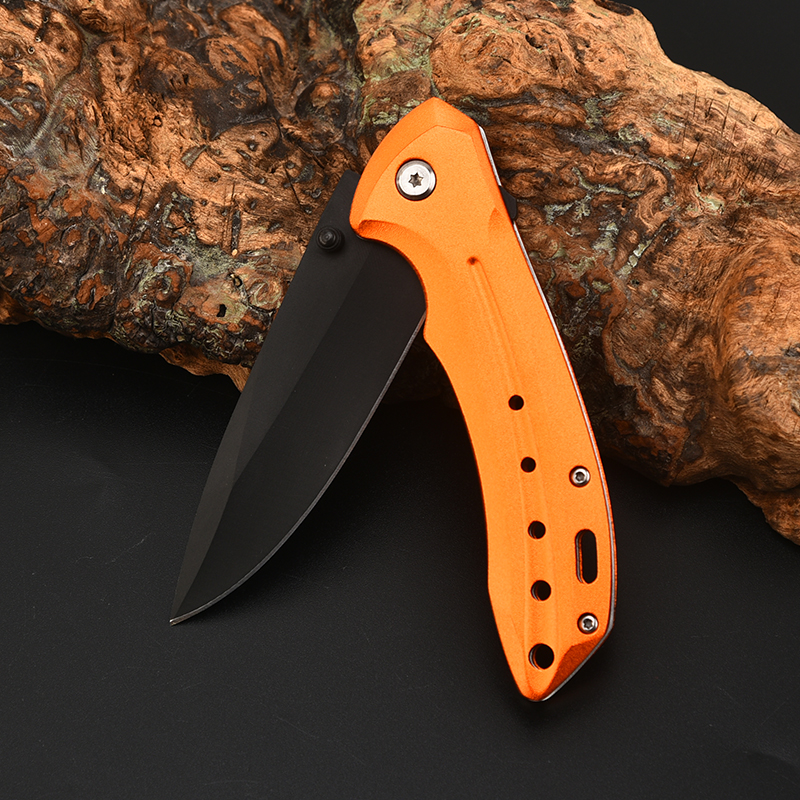
The best compact knife is not the one with the longest feature list. It is the one that matches the user's normal tasks.
Before comparing materials or finishes, define what the knife will actually do.
For box opening and shipping work, choose a fine cutting edge, a controlled point, and a handle that remains secure during repeated cuts.
For outdoor retail, prioritize corrosion resistance, textured grip surfaces, a strong pocket clip, and an easy-to-maintain blade profile.
For gift and promotional programs, focus on visual identity, logo placement, packaging, color consistency, and a practical but uncomplicated mechanism.
For premium EDC buyers, details matter more: pivot smoothness, blade centering, lock engagement, pocket clip tension, machining quality, and finish consistency.
1. Define the target market and expected retail price.
2. Identify the most common cutting tasks.
3. Select a blade shape suited to those tasks.
4. Choose steel based on performance, corrosion needs, and price position.
5. Confirm the required opening and locking mechanism.
6. Evaluate handle grip, size, and pocket comfort with physical samples.
7. Review local product rules before launch.
8. Finalize packaging, warning labels, logo application, and inspection requirements.
This approach helps buyers avoid a common mistake: choosing a knife only because it looks compact or premium, without considering whether it is comfortable, compliant, and repeatable at production scale.
A compact knife should be treated as a cutting tool, not a pry bar, screwdriver, or impact tool. Responsible product design and user education reduce avoidable damage and injuries.
The American Knife & Tool Institute promotes a simple safety framework: stop and ensure others are clear, cut away from the body, keep the knife sharp and clean, and store it closed or appropriately protected when not in use.
For everyday users, good habits include:
- Keep fingers out of the blade's travel path
- Cut away from your body and supporting hand
- Use a stable surface when cutting packaging
- Close the knife immediately after completing the task
- Avoid using the blade for prying, twisting, or striking
- Clean moisture and adhesive residue from the blade
- Check pivot tension, screw tightness, and lock operation regularly
- Store the knife responsibly and away from children
A sharp, properly maintained blade generally requires less force than a dull edge. Less force means better control, cleaner cuts, and reduced risk of slipping.
For private-label customers, product success depends on more than copying a popular knife format. A successful custom project begins with a clear product brief and continues through engineering, sampling, testing, quality control, packaging, and stable batch production.
Yangjiang Holin Industrial Co., Ltd. supports one-stop OEM and ODM knife development for folding knives, pocket knives, utility knives, and outdoor tools. With an in-house R&D team and production capability, we help customers move from product concept to scalable manufacturing.
Depending on the project, customization can include:
- Blade length, thickness, profile, and finish
- Stainless steel grade and heat-treatment target
- Handle materials, colors, textures, and inlays
- Lock type and opening method
- Pocket clip style, position, and coating
- Screws, pivots, spacers, and hardware finish
- Laser logo, etched logo, printed logo, or custom pattern
- Retail packaging, gift boxes, hang tags, and instruction cards
- Product inspection standards and shipment requirements
A reliable custom knife process typically follows these stages:
1. Requirement review: Define the market, intended use, target price, dimensions, and visual direction.
2. Design development: Create drawings, material recommendations, and mechanism specifications.
3. Prototype sampling: Review ergonomics, blade action, finish, assembly, and branding.
4. Revision and confirmation: Improve details before production tooling or bulk approval.
5. Mass production: Maintain defined material, assembly, and appearance standards across the order.
6. Quality inspection: Check blade finish, edge quality, lock function, centering, hardware, packaging, and quantity.
7. Export preparation: Arrange packaging and shipping documentation according to customer requirements.
This structured process is especially important for compact folders. Because tolerances are smaller and user contact points are closer together, inconsistent blade centering, rough edges, weak clip tension, or uneven lock engagement can quickly affect perceived quality.
The best short blade pocket knives are compact by design, not compromised by size. They offer controlled cutting, convenient carry, and practical utility for users who value a knife that fits naturally into daily life.
For buyers and brands, the strongest product strategy is to match blade geometry, materials, handle ergonomics, mechanism, and compliance planning to the intended customer. A compact knife can be a simple utility item, a premium EDC product, a branded gift, or an outdoor accessory—but only when the underlying design is purposeful and the production quality is consistent.
Looking for a custom short blade pocket knife, folding knife, utility knife, or outdoor tool program? Contact Yangjiang Holin Industrial Co., Ltd. to discuss your OEM/ODM requirements, product concept, materials, branding, packaging, prototype samples, and large-volume manufacturing plan.
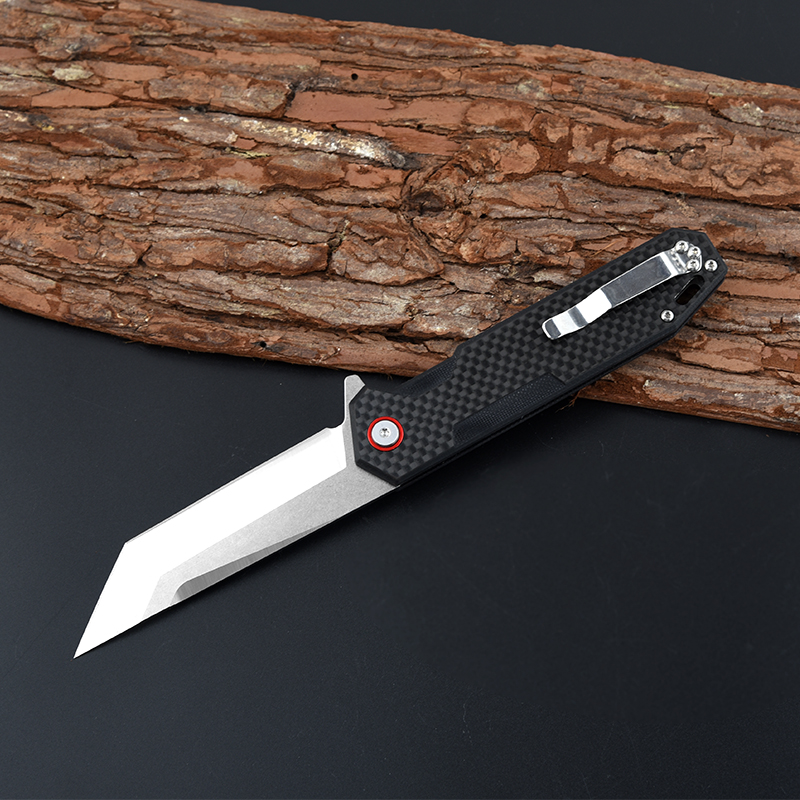
For many everyday tasks, a blade between approximately 1.5 and 2.5 inches offers a useful balance of compact carry and cutting control. The ideal length depends on the knife's intended use, user preference, and applicable local requirements.
Yes. Short blade pocket knives are well suited to routine cutting tasks such as opening packages, cutting cord, trimming materials, and handling light utility work. Their compact size often makes them more comfortable for daily pocket carry than larger knives.
A wharncliffe, sheepsfoot, or compact drop-point blade can work well for box opening. A wharncliffe provides controlled straight-edge cutting, while a sheepsfoot reduces the chance of accidental punctures. A drop point remains a versatile choice for mixed daily tasks.
The best handle material depends on the product's target price and intended use. G10 and textured polymers offer grip and durability. Aluminum provides low weight and a modern appearance. Stainless steel can create a solid feel, while micarta and carbon fiber can support premium positioning.
Yes. OEM and ODM knife programs can include laser logos, engraved branding, handle color matching, custom blade finishes, branded pocket clips, retail packaging, gift boxes, and product instruction materials.
Check blade centering, sharpness, grind consistency, opening action, lock engagement, handle comfort, pocket clip tension, screw quality, logo placement, finish uniformity, packaging, and overall fit and finish. Test the knife using the tasks it is expected to handle in the target market.
No. Rules can differ by country, state, city, carry method, blade length, and restricted location. Buyers and users should confirm the rules that apply to their specific destination before ordering, importing, selling, or carrying an automatic knife.
1. [Blade HQ — Best Short Blade Pocket Knives]
2. [American Knife & Tool Institute — Knife Education and Safety]
3. [American Knife & Tool Institute — State Laws Regarding Automatic Knives]


