


Views: 238 Author: Holin Knife Publish Time: 2026-09-17 Origin: Site


Content Menu
>> Common Pocket Knife Features
>> Pocket Knife Design Priorities
>> The EDC Mindset: Daily Function Over Tradition
● Pocket Knife vs EDC Knife: Key Differences
● Why the Difference Matters for Knife Buyers
● Blade Design: The Most Important Functional Difference
>> Common Pocket Knife Blade Options
>> Common EDC Knife Blade Options
>> Blade Steel Selection for Different Buyers
● Lock Mechanisms and Everyday Safety
● Pocket Carry, Ergonomics, and User Comfort
>> What EDC Users Notice Immediately
>> Deep-Carry Clip vs Standard Clip
>> Step 1: Define the Primary User
>> Step 2: Define the Main Cutting Tasks
>> Step 3: Set Carry and Compliance Requirements
>> Step 4: Select the Right Product Tier
● Common Buying Mistakes to Avoid
>> Mistake 1: Treating "Pocket Knife" and "EDC Knife" as Identical
>> Mistake 2: Choosing Steel Only by Marketing Value
>> Mistake 3: Ignoring Pocket Clip Quality
>> Mistake 4: Overbuilding a Compact Knife
>> Mistake 5: Skipping Pre-Production Function Checks
● How Manufacturers Can Create Better EDC Knife Programs
● Final Verdict: Which One Should Buyers Choose?
● FAQ
>> 1. Is an EDC knife the same as a pocket knife?
>> 2. What blade length is best for an EDC pocket knife?
>> 3. Should an EDC knife have a locking blade?
>> 4. Which handle material is best for a custom EDC knife?
>> 5. What is the difference between a utility knife and an EDC knife?
>> 6. Can a manufacturer customize an existing pocket knife model?
>> 7. What should buyers inspect before approving mass production?
When buyers compare a pocket knife vs EDC knife, the distinction is often misunderstood. A pocket knife describes a physical knife format—typically a compact folding knife that fits safely in a pocket—while an EDC knife describes a use case: a knife selected for reliable, frequent everyday carry and routine cutting tasks.
In other words, many EDC knives are pocket knives, but not every pocket knife is designed to be an ideal EDC knife. For importers, private-label brands, wholesalers, outdoor retailers, and procurement teams, this difference directly affects product positioning, feature selection, packaging, testing requirements, target price, and customer satisfaction.
For a knife manufacturer such as Yangjiang Holin Industrial Co., Ltd., the practical question is not simply whether to produce a pocket knife or an EDC knife. The important question is: What daily task, user group, retail channel, and legal market is the product designed to serve?
This guide explains the real difference between pocket knives and EDC knives from a buyer's perspective, including construction, design priorities, market positioning, customization opportunities, and sourcing considerations.
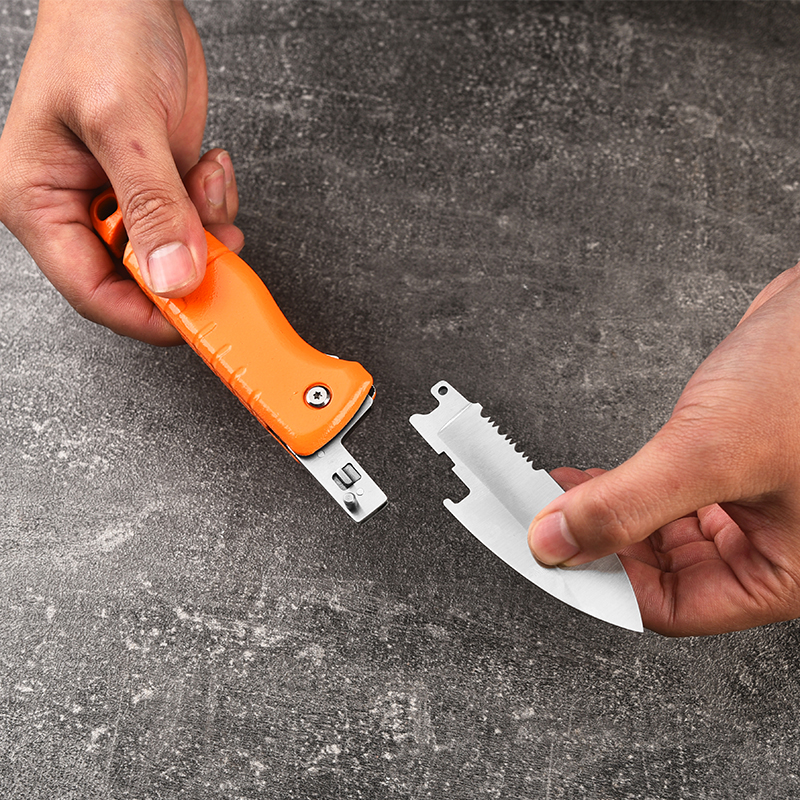
A pocket knife is generally a knife with one or more blades that fold into the handle and can be conveniently carried in a pocket. This definition focuses on the product's structure and portability rather than the user's lifestyle or specific daily needs.
Pocket knives have been used for generations as compact cutting tools. Traditional models may include one blade, several blades, small auxiliary tools, or a simple slip-joint mechanism. Their purpose is broad: opening envelopes, cutting string, trimming small materials, preparing food outdoors, and completing light household tasks.
A pocket knife may include:
- A folding blade that stores inside the handle
- A compact handle suitable for pocket carry
- A nail nick, thumb stud, or traditional two-hand opening design
- One or more blades
- A slip-joint, back lock, liner lock, frame lock, or other locking structure
- Natural wood, G10, aluminum, stainless steel, ABS, bone, or composite handle scales
- A traditional, tactical, outdoor, utility, or gift-oriented appearance
- Optional accessories such as scissors, bottle openers, saw blades, files, or screwdrivers
The category is broad. A classic multi-blade folding knife, a small gentleman's knife, a lockback camping folder, and a compact keychain knife can all be considered pocket knives.
The defining point is straightforward: a pocket knife is identified mainly by its folding, pocket-friendly form.
A traditional pocket knife often emphasizes:
- Compact size
- Simple carry
- Multi-function utility
- Familiar appearance
- Affordable pricing
- Gift appeal
- Heritage-inspired styling
- Occasional use rather than intensive daily use
For example, a three-blade slip-joint knife with wood handles may be an excellent pocket knife for gift stores, hardware channels, collectors, and traditional outdoor users. However, it may not be the best choice for a customer who opens dozens of boxes each day and needs one-hand operation, secure locking, quick cleaning, and a reversible deep-carry clip.
That is where the EDC knife category becomes more specific.
EDC means "everyday carry." It refers to useful items a person intentionally carries every day, commonly in a pocket, bag, or organizer. The term can describe a collection of essentials, such as keys, a wallet, flashlight, multitool, pen, and knife.
An EDC knife is therefore a knife selected and designed for regular, real-world daily use. It is not limited to one knife style. It may be a folding knife, a compact fixed-blade knife where permitted, a replaceable-blade utility knife, or a multi-function tool. In most consumer markets, though, the most common EDC knife is a compact folding knife.
An EDC knife is usually expected to perform reliably across repeated routine tasks:
- Opening cartons and packages
- Cutting tape, cord, zip ties, and plastic wrap
- Trimming loose threads or labels
- Cutting food during travel or outdoor activities
- Handling light repairs
- Supporting warehouse, office, retail, delivery, maintenance, or camping use
- Serving as a practical backup tool when scissors are unavailable
A well-designed EDC knife is not merely small enough to fit in a pocket. It should feel natural to carry, easy to deploy, stable in use, comfortable in the hand, and simple to maintain.
The real difference is often a matter of design intent.
A traditional pocket knife may be purchased because it is compact, attractive, collectible, or familiar. An EDC knife is normally purchased because the user expects it to solve frequent daily problems with minimal inconvenience.
An EDC-oriented customer may evaluate details that a casual pocket-knife buyer overlooks:
- Can the blade be opened with one hand?
- Does the lock inspire confidence during controlled cutting work?
- Is the pocket clip deep enough and secure enough?
- Does the knife create uncomfortable bulk in jeans or work trousers?
- Is the handle textured enough for wet or gloved hands?
- Is the blade steel appropriate for the intended balance of sharpness retention, corrosion resistance, and maintenance?
- Can the knife be cleaned after exposure to adhesive residue, food, dirt, or moisture?
- Can left-handed users operate it comfortably?
- Does the product comply with the retailer's target-market requirements?
For this reason, EDC knife development requires more user-centered product planning than simply reducing the size of a folding knife.
The table below summarizes the most important differences for buyers and product developers.
| Comparison Area | Pocket Knife | EDC Knife |
|---|---|---|
| Primary definition | A folding knife designed to fit in a pocket | A knife chosen for frequent, practical daily carry |
| Core focus | Portable knife format | Daily usability, readiness, and convenience |
| Typical style | Traditional folders, slip joints, multi-blade models, compact folders | Modern folders, compact utility knives, one-hand-opening knives, compact fixed blades where appropriate |
| Typical use frequency | Occasional to regular light use | Frequent, repeatable everyday use |
| Opening method | Often two-hand opening or nail nick | Often thumb stud, thumb hole, flipper, or other quick manual opening method |
| Locking expectation | May be non-locking or locking | Often locking for controlled task use, depending on market requirements |
| Pocket clip | Optional or absent | Commonly expected, especially in modern designs |
| Handle design | May prioritize appearance or compactness | Usually prioritizes grip, ergonomics, and carry comfort |
| Blade style | Broad variety, including pen, clip, spear, and multi-blade patterns | Often drop point, sheepsfoot, wharncliffe, utility profile, or compact clip point |
| Buyer segment | Gift retailers, traditional knife sellers, collectors, outdoor stores, hardware channels | EDC brands, lifestyle retailers, workwear suppliers, outdoor brands, tool distributors, promotional-product buyers |
| Customization emphasis | Handle materials, engraving, gift box, multi-tool combination | Ergonomics, steel, lock, clip, blade grind, colorway, opening system, packaging, brand identity |
The categories overlap. A compact folding knife with a 2.8-inch blade, a liner lock, a thumb stud, textured G10 scales, and a deep-carry clip can accurately be sold as both a pocket knife and an EDC knife.
However, the marketing message should match the actual product. Calling a decorative multi-blade knife an "EDC work knife" may create unrealistic expectations. Calling a purpose-built, lightweight, one-hand-opening folder merely a "pocket knife" may fail to communicate its full value to modern buyers.
For B2B buyers, product terminology influences more than catalog wording. It affects the entire sourcing process.
A buyer who requests a "pocket knife" may be looking for:
- A classic wooden-handle folding knife
- A low-cost promotional knife
- A multi-function camping knife
- A compact gift item
- A non-locking folding knife
- A small retail-ready tool for a hardware assortment
A buyer who requests an "EDC knife" may instead expect:
- A compact but sturdy folding knife
- One-hand manual deployment
- A dependable lock mechanism
- A removable or reversible pocket clip
- Modern handle materials
- Higher edge retention
- A low-profile carry design
- Custom branding with premium packaging
Without clarifying the intended end use, manufacturers may quote the wrong construction level, target price, materials, or tooling requirements.
A pocket knife often works well in traditional knife displays, souvenir stores, gift channels, fishing shops, farm-supply stores, and entry-level outdoor retail.
An EDC knife is often positioned for:
- Everyday utility
- Urban commuting
- Warehouse and logistics work
- Outdoor lifestyle
- DIY projects
- Travel gear
- Tactical-inspired accessories
- Premium everyday tools
- Workwear and tool retailers
The same basic folding knife can enter different retail categories depending on its design details, packaging, and product story.
EDC buyers are frequently willing to pay for features they can feel or use every day. These may include:
- Better blade centering
- Smoother opening action
- More refined lock engagement
- CNC-machined handle details
- Premium steels
- Deep-carry clips
- Ambidextrous options
- Improved edge geometry
- Better tolerances
- Branded presentation boxes
A basic pocket knife can compete strongly on price and classic appeal. A premium EDC knife can compete on performance, convenience, and repeat-use value.
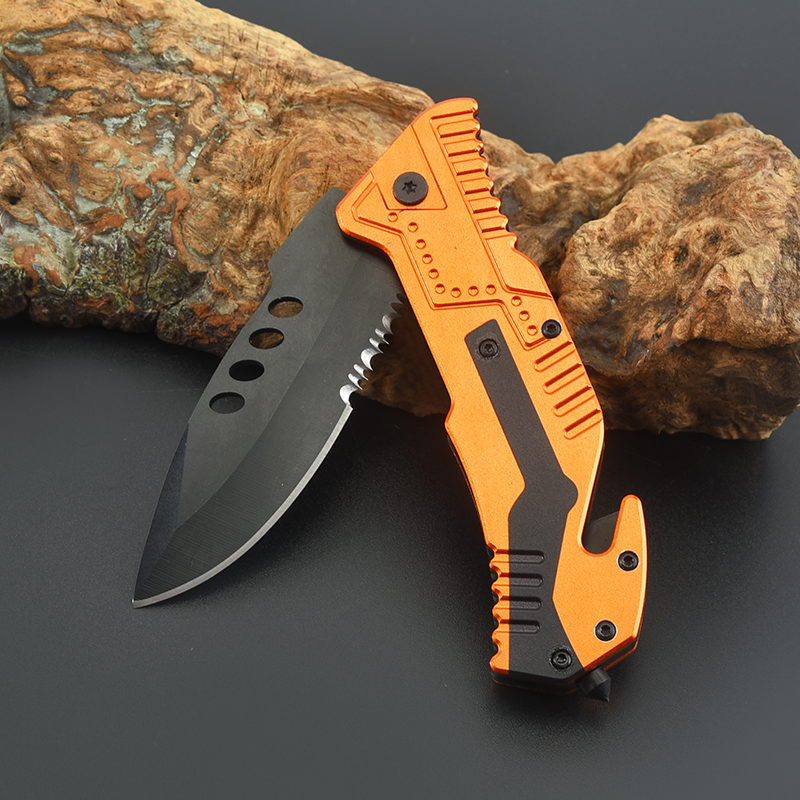
Blade design is one of the clearest ways to separate a general pocket knife from a purpose-built EDC knife.
Traditional pocket knives may use:
- Clip-point blades for general cutting and controlled detail work
- Pen blades for light utility tasks
- Spey blades for rounded-tip utility use
- Sheepsfoot blades for controlled slicing
- Multiple blade combinations for broader casual utility
- Small multi-tool blades paired with files, openers, or scissors
These designs are versatile, familiar, and suitable for many consumer segments.
EDC knife users often prefer blade shapes that support repetitive everyday cutting:
- Drop-point blades for all-around strength and versatile utility
- Sheepsfoot blades for controlled cutting with a reduced accidental-puncture risk
- Wharncliffe blades for precision cutting, boxes, cords, and packaging
- Utility-style blades for work-oriented tasks
- Modified clip points for users who want a more pointed tip without excessive fragility
For frequent carton opening, a sheepsfoot or wharncliffe blade may be highly practical because the straighter edge supports pull cuts and the lowered tip can reduce unintended punctures. For outdoor and general consumer use, a drop-point blade offers a strong balance of slicing performance and tip durability.
Steel should match the product's intended price point, use pattern, and maintenance expectations.
| Buyer Need | Suitable Steel Direction | Product Rationale |
|---|---|---|
| Value retail pocket knife | 3Cr13, 420, or similar entry-level stainless steel | Cost-effective, corrosion-resistant, easy to sharpen |
| Mid-range EDC folding knife | 5Cr15MoV, 7Cr17MoV, 8Cr13MoV, or comparable grades | Better balance of edge retention, hardness, and price |
| Premium branded EDC knife | D2, 14C28N, VG-10, or selected premium steel options | Higher perceived value and stronger performance positioning |
| Outdoor or humid-market product | Corrosion-resistant stainless steel | Helps reduce maintenance concerns in wet environments |
| Replaceable utility blade product | Standardized replaceable blade system | Minimizes sharpening needs and supports work-focused use |
Material names alone do not guarantee performance. Buyers should also discuss blade thickness, heat treatment, hardness target, edge angle, blade grind, finish, corrosion testing expectations, and quality-control procedures.
A properly produced mid-range steel with consistent heat treatment can outperform a poorly controlled premium-grade material. For OEM and ODM projects, the most reliable approach is to define performance requirements early and confirm them through samples and agreed inspection standards.
For an EDC folding knife, the lock mechanism affects confidence, ease of use, user perception, and market suitability.
Common structures include:
- Slip joint: Traditional non-locking design with spring tension. Suitable for classic pocket knives and markets where non-locking designs are preferred.
- Liner lock: A common, cost-effective locking system. It can support one-hand operation when properly engineered.
- Frame lock: Uses part of the handle frame as the lock. Often selected for metal-handle EDC knives.
- Back lock: A familiar and generally robust structure frequently used in outdoor and traditional folding knives.
- Button lock: Can offer convenient operation and an appealing modern feel when designed with stable lock engagement.
- Crossbar-style lock: Often valued for ambidextrous operation and finger-safe closing, subject to design and intellectual-property review.
- Lockback with assisted opening: May appeal to some markets, but buyers should carefully verify market-specific restrictions before proceeding.
A locking blade does not eliminate risk. Users should cut away from the body, keep hands out of the cutting path, use the correct tool for the task, and avoid prying or twisting a folding knife beyond its intended design limits.
For manufacturers, the priority is consistent production control. Blade play, lock engagement, lock release access, detent strength, pivot adjustment, screw retention, and sharp-edge finishing all influence product quality.
Cyclic testing equipment can evaluate the wear of folding knife components during repeated opening and closing, including the rivet, screw, tang, and spring areas. For a serious private-label program, buyers should ask how samples are checked for opening action, lock function, blade centering, edge condition, and cosmetic finish before shipment.
An EDC knife lives in the user's pocket all day. That makes carry comfort a product feature, not a minor detail.
Experienced users usually notice the following within the first few days:
- Excessive handle thickness
- Sharp or uncomfortable pocket clip edges
- A clip that catches on fabric
- Weak clip retention
- Unstable blade centering
- Difficult one-hand opening
- A handle that becomes slippery with sweat or gloves
- Screws that loosen over time
- A knife that feels too heavy for its blade length
- A blade that is difficult to clean after cutting tape or food
For a general pocket knife, a clip may be unnecessary. For an EDC knife, the pocket clip is often central to the ownership experience.
A standard pocket clip may leave part of the knife handle visible above the pocket. A deep-carry clip positions the knife lower, reducing visible handle exposure and making the product feel more discreet.
Buyers should specify:
- Clip material
- Clip thickness
- Screw position
- Tip-up or tip-down carry
- Left- or right-side placement
- Reversible or non-reversible design
- Clip tension
- Deep-carry depth
- Surface finish
- Branding option
A small detail such as a better clip can significantly improve a product's retail reviews.
When developing a private-label knife, avoid starting only with blade length or handle color. Start with the user and the task.
Ask who will carry the product:
- Office worker
- Delivery driver
- Warehouse employee
- Camper
- Fisherman
- Hiker
- DIY user
- Collector
- Gift recipient
- Emergency-preparedness customer
- Outdoor retailer customer
- Tool-store buyer
A knife designed for occasional camping use should not necessarily be designed like a daily package-opening tool.
Identify the tasks that will occur most often:
- Opening boxes
- Cutting tape
- Cutting cord
- Preparing food outdoors
- Cutting plastic packaging
- Trimming material
- Light wood work
- General camping utility
- Emergency use
- Small repairs
This decision influences blade shape, edge geometry, lock type, handle texture, and steel selection.
Before production, confirm:
- Target country and sales regions
- Blade-length expectations
- Manual, assisted, or automatic opening preference
- Folding or fixed-blade construction
- Locking or non-locking requirement
- Concealed-carry considerations
- Retailer product rules
- Packaging warnings
- Age restrictions where relevant
Knife laws vary substantially by jurisdiction and may depend on mechanism, blade length, carry method, and the legal classification of the knife. The American Knife & Tool Institute notes that knife laws are often found within weapons statutes and can differ based on knife type, mechanism, and blade length.
For this reason, product descriptions should never make universal claims such as "legal everywhere" or "approved for all daily carry." Buyers should review current regulations in every intended market and obtain local legal advice when necessary.
A clear product tier helps prevent cost overruns and mismatched expectations.
| Product Tier | Typical Direction | Best-Fit Market |
|---|---|---|
| Entry-level pocket knife | Basic stainless blade, traditional handle, simple folding mechanism | Promotions, gifts, hardware retail, value channels |
| Mid-range everyday folder | Locking blade, pocket clip, ergonomic handle, practical steel | Outdoor retail, EDC stores, workwear, online brands |
| Premium EDC knife | Refined tolerances, upgraded steel, CNC handle, premium clip, gift packaging | Specialty retailers, branded collections, enthusiast market |
| Work utility knife | Replaceable blade or durable utility profile, grip-focused handle | Construction supply, warehouse, logistics, maintenance |
| Outdoor multi-tool knife | Blade plus functional tools, durable handle, outdoor packaging | Camping, fishing, travel, survival-oriented retail |
The most expensive sourcing mistakes are usually not visible in a product photo. They appear after samples arrive, production starts, or consumer reviews accumulate.
The terms overlap, but they communicate different buyer expectations. Use "pocket knife" when emphasizing portability and folding construction. Use "EDC knife" when emphasizing daily utility, carry comfort, readiness, and repeat-use performance.
A premium steel label may look attractive in a catalog, but the full production process matters. Buyers should evaluate heat treatment control, corrosion resistance, sharpening expectations, blade geometry, and the actual use environment.
A weak, sharp-edged, or poorly positioned clip can make an otherwise good folding knife frustrating to carry. Request physical carry testing during the sample stage.
An EDC knife should feel capable, but it should not become unnecessarily heavy or thick. A compact knife that is uncomfortable in the pocket may be left at home, defeating its intended purpose.
Before mass production, confirm:
- Blade centering
- Opening force
- Lock engagement
- Lock release function
- Blade sharpness
- Tip alignment
- Pocket clip tension
- Screw tightness
- Handle fit
- Logo placement
- Packaging accuracy
- Barcode and labeling requirements
A written golden-sample standard gives both buyer and manufacturer a shared reference for production acceptance.
A capable knife manufacturer should do more than offer a catalog model and add a logo. The strongest OEM and ODM programs combine design support, manufacturing experience, sample validation, material selection, production planning, and packaging coordination.
At Yangjiang Holin Industrial Co., Ltd., a buyer can begin with an existing folding knife platform or develop a more customized product based on market goals. Depending on the project, customization may include:
- Blade profile and blade length
- Blade steel and surface finish
- Lock mechanism
- Opening system
- Handle material and texture
- Handle color and pattern
- Pocket clip design
- Laser logo, etched logo, or printed branding
- Custom screws and hardware colors
- Gift box, blister card, nylon pouch, or retail packaging
- User manual and warning labels
- Carton specifications
- Inspection requirements
- Bulk production planning
For a new EDC brand, beginning with an established knife structure can reduce development time and initial risk. For a mature brand seeking market differentiation, custom blade geometry, handle tooling, proprietary styling, packaging systems, and dedicated quality specifications can create a stronger product identity.
The best route depends on the buyer's quantity, budget, target market, expected retail price, and desired launch timeline.
The best choice depends on the job the knife must do.
Choose a pocket knife when your product program prioritizes compact folding construction, classic style, simple utility, gift appeal, multi-blade versatility, or broad value-market accessibility.
Choose an EDC knife when your product program prioritizes frequent use, one-hand operation, secure carry, practical ergonomics, dependable performance, modern styling, and repeatable utility.
The most commercially successful products often combine both advantages: they are compact enough to qualify as pocket knives, yet refined enough to perform as dependable everyday carry tools.
For private-label buyers, the most useful product brief is not "We need a pocket knife" or "We need an EDC knife." A stronger brief is:
> "We need a compact manual folding knife for daily package opening and light outdoor utility, with a 2.8-inch drop-point blade, liner lock, reversible deep-carry clip, textured G10 handle, customized logo, and retail-ready packaging for our target market."
That level of clarity helps align design, materials, pricing, testing, packaging, and production.
If you are developing a new folding knife, pocket knife, utility knife, or outdoor tool collection, contact Yangjiang Holin Industrial Co., Ltd. to discuss your OEM/ODM requirements. Share your target market, estimated order quantity, preferred materials, product concept, and packaging needs, and our team can help turn your requirements into a scalable production plan.
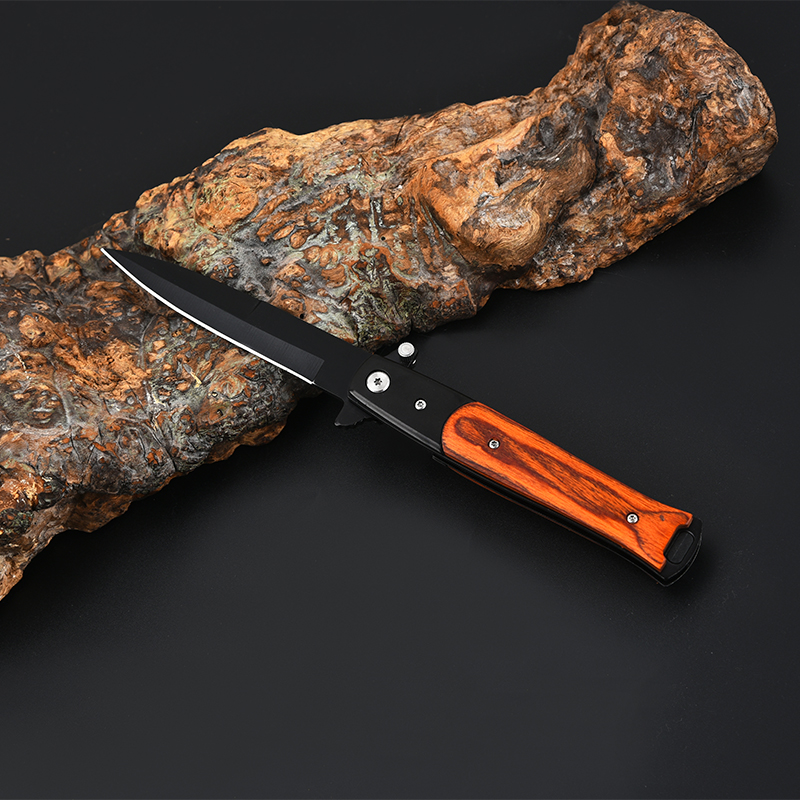
Not exactly. A pocket knife is usually defined by its folding, pocket-carry form. An EDC knife is defined by its role as a practical tool carried and used regularly. Many EDC knives are pocket knives, but a traditional pocket knife may not include the ergonomic, locking, clip, or deployment features expected by frequent daily users.
For many general daily tasks, a blade between approximately 2.5 and 3.25 inches offers a practical balance of cutting ability, compact carry, and control. However, buyers should verify the rules and retail requirements for every intended market before choosing a final blade length.
A locking blade can provide greater stability during controlled cutting tasks. However, non-locking designs remain popular for traditional pocket knives and may be preferred or required in some markets. The correct choice depends on target users, local rules, product positioning, and the intended task.
There is no single best material. G10 provides grip and a modern technical appearance. Aluminum can offer a lightweight premium feel. Stainless steel is durable and suitable for engraving. Wood provides classic gift appeal. Micarta can offer a tactile outdoor-focused character. The right choice depends on target price, visual identity, use environment, and production volume.
A utility knife is generally optimized for work tasks such as cutting drywall, packaging, carpeting, or construction materials, often with a replaceable blade. An EDC knife is broader: it may be used for daily utility, outdoor tasks, travel, light repairs, and general cutting. Some compact utility knives are also excellent EDC tools.
Yes. Existing models can often be customized through blade finishes, handle materials, colors, logos, pocket clips, screws, packaging, and accessories. More extensive ODM development can include new blade shapes, handle profiles, lock structures, and dedicated tooling, depending on the project requirements.
Buyers should inspect the approved sample for blade centering, lock performance, opening action, edge sharpness, handle fit, screw tightness, pocket clip tension, logo quality, cosmetic finish, packaging details, and labeling. A documented golden sample and agreed quality checklist help maintain consistency during bulk production.
1. Merriam-Webster. "[Pocketknife Definition & Meaning]." Defines a pocketknife as a knife with one or more blades that fold into the handle and can be carried in a pocket. [merriam-webster]
2. Merriam-Webster. "[Everyday Carry Slang Meaning]." Explains everyday carry as the collection of items a person carries daily. [merriam-webster]
3. American Knife & Tool Institute. "[State Knife Laws]." Provides state-level legal summaries and notes that knife rules can depend on mechanism, blade length, and classification. [akti]
4. CATRA. "[Folding Knife Endurance Tester]." Describes cyclic testing equipment for assessing wear in folding knives and related tools. [catra]
5. Everyday Carry. "[What Is EDC? Everyday Carry Guide]." Discusses the everyday-carry concept and the practical role of compact tools, including folding knives. [everydaycarry]
6. U.S. Consumer Product Safety Commission. "[Consumer Product Safety Commission]." Provides consumer-product safety information and regulatory resources relevant to products manufactured, imported, or sold in the United States. [cpsc]


