


Views: 257 Author: Holin Knife Publish Time: 2026-09-16 Origin: Site


Content Menu
● Why Tanto Blade Knives Remain Popular
>> Tactical and Commercial Appeal
● American Tanto vs. Traditional Japanese Tanto
● Pros and Limitations of a Tanto Blade
● How to Choose the Best Tanto Knife
>> 1. Choose the Right Knife Type
>> 2. Evaluate Blade Steel by Use Case
>> 3. Check the Lock and Construction
● A Practical Sharpening Method for Tanto Knives
>> Step-by-Step Tanto Sharpening
● What Buyers Should Ask an OEM Tanto Knife Manufacturer
● OEM and ODM Tanto Knife Development
>> Is a tanto knife good for everyday carry?
>> Are tanto blades stronger than drop-point blades?
>> Why are tanto knives harder to sharpen?
>> What steel is best for a tanto pocket knife?
>> What is the difference between an American tanto and a Japanese tantō?
>> Can I order a custom tanto knife with my own logo?
>> Can a tanto knife be used for outdoor tools?
A well-designed tanto knife is more than a visually distinctive cutting tool. Its angular point, reinforced forward section, and two-part cutting edge make it a practical option for users who prioritize controlled piercing, durable tip geometry, utility cutting, and a bold tactical profile.
For buyers, distributors, private-label brands, and outdoor-tool companies, choosing the best tanto knife requires more than comparing appearance or price. Blade steel, heat treatment, grind geometry, lock construction, handle ergonomics, deployment method, and production consistency all affect real-world performance. This guide explains how to evaluate tanto folding knives, fixed blade tantos, pocket knives, utility knives, and custom OEM/ODM knife projects with confidence.
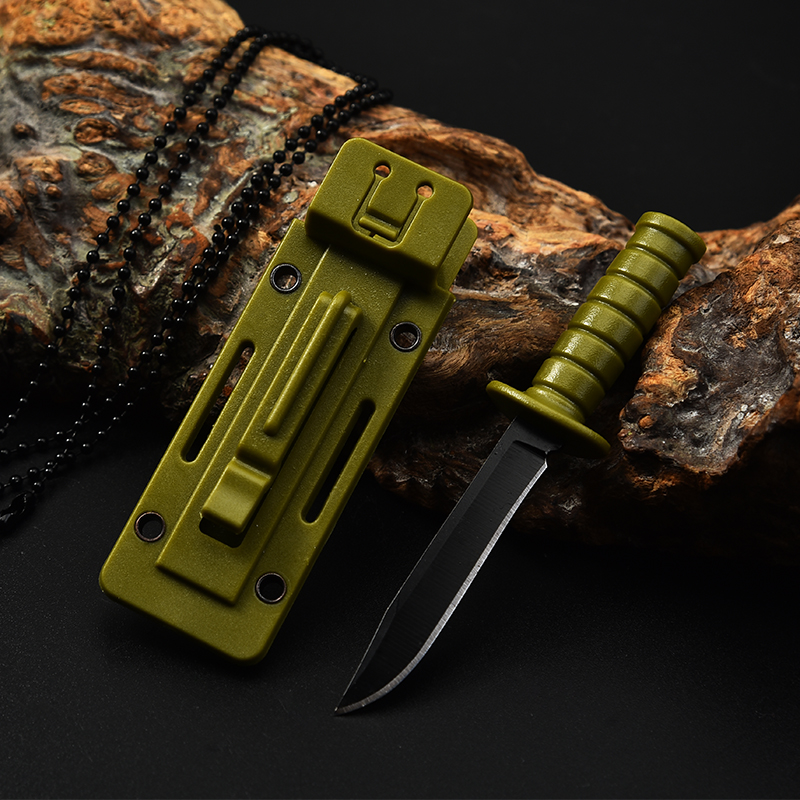
A tanto knife is a knife featuring a blade profile inspired by the traditional Japanese tantō, a short sword or dagger historically associated with close-range use. Modern interpretations vary widely, but the most recognizable contemporary format is the American tanto blade.
Unlike a traditional curved blade, such as a clip point or drop point, an American tanto usually has:
- A relatively straight main cutting edge
- A pronounced angular transition near the front of the blade
- A short, secondary front edge
- A strong-looking, triangular point area
- Less belly than a drop-point blade
- Two distinct edge sections that may use different grinds
This geometry creates a blade that looks purposeful and performs particularly well in controlled utility tasks where tip strength, point access, and directional cutting matter.
The word "tanto" originally refers to a Japanese short blade rather than one universal blade shape. Over time, Western makers developed a more angular, tactical-oriented version. Knifemaker Bob Lum is widely associated with popularizing an Americanized tanto form, while Cold Steel helped bring the design to a much larger market beginning in the early 1980s.
Tanto knives appeal to users because they combine practical geometry with a recognizable visual identity. They are common in EDC folders, tactical folding knives, rescue tools, fixed blade outdoor knives, work knives, and collector-oriented designs.
The main advantage of a tanto blade is its reinforced-looking front section. The blade retains more material near the tip than many highly tapered blade profiles. This can make the point feel more substantial during controlled piercing and detailed utility work.
For example, when opening heavy cartons, cutting thick plastic straps, scoring laminate, trimming rubber, or puncturing packaging materials, the forward edge can provide a precise contact point. The angular transition also creates a secondary cutting zone that some users find useful for draw cuts and detail work.
However, "stronger tip" should not be treated as an automatic guarantee. Actual durability depends on several connected factors:
- Blade stock thickness
- Grind type
- Heat treatment
- Steel toughness
- Edge angle
- Point geometry
- User technique
- The material being cut
A thick tanto blade with an overly thin edge can still chip. A well-designed drop point with an appropriate heat treatment can still be highly durable. Buyers should evaluate the full blade system, not only the profile name.
A typical American tanto has two edge sections. The longer rear edge handles general cutting, while the shorter forward edge can support more controlled work around corners, seams, tape, straps, and other compact targets.
This separation can be particularly useful for:
- Opening corrugated boxes
- Cutting pallet wrap
- Trimming cable ties
- Scoring sheet materials
- Cutting leather or webbing
- Outdoor gear adjustments
- Controlled push cuts
- Precision workshop tasks
From a product-development perspective, the tanto profile has strong shelf appeal. Its angular silhouette communicates durability, modernity, and technical intent. For distributors and private-label brands, this can make the blade a highly effective design choice for tactical, outdoor, EDC, and work-tool collections.
A folding tanto knife can also be differentiated through handle texture, color options, blade finish, opening mechanism, clip style, packaging, and logo placement. This gives OEM customers substantial room to build a recognizable product line without changing the core utility proposition.
Although both designs share a historical connection, they should not be treated as identical.
| Feature | Traditional Japanese Tantō | American Tanto Knife |
|---|---|---|
| Primary identity | Japanese short sword or dagger | Modern Western knife profile |
| Blade appearance | Often curved or subtly shaped, depending on historical style | Angular, straight-edged, highly geometric |
| Tip area | Can feature complex traditional geometry | Usually has a pronounced angular front section |
| Typical modern use | Collecting, historical reproduction, martial arts interest | EDC, tactical, work, outdoor, and utility use |
| Edge layout | Varies by traditional construction | Often two visually distinct cutting sections |
| Market appeal | Heritage and craftsmanship | Utility, bold styling, and perceived tip durability |
The American tanto became especially recognizable because its blade profile was adapted for modern production, folding knives, and tactical-market preferences. Some versions combine a hollow-ground main edge with a stronger front grind, while others use flat, convex, or compound grinds to balance slicing behavior and point durability.
No blade shape is universally best. The right design depends on the user's cutting tasks, maintenance habits, carry preference, and local regulations.
Controlled piercing performance. The angular point and reinforced-looking front geometry can be useful when a user needs deliberate point access rather than broad slicing motion.
Useful secondary edge. The short front edge can work well for detail cuts, pull cuts, strap cutting, and tasks where the user wants to place the blade precisely.
Strong visual differentiation. Tanto knives stand out immediately in product listings, retail displays, and catalog photography.
Versatile platform for customization. Tanto blades work across folding knives, fixed blades, assisted-opening designs, liner-lock knives, frame-lock knives, crossbar-lock folders, and outdoor utility tools.
Good fit for rugged product lines. The design pairs naturally with G10, aluminum, stainless steel, micarta, FRN, carbon fiber, and textured polymer handles.
Less natural belly for long slicing cuts. A blade with more curvature often performs better when slicing through food, rope, cardboard, fabric, or other materials using a continuous rocking or drawing motion.
Sharpening requires more attention. The two edge sections should normally be sharpened separately. The angular transition must remain crisp; excessive blending can round the corner and change the original profile. A practical sharpening approach is to treat each cutting section as an independent edge and protect the transition as though it were a small tip.
The point can catch in some cuts. The angular front edge may snag or hesitate in materials that favor a smooth, curved slicing profile.
Performance varies by grind. Two knives can both be called tantos but cut very differently. A thin flat grind, hollow grind, saber grind, or convex grind changes how the knife penetrates, slices, sharpens, and resists damage.
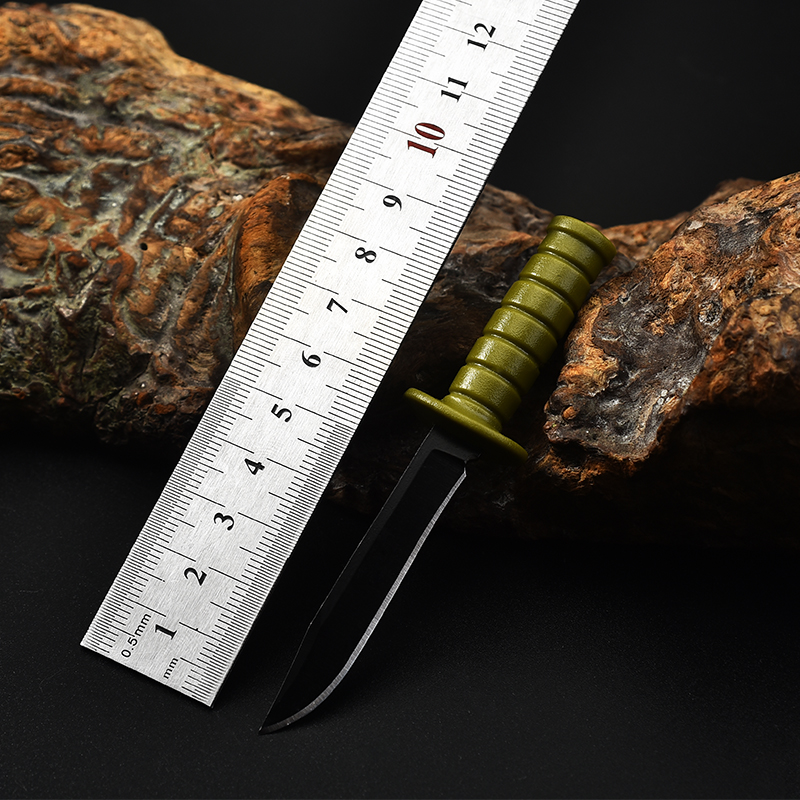
The best tanto knife is the one that matches the buyer's application. A compact pocket knife for everyday package opening needs different specifications from a fixed blade outdoor knife or a private-label tactical folder.
Folding tanto knife: Best for compact carry, EDC collections, retail programs, and work-oriented pocket tools. Look for a secure lock, smooth opening action, reliable pocket clip, and ergonomic handle.
Fixed blade tanto knife: Better for outdoor tools, field use, survival-oriented kits, and heavy-duty applications. A full-tang construction is often preferred for demanding use.
Utility tanto knife: Suitable for warehouse, packaging, maintenance, and professional cutting tasks. Replaceable-blade utility designs may be preferred when rapid blade changes are more important than edge retention.
Automatic or OTF tanto knife: These products have specialized legal and commercial considerations. Brands should verify local rules, import requirements, shipping restrictions, and market-specific compliance before developing or distributing them.
Steel choice should be guided by the desired balance among edge retention, toughness, corrosion resistance, sharpening difficulty, target price, and manufacturing process.
| Steel Category | Typical Benefits | Typical Considerations | Suitable Product Positioning |
|---|---|---|---|
| 3Cr13 / 5Cr15 | Cost-effective, corrosion resistant, easy to sharpen | Lower long-term edge retention | Promotional tools, entry-level utility knives |
| 8Cr13MoV | Good value balance, familiar to many users | Needs controlled heat treatment for consistent results | Budget EDC and retail folding knives |
| 14C28N | Strong corrosion resistance and practical toughness | Higher material cost than entry-level steels | Outdoor, EDC, and mid-range private-label knives |
| D2 | Good wear resistance and edge retention | Less corrosion resistant than stainless options | Value-oriented work and tactical knives |
| 440C | Established stainless option with balanced properties | Results depend heavily on heat treatment | General-purpose folding and fixed blade knives |
| Premium powder metallurgy steels | High performance potential | Higher cost and more demanding manufacturing | Premium EDC, collector, and enthusiast lines |
Steel performance is not determined by the steel name alone. Heat treatment, edge geometry, blade thickness, and surface finish all influence real use. Metallurgical testing also shows that edge retention, toughness, and corrosion resistance involve trade-offs rather than a single "best" steel.
For example, a highly wear-resistant steel may retain its edge longer but take more effort to resharpen. A tougher steel may be preferable for a field knife exposed to shock, while a more corrosion-resistant steel may be a better choice for humid, coastal, marine, or sweat-heavy carry environments.
For a folding tanto knife, the locking system deserves as much attention as the blade profile.
Common options include:
- Liner lock: Cost-effective, compact, and widely used in folding knife production
- Frame lock: Strong, simple, and popular for metal-handle EDC knives
- Back lock: Traditional and reliable, often suited to outdoor and hunting styles
- Crossbar lock: Ambidextrous operation and convenient one-handed closing
- Button lock: User-friendly, modern, and frequently used in fidget-friendly EDC designs
- Slip joint: Non-locking option that may be appropriate for specific markets or carry preferences
A reliable knife should open smoothly, lock positively, close safely, and maintain alignment through repeated use. During production, manufacturers should inspect lock engagement, blade centering, opening force, screw security, sharpness, and cosmetic finish.
Sharpening is where many users accidentally change a tanto's defining geometry. The key is simple: do not sweep across the entire edge as if it were one continuous curve.
1. Clean the knife and inspect the edge. Remove adhesive, dirt, moisture, and metal debris before sharpening.
2. Mark the bevel if needed. A removable marker can help confirm whether the sharpening angle is contacting the existing bevel correctly.
3. Sharpen the main edge first. Keep the blade section aligned consistently on the sharpening surface.
4. Sharpen the front edge separately. Reposition the knife so the short forward edge receives the same controlled attention.
5. Protect the transition point. Treat the corner between the two edge sections carefully. Overworking it can round the angle and reduce the crisp tanto appearance.
6. Use light finishing strokes. Avoid excessive pressure, especially near the point.
7. Remove the burr and test safely. Test on paper, cardboard, or another appropriate material. Never test sharpness against skin.
The exact sharpening angle should follow the blade's factory geometry and intended use. Lower angles may improve cutting efficiency but can make thin edges less durable; more conservative angles can improve edge stability for harder-use applications.
A strong OEM/ODM partner does more than supply a catalog design. The manufacturer should help convert a product concept into a repeatable, quality-controlled commercial item.
When evaluating a custom tanto knife project, ask these questions:
- Can the factory provide product design support and technical drawings?
- Which blade steels, handle materials, and finishes are available?
- What blade thicknesses and lengths can be produced?
- Can the supplier develop a custom American tanto profile?
- What heat-treatment process is used for each steel?
- How is hardness verified during production?
- Can the factory provide logo engraving, laser marking, or custom packaging?
- What is the minimum order quantity for an OEM knife?
- Are prototypes available before mass production?
- How are lock function, blade centering, and sharpness inspected?
- Can the supplier support export packaging and market-specific compliance documentation?
For commercial buyers, consistency is often more valuable than a long list of material names. A stable production process, repeatable assembly, clear inspection standards, and dependable delivery can protect a brand far better than an attractive specification sheet alone.
At Yangjiang Holin Industrial Co., Ltd., tanto knives can be developed as part of a complete private-label program rather than as isolated products. With an in-house R&D team and scalable manufacturing capability, we support customers from early concept development through batch production.
Our one-stop OEM/ODM customization service can support:
- Custom tanto folding knives
- Pocket knife and EDC tool development
- Fixed blade outdoor knives
- Utility knife and box-cutter programs
- Blade profile and grind customization
- Handle material selection
- Color and surface-finish development
- Laser logos, branding, and packaging
- Prototype sampling and design refinement
- Stable bulk manufacturing for global procurement
A typical project may begin with a buyer's target market, estimated price range, preferred blade length, and use scenario. From there, the product team can recommend practical combinations of steel, handle material, opening method, lock type, clip configuration, and packaging format.
For instance, a distributor targeting everyday users may choose an 8Cr13MoV tanto folder with a G10 handle, liner lock, pocket clip, black stonewashed blade, and branded retail box. A premium outdoor brand may instead require a fixed blade tanto with upgraded stainless steel, full-tang construction, textured micarta scales, a molded sheath, and a field-ready packaging system.
The best tanto knives balance blade geometry, steel selection, heat treatment, handle comfort, construction quality, and intended use. Their angular profile is visually compelling, but their real value comes from thoughtful engineering.
For users, a tanto knife can be an effective tool for controlled utility cutting, detailed work, outdoor tasks, and everyday carry. For brands and importers, it is a versatile product platform that can be adapted to different market segments, price levels, and customer preferences.
If you are planning a custom folding tanto knife, fixed blade tanto, pocket knife, utility cutter, or outdoor-tool collection, contact Yangjiang Holin Industrial Co., Ltd. to discuss your OEM/ODM requirements, product drawings, target specifications, and bulk-order plan.

Yes. A compact tanto folding knife can work well for daily tasks such as opening boxes, cutting tape, trimming packaging, and handling light utility jobs. Buyers who frequently make long slicing cuts through food, rope, or fabric may prefer a drop-point or clip-point blade with more belly.
A tanto's forward geometry can retain more material near the point, which may support robust point-focused work. However, actual strength depends on blade thickness, grind, heat treatment, steel toughness, edge angle, and user technique. Blade profile alone does not determine durability.
Most American tanto blades have two separate cutting sections. Each section should be sharpened independently to preserve the angular transition. Sharpening across the corner continuously can round the transition and alter the blade shape.
The right steel depends on the target user and price position. 8Cr13MoV and 14C28N are practical choices for many EDC knives. D2 can offer wear resistance for value-focused work knives, while premium steels may suit high-end products where corrosion resistance, toughness, and edge retention are major selling points.
A traditional Japanese tantō is a historical short blade with a range of traditional forms and grinds. An American tanto is a modern Western adaptation, typically featuring a sharply angular point, two distinct cutting sections, and a tactical visual style.
Yes. OEM/ODM knife manufacturers can generally support custom blade shapes, handle materials, finishes, logo marking, packaging, and bulk production. Before ordering, buyers should confirm prototype options, minimum order quantities, quality-control requirements, and target-market regulations.
Yes. A fixed blade tanto can be designed for camping, field work, general outdoor utility, and equipment tasks. For heavy outdoor use, select a suitable steel, durable heat treatment, full-tang construction, secure handle material, and a reliable sheath system.
- [Blade HQ — Best Tanto Knives]
- [Knife Steel Nerds — Testing the Edge Retention of 48 Knife Steels]
- [Knife Steel Nerds — Knife Steels Rated by a Metallurgist]
- [Work Sharp — How to Sharpen a Tanto Knife]
- [Gorilla Surplus — A Tale of Two Tantos]


