


Views: 217 Author: Holin Knife Publish Time: 2026-09-19 Origin: Site


Content Menu
● Quick Answer: Compact Knives Lead in Broad Retail Demand
● What Counts as a Compact or Large Pocket Knife?
● Why Compact Pocket Knives Sell in Higher Volumes
>> Everyday Carry Creates Frequent Demand
>> Compact Designs Reduce Purchase Friction
>> Retail Pricing Supports Impulse and Add-On Sales
● Why Large Pocket Knives Still Matter
>> Large Knives Win Where Performance Is Visible
>> Large Pocket Knives Can Raise Average Order Value
● Retail Demand by Customer Segment
● The Regulation Factor Can Change Demand Overnight
● Product Features That Increase Compact Knife Demand
>> Build for Comfortable Daily Carry
>> Make the Product Easy to Understand
● Product Features That Increase Large Knife Demand
>> Sell Capability, Not Just Size
>> Premium Materials Need Proof
● A Smarter Assortment Strategy: Do Not Choose Only One
>> The Three-Tier Product Plan
● Practical Buying Checklist for Retailers
● Compact vs Large Pocket Knife: Final Verdict
● FAQ
>> 1. Do compact pocket knives sell better than large pocket knives?
>> 2. What blade length is best for a retail pocket knife?
>> 3. Are large pocket knives more profitable for retailers?
>> 4. What features should an OEM compact pocket knife include?
>> 5. Can a large pocket knife be suitable for everyday carry?
>> 6. What should buyers check before importing pocket knives?
>> 7. How can a brand differentiate its pocket knife collection?
Compact pocket knives generally have higher mass-market retail demand because they are easier to carry, fit everyday-use expectations, suit a wider price range, and work well for convenience-focused buyers. Large pocket knives, however, can generate stronger average order values and better margins in outdoor, tactical, hunting, work-tool, and enthusiast-oriented retail segments.
For retailers, importers, private-label brands, and sourcing teams, the question is not simply whether compact or large pocket knives sell more. The more useful question is: which size delivers the right balance of unit volume, legal-market fit, product differentiation, retail margin, and repeat purchasing potential?
As a knife manufacturer with in-house development and scalable production capability, Yangjiang Holin Industrial Co., Ltd. sees this distinction clearly in OEM and ODM product planning. A compact folding knife may become a high-volume everyday-carry item, while a larger folding knife may serve as a higher-value hero product for outdoor and professional-use collections.
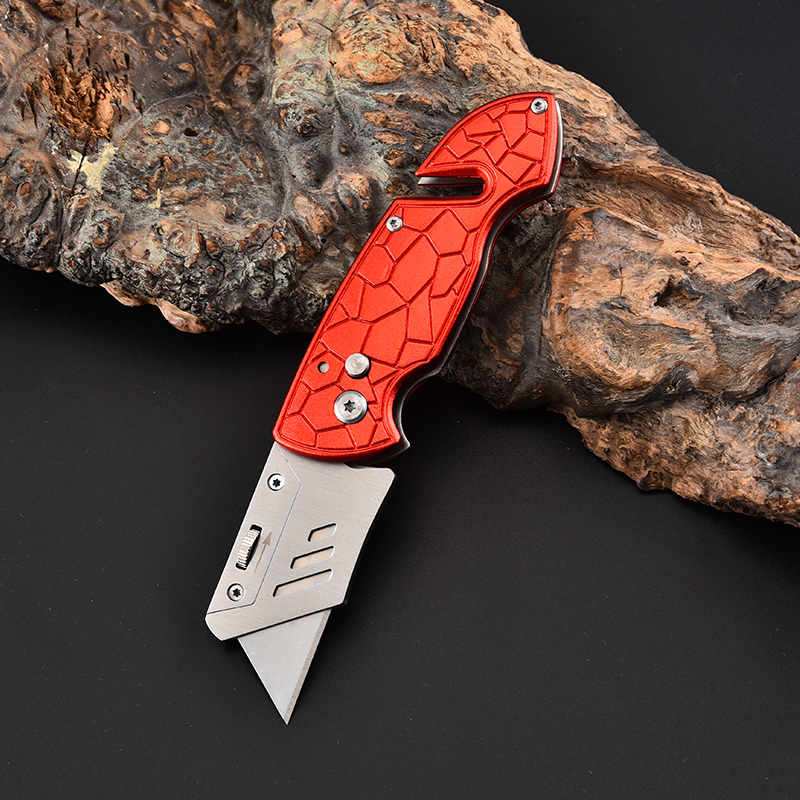
If a retailer sells through general e-commerce, hardware stores, gift channels, convenience-focused outdoor shops, or private-label marketplaces, compact pocket knives are usually the safer high-volume choice.
Their advantages are clear:
- Lower carrying burden for consumers.
- Broader everyday-use appeal, including opening packages, cutting cord, preparing food outdoors, and handling small repair tasks.
- Lower shipping weight and packaging volume.
- More accessible retail prices.
- More color, handle, logo, and gift-set possibilities.
- Better compatibility with many everyday-carry product assortments.
Large pocket knives can still win in selected categories. They are especially relevant when buyers prioritize blade length, grip security, robust cutting performance, outdoor readiness, or a more substantial hand feel.
The global market backdrop favors folding products. The overall knife market was valued at approximately USD 4.75 billion in 2025 and is projected to reach about USD 7.79 billion by 2033. Folding knives are expected to be the fastest-growing knife type during the forecast period. The outdoor knife category is also expanding, with folding-blade outdoor knives expected to grow faster than other outdoor knife formats.
There is no single universal size definition. Retailers, brands, and consumers often classify pocket knives by closed length, blade length, weight, and intended use, rather than by one measurement alone.
For practical product planning, the following ranges are useful.
| Product Category | Typical Closed Length | Typical Blade Length | Common Uses | Main Buyer Type |
|---|---|---|---|---|
| Compact pocket knife | 2.5–4.0 in | 1.5–3.0 in | Daily tasks, packages, light utility, travel-oriented carry | General consumers, gift buyers, EDC buyers |
| Mid-size pocket knife | 3.5–4.5 in | 2.75–3.5 in | Everyday work, outdoor use, household tasks | Broad EDC and outdoor audience |
| Large pocket knife | 4.25–5.5 in or more | 3.5–5.0 in or more | Camping, hunting, field work, heavy cutting | Outdoor users, workers, collectors |
A compact knife is not automatically a weak knife. With the right steel selection, locking mechanism, blade geometry, handle texture, and assembly quality, a compact folding knife can provide dependable performance for a large range of normal tasks.
Likewise, a large folding knife is not automatically more useful. If it feels too heavy, bulky, difficult to carry, or mismatched to local regulations, consumers may admire it online but decide not to purchase it.
The greatest retail advantage of compact pocket knives is frequency of use. Many consumers do not buy a knife for a single specialized activity. They buy a practical tool they can keep in a pocket, bag, glove compartment, tool pouch, or outdoor kit.
Compact models solve small but recurring problems:
- Opening cartons and mailers.
- Cutting zip ties and packing tape.
- Trimming loose threads or cord.
- Preparing snacks during travel or camping.
- Opening product packaging.
- Handling light emergency or repair tasks.
- Supporting hobby, fishing, gardening, and home-use activities.
This makes compact knives easier to position as a general-purpose product rather than a niche item.
A buyer who sees a 3-inch compact folding knife may think, "I can use this every week." A buyer looking at a 5-inch tactical-style folder may think, "This looks impressive, but do I actually need it?" That difference strongly affects conversion rates.
Retail demand is often driven by how easy it is for a customer to say yes. Compact pocket knives reduce several common barriers.
| Retail Barrier | Compact Pocket Knife Response | Large Pocket Knife Response |
|---|---|---|
| Pocket comfort | Usually easy to carry | Can feel bulky or heavy |
| First-time buyer confidence | Less intimidating | May look specialized |
| Gift suitability | High | More audience-specific |
| Shipping efficiency | Better | Usually less efficient |
| Shelf-space efficiency | Strong | Requires more display space |
| Price accessibility | Usually stronger | Often higher retail price |
| Legal-market flexibility | Often better, but market-specific | More restrictions may apply |
| Custom color options | Easy to expand | More limited by tactical positioning |
The compact segment is also ideal for retailers that want multiple variations. A single platform can support several handle colors, logo methods, packaging themes, blade finishes, and accessory combinations.
For example, one compact folding knife platform can become:
- A black G10 work knife.
- A colorful aluminum-handle gift knife.
- A wood-handle outdoor souvenir knife.
- A branded promotional knife.
- A multi-tool-inspired private-label item.
- A boxed retail product for hardware stores.
That flexibility improves inventory planning and helps brands create a broader collection without developing every SKU from zero.
Compact pocket knives commonly perform well as impulse purchases, checkout add-ons, gift items, and bundled accessories.
A retailer can place a compact knife beside flashlights, multitools, keychain tools, camping accessories, work gloves, sharpening tools, or outdoor gift sets. The smaller visual footprint makes it easier to display in counter units, clip strips, pegboard packaging, and e-commerce cross-sell modules.
Large folding knives are less likely to function as low-friction add-ons. Their retail presentation usually requires more detailed product education about steel, lock type, blade profile, grip construction, and intended use.
That does not make large knives commercially weaker. It simply means they usually need a more targeted sales environment.
Large pocket knives have a powerful advantage in task-driven categories. A longer blade and fuller handle can provide better control when a user is cutting thicker rope, processing food outdoors, handling wet gloves, preparing fire-starting materials, or completing demanding work tasks.
Their key selling points include:
- Longer cutting edge.
- More leverage during heavy cuts.
- A larger, more secure grip.
- More room for textured handle materials.
- Greater visual impact on retail shelves and product pages.
- Higher perceived durability.
- More opportunities for premium materials and upgraded hardware.
For outdoor consumers, a large folding knife may feel more capable than a compact model. This perception can be commercially important, especially in camping, fishing, hunting, survival, bushcraft, and heavy-duty work categories.
The outdoor knife market was valued at about USD 2.39 billion in 2024 and is projected to reach USD 3.43 billion by 2030. Rising participation in camping, hiking, fishing, and survival-oriented activities is identified as a major demand driver.
Large folding knives tend to justify premium features more easily. This can increase the average selling price and improve margin potential for a retailer.
Premium options may include:
- D2, 8Cr, 9Cr, 14C28N, or other specified blade steels.
- Ball-bearing pivot systems.
- G10, micarta, carbon fiber, wood, aluminum, or titanium handles.
- Liner locks, frame locks, button locks, crossbar locks, or other legal-market-appropriate systems.
- Stonewashed, satin, coated, blackened, or patterned blade finishes.
- Reversible clips and deep-carry clips.
- Premium boxes, pouches, and collector packaging.
A compact knife may create more units sold. A large knife may create more revenue per transaction. Retailers should therefore track both sell-through rate and gross profit per SKU, rather than choosing based on unit volume alone.
The strongest product assortment depends on who is buying.
| Customer Segment | Higher-Demand Size | Why It Usually Wins |
|---|---|---|
| General e-commerce buyers | Compact | Easy to understand, carry, gift, and price |
| Hardware and home-improvement shoppers | Compact or mid-size | Practical daily utility drives selection |
| Outdoor specialty retailers | Mid-size or large | Buyers value grip, cutting capacity, and durability |
| Hunting and fishing shops | Large | More specialized field-use expectations |
| EDC-focused brands | Compact and mid-size | Pocket comfort and design identity matter most |
| Promotional-product buyers | Compact | Lower cost, portable format, branding potential |
| Tactical and enthusiast retailers | Large | Strong visual appeal and premium feature demand |
| Travel and souvenir channels | Compact | Giftability and portability are important |
| Industrial safety buyers | Utility knife format | Replaceable blades and safety features matter more than size |
This comparison reveals an important truth: compact pocket knives have wider market reach, while large pocket knives have deeper niche appeal.
A retailer with a general customer base should normally start with compact and mid-size models. A specialist outdoor retailer can build a more substantial large-knife range around performance, materials, and use-case credibility.
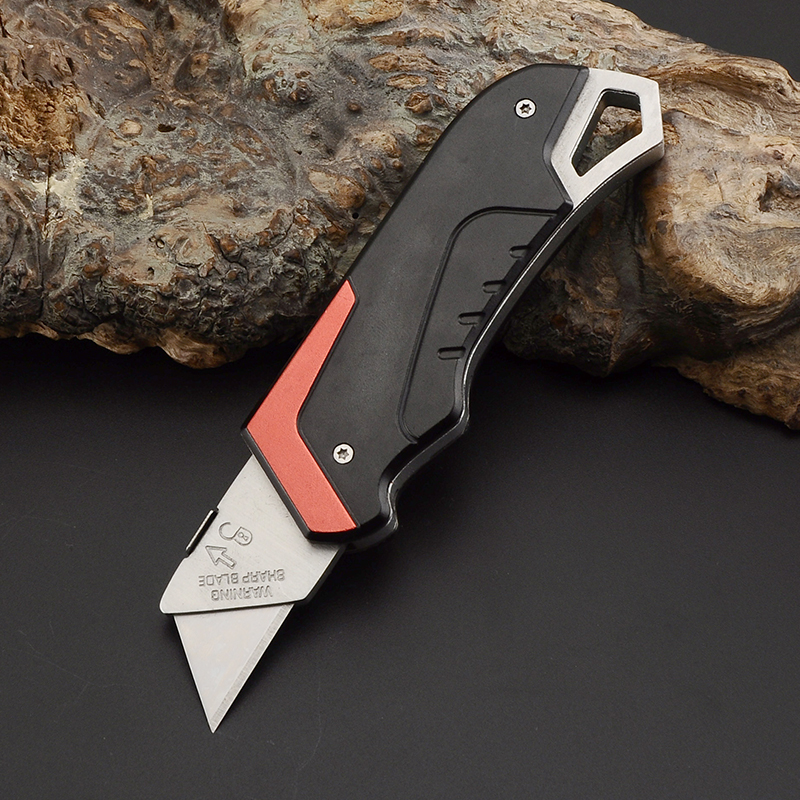
A pocket knife's retail potential is not determined by design alone. Local laws, age restrictions, blade-length limits, lock classifications, opening mechanisms, and public-carry rules can materially affect market fit.
For example, in the United Kingdom, the public-carry exception is limited to folding pocket knives with a cutting edge of no more than 3 inches and without a locking mechanism. Many other knives may require a lawful reason or may be restricted in public settings.
This creates a practical sourcing lesson:
> A larger knife may be technically excellent but commercially unsuitable for a target market if its configuration creates regulatory friction.
Before finalizing an OEM or ODM order, buyers should evaluate:
1. Target-country sales rules.
2. Public-carry restrictions.
3. Minimum-age requirements.
4. Locking and opening-mechanism classifications.
5. Blade length and cutting-edge measurement standards.
6. Packaging warnings and retailer compliance requirements.
7. Platform-specific selling policies.
8. Import documentation and customs classifications.
Legal requirements differ by country, state, province, city, and platform. Product suppliers and retailers should obtain qualified local compliance advice before listing or shipping knives into a market.
The best compact pocket knife is not merely smaller. It is designed around real user behavior.
For broad retail demand, consider the following feature priorities:
- Slim profile that sits comfortably in a pocket.
- Rounded edges that reduce pressure points.
- Reliable opening and closing action.
- Secure blade retention when closed.
- A practical clip position when permitted and desired.
- A blade shape that handles ordinary cutting tasks.
- Corrosion-resistant materials for humid climates and outdoor use.
- Clear packaging that communicates use and safety features.
A compact knife with poor ergonomics will underperform, even if it has attractive materials. Buyers quickly notice pocket hotspots, sharp handle edges, uneven action, blade play, or difficult one-hand operation.
Consumers should understand the product within seconds. Retail packaging and online listings should answer:
- What is the blade length?
- What is the closed length?
- What steel is used?
- Does the knife lock?
- What tasks is it designed for?
- Is there a pocket clip?
- How much does it weigh?
- What safety features are included?
- What accessories are included?
For online retail, simple comparison graphics can improve decision-making. A compact knife should be shown next to common objects or with clearly stated dimensions so shoppers can understand its true scale.
A large pocket knife needs a reason to exist. "Bigger" is rarely enough. The product should communicate a specific performance advantage.
Strong positioning examples include:
- Heavy-duty folding knife for camping and overlanding.
- Large grip folding knife for gloved work.
- Fishing knife with corrosion-resistant blade material.
- Outdoor food-prep folding knife.
- Rugged field knife with a secure lock and high-traction handle.
- Work-oriented knife with a durable clip and reinforced pivot.
The product page should connect blade length to a real benefit. For instance, a longer blade may offer more slicing travel through thick rope, cardboard, hose, or food. A longer handle may provide a more stable grip for users wearing work gloves.
Higher-priced large knives need visible quality signals. These may include precise blade centering, consistent grind lines, tight lock engagement, clean handle transitions, smooth pivots, durable screws, and quality-controlled packaging.
At the manufacturing stage, buyers should ask for:
- Blade-steel specification and material verification.
- Hardness range requirements where appropriate.
- Corrosion-resistance and finish expectations.
- Lock-function inspection criteria.
- Blade-play limits.
- Sharpness and edge-consistency standards.
- Drop-test or packaging-protection requirements.
- AQL inspection requirements for bulk orders.
These details make a large pocket knife more credible as a premium product, rather than simply a physically larger item.
For most retailers, the best answer is not "compact" or "large." It is a tiered pocket knife assortment.
| Tier | Product Role | Suggested Positioning | Retail Goal |
|---|---|---|---|
| Entry tier | Compact folding knife | Everyday carry, gift, utility | Drive volume |
| Core tier | Mid-size folding knife | Daily work and outdoor versatility | Create repeatable bestseller |
| Premium tier | Large folding knife | Outdoor, heavy-duty, enthusiast | Raise average order value |
This structure gives buyers a natural upgrade path. A consumer may first purchase a compact knife for daily use, then add a larger model for camping, fishing, or work.
From a private-label perspective, shared design elements can create a recognizable family. Matching logo placement, blade finish, handle texture, packaging design, and color language can connect the collection while allowing each size to serve a different buyer need.
Before choosing compact or large pocket knives, use this decision process.
1. Define the sales channel. General marketplaces typically reward compact products, while specialist outdoor channels can support larger and more technical models.
2. Identify the primary use case. Daily utility, camping, hunting, warehouse work, fishing, gifting, and promotional distribution each require different features.
3. Set the target retail price. Compact products usually compete on value and convenience. Large products often need material, performance, or design upgrades to justify a higher price.
4. Check market compliance early. Do this before approving tooling, packaging, or bulk production.
5. Build clear product differentiation. Avoid offering several similar knives with no meaningful difference in size, lock, handle, blade shape, or use case.
6. Request samples before confirming the final order. Evaluate pocket comfort, opening action, blade centering, lock performance, sharpening quality, finish consistency, and packaging.
7. Use retail-ready packaging. Include clear measurements, responsible-use language, age-related warnings where required, and scannable product identification.
8. Test the first production run. Monitor return reasons, customer reviews, sell-through speed, and customer questions before scaling the next order.
Compact pocket knives have higher overall retail demand because they are more portable, approachable, versatile, and easier to sell across broad consumer channels. They are the strongest starting point for brands seeking high-volume everyday-carry products, promotional knives, private-label gift items, and general e-commerce listings.
Large pocket knives have higher value potential in specialist segments. They can command better prices when they offer real advantages in grip, blade length, durability, materials, and outdoor or work performance.
The strongest commercial strategy is to use compact knives as the volume driver and large knives as the premium upgrade. This creates a balanced range that serves both practical buyers and performance-focused customers.
Yangjiang Holin Industrial Co., Ltd. can support this strategy through integrated OEM and ODM knife development, including product concept refinement, handle and blade customization, material selection, logo application, packaging development, sampling, quality control, and scalable mass production. Contact our team to develop a compact, mid-size, or large pocket knife collection tailored to your target market, brand position, and bulk purchasing requirements.
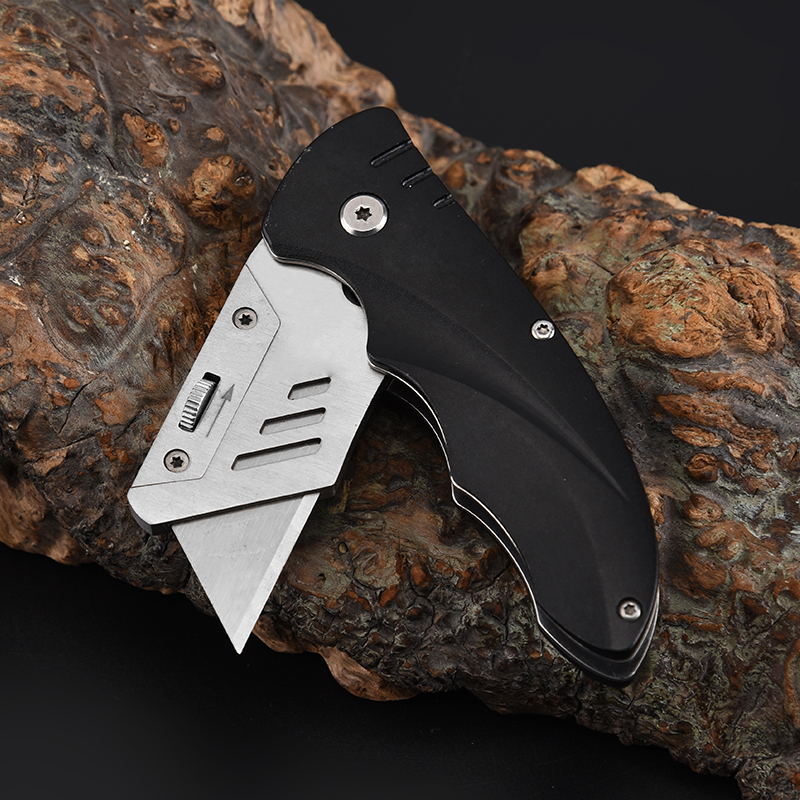
In most broad retail channels, yes. Compact pocket knives usually sell in higher unit volumes because they are easier to carry, more affordable, less intimidating, and useful for everyday tasks. Large pocket knives may still generate higher revenue per unit in outdoor, tactical, hunting, and work-oriented categories.
For broad everyday-carry appeal, a blade length of roughly 2.5 to 3 inches is often a practical starting range. However, the ideal length depends on the target market, intended use, local rules, handle size, and product positioning.
They can be. Large pocket knives often support higher retail prices because they may use larger quantities of material, more advanced locking systems, premium handle materials, and outdoor-focused features. Profitability still depends on landed cost, retail price, sell-through rate, returns, and marketing costs.
A commercially strong compact pocket knife often includes a slim and comfortable handle, reliable opening action, secure blade retention, corrosion-resistant materials, a practical blade profile, clear size information, and retail-ready packaging. Custom logo placement and handle color options can further improve private-label appeal.
Yes, but it depends on the user's habits, clothing, work needs, and local regulations. A large knife should offer a clear advantage, such as better grip, more cutting capacity, or outdoor durability. If it is too heavy or bulky, consumers may leave it at home.
Buyers should verify local knife rules, blade-length limits, locking-mechanism classifications, age restrictions, public-carry rules, platform policies, packaging requirements, customs requirements, and any product-specific safety obligations. Rules can vary significantly by destination.
A brand can differentiate through use-case positioning, blade shape, steel selection, handle material, locking system, carry clip design, color options, packaging, engraving, included accessories, and collection-level visual identity. Clear differences between compact, mid-size, and large models reduce internal product competition.
1. Grand View Research. [Knife Market Size, Share & Growth Report, 2026–2033]
2. Grand View Research. [Outdoor Knife Market Size, Share & Trends Report, 2025–2030]
3. Grand View Research. [U.S. Knife Market Size & Outlook, 2021–2030]
4. Grand View Research. [North America Outdoor Knife Market Size & Outlook, 2030]
5. GOV.UK. [Selling, Buying and Carrying Knives and Weapons]
6. Occupational Safety and Health Administration. [Sharp Knives and Utensils in the Workplace]
7. OSHA Education Center. [Guide to Safely Using Box Cutters and Utility Knives]


