


Views: 241 Author: Holin Knife Publish Time: 2026-09-20 Origin: Site


Content Menu
● What Makes a Pocket Knife Cool?
● Seven Cool Pocket Knife Styles That Inspire Buyers
>> 1. Tactical OTF Knives: High-Impact Mechanical Appeal
>> 2. Wharncliffe Folding Knives: Clean Lines With Serious Cutting Utility
>> 3. Balisong Designs: Movement, Balance, and Collector Energy
>> 4. Hidden-Release Automatic Folders: Surprise and Refinement
>> 5. Glow-in-the-Dark and Carbon Fiber Knives: Functional Visual Differentiation
>> 6. Novelty Pocket Knives: Character Creates Memorability
>> 7. Karambit-Inspired Folding Knives: Distinctive Shape and Ergonomics
● Pocket Knife Materials: What Buyers Notice First
● How to Choose a Cool Pocket Knife for Everyday Carry
>> 1. Define the Primary Cutting Tasks
>> 2. Match the Opening System to the User
>> 4. Check the Lock and Closing Experience
● From Concept to Production: A Better Way to Build a Custom Pocket Knife
>> Step 1: Build a Clear Product Brief
>> Step 2: Convert Style Into Manufacturable Details
>> Step 3: Review Samples Like an End User
>> Step 4: Control Quality at Scale
● Why Retail Reviews Matter in Product Development
● Build Your Next Pocket Knife Collection
● FAQ
>> What is considered a cool pocket knife?
>> What blade steel is best for a pocket knife?
>> Are liner locks reliable for folding knives?
>> What handle material should I choose for a custom folding knife?
>> Can I add my logo to a pocket knife?
>> What information is needed to start an OEM or ODM pocket knife project?
>> Are automatic and butterfly knives legal to sell?
A cool pocket knife is more than an eye-catching object. The best models combine a purposeful blade profile, dependable opening and locking action, comfortable carry, and a visual identity that users want to pick up every day.
For collectors, outdoor users, retailers, and private-label buyers, "cool" is subjective—but product success is not. A folding knife must look distinctive while delivering consistent fit, finish, cutting performance, and user confidence. This guide explains what makes pocket knives stand out, how to evaluate popular designs, and how to develop a custom folding knife collection for your market.

A cool pocket knife usually creates a strong first impression through its blade shape, handle texture, opening mechanism, finish, or compact silhouette. But long-term appeal comes from how well those elements work together in real use.
The most successful designs tend to balance four factors:
- Visual personality: A memorable blade shape, colored handle, unusual texture, patterned scale, or limited-edition finish.
- Mechanical satisfaction: Smooth opening, reliable detent, secure lockup, and controlled closing action.
- Useful proportions: A blade and handle size that feel practical for daily carry, outdoor tasks, utility work, or collecting.
- Material credibility: Steel, handle materials, hardware, and surface treatments that support the product's intended price point and use case.
A knife can be visually dramatic without being impractical. It can also be minimal, compact, and understated while still feeling premium. The key is to align the design with the buyer's expectations.
For example, a collector may prefer titanium handles, a complex opening mechanism, and a rare finish. A retail customer buying an everyday carry folder may prioritize a pocket clip, corrosion resistance, secure grip, and simple one-hand operation.
Instead of treating "cool pocket knives" as a single category, it is more useful to understand the design directions that repeatedly attract attention in the market.
Out-the-front knives stand out because the blade travels directly through the front of the handle. This creates a highly recognizable action and a sleek, technical appearance.
Premium OTF designs often use aluminum handles, precise internal components, and stainless or powder-metallurgy blade steels. Their appeal comes from the combination of compactness, speed, and a futuristic silhouette.
Common design features include:
- Double-action opening and retraction systems
- CNC-machined aluminum handles
- Drop-point, dagger-style, tanto, or clip-point blades
- Black stonewashed, satin, coated, or two-tone finishes
- Textured sliders and machined grip patterns
For manufacturers and brands, OTF projects require careful tolerancing and repeated functional testing. Consistent blade travel, reliable spring performance, controlled blade play, and secure retention are essential to the user experience.
Buyer insight: A visually impressive OTF knife may attract initial attention, but repeat purchases depend on action consistency and dependable assembly quality.
The Wharncliffe blade has a straight cutting edge and a spine that slopes toward the tip. Its aggressive, angular profile gives it a technical and modern appearance, while its low tip supports controlled cutting.
This blade style works especially well for:
- Packaging and carton opening
- Rope and cord cutting
- Detail work
- Controlled slicing
- Utility-focused everyday carry
A Wharncliffe folder can look tactical, industrial, minimalist, or premium depending on the handle material and finishing choices. Pairing it with G10, micarta, carbon fiber, aluminum, or titanium allows a brand to target different price tiers.
A textured G10 handle, for example, can communicate hard-use practicality. Carbon fiber may create a lighter and more upscale presentation. Titanium can support a collector-oriented or premium EDC concept.
Balisong knives, commonly called butterfly knives, are recognized by their two rotating handles. Their appeal is strongly connected to movement, balance, construction quality, and visual presence.
For users who enjoy handling and collecting knives, the experience matters as much as the blade itself. Handle geometry, pivot hardware, handle weight, blade balance, and latch design all affect how the knife feels.
A well-executed balisong concept may include:
- Stainless steel, aluminum, or titanium handle construction
- Channel or sandwich handle architecture
- Bushings, bearings, or washer pivot systems
- Magnetic or mechanical latches
- Stonewashed, bead-blasted, coated, or satin blade surfaces
This category requires extra attention to legal restrictions, intended user groups, and local market rules. Brands should always review applicable regulations before importing, selling, marketing, or distributing any knife type in a target region. Automatic, OTF, and butterfly-knife rules can differ significantly across jurisdictions and may depend on ownership, carry method, blade length, and local ordinances.
A hidden-release automatic folding knife appears discreet until the user discovers its opening mechanism. This "reveal" creates strong product-demo value for retailers, reviewers, and collectors.
The appeal comes from contrast: the knife may have the traditional appearance of a gentleman's folder but a more complex mechanical experience. Bolster-release concepts, concealed triggers, and subtle firing mechanisms can make a conventional profile feel special.
When developing this type of pocket knife, designers should prioritize:
- Clear but discreet user operation
- Accidental-deployment resistance
- Predictable lock engagement
- Safe closing behavior
- Handle ergonomics during activation
The mechanism should enhance the knife rather than create confusion. If a buyer cannot intuitively understand safe operation after basic instruction, the feature may become a barrier instead of a benefit.
Some of the most memorable cool pocket knives use visual effects that change in low light. Glow-in-the-dark handle inlays, luminous backspacers, glow resin, and contrasting scales can add a strong visual signature.
Carbon fiber is also popular because of its recognizable woven pattern, low weight, and technical appearance. It pairs naturally with titanium frames, stainless liners, and premium blade steels.
This design direction is especially effective for:
- Limited-edition collections
- Gift-oriented product lines
- Outdoor and camping themes
- Collector-focused releases
- Social-media-friendly product launches
However, visual materials must remain practical. A glowing insert should fit securely, resist cracking, and not interfere with grip. Carbon fiber edges should be finished smoothly. Decorative components should not compromise pocket comfort or structural stability.
Not every knife needs to look tactical or premium. Novelty designs can be highly effective when the target customer values humor, art, color, themes, or collectible appeal.
A memorable handle design may feature:
- Animal, marine, outdoor, or fantasy themes
- Printed graphics
- Engraved artwork
- Bright anodized colorways
- Patterned aluminum or stainless steel handles
- Retail-ready gift packaging
Novelty does not mean poor quality. A themed pocket knife should still offer safe edges, clean fitment, appropriate lock function, and reliable opening. The strongest novelty products give consumers a reason to smile while still performing basic cutting tasks.
For a private-label brand, a themed knife can be an accessible entry product that introduces new consumers to a larger EDC or outdoor collection.
Karambit-inspired folders use a curved blade profile and, in many cases, a finger ring. Their shape is immediately recognizable and gives a product a strong visual identity.
A folding karambit can be developed for utility, outdoor use, rescue-inspired themes, collection, or tactical styling. The product should be evaluated carefully for pocket comfort, safe deployment, grip orientation, and the specific laws that apply in the intended market.
The goal is not only to make an unusual-looking knife. It is to create a design with a clear purpose, secure handling characteristics, and a presentation that matches the buyer's expectations.
Material selection shapes both performance and perceived value. Buyers often judge quality by blade steel, handle feel, edge finish, and hardware before they even use the knife.
| Component | Common Options | Main Buyer Benefit | Best Fit |
|---|---|---|---|
| Blade steel | 8Cr13MoV, 7Cr17MoV, D2, 14C28N, 154CM, S30V, M390 | Sharpness, edge retention, corrosion resistance, value | EDC, outdoor, premium folders |
| Handle | G10, aluminum, stainless steel, micarta, carbon fiber, titanium | Grip, weight, appearance, durability | Budget to premium collections |
| Blade finish | Satin, stonewashed, black coating, bead blast, mirror polish | Style, glare reduction, scratch camouflage | Tactical, outdoor, collector lines |
| Pivot system | Washers, ball bearings, bushings | Opening feel and durability | Utility folders, premium EDC, balisongs |
| Lock system | Liner lock, frame lock, button lock, back lock, crossbar-style lock | Open-blade security and user confidence | Most folding-knife categories |
Premium steels such as M390, CPM-S30V, and CPM-20CV are generally positioned for strong edge retention and corrosion resistance. D2 and 154CM remain popular options for value-focused and mid-range folding knives, though their maintenance needs and performance profiles vary with heat treatment and blade geometry.
Important manufacturing point: Steel name alone does not guarantee performance. The heat treatment, hardness target, grind geometry, edge angle, finishing process, and quality control procedures all influence the final cutting experience.
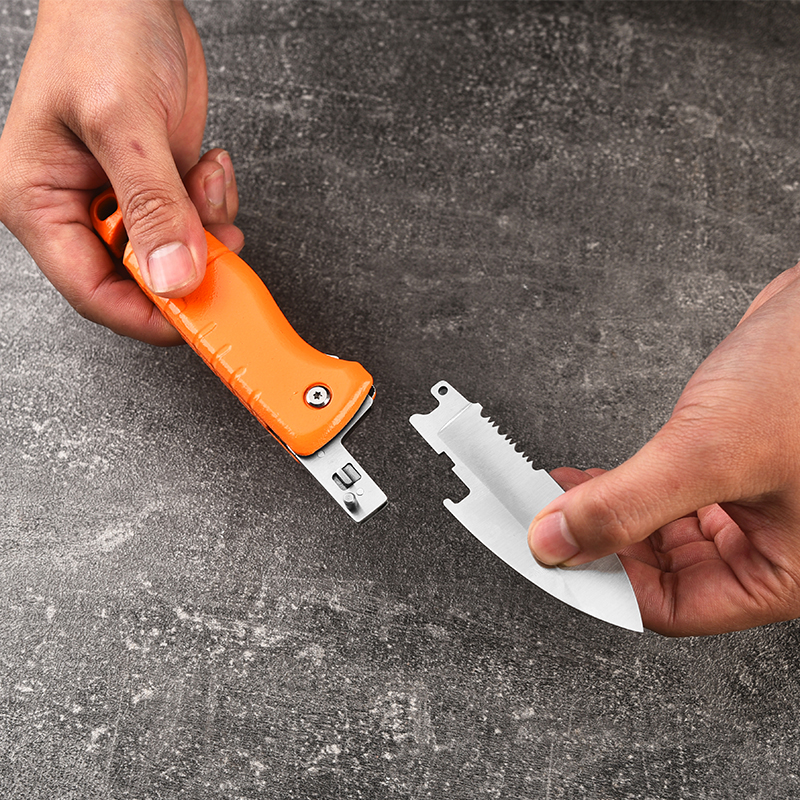
Before selecting a knife, focus on the job it must perform. A visually interesting product that is uncomfortable, too heavy, difficult to clean, or unsuitable for local carry rules may spend more time in a drawer than in a pocket.
Use this practical checklist.
Ask what the user will cut most often:
- Cardboard and packaging
- Rope, webbing, and cord
- Food during outdoor activities
- Wood shavings and camp tasks
- Zip ties and light utility materials
- Collection and display rather than daily work
A thin, slicey blade may be ideal for cardboard. A more robust blade geometry may suit outdoor utility work. For many EDC users, a practical blade length and a neutral handle shape are more valuable than an oversized design.
Common opening methods include thumb studs, thumb holes, front flippers, rear flippers, nail nicks, button deployment, and automatic mechanisms.
Choose based on intended market behavior:
- Thumb studs: Familiar, versatile, and suitable for many designs
- Thumb holes: Easy to recognize and often glove-friendly
- Flippers: Fast, fun, and visually dynamic
- Nail nicks: Traditional and simple for classic slipjoint designs
- Button-operated systems: Convenient but require robust testing
- Automatic actions: Strong visual appeal but require legal review
A cool pocket knife should also carry well. Consider:
- Closed length
- Overall thickness
- Weight
- Pocket clip position
- Clip tension
- Sharp edges around the handle
- Lanyard-hole placement
- Left- or right-hand usability
A knife that looks compact in product photos may feel bulky in real clothing pockets. Prototype testing with common pants, jeans, workwear, and outdoor garments can uncover problems before mass production.
A lock is not merely a feature list item. It affects user confidence every time the knife is opened or closed.
Locking mechanisms help hold a folding blade in the open position, reducing the likelihood of unintentional closure during use.
During product evaluation, check:
1. Whether the blade centers when closed
2. Whether the lock engages consistently
3. Whether there is excessive blade play
4. Whether the user can release the lock safely
5. Whether the knife can be closed without placing fingers in the blade path
6. Whether repeated opening and closing affects lockup or action
For importers, distributors, outdoor brands, tool brands, and promotional-product companies, a custom knife project should begin with product positioning—not only with a reference photo.
At Yangjiang Holin Industrial Co., Ltd., the development process can be structured around the intended customer, target retail price, order quantity, material requirements, and regional compliance needs.
A productive brief should define:
- Knife category: folding knife, pocket knife, utility knife, outdoor tool, or multi-tool
- Target customer: EDC user, outdoor enthusiast, retailer, promotional buyer, or collector
- Target market and sales channels
- Desired blade length and overall dimensions
- Blade shape and steel preference
- Handle material and color direction
- Opening and locking mechanism
- Packaging requirements
- Branding location: blade, handle, clip, box, pouch, or insert card
- Estimated order quantity and target price range
The more precise the brief, the faster a development team can identify feasible materials and construction options.
A concept image may look excellent but still require engineering adjustments. The product-development stage should refine the design for production consistency.
Typical areas include:
- Blade thickness and grind
- Pivot structure
- Lock-bar geometry
- Screw and hardware selection
- Handle machining or stamping method
- Surface treatment
- Assembly sequence
- Packaging protection
- Inspection standards
This is where an experienced R&D team adds real value. The objective is to preserve the product's visual identity while improving durability, repeatability, and assembly efficiency.
A sample should be evaluated beyond appearance. Test it as if it were already in a customer's pocket.
Check:
- Opening smoothness
- Lock consistency
- Blade centering
- Edge finish
- Handle comfort
- Pocket clip retention
- Logo clarity
- Coating adhesion
- Packaging condition after transit simulation
Collect feedback from more than one person. Different hand sizes, carry habits, and experience levels can reveal usability issues that a single reviewer may miss.
Stable mass production depends on repeatable processes. A production plan should define key checkpoints for materials, components, assembly, functional performance, appearance, and packaging.
For folding knives and pocket tools, useful checkpoints may include:
- Incoming material verification
- Blade hardness and finish checks
- Blade centering inspection
- Opening and closing cycle tests
- Lock engagement review
- Screw torque control
- Handle alignment checks
- Sharpness and edge consistency inspection
- Final cosmetic inspection
- Packaging and carton-drop review
A good custom knife is not simply a customized stock product. It is a product whose design, materials, manufacturing process, quality standard, and packaging all reinforce the same market position.
Customer feedback can reveal what specification sheets cannot. Reviews of popular pocket knives frequently emphasize factors such as solid construction, comfortable grip, smooth opening, blade sharpness, distinctive appearance, manageable carry weight, and confidence in the lock.
These comments show a useful pattern: users remember the feeling of the knife.
They remember whether the handle felt secure. They remember whether the blade opened smoothly. They remember whether the product seemed special enough to show a friend. They also remember small frustrations, such as a stiff mechanism, excessive weight, poor pocket clip tension, or an awkward closing process.
For private-label knife development, customer reviews should be categorized into five groups:
- Appearance: Color, finish, blade shape, premium feel
- Ergonomics: Grip, balance, comfort, pocket carry
- Mechanics: Opening action, detent, pivot smoothness, lock engagement
- Performance: Sharpness, edge retention, corrosion behavior, durability
- Value perception: Packaging, branding, material story, price-to-quality balance
This approach helps a brand turn qualitative customer language into measurable development requirements.
The best cool pocket knives are not copies of what is already popular. They combine recognizable market appeal with a clear product story, reliable mechanics, practical materials, and a design that fits a specific buyer.
Yangjiang Holin Industrial Co., Ltd. supports global buyers with integrated folding knife, pocket knife, utility knife, and outdoor-tool manufacturing. With an in-house R&D team and scalable production capability, we can support product design, sampling, OEM/ODM customization, branding, packaging, and bulk manufacturing for your project.
Whether you are developing a compact everyday carry folder, a colorful gift knife, a robust outdoor tool, or a premium collector-inspired design, start with a clear brief and a production partner that understands both design details and large-scale quality control.
Contact Yangjiang Holin Industrial Co., Ltd. today to discuss your custom pocket knife concept, request a product-development consultation, or begin an OEM/ODM sampling project.
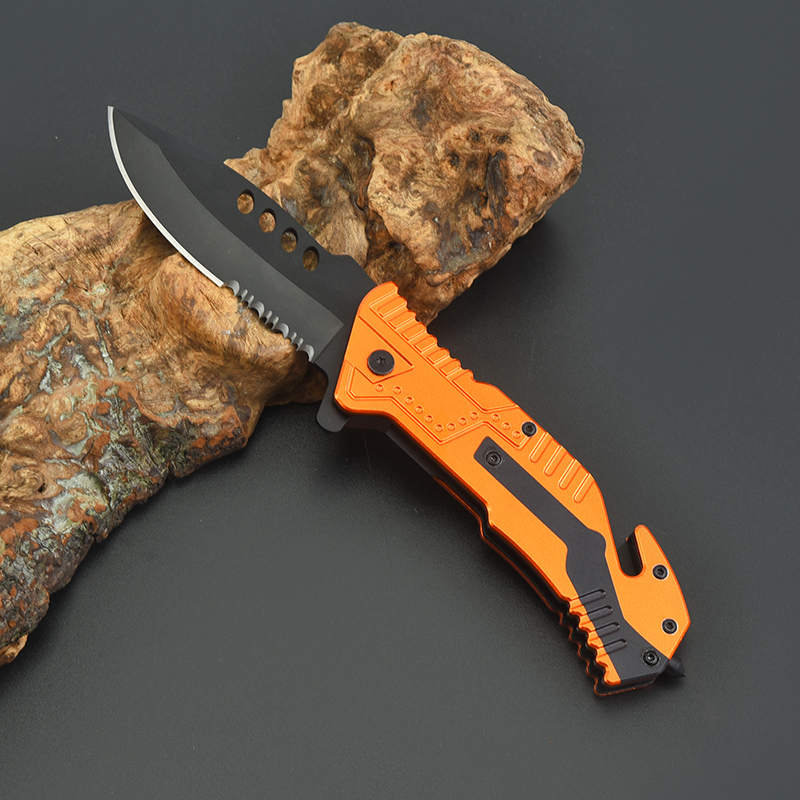
A cool pocket knife typically combines a distinctive design with practical usability. Features such as a unique blade shape, premium-looking handle material, smooth opening action, textured grip, unusual colorway, or compact EDC form can make a knife stand out.
The best steel depends on the target user and price point. D2 can offer strong wear resistance for value-oriented products, while 14C28N is often selected for corrosion resistance and easy maintenance. Premium steels such as M390 and CPM-S30V are commonly used in higher-end EDC knives because of their edge retention and corrosion resistance.
A properly designed and manufactured liner lock can be reliable for normal cutting tasks. The overall result depends on lock geometry, material selection, heat treatment, assembly accuracy, and quality control. Buyers should test lock engagement, blade play, and safe closing behavior before placing a production order.
G10 is a practical option for grip-focused designs. Aluminum provides low weight and supports anodized color options. Micarta offers a warm, textured feel. Carbon fiber creates a lightweight premium appearance, while titanium is often used for upscale EDC and collector-focused models.
Yes. Common branding options include laser engraving, screen printing, pad printing, etched blade marks, handle logos, pocket-clip branding, customized packaging, hang tags, instruction cards, and protective pouches. The best method depends on handle material, finish, artwork complexity, and target price.
Provide a reference image or design concept, target market, intended use, estimated order quantity, preferred blade and handle materials, dimensions, opening and lock preferences, color requirements, logo artwork, packaging needs, and expected price range. These details help the manufacturer recommend feasible construction and materials.
Rules vary widely by country, state, city, blade type, blade length, and whether the issue involves ownership, sale, import, transport, open carry, or concealed carry. Buyers should verify the current rules for every intended market before proceeding.
- [Blade HQ — Cool Pocket Knives]
- [Blade HQ — Knife Steel Guide]
- [KnifeCenter — Folding Knife Lock Types]
- [Knife Rights — State Civilian Switchblade / Automatic Knife Legality]
- [American Knife & Tool Institute — State Laws Regarding Automatic Knives]
- [American Knife & Tool Institute — State Knife Laws]
- [Tactical Sporting Goods — Blade Steel Guide: D2, M390, S30V, and 154CM]


