


Views: 269 Author: Holin Knife Publish Time: 2026-09-18 Origin: Site


Content Menu
● What Is a Knife Blade Coating?
● Why Manufacturers Apply Coatings to Knife Blades
>> Corrosion Protection for Humid, Coastal and Outdoor Use
>> Lower Glare and Tactical Appearance
>> Better Wear Resistance and Cutting Glide
>> Product Differentiation and Custom Branding
● Main Types of Knife Blade Coatings
● Paint Coatings: Flexible, Affordable and Highly Visual
>> Advantages of Painted Knife Blades
>> Limitations of Painted Knife Blades
● Powder-Coated Blades: Durable Coverage for Working Tools
>> When Powder Coating Makes Sense
● Ceramic-Polymer Coatings: Strong Color Control and Barrier Protection
>> Benefits for Outdoor Knife Programs
● PVD and Titanium Nitride: Thin, Hard Coatings for Precision Knives
>> What Buyers Should Ask About PVD
● DLC Coating: Premium Black Finish With Low Friction
● How to Choose the Best Knife Blade Coating
>> Choose by Knife Application
>> Consider the Base Steel First
>> Consider How Users Will Judge Wear
● Manufacturing Checklist for OEM and ODM Knife Coatings
>> Key Questions to Define Before Production
● Blade Coating Care: Practical Advice for End Users
● Work With a Custom Knife Manufacturer
● FAQ
>> 1. What is the most durable black knife blade coating?
>> 2. Is PVD better than ceramic-polymer coating for knives?
>> 3. Does a coated knife blade still rust?
>> 4. Can a coating affect a folding knife's action?
>> 5. Are coated knife blades safe for food preparation?
>> 6. Which coating is best for outdoor knives?
>> 7. Can I customize the blade coating color for an OEM knife order?
A blade coating is more than a visual detail. For a folding knife, pocket knife, utility knife, or outdoor tool, the right finish can influence corrosion resistance, cutting glide, scratch visibility, glare reduction, cleanability, and perceived product value.
At Yangjiang Holin Industrial Co., Ltd., we develop and manufacture knives for global private-label programs. From product-development discussions with buyers, one lesson is consistent: the best knife blade coating is not automatically the hardest, darkest, or most expensive option. It is the coating that matches the blade steel, product category, target price, expected environment, and the end user's expectations after months of real use.
This guide explains the major knife blade coating types, their trade-offs, and how importers, brands, and product managers can select a practical finish for OEM and ODM knife projects.

A knife blade coating is a material layer intentionally applied over the blade surface after grinding, polishing, blasting, or other preparation steps. Unlike a stonewashed finish, satin finish, bead-blasted finish, patina, or black oxide conversion treatment, a true coating adds a separate material onto the steel.
A properly selected coating can help a knife perform better in demanding conditions. It may protect a carbon-steel blade from moisture, reduce reflectivity for outdoor use, improve sliding performance in certain cutting tasks, or give a product a distinctive black, gray, gold, camouflage, or custom-color appearance.
However, a coating should never be treated as a substitute for proper steel selection, heat treatment, edge geometry, blade grinding, assembly control, or quality inspection.
For example, a thick protective coating can improve moisture resistance on a tool-steel outdoor knife. But if the sharpened edge is exposed, scratched deeply, or poorly maintained, the base steel can still corrode. In the same way, a highly wear-resistant vacuum coating may preserve the blade's appearance longer, but it cannot correct a poor blade profile or an inconsistent cutting edge.
A coating is a performance layer—not a cure-all.
A coated blade usually serves one or more of four purposes: protection, wear resistance, function, and appearance.
Moisture, salt, acidic residue, sweat, and dirty storage conditions can attack exposed steel. This is especially relevant for high-carbon steels and non-stainless tool steels, but stainless steels also benefit from sensible surface protection in wet, marine, industrial, or high-humidity environments.
A coating can act as a barrier between the blade surface and the environment. Thicker sprayed coatings generally provide stronger barrier protection when their film is continuous and properly cured. Thin vacuum-applied coatings can improve surface durability, but scratches, pinholes, the cutting edge, and uncoated areas remain important considerations.
For comparative corrosion checks, manufacturers often use neutral salt-spray testing under ASTM B117 or ISO 9227 conditions. ASTM B117 uses a controlled salt-fog environment, typically with a 5% sodium chloride solution at 35°C. It is useful for comparing similarly prepared samples, but it should not be presented as a direct prediction of real-life service life. [No citation in body as requested.]
Many folding knives and outdoor knives use black, dark gray, or matte coatings to reduce blade reflection. This can be valuable for hunting, camping, tactical-inspired products, rescue tools, and everyday carry knives where buyers prefer a discreet, rugged visual style.
A non-reflective finish can also create a stronger contrast with bright handle colors, metallic hardware, or logo markings. For consumer brands, this visual control matters: the blade coating often defines whether a knife feels technical, premium, military-inspired, minimalist, or recreational.
Some advanced coatings increase surface hardness and reduce friction. This can help a blade move more smoothly through materials, reduce material pickup, and preserve the surface finish during abrasive use.
Physical Vapor Deposition coatings and Diamond-Like Carbon coatings are widely associated with this performance profile. PVD coatings are typically very thin, helping preserve critical dimensions on folding-knife parts, sliding mechanisms, and close-tolerance tools. DLC is a carbon-based coating family valued for hardness, low friction, and deep black appearance.
The practical benefit depends on the full knife design. A coated blade can improve the user experience, but cutting performance still depends heavily on blade thickness behind the edge, primary grind, edge angle, steel heat treatment, and the material being cut.
For OEM knife programs, coatings create strong opportunities for differentiation:
- Matte black blades for EDC folding knives
- Earth-tone coatings for hunting and camping tools
- Bright colors for utility knives and safety-oriented products
- Camouflage or graphic patterns for promotional collections
- Gold, bronze, rainbow, or dark metallic finishes for gift and collector knives
- Custom logo marking through laser engraving after coating
This makes coating selection both a technical decision and a commercial decision. A premium finish can raise product appeal, but it must still align with the target market and retail position.
The most common coating categories for knives include painted finishes, powder coatings, ceramic-polymer coatings, PVD coatings, titanium nitride coatings, and DLC coatings. Each has different strengths, limitations, cost implications, and manufacturing requirements.
| Coating Type | Typical Character | Relative Film Thickness | Main Advantage | Main Limitation | Best-Fit Products |
|---|---|---|---|---|---|
| Paint | Sprayed color layer | Usually thicker than vacuum films | Low cost and broad color choice | Chips and wears relatively quickly | Budget knives, promotional tools |
| Powder coating | Electrostatic powder, heat cured | Medium to thick | Strong barrier and impact resistance | Can feel rougher and affect precision areas | Fixed blades, outdoor tools |
| Ceramic-polymer coating | Spray-applied and oven cured | Medium to thick | Color flexibility and corrosion barrier | Thickness must be tightly controlled | Outdoor, tactical, custom knives |
| Titanium nitride | Vacuum-applied hard coating | Thin | Wear resistance and metallic appearance | Limited corrosion barrier at damage points | Utility blades, decorative knives |
| PVD | Vacuum-deposited coating family | Usually very thin | High wear resistance and low tolerance impact | Higher process cost | Premium folders, precision tools |
| DLC | Carbon-based vacuum coating | Usually very thin | Low friction, high wear resistance, deep black look | Premium process and substrate preparation required | EDC folders, premium outdoor knives |
The terms used in the market can overlap. For example, "PVD black coating" may describe several coating formulations and processes. A buyer should request the actual coating specification rather than relying only on a broad marketing name.
Paint is one of the simplest blade-finishing options. It is usually sprayed onto the blade and cured or dried according to the selected paint system. It is suitable for low-cost knives, novelty products, themed collections, promotional tools, and products where color is more important than maximum abrasion resistance.
- Low initial cost compared with specialized vacuum coatings
- Wide choice of colors, graphics, and custom visual effects
- Suitable for brand colors and seasonal product collections
- Easy to refresh in small-scale customization projects
- Can create intentionally distressed or rugged-looking products
- Paint can chip, scratch, peel, or fade under hard use
- Some paint systems may not be appropriate for food-contact applications
- Surface preparation strongly affects adhesion
- Thick or uneven paint may interfere with folding clearances
- Wear can expose the base steel relatively quickly
Painted blades can work well when the buyer expects visible wear as part of the product character. They are less suitable for a premium hard-use knife where users expect the finish to remain clean after extended cutting, abrasion, and pocket carry.
Powder coating uses dry powder materials that are applied electrostatically and then cured with heat. The resulting finish can be durable, impact-resistant, and available in many colors and textures.
For outdoor knives, large fixed blades, machete-style tools, garden tools, and utility products, powder coating can offer practical protection at a controlled cost. The film is usually more substantial than a vacuum-deposited coating, helping create a stronger moisture barrier while intact.
Powder coating is often a sound choice when a product needs:
- A durable non-reflective finish
- Strong color coverage
- Good protection for a carbon-steel blade body
- A finish suited to larger blade surfaces
- A cost-conscious industrial or outdoor-tool positioning
The main trade-off is surface texture. A rougher coating can create drag in some cutting tasks and may retain residue more easily than a smooth polished or vacuum-coated surface. For folding knives, careful masking and dimensional control are also essential around pivots, lock faces, detents, and other moving interfaces.

Ceramic-polymer coatings are commonly used when brands want a broad color palette, a matte low-glare appearance, and robust corrosion protection. These coatings are generally sprayed and oven cured. They can be applied as a solid color, camouflage pattern, or customized visual design.
For many outdoor and tactical-style products, ceramic-polymer coatings provide a practical middle ground between basic paint and high-cost vacuum deposition.
A properly applied ceramic-polymer finish can deliver:
- Strong visual customization
- Good moisture and corrosion barrier performance
- A smooth or matte non-reflective surface
- Better scratch resistance than ordinary paint systems
- Compatibility with many branding, camouflage, and limited-edition concepts
However, film thickness must be controlled carefully. A coating that is too thick can affect folding action, lock engagement, sheath fit, or tight mechanical clearances. For this reason, a knife manufacturer should define masking zones and inspection criteria before production begins.
For knife coatings intended to contact food, buyers should not assume that a coating is suitable simply because it looks clean or durable. The specific formulation, intended use, migration profile, and applicable market requirements must be reviewed. Manufacturers of food-contact materials are responsible for ensuring their materials comply with applicable specifications and use limitations. [No citation in body as requested.]
Physical Vapor Deposition is a family of vacuum-based coating processes. In a controlled chamber, coating material is vaporized and deposited onto the prepared blade surface. PVD coatings are typically very thin, which is a major advantage for folding knives and precision cutting tools.
A thin coating reduces the risk of changing blade dimensions, pivot clearances, or locking interfaces. At the same time, it can provide excellent wear resistance and an attractive metallic or dark finish.
Titanium nitride is one well-known hard coating. It is often associated with a gold color, although process variations can create other visual effects. It can enhance wear resistance and provide an eye-catching premium appearance for pocket knives, utility blades, and collector-oriented designs.
Instead of requesting "black PVD" as a general term, professional buyers should clarify:
1. What is the coating composition?
Ask whether the supplier proposes titanium nitride, chromium nitride, titanium carbonitride, DLC, or another system.
2. What is the target thickness range?
Thickness affects wear performance, appearance, and tolerance control.
3. Which surfaces will be coated?
Confirm whether the blade flats, bevels, tang, lock contact areas, pivot region, and hardware will be masked or coated.
4. What substrate preparation is required?
Polished, satin, bead-blasted, and stonewashed surfaces can produce very different final appearances and adhesion results.
5. How will quality be inspected?
Define color consistency, adhesion expectations, cosmetic acceptance criteria, and corrosion-test requirements before mass production.
This level of detail reduces misunderstandings between brands, designers, coating providers, and assembly factories.
DLC, short for Diamond-Like Carbon, is a carbon-based coating family known for a dark appearance, high surface hardness, strong wear resistance, and low friction. It is commonly selected for premium everyday-carry knives, tactical folders, premium utility knives, and components that benefit from smooth movement.
DLC is particularly attractive when a brand wants a refined black blade that resists visible wear better than paint or many thicker spray coatings. In cutting-tool applications, PVD and DLC systems are used to improve hardness, reduce friction, and support smoother movement through the material being cut.
A quality DLC coating can feel sleek rather than chalky. It also tends to preserve the original blade geometry because the coating layer is thin. Yet, like other coatings, it does not eliminate the need for care. The sharpened edge is commonly uncoated or becomes exposed through sharpening, and deep scratches can reveal the underlying steel.
DLC is usually the premium choice when wear resistance, low drag, dark aesthetics, and tight dimensional control are priorities.
The best coating depends on the product's real purpose. A coating selection process should start with the user, not with a trend.
| Knife Application | Recommended Coating Direction | Why It Fits |
|---|---|---|
| Everyday-carry folding knife | PVD or DLC | Thin film, premium appearance, wear resistance, smooth feel |
| Outdoor fixed blade | Powder coating or ceramic-polymer coating | Strong barrier protection and low-glare coverage |
| Budget pocket knife | Paint or basic coated finish | Cost-effective color and product differentiation |
| Utility knife | PVD, titanium nitride, or application-specific coating | Wear resistance and controlled dimensions |
| Tactical-style knife | Matte ceramic-polymer, PVD, or DLC | Non-reflective appearance and durable visual identity |
| Gift or collector knife | Titanium nitride, color PVD, or custom ceramic finish | Distinctive premium visual effect |
| Food-preparation knife | Uncoated stainless steel or specifically validated food-contact finish | Easier compliance review and simpler cleaning expectations |
A coating should support the selected steel.
- High-carbon and tool steels often benefit more from barrier coatings because they may be less forgiving in humid conditions.
- Stainless steels may need coatings primarily for wear resistance, glare reduction, or appearance rather than basic corrosion protection.
- Budget steels can gain perceived value from a durable finish, but excessive coating cost can make the product commercially unbalanced.
- Premium steels deserve a coating that preserves their performance rather than hiding poor processing or poor edge quality.
Not every buyer evaluates coating wear in the same way.
Some users want a pristine black finish that stays visually consistent. Others like a worn, field-used appearance. A product manager should define the expected "aging story" before selecting the finish.
For example:
- A premium office-carry folding knife may need DLC or high-quality PVD to maintain a clean, refined look.
- A bushcraft knife may be accepted—even appreciated—with visible wear on a powder-coated blade.
- A colorful camping knife may prioritize color consistency and corrosion protection over ultra-low friction.
A successful custom knife project requires more than choosing a coating name. The buyer and manufacturer should agree on measurable requirements before confirming mass production.
- Blade steel grade and heat-treatment target
- Blade finish before coating: satin, polished, stonewashed, or blasted
- Coating type, color, texture, and gloss level
- Coating thickness range and permitted variation
- Areas requiring masking, especially pivots and lock interfaces
- Logo marking method before or after coating
- Adhesion and cosmetic inspection criteria
- Corrosion-test method, sample size, duration, and acceptance standard
- Packaging requirements that prevent blade-to-blade abrasion
- Product-care instructions for the final customer
This documentation is particularly important for global sourcing projects. It turns a general request such as "matte black blade" into a reproducible production standard.
Even the best knife blade coating benefits from basic maintenance.
1. Wipe the blade dry after exposure to water, sweat, food residue, or salt.
2. Clean sticky residue promptly using a suitable mild cleaner and soft cloth.
3. Avoid abrasive scouring materials that can scratch or dull the coating surface.
4. Lubricate pivots and moving parts according to the knife's intended use.
5. Inspect scratches and edge areas because exposed steel may need light protection.
6. Store the knife in a dry place rather than leaving it in a wet sheath, vehicle, tackle box, or outdoor bag.
For food-related use, choose materials and finishes that have been specifically reviewed for the intended food-contact conditions. A general-purpose coated blade should not automatically be marketed for food use without appropriate material documentation.
Blade coating selection is one of the most important decisions in a folding knife, pocket knife, utility knife, or outdoor-tool program. It affects appearance, production cost, corrosion performance, cutting feel, maintenance expectations, and how the product ages in the customer's hands.
Yangjiang Holin Industrial Co., Ltd. provides one-stop OEM and ODM support for knife and outdoor-tool buyers, including product design, development, sampling, material selection, blade-finish planning, production, assembly, and bulk manufacturing.
Whether you are developing a black DLC-style EDC folder, a custom-color camping knife, a coated utility blade, or a branded outdoor-tool collection, our team can help translate your concept into a practical, scalable production specification.
Contact Yangjiang Holin Industrial Co., Ltd. to discuss your custom knife design, coating requirements, target market, order quantity, and product-development timeline.
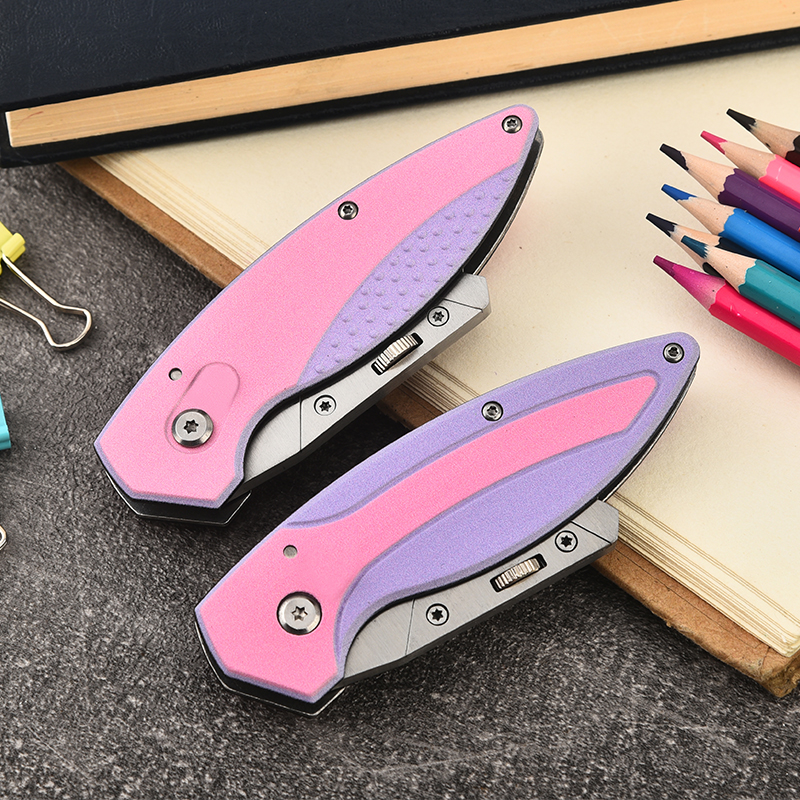
DLC is commonly considered one of the strongest premium options for a black blade because it offers high wear resistance, a thin film, and low-friction characteristics. The final performance still depends on surface preparation, coating quality, blade geometry, use conditions, and maintenance.
Neither is universally better. PVD is usually preferable when thin coating thickness, wear resistance, smoothness, and tight dimensional control are important. Ceramic-polymer coating is often better when a project needs stronger barrier protection, matte color options, camouflage patterns, or broad visual customization.
Yes. A coating can reduce corrosion risk, but it cannot guarantee that a knife will never rust. The cutting edge, deep scratches, coating defects, pivot area, and uncoated surfaces may remain vulnerable. Regular cleaning and dry storage are still important.
Yes. Thick or poorly controlled coatings can interfere with pivots, detent tracks, washers, lock faces, and blade centering. Folding knives require defined masking areas and close thickness control during the coating process.
It depends on the exact coating formulation and intended use. Food-contact suitability must be verified for the specific material system, manufacturing process, market, and use conditions. Do not assume a coating is appropriate for food contact without supporting documentation.
For many outdoor fixed blades, powder coating or ceramic-polymer coating offers a practical balance of corrosion-barrier protection, low glare, color flexibility, and cost. For premium outdoor folders, PVD or DLC may be preferred when wear resistance and a thinner finish are priorities.
Yes. Depending on the coating process, buyers can request matte black, gray, green, tan, camouflage, metallic gold, bronze, rainbow, or other custom visual directions. Final color availability, consistency, minimum order quantity, and cost should be confirmed during sampling.
1. [Blade HQ — Blade Coatings Explained]
2. [INORCOAT — PVD Coating Solutions for Knives and Blades]
3. [Crystallume PVD — PVD and DLC Coatings]
4. [Q-Lab — ASTM B117 Salt Spray Test Standard]
5. [Sherwin-Williams — The Limitations of ASTM B117 Salt Spray Testing]
6. [U.S. Food and Drug Administration — Regulatory Status of Components of a Food Contact Material]
7. [U.S. Food and Drug Administration — Packaging and Food Contact Substances]


