


Views: 215 Author: Holin Knife Publish Time: 2026-10-27 Origin: Site


Content Menu
● Urban EDC Knife vs Outdoor EDC Knife: Key Differences
● EDC Knife for Urban Users: Precision and Carry Comfort
>> Everyday Cutting Tasks Favor Control
>> Pocket Comfort Includes More Than Weight
● EDC Knife for Outdoor Users: Grip and Environmental Readiness
>> Outdoor Cutting Requires a Different Balance
>> Wet and Gloved Handling Deserves Separate Evaluation
● Blade Steel and Geometry: What Actually Changes Performance?
>> Edge Retention Is Only One Property
>> Geometry Can Matter More Than the Steel Label
● Locking Systems, Safe Handling, and Carry Restrictions
>> A Lock Is Not Permission to Misuse the Knife
>> Check the Destination Before Finalizing the Design
● Three Practical Insights That Improve Knife Selection
>> 1. Use a Task-Based Scorecard
>> 2. Compare Complete Knives, Not Isolated Specifications
>> 3. Separate Laboratory Results From Field Suitability
● A Practical OEM/ODM Development Plan
● Maintenance for Urban and Outdoor EDC Knives
● Develop an EDC Knife Around Your Customer's Real Tasks
>> Can One EDC Knife Work for Both Urban and Outdoor Use?
>> Is a Larger Blade Better for Outdoor Users?
>> Which Steel Is Best for an Urban EDC Knife?
>> Should Outdoor Users Always Choose a Locking Knife?
>> What Should Buyers Include in an OEM/ODM Inquiry?
An EDC knife for urban users vs outdoor users is best compared by the work it performs—not by how rugged it looks. City users typically need convenient pocket carry and precise cutting for packaging and everyday tasks. Outdoor users need dependable handling, manageable maintenance, and cutting performance suited to changing conditions.
The distinction is not simply small versus large. A bulky knife can become uncomfortable during a commute, while an overly compact handle can become awkward during extended campsite work.
My starting point is task-first selection: identify what you cut, where you carry, and how you maintain your tools. From a product-development perspective, these details create a more useful specification than appearance or steel name alone.
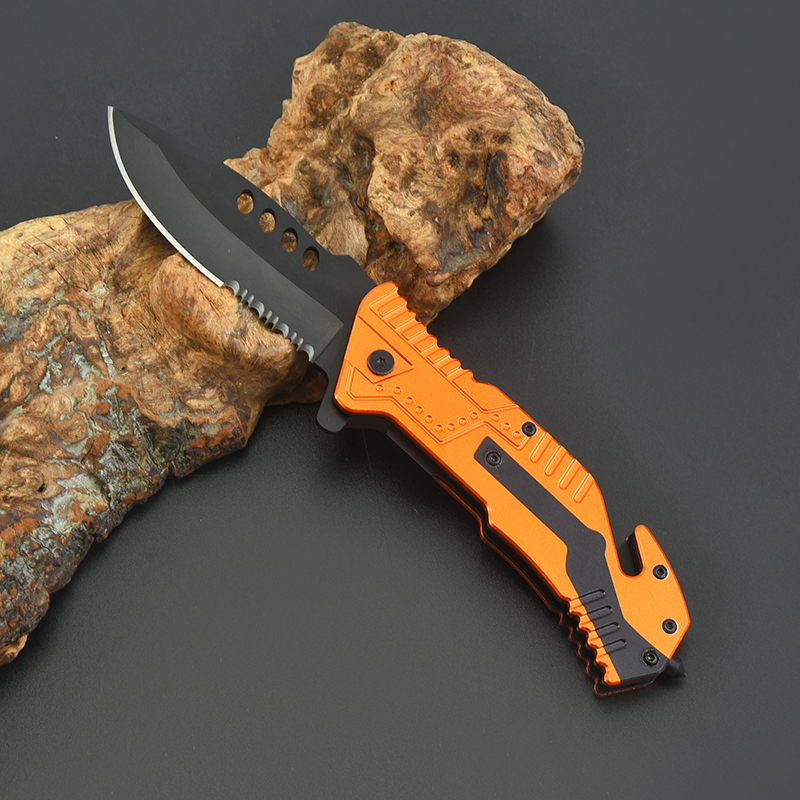
EDC means "everyday carry." However, everyday needs change considerably between an office commute and a weekend outdoors.
The following comparison presents design priorities, not universal requirements.
| Selection factor | Urban EDC knife | Outdoor EDC knife |
|---|---|---|
| Typical tasks | Opening parcels, trimming packaging, cutting cord | Cutting cordage, campsite preparation, light wood cutting |
| Carry priority | Low weight, slim profile, comfortable clip | Secure retention and accessible placement |
| Blade geometry | Efficient slicing and controlled tip work | Cutting efficiency balanced with edge durability |
| Handle design | Compact dimensions and pocket comfort | Secure grip during prolonged or gloved use |
| Environmental exposure | Pocket moisture, adhesive, occasional rain | Rain, dirt, humidity, and potentially saltwater |
| Maintenance priority | Easy cleaning after routine tasks | Accessible cleaning and practical field sharpening |
| Main buying mistake | Choosing unnecessary bulk | Treating a folding knife as a heavy-duty survival tool |
A hybrid knife can serve both environments. Nevertheless, it should reflect the user's dominant tasks rather than attempt to maximize every feature.
An urban EDC pocket knife often works around objects that should remain undamaged: products inside cartons, cables beside packaging, or fabric beneath a loose thread.
For these tasks, controlled cutting matters more than an imposing blade.
A useful urban design should support:
- A secure grip without excessive handle bulk.
- Predictable opening and closing.
- A blade profile suitable for shallow, deliberate cuts.
- Comfortable carry while sitting, walking, and commuting.
For frequent carton opening, a utility knife with replaceable blades may be more practical than a conventional folding knife. This is especially relevant when adhesive contamination and repeated abrasive cutting dominate the workload.
The right comparison is therefore not always one pocket knife against another. Sometimes the better tool belongs to a different category.
A lightweight knife can still carry poorly if its handle is unusually thick or its clip presses against the hand.
Evaluate the complete carry experience:
1. Does the closed knife sit comfortably in the intended pocket?
2. Does the clip retain it securely without excessive removal force?
3. Are exposed edges uncomfortable when reaching into the pocket?
4. Does the handle interfere with seated movement?
I would prioritize these questions over visual styling when defining an urban EDC knife. A tool that becomes irritating to carry is unlikely to remain part of a daily routine.
Outdoor EDC knives may handle rope, packaging, food preparation, and light wood cutting. These activities create different demands, even during the same trip.
A fine cutting edge may slice efficiently, but edge durability becomes important when materials contain grit or cutting conditions are less controlled. Conversely, increasing blade thickness indiscriminately can reduce slicing efficiency.
The design objective is not maximum thickness. It is sufficient durability for the intended workload without unnecessary cutting resistance.
A folding knife should not be treated as a substitute for a hatchet, pry bar, or purpose-built heavy-duty tool.
A handle that feels comfortable indoors may behave differently when wet or used with gloves.
Outdoor evaluation should consider:
- Usable grip length.
- Rounded surfaces that avoid pressure points.
- Texture that remains manageable during repeated cuts.
- Access to the opening and release controls.
- Secure retention in the selected pocket or pouch.
More aggressive texture is not automatically better. It may improve purchase while also increasing discomfort or pocket wear.
The strongest design decision comes from testing the actual handle shape under intended conditions, rather than judging a material sample alone.

Knife steel selection involves trade-offs among edge retention, toughness, corrosion resistance, and sharpening response.
Edge retention describes how well an edge maintains cutting ability. Toughness describes resistance to fracture, including edge chipping. These properties are related to steel composition, heat treatment, and blade geometry.
Higher abrasive wear resistance does not automatically produce the best knife for every user. A blade that performs well during repeated clean cutting may be less suitable when easy sharpening or greater resistance to chipping takes priority.
For an urban knife, frequent packaging work may justify emphasizing wear resistance. For an outdoor knife, maintainability and environmental exposure may deserve greater weight. Neither category has one universally superior steel.
Two knives using the same steel can cut differently because their edge angles, thickness behind the edge, and heat treatment differ.
A thinner cutting geometry generally reduces resistance during slicing, but the edge must still withstand its intended work. A more substantial edge may improve durability in some applications while requiring more cutting effort.
For buyers developing a product range, the specification should therefore cover:
- Steel grade and material verification.
- Agreed hardness range.
- Blade and edge geometry.
- Surface finish.
- Sharpening consistency.
- Representative cutting tasks.
A premium material name should never replace a complete performance specification.
A locking mechanism can help resist unintended closure when correctly engaged, but it does not make a folding knife suitable for twisting, prying, or impact work.
Before use, inspect the knife for damage, unusual movement, contamination, and incomplete engagement. Keep fingers clear of the blade path when closing, and discontinue use if the mechanism behaves unpredictably.
For product development, evaluate opening, closure, blade retention, and applicable lock operation as a system. Smooth deployment alone does not establish long-term reliability.
Carry rules can change the suitability of a product, regardless of its cutting performance.
For example, UK government guidance identifies an exception for folding pocketknives with a cutting edge no longer than three inches that do not lock. Locking knives do not qualify for that particular exception.
This is not a universal permission to carry a knife anywhere. Location, circumstances, restricted settings, and other applicable rules still matter.
For international procurement, review the destination market before approving blade dimensions, mechanisms, packaging claims, or marketing language. Obtain qualified local guidance where necessary.
Instead of asking which knife is "best," compare candidates against a defined workload.
The following weights are an illustrative purchasing framework, not measured industry data.
| Evaluation criterion | Urban weighting | Outdoor weighting |
|---|---|---|
| Carry comfort | 30% | 15% |
| Cutting performance | 25% | 25% |
| Grip security | 15% | 25% |
| Maintenance practicality | 15% | 20% |
| Fit, finish, and operation | 15% | 15% |
Score each candidate from one to five, multiply by the weighting, and compare totals.
Apply legal and essential safety requirements as pass-or-fail gates before scoring. A high overall score cannot compensate for an unsuitable mechanism or an unlawful configuration.
Consider two illustrative product briefs—not reported customer cases.
An urban packaging knife prioritizes comfortable pocket carry, controlled slicing, and straightforward adhesive removal.
An outdoor utility folder prioritizes a full working grip, accessible controls, corrosion management, and practical sharpening.
Giving both products the same blade steel does not make them equivalent. Geometry, handle shape, assembly, and maintenance access still determine how each performs.
This is why I would approve production samples against a written brief, not merely against a photograph or material list.
CATRA equipment measures cutting performance and edge durability through controlled testing against standardized media. Such testing can support repeatable comparisons.
However, an abrasive cutting result does not establish wet-grip security, lock reliability, or resistance to misuse.
Likewise, ISO 8442-5 addresses sharpness and edge retention for specified food-preparation knives. It should not be presented as comprehensive certification of every aspect of an outdoor folding knife.
A credible evaluation combines relevant laboratory measurements with application-specific checks.
For brands, distributors, and importers, urban and outdoor positioning should become measurable requirements before tooling or bulk production.
A structured development process can follow six steps:
1. Define the customer and destination market. Identify typical tasks, carry expectations, price positioning, and regulatory constraints.
2. Write separate product briefs. Distinguish essential functions from optional styling features.
3. Agree on materials and construction. Specify steel, handle material, dimensions, finish, and mechanism.
4. Review functional prototypes. Assess cutting, ergonomics, pocket carry, and operation.
5. Establish acceptance criteria. Define relevant dimensional checks, workmanship requirements, and agreed performance evaluations.
6. Approve a production reference sample. Use it alongside written specifications to manage consistency.
Yangjiang Holin Industrial Co., Ltd. supports product design, development, and bulk production through its in-house R&D team and manufacturing facility. Its OEM/ODM services provide a route for turning these requirements into customized knife programs.
Specific testing capabilities, certifications, tolerances, and production commitments should be confirmed during project discussions rather than assumed.
Maintenance needs follow exposure, not marketing labels.
After routine urban use, remove adhesive and debris using methods compatible with the manufacturer's instructions. Inspect the pivot area for pocket lint and keep the cutting edge serviceable.
After outdoor use, remove dirt, dry the knife thoroughly, and pay attention to trapped moisture. Saltwater exposure requires prompt cleaning and careful drying. Stainless steel should not be treated as maintenance-free.
A practical routine is:
- Inspect before use.
- Clean after contamination.
- Dry before storage.
- Lubricate only as directed.
- Sharpen with suitable equipment.
- Stop using damaged or unreliable tools.
Avoid disassembly unless the manufacturer permits it and provides appropriate guidance.
Urban buyers need a knife they can carry comfortably and control precisely. Outdoor buyers need dependable handling and maintainability under their expected conditions.
Contact Yangjiang Holin Industrial Co., Ltd. with your target market, application, preferred specifications, and order requirements to discuss a customized OEM/ODM knife program.
Yes. A balanced folding knife can handle commuting and light outdoor tasks. Choose around the most frequent workload, and use dedicated tools when the task exceeds its intended function.
Not automatically. Extra size may increase cutting reach, but it can also add bulk. Handle security, geometry, task suitability, and local restrictions matter more than size alone.
There is no universal winner. Compare wear resistance, corrosion resistance, sharpening needs, heat treatment, and geometry against the actual workload.
No single mechanism suits every user or market. Consider intended tasks, safe operation, applicable restrictions, and verified product performance. A lock does not make abusive use safe.
Include the target market, intended tasks, preferred dimensions, materials, mechanism, branding, packaging, expected volume, and required evaluations. Clear requirements improve sample development.
- Larrin Thomas, Knife Steel Nerds. "[Knife Steels Rated by a Metallurgist: Toughness, Edge Retention, and Corrosion Resistance]." Published October 19, 2021. Technical basis for steel-property trade-offs and the importance of heat treatment and geometry. [knifesteelnerds]
- UK Government. "[Selling, Buying and Carrying Knives and Weapons]." Official guidance supporting the UK carry-law example. [gov]
- CATRA, Cutlery and Allied Trades Research Association. "[Semi-Automatic Edge Tester]." Explanation of controlled sharpness and edge-durability measurement. [catra]
- International Organization for Standardization. "[ISO 8442-5:2004—Sharpness and Edge Retention Test of Cutlery]." Standard scope and controlled cutting-test principles. [iso]
- KRUDO Knives. "[Folding Knife Care and Maintenance]." Practical cleaning, lubrication, saltwater-exposure, and misuse guidance. [krudoknives]


