


Views: 288 Author: Holin Knife Publish Time: 2026-10-22 Origin: Site


Content Menu
● Deep Carry Clip vs Standard Clip: The Main Difference
● How an EDC Knife with a Deep Carry Clip Works
>> Low-Riding Geometry Reduces Handle Exposure
>> Discreet Carry Does Not Mean Invisible Carry
>> Pocket Clearance Can Become the Limiting Factor
● How a Standard Pocket Clip Changes Everyday Use
>> More Exposed Handle Can Improve Initial Access
>> Higher Carry Creates Its Own Trade-Offs
● Deep Carry vs Standard Clip: Six Practical Comparisons
>> 1. Discretion and Everyday Appearance
>> 2. Access with Bare Hands or Gloves
>> 3. Retention and Resistance to Accidental Loss
>> 4. Clothing Wear and Pocket Compatibility
>> 5. Comfort During Cutting Tasks
>> 6. Durability and Replacement
● A Practical Pocket-Clip Testing Protocol
>> Step 1: Control the Comparison
>> Step 2: Test Three Representative Fabrics
>> Step 3: Record Observable Results
>> Step 4: Set Project-Specific Acceptance Criteria
● OEM/ODM Design Insights: Specify the Clip Before Tooling
>> Define the Carry Experience
>> Evaluate the Full Hardware Stack
>> Consider Two Versions of One Product
● Which Pocket Clip Should You Choose?
● Develop Your Custom EDC Knife with Holin
>> Is a deep carry clip better for an EDC knife?
>> Does a deep carry clip prevent a knife from falling out?
>> Are standard clips easier to use with gloves?
>> Can I replace a standard clip with a deep carry clip?
>> Does deep carry mean tip-up carry?
>> Which pocket clip causes less clothing wear?
Choosing an EDC knife with deep carry clip vs standard clip changes more than how much of the handle shows above your pocket. It affects access, comfort, clothing compatibility, and the way the knife fits into your daily routine. For brands and distributors, that small component also influences product positioning and customer satisfaction.
My starting point for this comparison is simple: evaluate the complete knife-and-pocket system, not the clip in isolation. A discreet design can become frustrating if it catches on a thick pocket seam. An accessible design can feel uncomfortable if its exposed handle presses against you when seated.
This guide compares both options from everyday-user and product-development perspectives, then outlines a practical evaluation process for buyers and OEM/ODM projects.

A deep carry pocket clip positions the knife lower inside the pocket, usually leaving little handle visible above the opening. A standard clip generally positions the knife higher, leaving more handle available to grasp.
Here, "standard clip" means a conventional, higher-riding clip—not a specific manufacturer's product name. Naming varies: some manufacturers use "standard" in the names of deep-carry replacement clips.
Neither arrangement automatically delivers better retention. How securely a knife stays in place also depends on clip geometry, spring force, handle texture, hardware, and pocket fabric.
| Comparison factor | Deep carry clip | Standard clip |
|---|---|---|
| Handle visibility | Usually minimal | Usually more exposed |
| Initial grip | Less exposed handle to grasp | More exposed handle to grasp |
| Carry appearance | Lower-profile presentation | More visible knife profile |
| Thick-pocket compatibility | Depends on fold and hardware clearance | Depends on entry ramp and clip clearance |
| Seated comfort | Depends on knife depth and pocket layout | Exposed handle may contact the body |
| Security | Must be evaluated on the actual design | Must be evaluated on the actual design |
| Typical priority | Discreet everyday carry | Accessible everyday carry |
These are design tendencies, not universal performance rankings.
Many deep carry clips use a folded or return-bend shape. This allows the pocket edge to sit close to the end of the handle while the attachment screws remain farther down.
Other designs achieve low carry through their mounting position or wire-clip geometry. Spyderco distinguishes deep-pocket clips from wire clips and notes that wire clips can position a knife either lower or higher.
That distinction matters when comparing products: "wire," "titanium," and "deep carry" describe different characteristics. One describes construction, another material, and another carry position.
A deep carry folding knife may hide most of its handle, but the clip normally remains visible outside the pocket. Finish, width, and shape therefore still affect appearance.
A narrow, subdued clip may attract less attention than a broad, reflective one. However, reducing visual prominence should never be confused with permission to carry. Local rules and workplace policies must be checked separately.
Look inside the folded section of a deep carry clip. Raised screw heads, a tight bend, or insufficient clearance can obstruct a thick pocket hem.
This creates an important purchasing distinction: a knife may sit deeply once installed but still be difficult to insert. Carry depth and insertion quality should be evaluated separately.
A conventional clip generally leaves more handle above the pocket. That can provide a larger area for the thumb and fingers to grasp before withdrawal.
For users wearing gloves or repeatedly accessing their knife during packaging tasks, this may be helpful. Nevertheless, handle shape and pocket position can outweigh the nominal clip category.
The relevant question is not simply, "Which clip is faster?" It is, "Which configuration provides a reliable grip with this knife, clothing, and user?"
More exposed handle can be easier to notice. Depending on knife length and pocket placement, it may also press against the body while sitting or bending.
However, higher carry can leave more space beneath the knife inside a shallow pocket. A deep carry model that works well in jeans may interfere with another item in a smaller pocket.
Neither configuration solves every clothing problem.
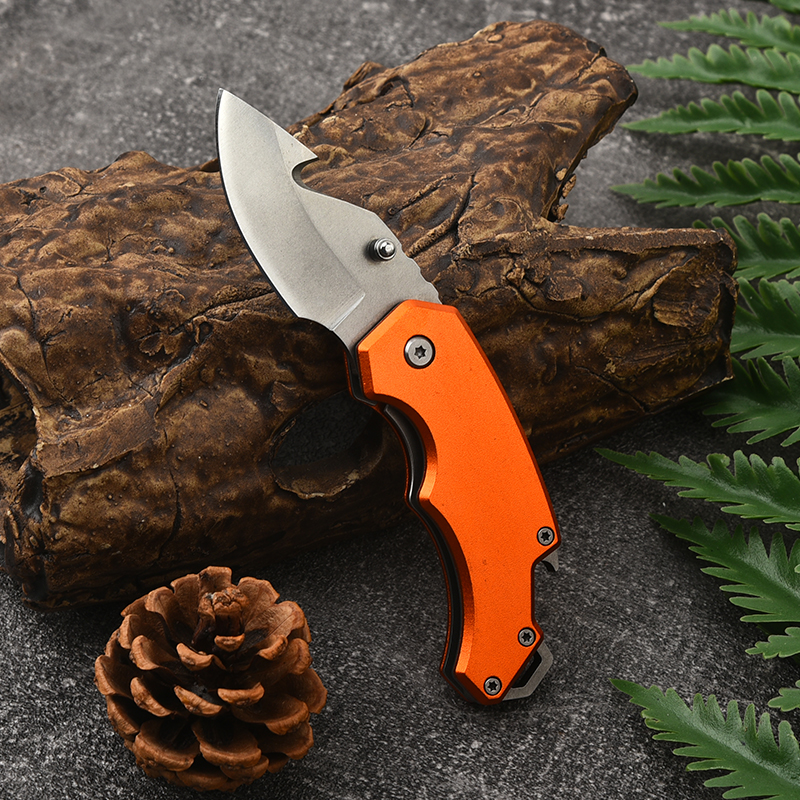
Deep carry is the stronger starting point when minimizing visible handle is the priority.
For a product intended for understated everyday use, evaluate the entire visible profile:
- Clip width and external length.
- Surface finish and reflectivity.
- Remaining handle exposure.
- Visible branding and hardware.
A low-riding knife with a large polished clip may still be visually prominent.
Standard carry offers more exposed handle, which can make the initial grasp easier. Deep carry may require the fingers to reach closer to the pocket opening.
However, avoid treating this as a measured speed difference without testing. Glove thickness, hand size, handle taper, and fabric stiffness all affect access.
Compare both configurations with the blade closed and use repeated withdrawals rather than a single favorable demonstration.
Deep carry is not automatically more secure because the knife sits lower. A standard clip is not automatically less secure because more handle remains exposed.
Retention comes from the interaction between clip force, contact geometry, fabric, and handle surface.
Too little force can allow unwanted movement. Excessive force can make insertion difficult and pull the pocket fabric during withdrawal.
The useful target is controlled, repeatable retention—not maximum tightness.
Both clip types can damage clothing if their contact surfaces are rough or their pressure is excessive.
Inspect the clip's underside, edges, and entry ramp. Also examine the handle area directly beneath it. Aggressive texture at that contact point may increase fabric abrasion.
Test thin trousers, denim, and reinforced workwear separately. A clip that feels excellent on one fabric may perform poorly on another.
Pocket comfort and hand comfort are different requirements.
A folded clip can create a raised area against the palm. A standard clip can also create discomfort through its tip, edges, or placement.
Assess the closed knife in the pocket, then assess normal working grips under controlled conditions. Clip shape should complement the handle rather than interrupt its intended grip surfaces.
Material alone does not establish clip quality. Titanium and steel clips still require appropriate geometry, forming, finishing, and attachment.
Replacement compatibility also involves more than matching the number of screw holes. Hole spacing, screw length, mounting surfaces, and clearance must agree.
LynchNW's compatibility guidance illustrates this clearly: some closely related knife variants require different clips or hardware.
For product development, I would replace broad claims such as "excellent pocket retention" with a repeatable comparison. The following is a proposed evaluation method, not a published industry standard or a report of Holin test results.
Where possible, use the same knife platform with two compatible clip configurations.
Keep knife weight, handle finish, clothing samples, and test procedure consistent. Otherwise, differences attributed to the clip may actually come from another component.
Select:
1. Lightweight trouser fabric.
2. Typical denim.
3. Reinforced workwear fabric.
Record fabric construction and pocket-hem thickness so future samples can be compared meaningfully.
| Evaluation | What to record | Why it matters |
|---|---|---|
| Handle exposure | Millimeters above the pocket edge | Makes carry depth comparable |
| Insertion | Catching, resistance, incomplete seating | Reveals clearance problems |
| Withdrawal | Peak force using a consistent fixture | Supports controlled retention comparison |
| Seated comfort | Feedback using a defined rating scale | Identifies pressure points |
| Repeated use | Fabric wear and clip deformation | Reveals deterioration |
| Hardware | Loosening or movement | Checks attachment stability |
Force measurements are useful only when pull direction, speed, fabric condition, and fixture remain consistent.
Do not invent a universal pull-force target. Define acceptable results around intended users and clothing.
For example, an outdoor work knife may prioritize dependable attachment with gloves and reinforced trousers. A lightweight everyday model may prioritize smooth insertion and minimal bulk.
The value lies in documented requirements and repeatable testing.
For private-label buyers, a pocket clip should be part of the original product brief—not a decorative decision made after the handle is finished.
A useful specification should address:
- Intended users and clothing.
- Target handle exposure.
- Right- or left-handed configuration.
- Tip-up or tip-down placement.
- Clip material and finish.
- Fabric-contact surfaces.
- Replacement hardware availability.
- Evaluation and acceptance procedures.
Carry depth and carry orientation are separate decisions. A deep carry clip can have different orientation options depending on the knife.
Recessed screws can improve clearance, but require compatible mounting geometry. Longer screws may interfere with internal components; shorter screws may provide inadequate engagement.
Any hardware change should therefore be checked against the complete assembly. Follow the knife manufacturer's installation guidance rather than assuming replacement clips are interchangeable.
A brand may choose a discreet deep-carry version and a higher-riding work-oriented version.
This is a product-planning option, not evidence that two versions will sell better. Its feasibility depends on mounting compatibility, minimum order requirements, inventory complexity, and customer demand.
Validate those factors before committing to tooling or packaging.
Choose a deep carry clip when low handle visibility is a priority and testing confirms acceptable access, pocket clearance, and comfort.
Choose a standard clip when more exposed handle supports your working routine and the higher position remains comfortable.
For mixed needs, compatible replacement clips can provide flexibility. Confirm model-specific fit before purchasing, and remember that the clip does not replace the knife's blade-retention mechanism.
Kershaw's guidance also emphasizes carrying the knife inside the pocket, with the clip outside and the blade side against the pocket seam. Always follow the instructions for the particular knife.
Yangjiang Holin Industrial Co., Ltd. manufactures folding knives, pocket knives, utility knives, and outdoor tools. With its own R&D team, production factory, and scalable manufacturing capabilities, Holin provides one-stop OEM/ODM support covering product design, development, and bulk production.
For your next project, send Holin your target market, preferred knife dimensions, carry position, clothing requirements, and customization brief. Request a discussion of clip geometry, mounting compatibility, and prototype evaluation before approving the production configuration.
A clearer brief helps turn "deep carry or standard?" into a product decision based on your customers' actual needs.

It is better suited to minimizing exposed handle. Whether it is better overall depends on access, clothing, comfort, and retention.
No clip guarantees this. Security depends on its design, condition, attachment, fabric interaction, and activity.
More exposed handle can help establish a grip, but glove thickness and handle geometry still require evaluation.
Only with a compatible replacement. Check mounting pattern, hardware, clearances, and the manufacturer's guidance.
No. Carry depth describes pocket position; tip-up or tip-down describes the closed blade's orientation.
Neither category guarantees less wear. Surface finish, edge quality, pressure, and handle texture are more useful factors to inspect.
1. [Spyderco — Clips]. Manufacturer explanation of deep-pocket, wire, and other clip designs, including carry-position differences. [spyderco]
2. [Kershaw — Tip-up or Tip-down? All About Kershaw Pocketclips]. Manufacturer guidance on deep carry, reversible configurations, and pocket placement. [kershaw.kaiusa]
3. [Spyderco — How to Change the Position of Your Pocket Clip]. Installation guidance covering closed-blade handling, tools, and clip hardware. [spyderco]
4. [LynchNW — Spyderco Standard Deep Carry Titanium Replacement Clip]. Model-specific compatibility, material specifications, and hardware exceptions. [lynchnw]
5. [Benchmade — Standard Deep-Carry Pocket Clip, Black Oxide]. Example of manufacturer naming conventions and replacement-hardware considerations. [benchmade]


