


Views: 264 Author: Holin Knife Publish Time: 2026-10-17 Origin: Site


Content Menu
● Lightweight EDC Knife vs Tactical EDC Knife: Key Differences
● What Makes a Good Lightweight EDC Knife?
>> Low Weight Without Unnecessary Compromise
>> Thoughtful Handle Construction
● What Makes a Good Tactical EDC Knife?
>> Grip Security That Matches the User
>> Accessible Opening and Lock Controls
>> Task-Specific Features Rather Than Decorative Complexity
● Blade Geometry and Steel: What Actually Changes Performance?
>> Blade Thickness Is Only One Measurement
>> Balance Toughness, Edge Retention, and Corrosion Resistance
>> Choose Blade Shape Around Cutting Tasks
● Real Product Specifications Show Why the Categories Overlap
● A Practical Sample-Testing Method for Buyers
>> Step 1: Define Representative Tasks
>> Step 2: Establish a Consistent Starting Condition
>> Step 3: Evaluate Comfort and Control
>> Step 4: Record Maintenance and Repeatability
● Which Knife Fits Your Everyday Use?
>> Choose a Lightweight EDC Knife When Carry Comfort Comes First
>> Choose a Tactical EDC Knife When Handling Requirements Come First
● OEM/ODM Development: Turn the Comparison Into a Product Brief
● Maintenance and Carry Rules Affect Both Categories
● Build Around the Customer, Not the Category
>> 1. Is a lightweight EDC knife strong enough for daily use?
>> 2. Is a tactical EDC knife always heavier?
>> 3. Which is better for opening boxes?
>> 4. Does a thicker blade hold its edge longer?
>> 5. Can one OEM/ODM platform support both categories?
>> 6. What should an importer request before bulk production?
A lightweight EDC knife prioritizes comfortable everyday carry, while a tactical EDC knife typically emphasizes secure handling, accessible controls, and task-specific features. In the lightweight EDC knife vs tactical EDC knife comparison, however, these categories overlap. A tactical folder can be remarkably light, and a lightweight pocket knife can offer a substantial blade and dependable locking mechanism.
My recommendation is to choose by intended use, not appearance. For packaging, office tasks, and occasional outdoor cutting, low weight and efficient blade geometry usually matter more than aggressive styling. For work involving gloves or demanding handling conditions, grip security and usable controls deserve greater attention.
For brands and importers, the same principle applies: define the customer's cutting tasks before specifying materials, mechanisms, or styling.

EDC means "everyday carry." Both categories can serve as everyday cutting tools, but their design priorities differ.
These are commercial descriptions, not universal engineering classifications. The following comparison describes common tendencies rather than mandatory specifications.
| Comparison factor | Lightweight EDC knife | Tactical EDC knife |
|---|---|---|
| Main priority | Comfortable, convenient carry | Secure handling and accessible operation |
| Typical construction | Weight-conscious handles and internal structures | Construction selected around handling and intended duty |
| Blade geometry | Often optimized for routine slicing | Varies widely; may prioritize point geometry or edge support |
| Handle design | Compact, pocket-friendly profile | Often more pronounced texture and indexing |
| Opening controls | Balanced against compactness | May emphasize access with gloves |
| Pocket experience | Usually less noticeable | Can require more pocket space |
| Suitable applications | Packages, general utility, light outdoor tasks | Utility work where grip and control are priorities |
| Main purchasing risk | Sacrificing comfort or rigidity to save grams | Paying for styling without measurable benefits |
Neither category automatically guarantees better steel, stronger locks, or longer service life.
A lightweight EDC folding knife reduces the burden of carrying a tool throughout the day. This matters when users wear light clothing, walk extensively, or carry several other items.
However, weight alone does not describe carry comfort. Closed length, handle thickness, clip tension, and exposed corners also matter.
A slim knife with a comfortable clip may carry better than a lighter model with bulky controls or sharp handle edges.
For routine tasks, cutting efficiency often matters more than blade thickness.
A thinner edge and suitable grind can reduce resistance through cardboard and similar materials. Conversely, a thick blade with a steep edge may require more force despite looking stronger.
This is why a lightweight pocket knife should be evaluated through controlled cutting tasks, not simply by its steel designation.
Fiberglass-reinforced nylon, commonly called FRN, can support weight-conscious handle designs. Metal handles can also be lightweight when their dimensions and internal structure are carefully engineered.
The useful question is not "Does this knife contain plastic?" It is "Does the complete handle provide appropriate support, comfort, and durability?"
Material names alone cannot answer that question.
A tactical EDC knife often uses texture, finger contours, or thumb-contact features to improve control.
More texture is not always better. Aggressive surfaces can create pressure points during sustained cutting and accelerate pocket wear.
Evaluate the handle with the intended users' hand sizes and gloves. A grip that feels secure during a brief demonstration may become uncomfortable during repeated work.
Large thumb studs, opening holes, or other accessible controls may help users operate a knife while wearing gloves. Actual usability depends on placement, resistance, clearance, and hand position.
Fast opening is not the same as safe operation.
A useful evaluation includes opening, confirming engagement, completing the cut, and closing the knife without awkward finger placement.
A dark coating, angular handle, or tanto profile does not establish superior performance.
Ask what each feature accomplishes:
- Does the coating provide documented protection or primarily change appearance?
- Does the blade shape suit the intended material?
- Can users maintain the edge conveniently?
- Does added hardware improve a real task?
- Are any rescue-related claims supported by appropriate testing?
Features should earn their place through function.
Spine thickness does not describe the entire cutting cross-section.
Grind height, thickness behind the edge, sharpening angle, and tip geometry all influence behavior. Two knives with identical spine thickness can cut very differently.
For a lightweight EDC knife designed around packages, prioritize controlled slicing. For a tactical-style utility folder, consider whether additional edge support justifies increased cutting resistance.
Neither should be treated as a pry bar or screwdriver.
These properties solve different problems:
- Toughness describes resistance to fracture and chipping.
- Edge retention describes how well cutting ability is maintained.
- Corrosion resistance describes resistance to environmental attack.
Metallurgist Larrin Thomas's published testing demonstrates why these properties should be evaluated separately rather than collapsed into a single "best steel" ranking.
Heat treatment and geometry also influence the finished blade. A premium steel name is not a substitute for a well-executed manufacturing specification.
For buyers, request a defined steel grade, target hardness range, and verification approach. Then evaluate finished samples under relevant conditions.
A drop-point profile can provide a useful general-purpose balance of curved edge and controllable tip.
A straight-edged utility profile may suit cuts made against a flat surface. A tanto profile introduces an angular transition that some users prefer for particular tasks, but it changes sharpening and cutting technique.
Do not select blade shape solely because it looks appropriate for a product category.
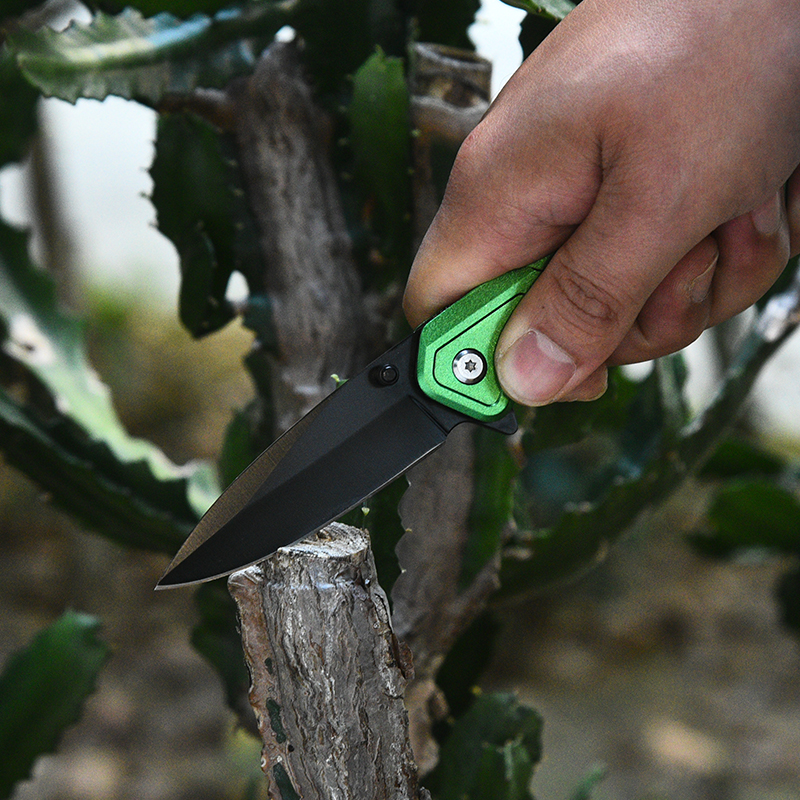
Manufacturer specifications provide a useful corrective to assumptions.
Spyderco lists the Para 3 Lightweight with a blade thickness of 3.7 mm. Its FRN construction and streamlined internal design reduce weight without requiring an exceptionally thin blade spine.
Benchmade lists the 537GY-1 Bailout at 2.7 oz, or 76.54 g, with a 2.29 mm blade. Its tactical positioning therefore does not translate into unusually heavy construction.
These examples are specification comparisons, not head-to-head performance tests.
The lesson for buyers is straightforward: a "lightweight" label does not guarantee thin stock, and a tactical description does not guarantee greater weight or strength. Compare dimensions, construction, and demonstrated performance.
The following is a proposed purchasing workflow, not a report of testing conducted by Yangjiang Holin Industrial Co., Ltd.
Select materials that reflect actual use, such as packaging tape, consistent cardboard, or appropriate utility cord.
Record the material specification. Changing cardboard thickness or cord construction between samples undermines the comparison.
If opening cartons dominates the workload, include a replaceable-blade utility knife as a benchmark rather than assuming a folding knife is automatically preferable.
Record each sample's:
- Weight and dimensions.
- Blade steel and stated hardness.
- Edge condition and sharpening geometry, where measurable.
- Opening and closing behavior.
- Clip retention and visible assembly condition.
Distinguish a comparison of factory-delivered products from a controlled geometry experiment. They answer different questions.
Use a stable work area and appropriate precautions.
Assess pressure points, grip movement, clip interference, and access to controls. Include the intended gloves where relevant.
Stop testing any sample showing damage, unreliable engagement, or unexpected movement. Destructive lock testing belongs in a properly equipped setting.
Document cleaning time, adhesive accumulation, edge deterioration, and any loosening.
Test multiple samples where possible. One excellent prototype cannot establish consistency across a production batch.
This approach produces more useful purchasing evidence than an unsupported "heavy-duty" claim.
A lightweight everyday carry knife is a strong candidate when:
- Most tasks involve packaging and general utility.
- The knife stays in a pocket for long periods.
- Low bulk matters.
- Easy cleaning and maintenance are priorities.
Avoid selecting the lightest option automatically. A slightly heavier knife may offer a more comfortable handle or better clip.
A tactical-style folder may be suitable when:
- Gloves are routinely used.
- Grip indexing matters.
- Controls need generous access.
- Particular blade or handle features solve identified tasks.
It should still cut efficiently and carry comfortably. Tactical styling does not excuse poor ergonomics.
For many customers, the practical answer is a lightweight tactical EDC knife: restrained weight, secure texture, accessible controls, and useful cutting geometry.
This creates a valuable development opportunity for brands. Instead of maximizing every feature, balance the few characteristics that matter to the target user.
For an OEM/ODM knife manufacturer, a clear brief reduces ambiguity before tooling and production.
| Requirement | Define before development |
|---|---|
| Target customer | Occupation, hand-size range, gloves, carry habits |
| Cutting tasks | Materials, frequency, expected conditions |
| Carry limits | Target weight, closed dimensions, clip position |
| Blade specification | Steel, heat treatment, geometry, finish |
| Mechanism | Opening method, lock design, operating requirements |
| Validation | Sample quantity, test methods, acceptance criteria |
| Destination market | Applicable product, sales, and carry requirements |
Avoid vague requirements such as "premium," "military-grade," or "extremely strong." Convert them into observable criteria.
For example, replace "comfortable grip" with an agreed evaluation covering pressure points, control access, and relevant glove use. Replace "consistent production" with approved inspection criteria and sampling arrangements.
Yangjiang Holin Industrial Co., Ltd. has an in-house research and development team, its own factory, scalable production capability, and one-stop OEM/ODM services, according to the company background supplied for this article. These capabilities support collaboration from product design and development through batch manufacturing; project-specific materials and validation requirements should still be confirmed.
Remove adhesive and debris before they accumulate around moving parts. Clean, dry, and lubricate the knife according to its manufacturer's instructions.
Stainless steel is not maintenance-free, and a coating does not eliminate care requirements.
Legal suitability also depends on the destination market. Blade length alone is insufficient. Official UK guidance, for example, distinguishes qualifying small non-locking folding pocketknives from lock knives.
Check applicable rules governing ownership, importation, sale, public carry, and restricted locations. Neither "EDC" nor "tactical" creates a legal exemption.
A lightweight EDC knife prioritizes unobtrusive carry. A tactical EDC knife emphasizes handling features that may suit particular working conditions. The strongest product combines the right priorities without unnecessary weight or complexity.
Discuss your target market, cutting tasks, preferred materials, and carry requirements with Yangjiang Holin Industrial Co., Ltd. Request an OEM/ODM development proposal covering design options, prototype evaluation, and agreed production specifications before committing to volume manufacturing.
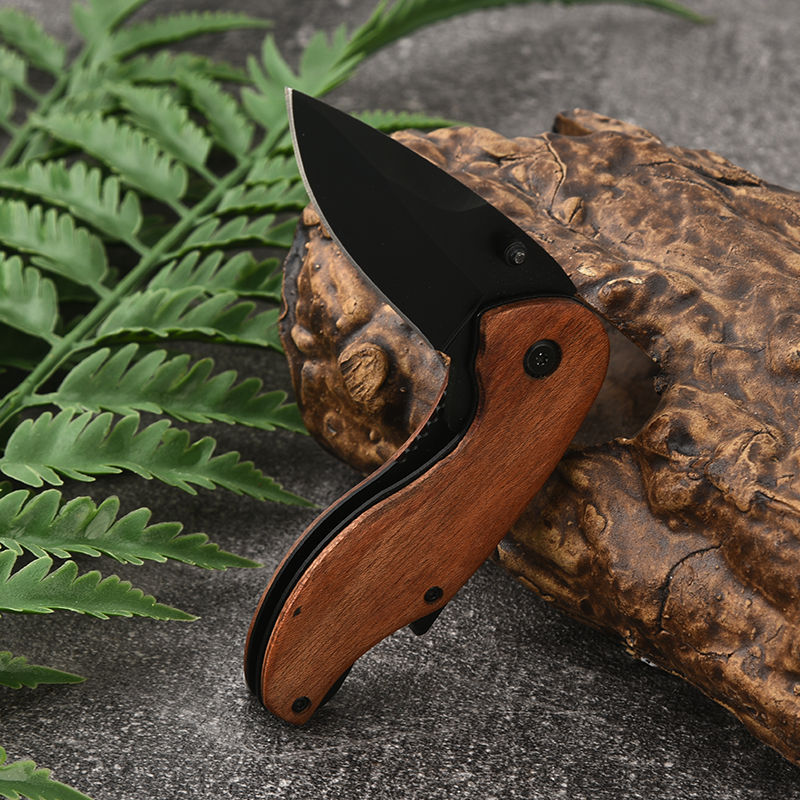
It can be, provided its construction and geometry suit the task. Low weight does not establish weakness, just as additional weight does not establish strength. Evaluate finished samples and follow the manufacturer's intended-use guidance.
No. Tactical positioning concerns design priorities, not a fixed weight class. Some tactical folders use thin blades and weight-conscious handles. Compare actual specifications rather than category labels.
An efficient edge and comfortable handle matter more than tactical styling. For frequent carton work, compare folding knives with a suitable replaceable-blade utility knife, particularly when convenient edge replacement is important.
Not automatically. Edge retention depends on steel, heat treatment, edge geometry, cutting material, and use. Spine thickness alone cannot predict how long a knife will maintain satisfactory cutting performance.
Potentially. A shared platform may support different handles, textures, clips, or finishes. Changes affecting geometry, mechanisms, or structural components require renewed evaluation rather than an assumption of identical performance.
Request an approved specification, representative samples, agreed inspection criteria, and destination-market review. Confirm packaging, labeling, maintenance information, and how deviations from approved samples will be handled.
1. Spyderco. "Para® 3 Lightweight." Official product description and technical specifications, including blade thickness, FRN handles, and weight-saving construction. [spyderco]
2. Benchmade. "537GY-1 Bailout®." Official specifications, including listed weight of 2.7 oz / 76.54 g and blade thickness of 0.09 in / 2.29 mm. [benchmade]
3. Thomas, Larrin. "Knife Steels Rated by a Metallurgist—Toughness, Edge Retention, and Corrosion Resistance." *Knife Steel Nerds*, October 19, 2021. Materials-testing discussion supporting the distinction between steel performance properties. [knifesteelnerds]
4. Thomas, Larrin. "Knife Steel—Can You Tell the Difference?" *Knife Steel Nerds*, February 23, 2026. Discussion of geometry, heat treatment, and differences between knife steels. [knifesteelnerds]
5. Spyderco. "Knife Maintenance: Simple Tips for Better Performance." Manufacturer guidance on cleaning, drying, lubrication, and preventing contamination around mechanisms. [spyderco]
6. GOV.UK. "Selling, Buying and Carrying Knives and Weapons." Official guidance on knife restrictions and the distinction between qualifying non-locking folding pocketknives and lock knives. [gov]


