


Views: 228 Author: Holin Knife Publish Time: 2026-10-19 Origin: Site


Content Menu
● Why Source Camping Utility Knives from China?
>> Yangjiang Offers an Established Industrial Cluster
>> Recent Data Supports the Cluster's Export Relevance
● How These Manufacturers Were Selected
● Top 10 Camping Utility Knife Manufacturers in China
>> 1. Yangjiang Holin Industrial Co., Ltd.
>> 2. Sanrenmu
>> 3. RUIKE Outdoor Tools Manufacturing Co., Ltd.
>> 8. Kubey
>> 9. QSP Knife
>> 10. NexTool
● Manufacturer Comparison: Capacity, MOQ, and Certification
● Technical Buying Guide: Specify Performance, Not Just Steel Names
>> Define the Actual Cutting Task
>> Treat Heat Treatment as Part of the Material Specification
>> Do Not Treat CE and RoHS as Universal Knife Certificates
● An Often-Overlooked Sourcing Trap: The Sample May Not Represent Production
● How to Verify a Factory and Manage the First Order
>> Confirm Who Actually Manufactures the Product
>> Use a Staged Sample Process
>> Compare Landed Cost and Delivery Commitments
>> 2. How can we reduce the risk of steel substitution?
>> 3. What should we do when the prototype passes but production knives vary?
>> 4. Can one MOQ cover several handle colors, blade finishes, and packaging versions?
>> 5. Does a CE or RoHS document prove that a camping knife can legally be sold in Europe?
Choosing a camping utility knife manufacturer in China requires more than comparing blade designs and unit prices. For professional buyers, the real challenge is finding a partner that can reproduce an approved specification, maintain dependable delivery schedules, and support the legal requirements of the destination market.
China offers a substantial manufacturing base for folding knives, pocket knives, replaceable-blade utility knives, and multifunction outdoor tools. However, these categories serve different applications. A compact knife for cutting cordage is not automatically suitable for food preparation, and a replaceable-blade cutter should not be evaluated as a bushcraft knife.
This guide compares ten manufacturers and manufacturing-led brands worth investigating. It examines their sourcing relevance, customization capabilities, and the questions buyers should resolve before committing to production.
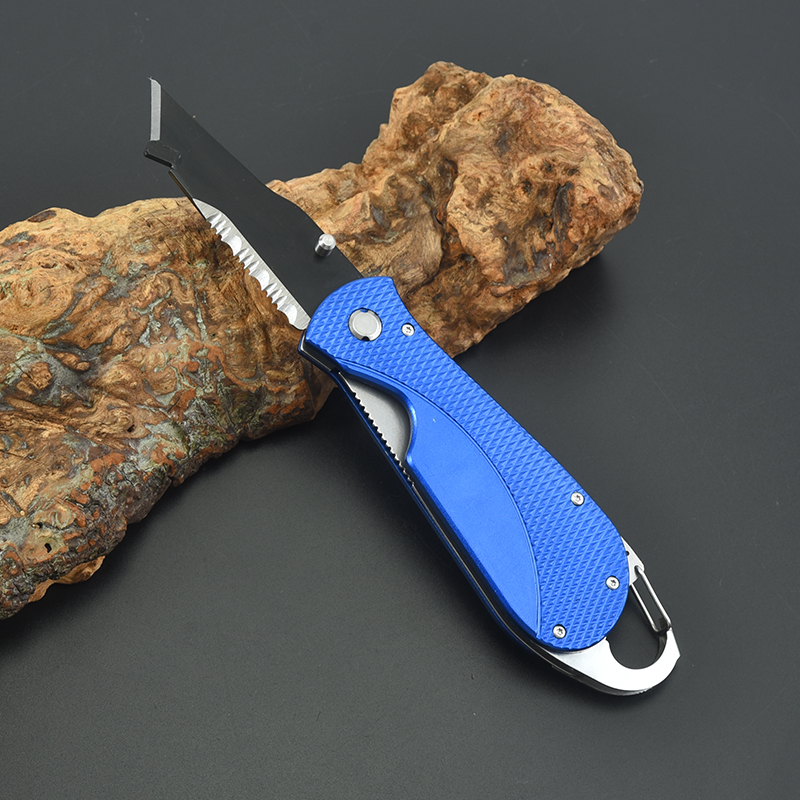
Yangjiang, Guangdong, is one of China's principal knife and scissors manufacturing centers.
In October 2025, the local government reported that the city had more than 8,500 industry-related business entities and an industrial-chain output exceeding RMB 55 billion. It also reported that Yangjiang accounted for approximately 75% of national knife and scissors production and 85% of export volume. These figures concern the broader hardware, knife, and scissors cluster—not camping utility knives alone.
The commercial advantage is the concentration of related capabilities: component production, machining, grinding, finishing, assembly, packaging, and supporting technical services. A developed supply chain can make product development and supplier coordination easier, although it does not guarantee that every factory meets the same standard.
Xinhua reported that Yangjiang's knife and scissors exports reached RMB 1.33 billion during January–April 2025, an increase of 8% year over year. This is a dated reporting period, not a full-year 2025 or 2026 figure.
For wider context, Grand View Research's 2026–2033 hand tools report values the global hand tools market at USD 25.2 billion in 2025 and projects USD 26.6 billion in 2026. That category is substantially broader than camping knives and should not be presented as the addressable market for a camping utility knife range.
For buyers, these figures establish manufacturing and export relevance. They do not replace supplier-level verification.
The shortlist prioritizes companies with publicly identifiable knife or outdoor-tool manufacturing activity, relevant product development experience, and a plausible role in international sourcing.
The following framework should guide final supplier qualification:
| Evaluation area | Evidence buyers should request |
|---|---|
| Factory identity | Business license, production address, ownership details, and manufacturing-process walkthrough |
| Development capability | Drawings, prototype workflow, engineering feedback, and responsibility for tooling |
| Materials control | Exact steel specification, purchasing records, material certificates, and batch traceability |
| Quality management | Incoming inspection, heat-treatment records, in-process checks, and final inspection procedures |
| Delivery reliability | Available production slots, bottleneck analysis, and documented production milestones |
| Compliance support | Applicable product documentation, current certificates, and destination-specific labeling support |
| Commercial suitability | MOQ by configuration, tooling charges, payment terms, and corrective-action responsibilities |
Public product catalogs and company profiles help identify candidates. They do not establish current factory approval, verified capacity, or an active certificate.
The shortlist also distinguishes open OEM/ODM suppliers from established brands whose current private-label availability must be confirmed.
Holin is a relevant candidate for smaller and growing brands seeking folding knives, pocket knives, utility knives, and outdoor tools with coordinated OEM/ODM development.
Its company page reports a 2,000-square-meter factory, more than 60 machines, approximately 80 skilled workers, five designers, and 12 technical specialists. These are supplier-published figures, not independently audited capacity measurements.
- Establishment: The website timeline identifies 2010 as the company setup year, while another statement describes more than 20 years of experience. Buyers should distinguish legal incorporation from accumulated team experience and confirm the business license.
- Market orientation: International custom procurement; a verified regional sales breakdown is not published.
- OEM/ODM scope: Product design, development, customization, and production support for folding, pocket, and outdoor knives.
- Core sourcing appeal: A development-oriented alternative for buyers who need specification discussions rather than catalog-only purchasing.
Holin's stated emphasis on responsive communication and one-stop development is particularly relevant to smaller brands managing limited engineering resources. Buyers should test that proposition with a structured inquiry: request a drawing review, a consolidated sample quotation, and a written development schedule.
Its value proposition is flexibility and coordinated support—not an unverified claim to the lowest price or largest capacity.
Sanrenmu's official website dates the brand's origin to December 1998 and identifies research, manufacturing, and sales activities across outdoor tools, knives, scissors, and related products.
It also describes OEM cooperation with European and American brands and lists an address in Yulin, Guangxi.
- Establishment: Brand established in 1998; confirm the contracting legal entity separately.
- Principal market orientation: Europe and North America, according to the company's account.
- OEM/ODM scope: Outdoor cutting tools and related products, supported by a stated history of overseas brand cooperation.
- Core sourcing appeal: Established experience in practical outdoor-tool manufacturing.
Sanrenmu is worth evaluating for utility-focused knife programs where repeatability and commercial positioning matter more than elaborate decorative machining. Buyers should still verify the exact production site, material specification, and availability of the proposed design for private-label use.
RUIKE states that its manufacturing business was founded in 1998 by Mr. Leung and that it provided design and manufacturing services to domestic and overseas knife brands before launching its own RUIKE brand in 2016.
- Establishment: Manufacturing business founded in 1998; own-brand launch in 2016.
- Principal market orientation: Domestic and overseas knife customers.
- OEM/ODM scope: Publicly described experience in knife design and manufacturing; current project acceptance requires confirmation.
- Core sourcing appeal: A manufacturing background combined with an established product brand.
RUIKE is a useful candidate for buyers exploring functional folding knives and multifunction designs. Do not assume that a branded retail model can be reproduced under another label; obtain written confirmation of design rights and customization availability.
Bestech publicly describes an international OEM manufacturing background and identifies its China operation in Yangjiang.
Its website lists CNC grinding, CNC carving, stamping, wire cutting, laser cutting, anodizing, and belt-finishing equipment. Its current range includes both accessible folding knives and more complex premium constructions.
- Establishment: An exact legal founding year was not established from the reviewed official page.
- Principal market orientation: Global, with published China and European contact locations.
- OEM/ODM scope: Knife manufacturing, in-house development, and collaboration with outside designers.
- Core sourcing appeal: Broad machining and finishing capabilities for differentiated folding-knife projects.
Bestech merits consideration when handle construction, machining detail, and visual differentiation are important. Buyers should identify which finishing operations occur internally and which require outside subcontractors.
Reate's website dates its founding to 2012 and emphasizes premium folding knives, precision manufacturing, and collaboration with independent designers and partner brands.
It specifically provides a contact route for OEM/ODM partnerships and identifies North America and Europe among its markets.
- Establishment: 2012.
- Principal markets: North America, Europe, and other international markets.
- OEM/ODM scope: Concept development through production, including proprietary designs and technical specifications.
- Core sourcing appeal: Premium, design-led manufacturing programs.
Reate is a more natural candidate for a differentiated premium knife than a basic promotional cutter. Buyers should clarify the manufacturing entity, production location, development charges, and ownership of project-specific drawings before proceeding.
WE Knife states that it was founded in 2000 to provide OEM manufacturing services to established cutlery companies. Its subsequent brand development draws on that manufacturing background and international designer collaborations.
- Establishment: 2000.
- Market orientation: International knife markets and designer-led product development.
- OEM/ODM scope: Documented OEM origins; current external project availability must be confirmed.
- Core sourcing appeal: A precision-manufacturing background relevant to higher-specification folding knives.
WE Knife belongs on a premium sourcing shortlist, but its reputation should not be treated as proof of suitability for every order size. Ask whether the proposed project matches its current commercial priorities before investing in extensive development.
Ganzo describes a Yangjiang-based business producing knives, multitools, and sharpeners. Its public brand information identifies sales in the United States, Germany, Italy, Spain, France, and other countries.
The company's Chinese website also refers to accumulated OEM experience in outdoor tools and knives.
- Establishment: The reviewed brand page states "over 20 years"; it does not establish an exact founding year.
- Principal markets: The United States and several European markets.
- OEM/ODM scope: Outdoor knives and tools, with an identified OEM background; present customization terms require confirmation.
- Core sourcing appeal: Value-oriented knife and multitool product development.
Ganzo is relevant to buyers considering accessible outdoor ranges. Confirm whether the commercial route is wholesale distribution, modification of an existing platform, or a genuinely separate OEM project.
Kubey provides a useful distinction between brand formation and manufacturing development. Its website states that founder Patrick Ma registered the brand in 2014 and established a knife-and-tool manufacturing factory in 2017.
The business identifies a Yangjiang factory and a Shenzhen trading office.
- Establishment: Brand registration in 2014; manufacturing factory established in 2017.
- Market orientation: International knife buyers; regional revenue shares are not disclosed.
- OEM/ODM scope: Publicly described design, development, production, and trading capabilities; project-specific OEM terms need confirmation.
- Core sourcing appeal: Integrated product development and manufacturing coordination.
Kubey is worth investigating for commercially differentiated folding knives. Buyers should determine which entity signs the contract, receives payment, owns tooling, and assumes responsibility for production defects.
QSP offers folding and fixed-blade knives relevant to everyday utility and outdoor product ranges.
Retailer Red Hill Cutlery dates the QSP brand launch to 2017, following more than a decade of OEM/ODM production. This historical statement is retailer-reported and should be confirmed directly during supplier qualification.
- Establishment: Brand launch reported as 2017; legal incorporation date requires verification.
- Market orientation: International retail and distribution.
- OEM/ODM scope: Reported OEM/ODM background; current project acceptance and exclusivity arrangements require direct confirmation.
- Core sourcing appeal: Utility-focused folding and fixed-blade product positioning.
QSP is a relevant candidate when practical design and price positioning are central. Buyers should separate opportunities to distribute existing products from opportunities to commission an exclusive design.
NexTool is relevant for buyers whose camping knife range extends into multitools and integrated outdoor equipment.
Its official catalog includes pocket knives, multitools, shovels, lights, emergency tools, and outdoor cutlery. Its Knight K40, for example, combines a 14C28N blade with a screwdriver module.
- Establishment: Retailer Knivesandtools dates the brand to 2012; confirm the legal manufacturing entity separately.
- Market orientation: International EDC and outdoor-tool customers.
- OEM/ODM scope: A supplier marketplace profile advertises OEM/ODM services; project scope and responsible factory require verification.
- Core sourcing appeal: Multifunction product integration rather than knife-only sourcing.
NexTool deserves attention when procurement covers a coordinated outdoor-tool collection. Products incorporating lights or other electrical functions require a different compliance assessment from ordinary manual knives.
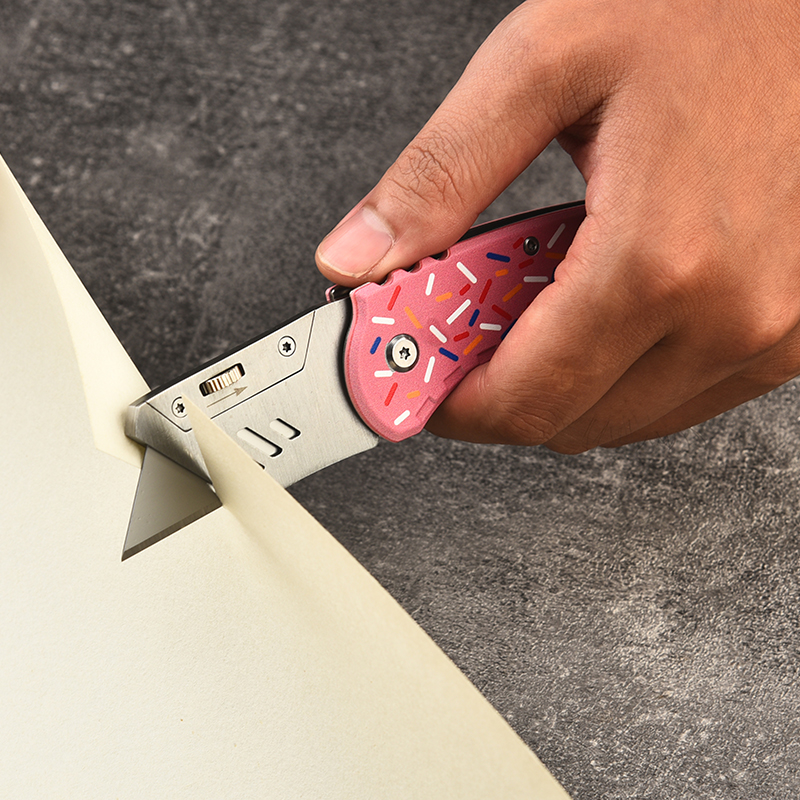
Comparable monthly output, model-specific MOQs, and current certificate records were not established across all ten companies. Publishing estimated numbers would create false precision.
The table therefore separates sourcing relevance from information that still requires a quotation or audit.
| Manufacturer | Primary sourcing focus | Capacity information available | MOQ |
|---|---|---|---|
| Holin | Development-led OEM/ODM and growing brands | Reports 2,000 m², 60+ machines, and 80 workers; not verified monthly output | Request by model and customization level |
| Sanrenmu | Practical outdoor knives and tools | Comparable monthly output not established | Project-specific inquiry |
| RUIKE | Functional folding and multifunction knives | Comparable monthly output not established | Confirm project availability |
| Bestech | Machined folding knives and designer projects | Publishes equipment types, not comparable monthly output | Project-specific inquiry |
| Reate | Premium proprietary designs | Comparable monthly output not established | Project-specific inquiry |
| WE Knife | Precision folding knives | Comparable monthly output not established | Confirm OEM acceptance |
| Ganzo | Value-oriented knives and multitools | Comparable monthly output not established | Confirm wholesale versus OEM terms |
| Kubey | Integrated design and production | Identifies factory, not comparable monthly output | Project-specific inquiry |
| QSP | Utility-focused folding and fixed blades | Comparable monthly output not established | Confirm OEM acceptance |
| NexTool | Integrated camping and multifunction tools | Comparable monthly output not established | Product- and project-specific inquiry |
The comparison reflects the public information reviewed, not an audit of operating capacity or certificate validity. "Not verified" does not mean that a company lacks certification.
A camping utility knife specification should begin with intended use:
- Cordage, packaging, and routine campsite cutting.
- Food-contact preparation, where applicable.
- Replaceable-blade utility work.
- Light outdoor maintenance.
- Multifunction repair tasks.
Avoid positioning a lightweight folding cutter as a chopping or prying tool without design validation.
A steel name alone does not guarantee performance.
Alleima describes 14C28N as a martensitic stainless steel developed for demanding knife applications and recommends a hardness range of 55–62 HRC. Its technical documentation explains how unsuitable hardening, cooling, or tempering conditions can reduce hardness, wear resistance, corrosion resistance, or toughness.
The purchasing implication is straightforward: specify the grade, approved material source, target hardness range, heat-treatment controls, and acceptance tests together.
Request:
1. Material documentation linked to the production batch.
2. Hardness measurements using an agreed sampling plan.
3. Blade geometry and edge-finish tolerances.
4. Corrosion-testing conditions appropriate to the intended use.
5. Functional checks for locking, retention, and blade replacement where applicable.
For replaceable-blade products, also agree on blade dimensions and retention compatibility. A housing that accepts one sample blade should not automatically be assumed compatible with every replacement blade sold under the same generic description.
CE marking applies only to products covered by relevant legislation requiring it. European Commission guidance explicitly states that CE marking must not be used where no applicable requirement exists. An ordinary non-electrical manual knife should therefore not be presented as needing a generic "CE knife certificate."
RoHS primarily concerns electrical and electronic equipment. It may become relevant when an outdoor tool includes an electrical function, but it is not a universal environmental certification for manual blades.
REACH addresses chemical risks and may be relevant to substances in materials, coatings, plastics, and other components. Buyers should determine the applicable obligations for the actual product and market rather than request an undefined "environmentally certified knife."
A polished approval sample proves what a supplier can make once. It does not, by itself, demonstrate routine production consistency.
The less visible risk is a process mismatch: a sample may receive additional fitting, polishing, or adjustment that is not included in the production quotation.
A practical safeguard is to approve both the product and the production route:
- Identify the drawing revision and bill of materials.
- Record approved finishing and assembly steps.
- Retain signed reference samples.
- Require written approval before changing materials or subcontractors.
- Inspect randomly selected pilot-production units.
- Compare functional results, not only appearance.
This is particularly important where material properties depend on controlled processing. Alleima's guidance illustrates why even the correct steel grade can deliver different results when heat treatment changes.
Treat the reference sample as one part of acceptance—not the entire quality system.
Request a live walkthrough following one product through incoming material control, machining, heat treatment, finishing, assembly, and inspection.
Ask which processes are outsourced and how subcontracted batches remain traceable. Outsourcing is not automatically a problem; undisclosed outsourcing and unclear responsibility are.
A practical development sequence is:
1. Specification review and preliminary quotation.
2. Prototype or modified-platform sample.
3. Written sample evaluation.
4. Production-intent sample using approved materials and processes.
5. Pilot order.
6. Bulk production following an agreed inspection plan.
Define who pays for revisions, what triggers tooling changes, and when the delivery clock starts.
Request separate prices for development, tooling, packaging, testing, inspection, freight, and replacement parts where applicable.
Before shipment, confirm classification, destination restrictions, carrier acceptance, packaging, country-of-origin marking, and importer responsibilities with the appropriate broker or adviser. Knife-related rules can depend on mechanism and configuration, so approval of one model should not be assumed to cover another.
China offers a broad supplier base for camping utility knives, but the appropriate partner depends on the product and purchasing model.
Holin is a relevant starting point for development-led OEM/ODM inquiries. Other candidates may fit premium machining, established utility designs, or integrated multitool programs more closely.
The strongest purchasing decision connects documented materials, repeatable manufacturing, suitable customization terms, and a realistic delivery plan.
For a tailored proposal from Yangjiang Holin Industrial Co., Ltd., prepare your target application, destination market, preferred materials, quantity by variant, packaging requirements, and expected launch date. Request a specification review, sample plan, and itemized quotation before committing to production tooling.

Search the exact company name or certificate number in IAF CertSearch, then examine status, scope, location, issuing certification body, and accreditation details.
Do not rely only on the expiry date printed on a PDF. A certificate can be suspended or withdrawn before that date, and a valid certificate may cover a different site or activity. If details cannot be reconciled, contact the issuing certification body directly.
Contract for an exact grade and require batch-linked material records, inspection access, and an agreed laboratory verification method when warranted.
Evaluate chemistry and processing separately. Correct composition does not prove correct heat treatment, and a hardness result alone does not establish the complete performance of the blade. Alleima's technical guidance demonstrates the importance of processing conditions to final properties.
Stop treating the prototype as the only acceptance reference. Review production records, material lots, subcontractors, assembly instructions, and inspection results.
Require a documented corrective-action response and evaluate randomly selected production units before accepting the affected batch. The contract should define rework, replacement, reinspection, and rejection responsibilities.
Do not assume so. Request MOQ separately for the base model, steel option, handle material, finish, color, and packaging configuration.
A supplier may accept a total order quantity while still requiring minimum batches for individual components. Ask which parts can be shared across variants and which changes create new tooling or setup charges.
No. The first question is whether the document concerns legislation applicable to that exact product.
CE marking is not a universal market-access approval, and RoHS concerns electrical and electronic equipment within its scope. Buyers must assess the complete product configuration and applicable safety, chemical, labeling, and knife-specific requirements separately.
- Yangjiang Jiangcheng District Government: [Opening of the 24th China (Yangjiang) International Hardware Knives and Scissors Fair]. October 2025 cluster figures. [jiangcheng.gov]
- Xinhua: [Yangjiang's knife and scissors exports continue to expand]. January–April 2025 export data. [gd.news]
- Grand View Research: [Hand Tools Market Size, Share & Growth Report, 2026–2033]. Broader market context, not a camping-knife-specific estimate. [grandviewresearch]
- Holin: [Company profile]. Supplier-reported facilities, staffing, development capabilities, and timeline. [holintools]
- Sanrenmu: [Official website]. Brand history and overseas cooperation. [sanrenmu]
- RUIKE: [About the company]. Manufacturing and brand history. [ruikeknives]
- Bestech: [Official website]. OEM background, equipment, and locations. [bestechknives]
- Reate: [Official website]. Founding date, market positioning, and partnership information. [reateknives]
- WE Knife: [Official website]. OEM origins and company history. [weknife]
- Ganzo: [Brand background] and [Chinese company introduction]. Products, markets, and OEM background. [ganzoknife]
- Kubey: [Official website]. Brand registration and manufacturing timeline. [kubeyknife]
- QSP: [Official website] and [Red Hill Cutlery brand profile]. The historical OEM/ODM and launch-year statements are retailer-reported. [qspknife]
- NexTool: [Official website], [Knivesandtools brand profile], and [supplier marketplace profile]. Product scope, retailer-reported brand date, and supplier-advertised OEM/ODM services. [nextoolworld]
- Alleima: [14C28N technical datasheet] and [knife-steel overview]. Material properties, hardness range, and heat-treatment limitations. [alleima]
- European Commission: [CE marking requirements]. Applicability and restrictions on marking. [europa]
- European Commission: [RoHS guidance document]. Electrical and electronic equipment scope. [environment.ec.europa]
- European Chemicals Agency: [Understanding REACH]. Chemical-risk responsibilities. [echa.europa]
- IAF CertSearch: [Certificate verification guidance]. Status, scope, location, and issuing-body checks. [iafcertsearch]


