


Views: 243 Author: Holin Knife Publish Time: 2026-10-18 Origin: Site


Content Menu
● How Folding Knife Locks Work
● Common Knife Lock Types and Their Trade-Offs
>> Liner Lock: Accessible and Widely Used
>> Frame Lock: A Structural Handle Component
>> Back Lock: Familiar and Ambidextrous
>> Crossbar Lock: Convenient Bilateral Controls
>> Compression Lock: Release Access Near the Spine
>> Button Lock: Simple Control, Different Applications
>> Ball Bearing Lock: A Different Locking Element
>> Ring Locks and Specialty Mechanisms
● Slip Joints and Friction Folders Are Not Locking Knives
● Knife Lock Comparison: Match the Mechanism to the User
● What Owner Feedback Reveals About Everyday Handling
● Why Lock Quality Matters More Than a Strength Ranking
● A Practical Folding Knife Inspection Checklist
>> 1. Read the Operating Instructions
>> 2. Check Engagement and Closure
>> 3. Evaluate Real User Access
>> 4. Look for Inconsistent Behavior
>> 5. Follow the Maintenance Procedure
● OEM/ODM Knife Lock Selection: From Prototype to Production
● Develop a Custom Folding Knife with Holin
>> 1. What Is the Best Knife Lock for Everyday Carry?
>> 2. Is a Frame Lock Stronger Than a Liner Lock?
>> 3. Are Crossbar Locks Suitable for Left-Handed Users?
>> 4. Does a Button Lock Mean Automatic Opening?
>> 5. Can a Slip Joint Close During Use?
>> 6. What Should Buyers Request Before Bulk Production?
Knife lock types affect how a folding knife opens, stays secure during cutting, and closes afterward. Whether you are choosing an everyday carry pocket knife or developing a private-label product, the mechanism deserves as much attention as blade steel and handle materials.
My starting point is simple: choose the lock around the user's work, not around its reputation. A mechanism that feels convenient at a desk may be difficult to release with gloves. A smooth demonstration sample does not establish consistent production quality.
This guide explains common folding knife lock mechanisms, their practical trade-offs, and the checks buyers should include when sourcing custom knives.

A folding knife rotates around a pivot. When the blade opens, a locking component engages the blade tang—the section inside the handle—to resist unintended closure.
Different mechanisms achieve this through a spring-loaded liner, handle section, rocker arm, crossbar, plunger, or bearing.
Three functions deserve separate consideration:
- Opening action: how the user deploys the blade.
- Open-blade retention: how the mechanism resists closure.
- Closed-blade retention: how the blade stays inside the handle.
These functions interact, but they are not interchangeable. A blade that opens smoothly is not necessarily locking correctly. Likewise, a strong open-blade lock does not automatically provide suitable closed-blade retention.
The essential principle is implementation: geometry, materials, tolerances, assembly, and inspection matter alongside the mechanism's name.
A liner lock uses a spring-like section of the internal metal liner. As the blade opens, the liner moves sideways against the tang, blocking closure.
Its compact layout makes it suitable for many pocket knife designs and price points.
To close it, the user pushes the liner aside before folding the blade. This initially places a thumb near the blade's closing path, so controlled handling matters.
For sourcing, examine release access, consistent engagement, and whether handle scales obstruct the thumb.
A frame lock follows a similar principle, but the locking section forms part of the handle itself rather than a separate internal liner.
This creates a visually straightforward construction, often associated with metal-handled folding knives.
However, a thicker-looking lock bar does not establish superior performance. Contact geometry and component fit still determine how the system behaves.
Check whether the user's natural grip presses against the lock bar and makes release more difficult.
A back lock uses a spring-driven rocker arm along the handle spine. A lug engages a notch in the blade tang when the blade opens.
Pressing the exposed release area lifts the lug and permits closure.
The centrally positioned release supports operation with either hand. Depending on the knife, however, closing may involve repositioning the grip or using two hands.
Inspect the engagement area for contamination and assess whether the release remains accessible without uncomfortable pressure.
A crossbar lock uses a spring-loaded bar spanning the handle. The bar engages the blade tang and retracts when the user pulls its exposed controls backward.
This layout commonly supports left- and right-handed operation while allowing fingers to remain outside the blade channel.
Benchmade's AXIS mechanism is a branded example, not a generic name for every crossbar design.
Spring arrangements differ between products. Buyers should confirm the actual construction, replacement-parts policy, and service procedure rather than assuming all crossbar locks are identical.
Spyderco's Compression Lock wedges a spring-like locking component between a ramp on the blade tang and a stop pin.
Although it uses a liner-like component, its load path differs from a conventional liner lock.
Its release position allows users to unlock the blade without placing a thumb inside the blade channel.
Ergonomics remain model-dependent. Release access, hand size, and handedness should be evaluated on the actual knife.
A conventional plunge-style button lock uses a spring-loaded plunger that engages the blade tang.
Pressing the button retracts the locking component.
Button locks appear on both manual and automatic knives. A button therefore does not, by itself, mean that a knife opens automatically.
For sample evaluation, check button travel, release consistency, and whether ordinary gripping positions can contact the button unintentionally. Also confirm how the specific design retains the blade when closed.
Spyderco's Ball Bearing Lock uses a spring-driven bearing wedged between the blade tang and a fixed structure inside the handle.
Some versions provide a cage that users pull backward to release the blade.
The bilateral control can support ambidextrous handling.
Do not confuse this mechanism with ball bearings around a blade pivot. Pivot bearings influence rotation; they do not necessarily lock the blade.
A rotating ring lock, such as Opinel's Virobloc, uses a collar to block blade movement. On applicable models, the collar can secure the blade open or closed.
Lever locks and moving-bolster releases also exist, particularly on traditional automatic designs.
With specialty mechanisms, clear instructions are especially important. A concealed or unfamiliar release should never require users to discover its operation by trial and error.

A slip joint uses spring pressure to resist blade movement, but it does not mechanically lock the blade open.
A friction folder relies on pivot friction and, commonly, pressure against an extended tang.
Both can suit controlled cutting tasks. Neither should be described as providing the same open-blade security as a positive lock.
Avoid pressure that pushes the blade toward closure.
Also, do not assume that a non-locking design is automatically legal everywhere. Carry restrictions can depend on blade length, opening method, location, and other requirements.
The following table summarizes selection priorities, not laboratory strength rankings.
| Mechanism | Practical attraction | Main evaluation point |
|---|---|---|
| Liner lock | Compact construction and broad design flexibility | Thumb access and controlled closing |
| Frame lock | Integrated metal-handle construction | Grip pressure and release consistency |
| Back lock | Central release and familiar operation | Release effort and hand repositioning |
| Crossbar lock | Bilateral controls | Spring arrangement and control access |
| Compression Lock | Release outside the blade channel | Handedness and finger reach |
| Button lock | Direct push-button release | Button protection and engagement |
| Ball Bearing Lock | Bilateral release on applicable models | Cage access and spring resistance |
| Ring lock | Simple rotating control | Deliberate locking and unlocking |
| Slip joint | Traditional non-locking operation | Awareness of possible closure |
For frequent everyday cutting, prioritize predictable handling. For gloved work, test the release with the intended gloves. For shared tools, consider different hand sizes and experience levels.
There is no universal winner independent of the finished product.
Public owner discussions and independent enthusiast reviews highlight issues that mechanism diagrams cannot fully explain.
Some users value back locks for their closing bias and familiar action. Others find the opening resistance or closing sequence less convenient.
Crossbar mechanisms attract praise for bilateral operation, while discussions also raise concerns about springs and serviceability. Such reports identify questions worth investigating; they do not establish a failure rate.
Button locks receive favorable commentary for intuitive controls. Meanwhile, liner and frame locks prompt discussion about detent strength, release feel, and blade movement.
My takeaway is to convert opinions into sample questions:
- Can different users reach the release comfortably?
- Does unlocking require an awkward grip change?
- Is the action consistent across several samples?
- Are replacement components and service instructions available?
These observations are not Holin customer testimonials or controlled comparative test results.
"Which knife lock is strongest?" sounds straightforward, but a useful answer requires comparable testing.
Results can change with blade length, loading position, force direction, fixture design, and the definition of failure.
A video showing one knife surviving a load does not prove that every knife with that mechanism performs similarly.
Buyers should distinguish between:
- Lock engagement: whether the locking surfaces connect correctly.
- Blade play: unwanted movement at the pivot or locking interface.
- Lock slip: movement that reduces secure engagement.
- Release behavior: whether intentional unlocking remains predictable.
- Durability: how function changes after repeated operation.
These are related, but they are not the same measurement.
A folding knife is still a cutting tool. Its lock should not be treated as permission to pry, hammer, or impose uncontrolled sideways loads.
This checklist is a preliminary functional review, not a substitute for engineering validation.
Identify the opening method, release location, and recommended closing sequence before handling the knife.
Keep the edge directed away from your body and other people.
Open the blade in a controlled manner. Confirm that the mechanism reaches its intended position.
Close it slowly using the specified release. Keep fingers out of the blade path.
Do not substitute a loud click for an actual engagement check.
Try the knife with both hands where appropriate.
For a work-oriented model, assess the intended gloves, grip positions, and release effort.
Stop using a knife that shows incomplete engagement, unexpected release, significant movement, or sudden changes in operation.
Do not conduct improvised spine impacts or attempt to force the blade closed against the lock.
Remove accessible debris and follow the manufacturer's cleaning and lubrication instructions.
Do not grind locking surfaces, bend springs, or adjust components beyond the documented procedure. Changes intended to improve "action" can affect function.
For brands and importers, choosing a mechanism is only the beginning. The development brief should describe the intended user experience and how production samples will be evaluated.
| Development topic | What to define |
|---|---|
| Intended application | Everyday carry, packaging, outdoor cutting, or another task |
| User profile | Hand size range, handedness, and glove use |
| Operating controls | Opening method, release access, and closed retention |
| Performance evaluation | Agreed methods, sample quantities, and acceptance criteria |
| Production consistency | Inspection stages and reference samples |
| Service requirements | Instructions, spare parts, and warranty responsibilities |
| Market requirements | Destination-specific review and labeling |
I recommend approving a documented reference sample before bulk production. Record the agreed materials, dimensions, finish, and functional requirements.
Prototype approval alone does not establish batch consistency. Buyers should agree with the manufacturer on appropriate incoming, in-process, and final checks.
Branded mechanism names and protected designs also require care. Custom development should include a review of applicable intellectual-property rights rather than assuming a familiar mechanism is unrestricted.
Yangjiang Holin Industrial Co., Ltd. manufactures folding knives, pocket knives, utility knives, and outdoor tools.
With an in-house research and development team and its own production factory, Holin provides one-stop OEM/ODM support covering product design, development, and bulk manufacturing.
For your next project, send Holin your target market, intended cutting tasks, preferred operating features, customization requirements, and expected order quantity.
Request a feasibility review and prototype proposal that connect the mechanism choice to your product's handling, inspection, and production requirements.
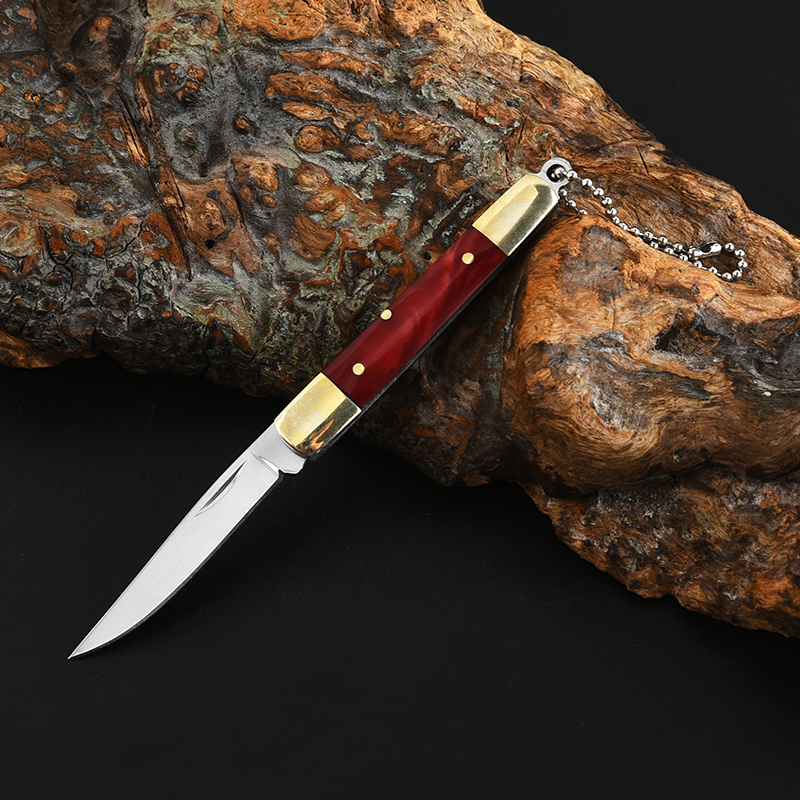
There is no single best mechanism. Choose a well-made knife with controls you can operate predictably and a closing sequence you understand.
Not automatically. Component dimensions, materials, contact geometry, and manufacturing quality matter. Compare specific products using comparable evidence.
Many provide bilateral controls. However, opening features, pocket clips, and handle geometry also affect whether the complete knife suits left-handed use.
No. Manual button-lock knives require a separate opening action. Automatic operation depends on the complete deployment mechanism, not simply the presence of a button.
Yes. Spring resistance is not a positive lock. Pressure in the closing direction can overcome that resistance, so task selection and handling are important.
Request approved specifications, reference samples, agreed functional checks, inspection criteria, operating instructions, and a clear process for handling nonconforming products.
1. Blade HQ — "Knife Lock Types Guide." Original article used for the mechanism overview and reconstruction. The retrieved text did not include verifiable customer comments. [bladehq]
2. Spyderco — "Locking Mechanisms." Manufacturer descriptions supporting the explanations of back locks, liner locks, frame locks, Compression Locks, Ball Bearing Locks, slip joints, and friction folders. [spyderco]
3. Benchmade — "AXIS® Lock Knives." Manufacturer information supporting the distinction between the branded AXIS mechanism and the broader crossbar category. Promotional performance language was not used as comparative test evidence. [benchmade]
4. Knife Thoughts — "Pocket Knife Locks Compared; Merits and Pitfalls." Independent enthusiast commentary supporting the discussion of handling preferences, release ergonomics, spring concerns, and serviceability questions. These opinions are not representative customer-survey data. [knifethoughts]
5. Spyderco Forums — "Baby got BACK(lock)." Public owner discussion illustrating preferences about closing bias and concerns about spring-dependent mechanisms. Individual posts do not establish reliability or failure rates. [forum.spyderco]


