


Views: 219 Author: Holin Knife Publish Time: 2026-10-16 Origin: Site


Content Menu
● Understanding Knife Blade Shapes and Cutting Geometry
● Common Knife Blade Shapes: Uses and Limitations
>> Drop Point: A Versatile Starting Point
>> Clip Point: Fine Tip Access
>> Tanto and Reverse Tanto: Different Edge Layouts
>> Wharncliffe: Straight-Edge Precision
>> Sheepsfoot: Less Emphasis on Piercing
>> Spear Point: A Centered Profile
>> Trailing Point: More Curved Cutting Edge
>> Hawkbill: Material Retention During Pull Cuts
>> Straight Back, Cleaver, and Harpoon Profiles
>> Specialized Profiles and Added Features
● Which Knife Blade Shape Fits Your Application?
● Why Blade Geometry Can Matter More Than the Profile Name
● How to Specify Knife Blade Shapes for OEM/ODM Production
>> Build a Clear Development Brief
● A Practical Sample-Evaluation Process
● Sharpening and Safety Considerations
● Develop a Blade Profile Around Your Market
● Frequently Asked Questions About Knife Blade Shapes
>> 1. What Is the Best Blade Shape for a Pocket Knife?
>> 2. Is a Tanto Stronger Than a Drop Point?
>> 3. What Is the Difference Between Wharncliffe and Sheepsfoot Blades?
>> 4. Which Blade Shapes Are Easiest to Sharpen?
>> 5. Does Blade Shape Determine Edge Retention?
>> 6. Can Buyers Customize a Blade Profile?
Knife blade shapes influence how a knife slices, how precisely its tip can be positioned, and how easily its edge can be maintained. Whether you are choosing a pocket knife or developing a custom product range, understanding blade profiles helps you match the tool to its intended work.
However, shape alone does not determine performance. Blade thickness, grind, steel, heat treatment, and handle design also matter. Two knives with similar silhouettes can feel very different when cutting the same material.
My starting point when evaluating a design is simple: identify the task before choosing the appearance. This guide explains common knife blade shapes, their practical trade-offs, and the specifications buyers should consider before approving an OEM/ODM project.
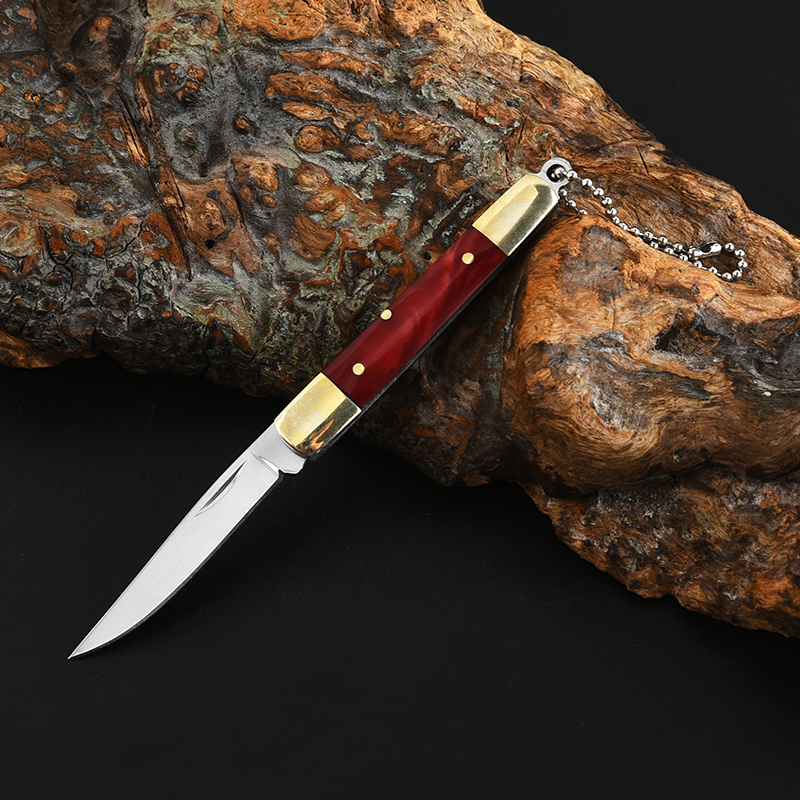
A blade profile is the outline viewed from the side. It describes the relationship between the spine, point, and cutting edge.
Several terms make comparisons easier:
- Spine: the back of the blade, opposite the cutting edge.
- Point: the tip, used for controlled positioning and initiating cuts.
- Belly: the outward curve of the cutting edge.
- Recurve: an inward curve along part of the edge.
- Grind: the cross-sectional geometry that narrows the blade toward its edge.
These features interact, but they are not interchangeable. A drop point describes a profile; a flat grind describes how the blade tapers.
The most useful principle is task-first selection. Start with the material, cutting motion, and working environment, then evaluate the geometry needed to support them.
A drop point has a spine that slopes downward toward the tip. Its cutting edge usually includes a curved belly.
This combination supports general slicing and controlled tip work. It is a practical starting point for everyday carry knives, camping knives, and multipurpose outdoor tools.
Its limitation is specialization. A drop point may not offer the straight-edge control of a Wharncliffe or the pronounced point of a clip point. Actual tip strength depends on thickness, taper, and material properties.
A clip point has a section of spine that appears cut away near the tip. That section may be straight or concave.
The resulting point often provides good access for detailed cutting. Many traditional pocket knives and Bowie-style knives use this profile.
A narrow tip needs careful handling. It should not be treated as a screwdriver or pry bar. Also, a clip point is not automatically a Bowie knife; the terms describe different aspects of knife design.
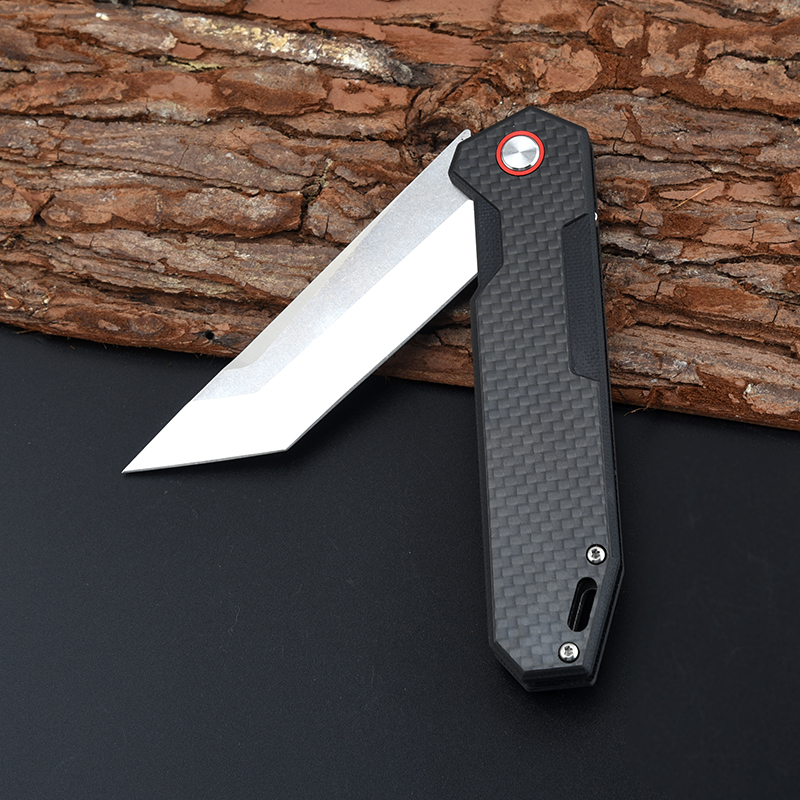
The modern American tanto typically has a long main edge and a shorter front edge meeting at a distinct corner.
That angular layout creates two cutting sections. Depending on construction, substantial material can remain behind the point, but the profile does not guarantee exceptional strength.
A reverse tanto places the pronounced angle on the spine rather than at the cutting-edge transition. Its edge may retain a smoother belly for slicing.
For buyers, the important distinction is maintenance: an angular tanto requires attention to both edge sections and their meeting point.
A Wharncliffe combines a straight cutting edge with a spine that descends toward the point.
The straight edge suits controlled draw cuts, packaging work, and precise trimming. Its tip can also provide useful access for detailed tasks.
It offers less curved belly for rocking cuts. A fine-pointed version also requires care near people, products, or delicate surfaces.
A sheepsfoot generally has a straight edge and a rounded spine that curves down toward the tip.
Compared with a sharply pointed profile, it places less emphasis on piercing. This makes it worth considering for work knives where accidental punctures are a concern.
However, a less pointed tip does not make a knife harmless. Edge exposure, cutting technique, and product construction remain important.
A spear point has a roughly symmetrical outline with the point near the blade's centerline.
Depending on its grind and edge configuration, it can support balanced everyday utility. Do not assume that every spear point has two sharpened edges.
A dagger typically has two cutting edges. That difference affects handling, intended use, and potentially legal classification, so specifications should identify the sharpened edges explicitly.
A trailing point rises above the general line of the spine, usually creating a pronounced belly.
That curve suits sweeping slicing motions and some hunting or food-preparation tasks. However, the elevated point may be less convenient for straight-line tip work.
When comparing samples, consider whether the curve helps the intended cutting motion or simply adds visual distinction.
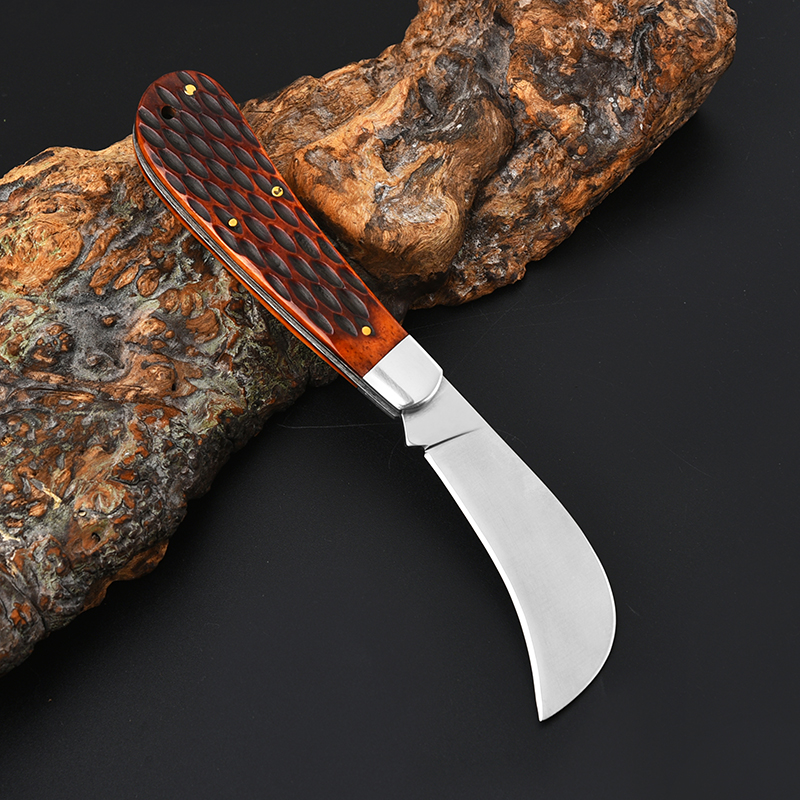
A hawkbill curves downward into a hooked profile. Its concave edge helps retain suitable material during a pulling cut.
It can be useful for cord, carpet, and horticultural applications when the complete knife is designed for those tasks.
The trade-off is versatility. Deep curves are less convenient for general cutting-board work and may require narrower sharpening tools.
A straight-back blade combines a relatively straight spine with an edge that curves upward toward the point. It is a straightforward option for general utility.
A pocket cleaver uses a broad, cleaver-like outline. That appearance does not mean a folding knife is suitable for chopping bone or receiving repeated impact.
A harpoon profile adds a raised feature along the spine. It may provide a thumb-contact area, but comfort and control depend on placement, finishing, and the handle.
A kukri combines a curved outline with a forward-oriented design suited to particular cutting applications. Size and construction matter more than resemblance alone.
Kris-style blades may have a wavy outline and strong cultural or decorative significance.
A gut hook is usually an added cutting feature rather than a complete blade category. Likewise, recurves and serrations can appear on multiple profiles. Evaluate these features separately from the overall shape.
Use this table to create a shortlist, not to declare a universal winner.
| Application | Profiles to consider | Important checks |
|---|---|---|
| General everyday carry | Drop point, spear point | Cutting geometry, tip access, carry comfort |
| Packaging and trimming | Wharncliffe, sheepsfoot | Cutting-depth control, edge exposure |
| Camping utility | Drop point, straight back | Grip security, corrosion resistance, maintenance |
| Detailed cutting | Clip point, Wharncliffe | Tip thickness and control |
| Cord or carpet pull cuts | Hawkbill, suitable recurve | Material retention, sharpening access |
| Hunting-related slicing | Drop point, trailing point | Belly shape, hygiene, cleaning access |
For replaceable-blade utility knives, also evaluate the blade holder, retention mechanism, and depth adjustment. Those systems can be more consequential than the silhouette alone.
A knife may have a sharp edge yet still require considerable force to pass through material.
After the edge initiates a cut, the material must move around the blade. Thickness behind the edge and edge angle influence that resistance.
A thinner geometry generally cuts more efficiently, but it provides less support against damage. A heavier geometry may tolerate greater stress while requiring more cutting force.
Steel and heat treatment also affect edge retention, toughness, and corrosion resistance. No blade-shape label captures that complete balance.
For procurement, specify measurable geometry alongside the profile name. "Drop point outdoor knife" is a starting description, not a complete engineering brief.
A recognizable outline can help establish a product's identity. A repeatable specification makes that identity consistent across production.
Include:
- Target users and primary cutting tasks.
- Blade length, height, and stock thickness.
- Profile drawing and tip geometry.
- Grind type and edge-angle convention.
- Steel grade and intended hardness range.
- Surface finish and marking requirements.
- Handle, opening, and locking expectations.
- Inspection criteria and packaging requirements.
Clarify whether an angle refers to one side or the total included angle. Confirm where thickness measurements will be taken.
A folding blade must work within the handle.
Check closed-position tip protection, opening clearance, edge clearance, and the relationship between blade shape and locking components.
A more pronounced point or wider belly may change those requirements. Evaluate the assembled product rather than approving the blade outline in isolation.
Yangjiang Holin Industrial Co., Ltd. focuses on folding knives, pocket knives, utility knives, and outdoor tools. With its own research and development team and production factory, the company provides one-stop OEM/ODM support covering product design, development, and bulk production.
The following is a proposed buyer workflow, not a claim of completed testing.
1. Define representative tasks. Choose materials that reflect the intended application, such as packaging tape, cardboard, or suitable cord.
2. Control comparison conditions. Keep material type, cutting length, and technique consistent.
3. Assess handling. Check grip comfort, tip visibility, and cutting control.
4. Inspect after use. Look for edge damage, unexpected dulling, and changes in operation.
5. Review maintenance. Confirm that users can sharpen or replace the blade with suitable equipment.
6. Record approval criteria. Establish acceptance requirements before authorizing bulk production.
Keep cutting tests separate from deliberate abuse. Prying and twisting do not establish ordinary cutting performance.
When collecting user feedback, ask specific questions: Does the point reach the intended area? Does the edge snag? Is maintenance straightforward? These observations are more actionable than a general "good knife" rating.
Straight or gently curved edges are usually easier to maintain with common flat abrasives. Deep recurves may require appropriately shaped rods or narrow abrasives.
For an angular tanto, sharpen the main and front sections separately. Preserve their transition rather than repeatedly sweeping across it.
A rounded tip may reduce certain puncture risks, but it does not replace controlled handling. Keep hands outside the cutting path, secure the workpiece, and use only the exposure needed.
Check applicable ownership, carry, workplace, and import requirements before selecting a product for a particular market. A blade-profile name alone is not a legal classification.
The right knife blade shape connects an identifiable user need with a workable product specification.
For a custom project, send Yangjiang Holin Industrial Co., Ltd. your target applications, reference drawings, preferred materials, quantity requirements, and destination market. A clear brief supports focused design discussions and a more useful path from initial concept to approved sample and bulk production.
A drop point is a practical starting point for mixed daily tasks. A Wharncliffe may better suit straight-edge precision. Choose according to actual use, geometry, and maintenance needs rather than appearance alone.
Not automatically. A tanto can retain substantial material near its point, but strength also depends on thickness, taper, steel, heat treatment, and loading direction. Compare the finished designs, not just their names.
Both generally have straight cutting edges. A Wharncliffe usually tapers toward a more defined point, while a sheepsfoot typically has a more rounded descending spine. Modified designs can blur that distinction.
Straight and gently curved edges are generally straightforward with flat abrasives. Recurves and serrations need suitable tools. Angular tantos require separate treatment of their cutting sections.
No. Steel, heat treatment, edge angle, thickness, cutting material, and technique influence edge retention. Profile affects how the edge meets the task, but it does not independently establish durability.
Yes. OEM/ODM development can include changes to the spine, belly, point, and overall dimensions. The proposed design should be reviewed for cutting performance, manufacturing feasibility, maintenance, and compatibility with the complete knife.
1. Blade HQ — "Knife Blade Shapes Guide: 16 Blade Styles of Pocket Knives & Fixed Blades."
Source for the original article's scope, blade-profile terminology, and general application comparisons. Some claims have been qualified rather than repeated without limitation. [bladehq]
2. Larrin Thomas, Knife Steel Nerds — "What Is Edge Stability?" August 27, 2018.
Technical basis for distinguishing sharpness from cutting ability and explaining thickness behind the edge, edge angle, and the balance between cutting efficiency and edge support. [knifesteelnerds]
3. Larrin Thomas, Knife Steel Nerds — "Knife Steels Rated by a Metallurgist—Toughness, Edge Retention, and Corrosion Resistance." October 19, 2021.
Technical context for steel-property trade-offs and the influence of geometry on performance. [knifesteelnerds]
4. Work Sharp — "How to Sharpen a Tanto Knife." August 11, 2020.
Practical guidance on sharpening the two edge sections separately and preserving the transition between them. [worksharptools]
5. Work Sharp — "Answering Your Knife Sharpening Questions." July 8, 2020.
Guidance on choosing suitable sharpening surfaces for straight edges and recurved profiles. [worksharptools]


