


Views: 219 Author: Holin Knife Publish Time: 2026-10-23 Origin: Site


Content Menu
● How Knife Pocket Clips Affect Everyday Carry
● Six Common Knife Pocket Clip Types Compared
>> Standard Pocket Clips: Accessible and Straightforward
>> Deep-Carry Pocket Clips: Lower Visibility, Different Access
>> Mini Deep-Carry Clips: Compact but Not Automatically Better
>> Milled Pocket Clips: Sculpted Appearance, Geometry Matters
>> Wire Pocket Clips: Subtle and Visually Lightweight
>> Carabiner and Shackle Attachments: A Different Carry Method
● Deep Carry vs. Standard Pocket Clips: Which Should You Choose?
● Tip-Up vs. Tip-Down Carry: Understand the Mounting Position
>> Tip-Up Carry
● What User Feedback Reveals About Pocket Clip Preferences
● How to Check Replacement Pocket Clip Compatibility
● A Practical Five-Step Pocket Clip Evaluation
>> 1. Select Representative Fabrics
>> 2. Assess Insertion and Withdrawal
>> 3. Check Retention During Ordinary Movement
>> 5. Compare Condition Before and After
● Custom Knife Pocket Clips: An OEM/ODM Buyer's Checklist
>> Specify the Complete Clip Assembly
>> Define Repeatable Quality Checks
● Bent Pocket Clips: Repair or Replace?
● Develop a Knife Around the Intended Carry Experience
>> What is the best pocket clip for an everyday carry knife?
>> Are deep-carry pocket clips more secure?
>> Can I install a universal pocket clip?
>> Why does my knife clip damage my pocket?
>> Is a titanium pocket clip better than stainless steel?
>> Can a manufacturer customize pocket clip placement?
Knife pocket clips influence how securely a folding knife stays in place, how easily it leaves your pocket, and how comfortably it fits your hand. Whether you are choosing an everyday carry knife or developing a private-label product, the clip deserves the same attention as the blade, lock, and handle.
My starting point is simple: choose for balance, not appearance alone. A discreet clip can be awkward to grip. A strong clip can be difficult to slide over a pocket seam. An attractive design can create an uncomfortable pressure point during cutting.
This guide explains pocket clip types, carry positions, replacement considerations, and practical specifications for custom knife development.

A pocket clip positions a knife near the pocket opening instead of leaving it loose at the bottom. However, security is only one part of its job.
A well-matched clip should support:
- Predictable insertion and removal.
- Suitable retention for the intended clothing.
- Comfortable handling during use.
- Appropriate visibility above the pocket.
- Accessible mounting hardware and replacement parts.
These requirements interact. Increasing tension may improve retention but make withdrawal harder. Lowering the knife may reduce visibility but leave less handle available to grasp.
For buyers, the useful question is not "Which clip looks strongest?" It is "Which clip works best with this knife, clothing, and user?"
Pocket clip categories overlap. "Deep carry" describes ride height, while "wire" and "milled" describe construction. A wire clip can also be a deep-carry clip.
| Clip type | Main characteristic | Suitable applications | What to check |
|---|---|---|---|
| Standard | Leaves more handle exposed | General everyday carry | Handle access and visibility |
| Deep carry | Positions the handle lower | Discreet pocket carry | Seam clearance and withdrawal |
| Mini deep carry | Uses a shorter clip body | Compact, minimalist designs | Contact geometry and retention |
| Milled | Machined, sculpted construction | Design-focused products | Flexibility and hand comfort |
| Wire | Uses formed wire | Visually understated carry | Mounting security and movement |
| Carabiner or shackle | Attaches around a compatible loop | Pack or equipment attachment | Closure, access, and intended use |
Standard clips usually leave part of the handle above the pocket. That exposed section provides a gripping area, which can make retrieval straightforward.
They suit users who prioritize access over concealment. However, check how far the handle projects when sitting or bending. A design that feels unobtrusive while standing may become uncomfortable against a seat.
Deep-carry clips position the knife lower, leaving less handle exposed.
This can create a cleaner appearance, but deeper does not automatically mean more secure. Retention also depends on tension, contact surfaces, pocket thickness, and mounting stability.
Inspect the space beneath the clip's return bend. A bulky seam or protruding screw head can make an otherwise attractive deep-carry design frustrating to use.
A mini deep-carry clip reduces the visible clip footprint and can complement a small folding knife.
Its shorter shape does not establish its holding strength. Evaluate the complete assembly rather than assuming a smaller clip will be weaker—or that a thicker one will perform better.
Milled clips offer distinctive shapes and can become an important part of a premium knife's visual identity.
Nevertheless, "milled" is not a performance guarantee. Check the entry ramp, contact area, flexibility, and edges. During sample evaluation, hold the knife in normal cutting grips and note whether the clip presses into the palm.
Wire clips allow clothing to remain visible through the clip, producing a less visually solid appearance.
Their carry height varies by design. Some position the knife deeply; others leave more handle accessible. Evaluate mounting security and unwanted movement rather than treating all wire clips as equivalent.
These designs attach around compatible loops or equipment points rather than relying solely on pocket friction.
They can suit outdoor tools, but attachment location affects access and movement. A knife's integrated carabiner must not be treated as climbing or fall-protection equipment unless expressly certified for that purpose.
Choose according to access, clothing, and preferred visibility.
A deep-carry clip is worth considering when:
- You prefer minimal handle exposure.
- Your pockets provide enough usable depth.
- The clip accommodates your normal pocket seams.
- You can retrieve the closed knife comfortably.
A standard clip may suit you better when:
- You want more handle available to grasp.
- You frequently wear gloves.
- Your pockets are relatively shallow.
- Reduced visibility is not your priority.
For a fair comparison, test both styles on the same knife platform where compatible. Comparing two completely different knives makes it difficult to separate clip performance from handle shape, weight, and texture.
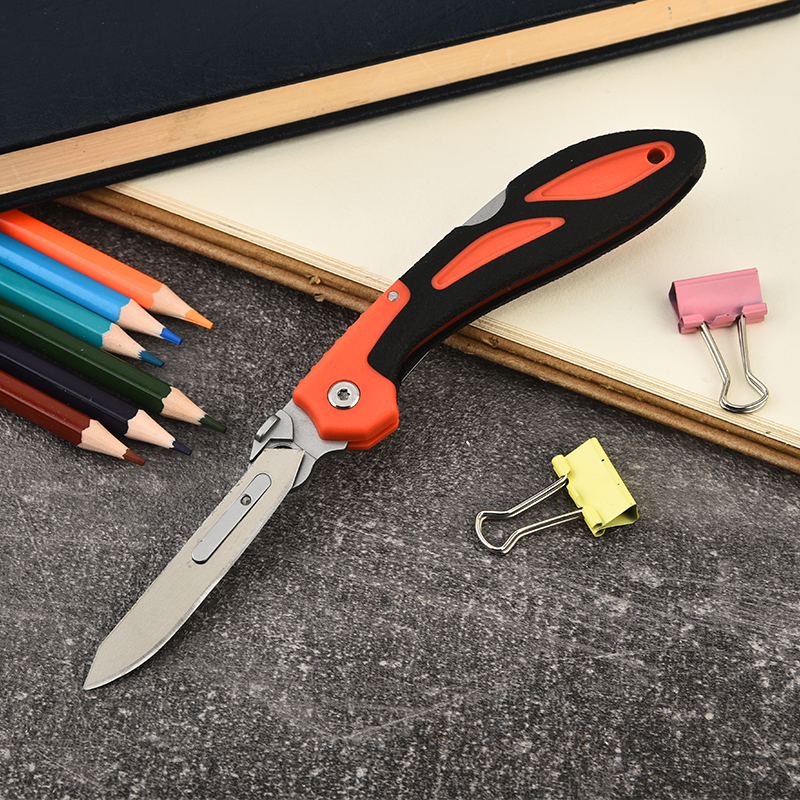
"Tip-up" and "tip-down" describe the direction of the folded blade's tip while the knife is carried.
Tip-up carry can place the handle conveniently for access to the opening mechanism. However, the result depends on handle length, hand size, pocket location, and knife geometry.
Tip-down carry changes how the knife enters the hand and may suit users who prefer a different retrieval sequence, particularly with larger handles.
Neither position is universally best. Evaluate retrieval with the blade closed before considering normal operation.
Also distinguish orientation from handedness. A reversible clip supports left- or right-side mounting, but it does not necessarily support both tip-up and tip-down carry. Confirm the actual mounting options.
Public customer feedback highlights why one clip cannot satisfy every user.
A comment on Benchmade's deep-carry clip listing expresses a preference for receiving deep carry as standard rather than purchasing it separately. A separate community contributor describes preferring a deep-carry clip because its looser, more flexible feel makes removal easier.
These are individual opinions, not controlled comparisons or proof of a market-wide preference. Their practical value is identifying questions for product development:
- Does the supplied clip match the intended customer's expectations?
- Is withdrawal comfortable rather than merely possible?
- Would alternative clips improve the product offering?
- Are compatible replacements easy to obtain?
No customer-review dataset was supplied for this article. These examples therefore illustrate evaluation priorities rather than satisfaction rates or verified product performance.
A similar appearance does not establish compatibility. Before ordering a replacement knife pocket clip, check:
1. Exact knife model and production version.
2. Number and spacing of mounting holes.
3. Screw thread, length, and head shape.
4. Mounting recess and clip-base geometry.
5. Clearance around the handle and moving components.
6. Supported carry orientation and side.
Use the clip supplier's compatibility list. If your model is absent, request confirmation rather than assuming that a familiar hole pattern is sufficient.
Check whether replacement screws are included. Some clips are sold without them, and the original screws may not suit the replacement geometry.
Never force a screw that resists engagement. Incorrect hardware can damage threads or interfere with the knife.
This proposed comparison method is useful for personal selection and preproduction reviews. It is not a standardized certification test.
Use the clothing your customers actually wear: lightweight trousers, denim, or workwear. Include the pocket seam, not just a flat fabric sample.
Keep the blade closed. Slide the knife onto each pocket and remove it several times. Record snagging, excessive resistance, and inconsistent movement.
Walk, sit, and bend in a controlled setting. Check whether the knife shifts or rises unexpectedly. Avoid aggressive movements that could cause loss or injury.
Hold the closed knife in representative grips. Identify pressure from the clip tip, mounting base, and exposed hardware.
Inspect screw security, clip alignment, visible deformation, and fabric marking. Photograph each sample under consistent conditions.
For procurement, turn subjective comments into defined acceptance criteria. Agree on test fabrics, measurement methods, and pass/fail limits before approving production.
For a branded knife, the clip should be developed alongside the handle—not added after the handle design is finalized.
A useful development brief includes:
- Material grade and manufacturing method.
- Clip dimensions and approved tolerances.
- Carry height and mounting position.
- Hardware specifications.
- Surface finish and edge treatment.
- Intended pocket fabrics.
- Retention and withdrawal evaluation methods.
- Spare-part requirements.
Material names alone are insufficient. Stainless steel and titanium clips can both be suitable, but geometry and processing influence how the finished part behaves.
Avoid approving a clip solely because a prototype looks attractive.
Ask how production samples will be compared with the approved assembly.
Useful checks include mounting-hole position, hardware fit, clip alignment, surface condition, and performance on agreed fabric samples.
If repeated insertion testing is required, define the cycle count and acceptance limits in the purchase specification. Do not present an arbitrary cycle count as an established industry standard.
A replaceable clip can simplify maintenance, provided compatible parts remain available.
Discuss spare clips, screw packs, identification codes, and installation instructions before launch. For distributors, clear replacement compatibility can also reduce avoidable customer-service confusion.
A bent clip does not automatically require replacement, but straightening is not universally appropriate.
Start with the knife or clip manufacturer's guidance. Some suppliers cover bent clips through their warranty, making replacement preferable to an uncertain repair.
Before removing or repositioning a clip:
1. Close the blade completely.
2. Work on a padded, stable surface.
3. Use the correctly fitting driver.
4. Keep small hardware organized.
5. Follow the manufacturer's tightening instructions.
6. Check clearance and function afterward.
Do not use the assembled knife as a bending lever. Avoid heating, grinding, or repeatedly flexing the clip unless the manufacturer specifically authorizes the procedure.
Replace cracked parts or clips that no longer retain reliably. Repeated deformation warrants inspection rather than increasingly forceful adjustment.
Yangjiang Holin Industrial Co., Ltd. manufactures folding knives, pocket knives, utility knives, and outdoor tools. With an in-house development team and production factory, the company provides OEM/ODM support spanning design, development, and bulk manufacturing.
For a custom project, start with the intended user and carry conditions. Then evaluate clip options alongside handle construction, mounting hardware, finish, and replacement requirements.
Send Holin your target market, knife concept, preferred carry position, reference dimensions, and estimated order quantity. Request a development discussion covering clip compatibility, sample evaluation, and agreed production specifications before committing to bulk manufacture.
There is no universal winner. Compare retention, withdrawal, visibility, and hand comfort using your normal clothing. A clip that performs well on denim may feel different on lightweight trousers.
Not necessarily. They reduce handle exposure, but security also depends on tension, contact geometry, fabric, and mounting stability. Evaluate the complete knife-and-pocket combination.
Do not assume compatibility. Confirm the exact model, mounting pattern, screw specifications, recess geometry, and clearances. A clip that appears to fit may still require different hardware.
Possible contributors include rough edges, aggressive handle texture, prominent hardware, excessive resistance, or poor seam clearance. Inspect all contact surfaces before changing tension.
Not automatically. Compare finished-part performance, cost, appearance, geometry, and replacement availability. The material name does not establish comfort or retention.
Potentially, but mounting changes must be reviewed with the handle structure and internal components. Confirm feasibility during development rather than assuming any location is available.
- Blade HQ — "Knife Pocket Clips." Source article covering six clip categories, carry orientation, and repair suggestions; reconstructed here with additional compatibility, evaluation, and procurement guidance. [bladehq]
- Spyderco — "Clips." Manufacturer descriptions of deep-pocket, metal, wire, integral, and shackle designs; supports the distinction between construction and carry height. [spyderco]
- Spyderco — "How to Change the Position of Your Pocket Clip." Manufacturer instructions concerning closed-blade handling, appropriate drivers, supported work surfaces, and avoiding overtightening. [spyderco]
- Lynch Northwest — "I Have a Question About Whether a Specific Clip Will Fit My Knife. How Do I Find Out?" Compatibility-list guidance and supplier confirmation procedures. [lynchnw]
- Benchmade — "Standard Deep-Carry Pocket Clip, Black Oxide." Product information concerning replacement hardware and clip warranty support; search-indexed customer feedback supplies one anecdotal preference discussed above. [benchmade]
- Benchmade Community — "Opinion Needed — Pocket Clip." Individual user opinion concerning flexibility and ease of removal; not treated as representative research. [benchmadehelp1676592262.zendesk]
- Lynch Northwest — "Warranties, Exchanges & Returns." Manufacturer warranty information covering bent clips and exclusions for specified modifications. [lynchnw]


