


Views: 219 Author: Holin Knife Publish Time: 2026-10-30 Origin: Site


Content Menu
● Microtech OTF Knife Size Chart: Compare Generations, Not Just Names
>> Why Historical Microtech Size Charts Can Mislead Buyers
● UTX-70 vs. UTX-85: Compact Carry or More Usable Grip?
>> UTX-70: Start Here When Minimum Size Matters
>> UTX-85: A Compact Alternative With More Working Length
● UTX-85 vs. Ultratech: When Does Full Size Make Sense?
● Ultratech vs. Combat Troodon: What the Larger Format Changes
● What Owner Comments Reveal About Everyday Carry
● How to Choose an OTF Knife Size in Five Steps
>> 1. Establish Your Actual Cutting Tasks
>> 2. Compare the Closed Package
>> 3. Check Grip and Switch Reach
>> 4. Evaluate Your Real Carry Setup
>> 5. Verify the Exact Product and Applicable Rules
● A Manufacturer's Perspective: Turn Size Preferences Into a Product Brief
>> Validate Samples Before Approving Volume Production
● Where Yangjiang Holin Fits Into Custom Knife Development
>> What is the smallest Microtech OTF in this comparison?
>> Is the UTX-85 exactly 85% of the Ultratech?
>> Which is better for everyday carry: UTX-85 or Ultratech?
>> Is the Combat Troodon too large for pocket carry?
>> Why do Microtech dimensions differ between websites?
>> Can Holin develop a custom knife based on these size preferences?
A Microtech OTF size comparison should answer more than which knife has the longest blade. The practical question is which model fits your hand, pocket, and cutting tasks. The UTX-70 prioritizes compact carry, the UTX-85 occupies the compact everyday-carry category, the Ultratech offers a full-size alternative, and the Combat Troodon provides substantially more blade and handle.
However, model names alone no longer tell the whole story. Different generations can have different dimensions, mechanisms, and weights.
From a knife-manufacturing perspective, I would start with fit, not appearance. A compact knife that compromises your grip is not necessarily easier to use, while a larger knife that stays at home offers little everyday value.
This guide combines published manufacturer specifications, historical comparisons, and publicly available owner feedback. It is a specification-based buying guide, not a claim of hands-on testing or a partnership with Microtech.
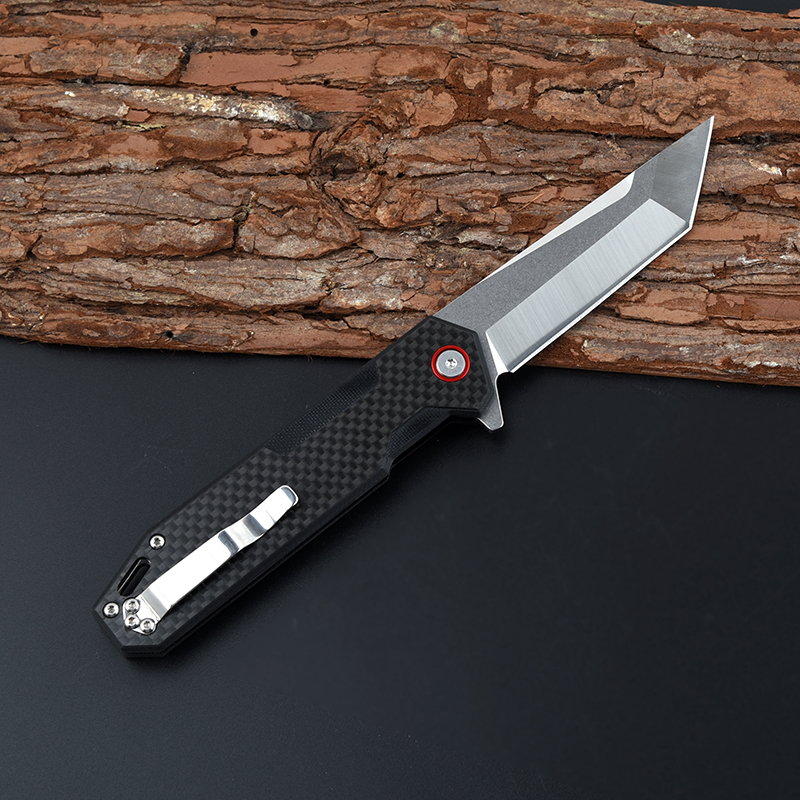
The following table separates specific product generations from broader collection specifications. Dimensions are in inches; weights are in ounces.
| Model and specification basis | Overall length | Blade length | Weight | Main comparison point |
|---|---|---|---|---|
| UTX-70, current collection listing | 6.00 | 2.50 | 1.40 | Smallest, lightest option here |
| UTX-85 Gen III, model 1232-10APBL | 7.65 | 3.10 | 3.10 | Compact everyday-carry format |
| Ultratech Gen IV, model 11234-1T | 8.54 | 3.55 | Check exact configuration | Full-size reference point |
| Combat Troodon Gen III, model 1144-1TA | 9.50 | 4.00 | 4.95 | Largest blade and handle format here |
These are reference specifications, not universal measurements for every knife carrying the same family name. Blade profiles, hardware, and production generations can affect the published figures.
The UTX-85 Gen III row is deliberately identified as Gen III. Gen IV versions also appear in current catalogs; buyers should check their selected product rather than transfer an older specification automatically.
The original Blade HQ comparison remains useful for understanding the lineup's historical proportions. However, it lists the UTX-70 at 5.63 inches overall and the Ultratech at 8.04 inches.
Current manufacturer information describes a 6-inch UTX-70 and an 8.54-inch Ultratech Gen IV.
The older Ultratech entry also lists a 3.44-inch blade and a 5.12-inch handle alongside that 8.04-inch overall figure. Those measurements do not reconcile through simple addition, so they should not be reused as an internally consistent modern specification.
The lesson is straightforward: verify the generation, configuration, and individual product page before buying or publishing a comparison.
Microtech describes the current UTX-70 as small enough for a watch pocket. Its collection specifications list a 2.5-inch blade and a weight of 1.4 ounces.
That makes it a sensible starting point for someone prioritizing low weight and minimal pocket space.
The compromise is available gripping area. Before choosing the smallest option, check whether your fingers remain securely on the handle and whether operating the switch requires repositioning your hand.
The UTX-70 Gen IV is also larger than the historical version in the original comparison. An owner's experience with an older UTX-70 should not be treated as an exact description of the current model.
The cited UTX-85 Gen III measures 7.65 inches overall with a 3.10-inch blade. It provides more blade length than the current UTX-70 while remaining shorter than the Ultratech Gen IV.
For buyers comparing the UTX-70 vs. UTX-85, the useful question is not simply whether the extra length looks substantial. Ask whether it improves your grip and reaches through your usual cutting material without making pocket carry inconvenient.
My recommendation is to evaluate the UTX-85 first when you want a compact OTF but are uncertain about miniature handles. Then compare it physically with the smaller and larger alternatives.
The Ultratech Gen IV product examined here measures 8.54 inches overall with a 3.55-inch blade.
Compared with the cited UTX-85 Gen III, it adds approximately 0.9 inch of overall length and 0.45 inch of blade length.
Those differences matter differently to different users. More handle space may improve comfort for a larger hand, but the longer closed package may compete with other pocket contents.
For an UTX-85 vs. Ultratech comparison, consider:
- Whether your little finger crowds the end of the smaller handle.
- Whether you can reach and operate the switch comfortably.
- Whether the clip position suits your pocket.
- Whether your cutting tasks actually benefit from additional blade length.
Microtech's Ultratech collection page and individual Gen IV product page also publish different reference dimensions. This reinforces why the exact item listing should guide a purchase.
The Combat Troodon Gen III examined here measures 9.5 inches overall, with a 4-inch blade and a listed weight of 4.95 ounces.
Its published handle length is 5.5 inches. That makes handle accommodation an important part of the comparison, not merely blade reach.
Someone wearing work gloves may wish to evaluate this larger format. However, a larger handle does not automatically guarantee better control: switch placement, contour, and glove thickness still matter.
The original Blade HQ article lists an older Combat Troodon with a 3.8-inch blade. The cited Gen III listing specifies 4 inches.
This is another reason to avoid comparing a current knife against an unidentified historical specification.
A public discussion of the UTX-85 illustrates why dimensions cannot produce one universally correct recommendation.
One participant described the UTX-85 as close to an ideal size after finding an older UTX-70 too small. Another praised its low weight and limited pocket footprint. A different participant preferred the Ultratech's size.
These comments are useful because they identify competing priorities:
- Minimal pocket bulk.
- Enough handle for a comfortable grip.
- A preference for a fuller-size knife.
They are not controlled tests, verified purchasing records, or evidence of a measurable reliability rate. The discussion also predates the newest generations.
I would use this feedback to create a handling checklist, not to declare a winner. No Holin customer testimonials were supplied for this article, so none are invented or attributed to the company.
List the materials you cut most often: packaging tape, cord, paper, or similar everyday materials.
Then consider the working edge and blade profile needed for those tasks. Maximum overall length is a poor substitute for a clear use case.
An OTF spends much of its time closed.
Ask for closed length, handle width, thickness, and clip-position information. Overall open length cannot explain how the knife shares a pocket with a phone, keys, or other tools.
Where lawful and practical, handle the exact model before buying.
With the blade closed and pointed safely away, assess whether your hand sits naturally on the handle. Follow the retailer's or manufacturer's instructions for any operation check.
Do not assume a newer generation feels identical to an older sample.
Consider pocket depth, fabric thickness, and whether you carry other equipment.
For gloved use, assess fit with the actual glove type. A bare-hand impression does not answer every workplace question.
Record the model number, generation, blade configuration, and published dimensions.
Separately check applicable possession, purchase, carry, shipping, and import requirements. A short blade is not, by itself, proof that an automatic knife is permitted.

For distributors and private-label buyers, consumer comparisons become more useful when translated into measurable development requirements.
Instead of requesting "a compact knife," define the intended user and the constraints.
| Buyer requirement | What to specify |
|---|---|
| Compact carry | Target closed length, width, thickness, and weight |
| Comfortable handling | Intended hand-size range and glove conditions |
| Appropriate cutting performance | Materials, blade geometry, steel, and heat-treatment requirements |
| Consistent operation | Agreed inspection method and acceptance criteria |
| Repeatable production | Approved sample, dimensional tolerances, and inspection records |
| Market suitability | Destination-specific product and documentation requirements |
This approach avoids a common development mistake: approving the appearance before agreeing on how the finished tool should function.
For example, a lighter product brief might prioritize carry comfort, while a work-oriented brief might prioritize grip space. These are development scenarios, not claims about completed Holin projects.
A practical sample-review sequence is:
1. Confirm dimensions against the approved drawing.
2. Inspect finish, edge condition, and component assembly.
3. Evaluate handling under the agreed use conditions.
4. Test cutting performance using a repeatable method.
5. Document changes and approve a reference sample.
Acceptance limits should be agreed before production rather than invented after a shipment arrives.
For mechanism-dependent products, request an appropriate function-testing plan. Do not advertise a service life or failure rate without supporting test records.
According to the company information provided for this article, Yangjiang Holin Industrial Co., Ltd. manufactures folding knives, pocket knives, utility knives, and outdoor tools.
Holin has an in-house research and development team, its own production factory, and scalable production capability. Its OEM/ODM service supports product design, development, customization, and volume manufacturing.
That makes the manufacturer relevant to buyers turning a carry-size preference into a custom product specification.
However, the supplied information does not establish a relationship with Microtech or confirm production capability for a particular automatic OTF mechanism. Those points require direct confirmation.
For a productive inquiry, send Holin your target market, intended use, preferred dimensions, materials, branding requirements, estimated quantity, and launch schedule. Ask the team to confirm feasibility, sampling stages, production arrangements, and the documentation available for your project.
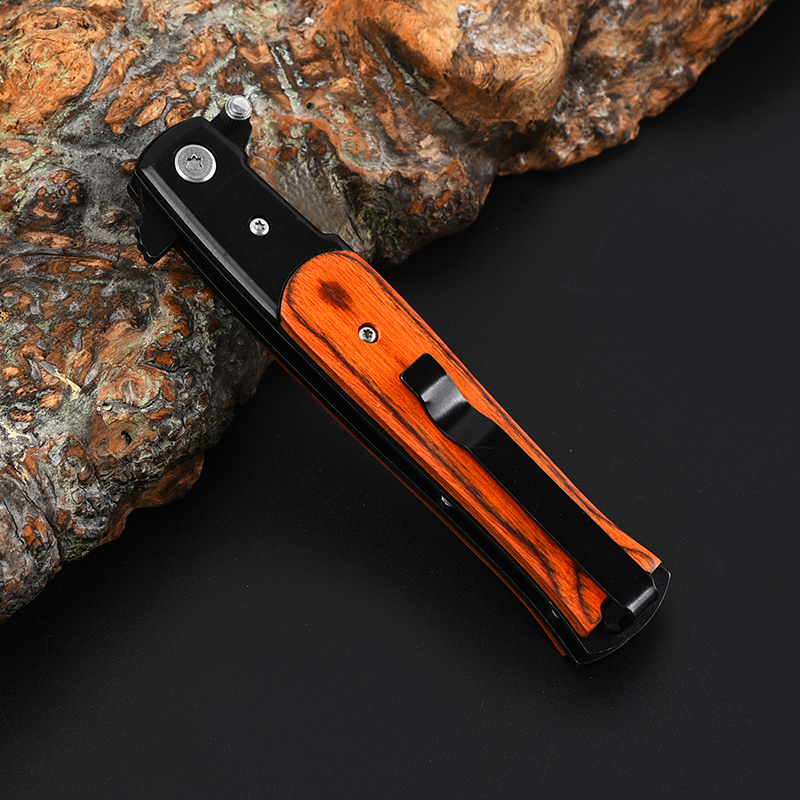
The UTX-70 is the smallest model compared here. Microtech's current collection page lists it at 6 inches overall, with a 2.5-inch blade and a weight of 1.4 ounces.
The name communicates its positioning relative to the Ultratech. Do not assume every dimension, weight, or component scales by exactly 85%, particularly when comparing different generations.
The UTX-85 is the more compact starting point; the Ultratech offers a larger format. Grip comfort, pocket space, cutting needs, and the exact generation should determine the choice.
There is no universal answer. The cited Gen III is 9.5 inches overall and weighs 4.95 ounces. Evaluate its closed dimensions, clip position, and pocket fit rather than judging open length alone.
Listings may describe different generations, blade configurations, or measurement conventions. Historical pages can also contain inconsistent figures. Use the precise manufacturer product listing and request clarification when measurements conflict.
Holin states that it supports OEM/ODM design, development, and production across its listed knife and tool categories. Submit a functional brief for assessment; confirm any automatic-mechanism requirements separately.
- Blade HQ, "Microtech OTF Size Comparisons." Original comparison, historical dimensions, model descriptions, and the specification inconsistencies discussed above. [bladehq]
- Microtech, "UTX-70" collection. Source for the current reference dimensions, weight, and compact-carry positioning. [microtechknives]
- Microtech, "UTX-70 Gen IV D/E Stonewash Standard OD Green," model 11474-10OD. Confirms the updated 6-inch overall length and generation changes. [microtechknives]
- Microtech, "UTX-85 Gen III D/E Stonewash AP Standard Blue," model 1232-10APBL. Source for the specific UTX-85 dimensions and weight used in the table. [microtechknives]
- Microtech, "UTX-85" collection. Documents family positioning and the presence of Gen IV products. [microtechknives]
- Microtech, "Ultratech Gen IV T/E Black Standard Tactical," model 11234-1T. Source for the 8.54-inch overall length and 3.55-inch blade. [microtechknives]
- Microtech, "Ultratech" collection. Provides the broader collection specifications distinguished from the individual Gen IV listing. [microtechknives]
- Microtech, "Combat Troodon Gen III T/E Black Standard Tan," model 1144-1TA. Source for overall length, blade length, handle length, and weight. [microtechknives]
- Reddit, r/EDC, "Can I get opinions of the microtech UTX-85?" November 5, 2022. Source for paraphrased owner opinions; anecdotal and not representative testing. [reddit]


