


Views: 247 Author: Holin Knife Publish Time: 2026-08-30 Origin: Site


Content Menu
>> Automatic vs. Assisted Opening vs. Manual Folding Knives
>> Why Tolerances Matter in Automatic Knife Manufacturing
● Side-Opening Automatic Knives: The Familiar Everyday Carry Format
>> Advantages of Side-Opening Automatic Knives
>> Common Side-Opening Knife Configurations
● OTF Automatic Knives: Direct Blade Deployment
>> OTF Design Considerations for Brands and Buyers
● Choosing the Right Blade Steel for an Automatic Knife
>> Practical Blade Steel Selection
● Handle Materials, Grip, and Carry Experience
● A Buyer's Checklist for Automatic Knives
>> For Wholesale Buyers and Brand Owners
● Compliance, Shipping, and Responsible Product Planning
● Building a Custom Automatic Knife Program
● FAQ
>> Are automatic knives and switchblades the same thing?
>> What is the difference between a side-opening automatic knife and an OTF knife?
>> Are automatic knives legal to own?
>> What blade steel is best for an automatic pocket knife?
>> What should a wholesale buyer inspect in an automatic knife sample?
>> Can automatic knives be customized for private-label brands?
>> What information should I provide when requesting an OEM or ODM quotation?
Automatic knives, often called switchblades, have moved far beyond their outdated pop-culture image. Today's automatic pocket knives are precision-built tools used by collectors, outdoor users, first responders, work crews, and everyday-carry enthusiasts who value fast, one-handed blade deployment.
For buyers, retailers, and private-label brands, however, choosing an automatic knife is not simply a matter of selecting a blade shape or handle color. The right product depends on deployment mechanism, lock design, blade steel, carry profile, target price point, local regulations, quality-control standards, and the manufacturer's ability to turn a concept into repeatable production.
This guide explains how automatic knives work, compares side-opening and out-the-front designs, outlines the buying criteria that matter most, and offers a sourcing perspective for businesses building customized knife programs.

An automatic knife is a knife that opens when the user activates a button, slide, lever, or other release mechanism built into the handle. Once activated, stored energy from an internal spring deploys the blade into its open position.
In the market, automatic knives may also be described as:
- Automatic pocket knives
- Switchblades
- Auto knives
- Push-button knives
- Side-opening automatic knives
- OTF automatic knives
- Out-the-front knives
The defining feature is not the blade shape. It is the powered opening action. A user intentionally triggers the mechanism, and the internal spring system completes blade deployment.
Automatic knives are different from manual folding knives, which require the user to physically rotate the blade open. They are also different from assisted-opening knives, where the user begins opening the blade manually before a spring assists the remaining motion.
| Knife Type | How It Opens | Typical User Action | Main Advantage | Main Consideration |
|---|---|---|---|---|
| Manual folding knife | Blade rotates manually | Thumb stud, nail nick, opening hole, or flipper | Simple structure and broad market acceptance | Requires more deliberate opening |
| Assisted-opening knife | Spring assists after partial manual opening | User starts blade movement | Fast action with familiar folding-knife form | Classification varies by market |
| Automatic knife | Spring deploys blade after release activation | Push button, slide, or lever | Quick, one-handed deployment | Mechanism quality and legal compliance matter |
| OTF automatic knife | Blade travels straight out from the front | Push-pull slide | Compact, direct deployment path | Requires higher mechanism precision |
For product developers, this distinction is critical. A knife's opening system affects its internal engineering, production complexity, test requirements, retail positioning, and intended customer group.
A reliable automatic knife is the result of controlled mechanical interaction rather than a single strong spring. The mechanism must deploy the blade decisively, lock it securely, resist unintended activation, and remain functional through repeated use.
In a typical side-opening automatic knife, the main components include:
- A blade with a pivot interface
- A button or release actuator
- A spring or coil-spring assembly
- A lock system that secures the blade in the open position
- Handle liners, scales, or internal frame components
- Stop pins and retention surfaces that control blade travel
- A safety mechanism on selected models
When the user presses the button, the system releases stored spring energy. The blade rotates quickly around the pivot and stops at its fully open position. A locking surface then engages to hold the blade open for normal cutting tasks.
A well-made automatic knife should not merely open quickly. It should open consistently. That consistency comes from proper spring tension, accurate part tolerances, clean internal surfaces, controlled blade geometry, and reliable final assembly.
Small variations can create noticeable problems in automatic mechanisms. Excessive blade play, weak deployment, button sticking, inconsistent lock engagement, or premature wear often begin with tolerance issues rather than obvious material failures.
From a manufacturing perspective, the most important control points include:
1. Blade pivot geometry
The pivot area must allow smooth rotation without excessive side-to-side movement.
2. Spring performance
Springs require controlled force characteristics. Too little force may cause weak deployment; too much may accelerate wear or make button activation uncomfortable.
3. Button travel and engagement
The button should feel intentional and responsive, not loose, overly stiff, or prone to accidental activation.
4. Lock-face contact
The lock must hold the blade securely in the open position while remaining durable after repeated cycles.
5. Handle alignment
Handle scales, liners, pockets, clips, and internal channels must align correctly to prevent rubbing or mechanism interference.
For wholesale buyers and brand owners, these points are more valuable than broad claims such as "high quality" or "premium mechanism." A supplier should be able to explain its inspection process, sampling standards, deployment testing approach, and corrective-action procedures.
A side-opening automatic knife looks similar to a traditional folding pocket knife. The blade swings outward from the side of the handle, usually through a pivot-driven mechanism.
This format is popular because it combines the familiar silhouette of a folding knife with rapid button-operated deployment. It can be designed for compact everyday carry, outdoor tasks, work use, tactical styling, collector editions, or promotional private-label programs.
- Familiar folding-knife form factor
- Broad range of blade shapes and handle styles
- Easy integration of pocket clips
- Suitable for compact and mid-size product formats
- Flexible material options for different price levels
- Strong potential for customized branding and visual differentiation
A side-opening design can support drop-point, clip-point, tanto, spear-point, wharncliffe, and utility-style blades. This makes it especially suitable for brands that want multiple models built around a shared mechanical platform.
For example, one validated handle and mechanism platform can be adapted into a product family with different scale materials, blade finishes, colors, logos, pocket clips, and packaging. This approach can reduce development risk while giving the final catalog a more complete and differentiated appearance.
| Feature | Entry-Level Program | Mid-Market Program | Premium Program |
|---|---|---|---|
| Blade steel | Common stainless steel | D2 or comparable performance steel | Higher-end powder metallurgy or premium stainless steel |
| Handle material | Aluminum, G10, polymer | Textured G10, aluminum, micarta | Titanium, carbon fiber, premium composites |
| Finish | Satin, black coating, stonewash | PVD, coated, stonewash, two-tone | Specialty coatings, refined finishing, custom treatments |
| Branding | Laser logo | Laser logo plus custom packaging | Full identity system, serialized runs, premium box |
| Development focus | Cost control | Balance of performance and appearance | Materials, fit, exclusivity, collector value |
The best configuration depends on the target channel. A value-oriented retailer may prioritize reliable action, simple packaging, and accessible pricing. A specialist outdoor brand may need better corrosion resistance, textured grip, and a more refined pocket clip. A collector-focused brand may prioritize limited finishes, distinctive machining, and upgraded presentation.
An OTF automatic knife deploys its blade through the front opening of the handle. OTF stands for "out the front," describing the blade's straight-line travel rather than a pivoting side-opening action.
There are two general OTF configurations:
- Single-action OTF: The blade deploys automatically, while the user retracts it manually.
- Double-action OTF: The same slide or actuator deploys and retracts the blade automatically.
OTF designs appeal to users who value direct deployment, compact carry proportions, and a visually distinctive mechanism. They also require careful engineering because internal blade channels, springs, actuator interfaces, retention points, and debris management all influence function.
OTF knives are not simply side-opening automatic knives with a different exterior. Their internal structure creates different sourcing and quality-control priorities.
Key considerations include:
- Blade track smoothness: The blade must travel smoothly inside the handle channel.
- Actuator texture: The slide should provide traction without being uncomfortable during repeated use.
- Front opening design: The blade exit should be engineered to reduce snagging and help limit debris entry.
- Retraction reliability: Double-action systems require consistent deployment and retraction performance.
- Handle rigidity: A rigid chassis helps support accurate internal alignment.
- Maintenance guidance: End users benefit from clear instructions for cleaning and appropriate lubrication.
An OTF product can be an excellent addition to an outdoor, tactical, or collector-oriented catalog, but it should be developed with realistic expectations. The mechanism requires a disciplined production process, structured function testing, and careful quality inspection before shipment.
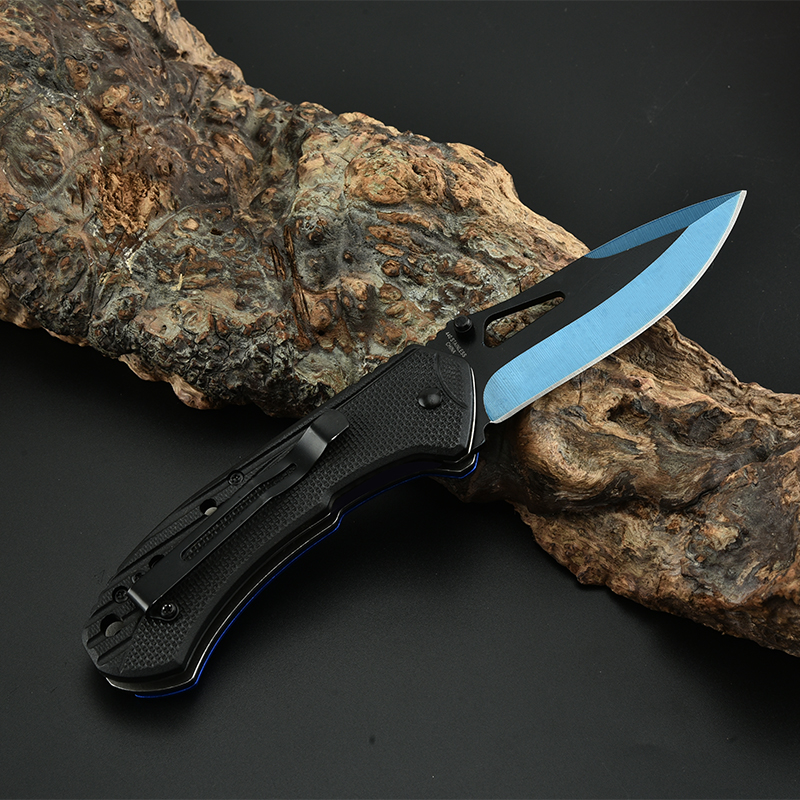
Blade steel is one of the most visible product specifications, but the best steel is not always the one with the highest price or most aggressive marketing claim. The right choice depends on use environment, expected maintenance, edge-retention needs, corrosion exposure, sharpening capability, target retail price, and brand positioning.
| Buyer Priority | Suitable Steel Direction | Why It Fits |
|---|---|---|
| Value-focused retail | Widely used stainless steel | Helps control cost and offers practical corrosion resistance |
| Outdoor and work use | D2 or durable tool-steel category | Offers good wear resistance and cutting durability |
| Humid or marine environments | Corrosion-resistant stainless steel | Better suited to moisture exposure and lower-maintenance use |
| Premium everyday carry | Higher-performance stainless or powder-metallurgy steel | Supports premium positioning, edge retention, and enthusiast appeal |
| Utility knife programs | Replaceable-blade or utility-focused steel systems | Prioritizes convenience and lower operating cost |
A responsible product description should explain what the selected steel is designed to do. Rather than claiming that one steel is universally "best," a brand should connect the material to the expected application.
For a compact automatic pocket knife used for everyday packages, cord, plastic straps, and light utility work, corrosion resistance and easy maintenance may matter more than maximum edge retention. For an outdoor-focused knife, edge durability, grip security, and blade profile may deserve more emphasis.
A knife is carried in the hand and in the pocket, not in a specification sheet. Handle material, contour, texture, weight, clip placement, and button location all determine whether a product feels practical in daily use.
Common handle options include:
- Aluminum: Lightweight, machinable, and suitable for colored anodized finishes.
- G10: Durable composite material with useful grip texture and broad styling flexibility.
- Micarta: Often selected for a warmer, more traditional hand feel and natural visual variation.
- Stainless steel: Strong and cost-effective, though potentially heavier.
- Titanium: Lightweight, corrosion resistant, and suited to premium product programs.
- Polymer: Useful for lightweight, budget-conscious, or high-volume utility applications.
The best handle should match the product's intended task. Smooth, decorative scales may work for a collector-focused knife, while wet-weather outdoor tools often benefit from more aggressive traction. For everyday carry, designers should consider pocket comfort, exposed corners, clip tension, and whether the button is protected from accidental contact.
Before selecting an automatic knife for personal use, retail distribution, or a private-label project, evaluate it through a practical checklist.
- Is the blade shape suitable for the intended cutting tasks?
- Does the handle provide secure grip in normal working conditions?
- Is the pocket clip positioned for the preferred carry orientation?
- Does the button operate consistently without excessive force?
- Is the blade centered and properly locked when open?
- Can the user maintain the knife with basic cleaning and lubrication?
- Are local ownership, carry, sale, import, and shipping rules understood?
- Can the supplier provide stable production capacity for repeat orders?
- Is the automatic mechanism tested during assembly and final inspection?
- Can blade steel, handle material, finish, and packaging be customized?
- Does the supplier support logo application, laser marking, custom molds, and product development?
- Are samples evaluated before production approval?
- Is there a documented quality-control plan for functional performance and cosmetic defects?
- Can the manufacturer support consistent specifications across multiple batches?
A strong sourcing decision should not be based on photos alone. Request samples, define acceptance criteria, test the mechanism repeatedly, inspect fit and finish, verify packaging, and confirm that the final production standard matches the approved sample.
Automatic knife rules vary significantly by jurisdiction. In the United States, federal rules and state-level rules can affect importation, interstate commerce, possession, open carry, concealed carry, blade-length limits, and customer eligibility. State rules may change, and local restrictions can also apply.
The federal framework commonly known as the Federal Switchblade Act was enacted in 1958 and primarily addresses certain interstate-commerce and importation activities. It does not replace the need to examine applicable state and local requirements. Organizations such as the American Knife & Tool Institute and Knife Rights provide state-by-state legal resources, but buyers and sellers should verify current requirements with qualified local legal counsel before purchasing, selling, shipping, importing, or carrying automatic knives.
For international buyers, compliance planning should begin before product development. Consider the destination market's product classification, import rules, shipping restrictions, packaging language, declaration requirements, and retailer policy. A manufacturer can support technical documents and product specifications, but the importer or brand owner should remain responsible for confirming market access and legal compliance.
For brands that need more than an off-the-shelf product, OEM and ODM development can create meaningful product differentiation. A capable manufacturer should help turn a product brief into a validated, production-ready knife.
At Yangjiang Holin Industrial Co., Ltd., our development process can support automatic knives, folding knives, pocket knives, utility knives, and outdoor tools through integrated design, development, manufacturing, and bulk-production services.
A typical customization path includes:
1. Define the commercial brief
Clarify target user, sales channel, price range, blade length, opening type, materials, packaging, and branding goals.
2. Select the mechanical platform
Choose a side-opening, OTF, manual folding, assisted-opening, or utility-knife structure that fits the intended market.
3. Develop the visual identity
Confirm blade profile, handle shape, texture, finishes, logo placement, pocket clip, colors, and packaging design.
4. Review functional samples
Evaluate deployment, lock engagement, centering, ergonomics, sharpness, cosmetic finish, and packaging before approval.
5. Confirm quality standards
Establish specifications for materials, visual defects, action consistency, assembly quality, and final inspection.
6. Scale into production
Move from approved sample to controlled mass production with consistent documentation and inspection checkpoints.
The value of OEM and ODM manufacturing is not limited to placing a logo on an existing knife. The strongest programs combine product design, mechanism selection, material planning, quality control, packaging, and scalable manufacturing into a product that serves a clearly defined customer.
The best automatic knife is not necessarily the fastest-opening or most aggressively styled model. It is the one that delivers reliable action, practical ergonomics, suitable materials, controlled production quality, and an appropriate fit for its legal and commercial market.
For consumers, that means choosing a knife based on real use conditions rather than appearance alone. For buyers and brands, it means working with a manufacturing partner that understands mechanism performance, scalable production, customization requirements, and the importance of product consistency.
If you are developing a private-label automatic knife, folding knife, utility knife, or outdoor-tool collection, Yangjiang Holin Industrial Co., Ltd. can help transform your idea into a market-ready product. Contact our team to discuss your design concept, material requirements, branding needs, sample development, and bulk-order plan.
In common usage, yes. "Automatic knife" and "switchblade" generally refer to knives that deploy their blades through an internal spring mechanism after the user activates a button, lever, or slide.
A side-opening automatic knife pivots open from the side of the handle like a folding knife. An OTF knife deploys and, in double-action designs, retracts through the front of the handle in a straight line.
Legality depends on where you live and how the knife is purchased, carried, shipped, imported, or sold. Rules can vary by country, state, city, blade length, and carry method. Always verify the current rules applicable to your location and intended use.
There is no single best steel for every user. A corrosion-resistant stainless steel may suit humid environments and lower-maintenance everyday carry. D2 and other wear-resistant steels can suit work and outdoor use. Higher-end steels may support premium positioning and enhanced edge retention.
Check blade centering, opening consistency, lock engagement, button function, handle alignment, sharpness, cosmetic finish, pocket clip tension, logo quality, packaging, and repeated-cycle performance. The approved sample should become the reference standard for production.
Yes. Depending on the manufacturing program, customization can include blade shape, steel, handle material, color, surface finish, logo, pocket clip, packaging, accessories, and product documentation. More extensive ODM projects can also include original structural and visual design development.
Provide your target market, product category, preferred mechanism, blade length, material preferences, handle design direction, logo requirements, packaging needs, estimated order quantity, target price range, and desired delivery timeline. Reference images or sketches can accelerate early product discussions.
1. [Blade HQ — Automatic Knives / Switchblades Product Category]
2. [Blade HQ — The Best Automatic Switchblade Knives of 2025]
3. [Benchmade — Manual, Auto, or Assisted: Key Differences in Knife Opening]
4. [American Knife & Tool Institute — State Laws Regarding Automatic Knives]
5. [Knife Rights — Federal Switchblade Act]
6. [Boker USA — Automatic Knives]
7. [Blade Reviews — Boker Plus Kalashnikov AK-74 Automatic Knife Review]


