


Views: 217 Author: Holin Knife Publish Time: 2026-09-12 Origin: Site


Content Menu
● The Core Difference Between a Factory and a Trading Company
● China Folding Knife Manufacturer vs Trading Company
● When a Trading Company May Be the Better Choice
>> You Need a Mixed Product Container
>> You Are Testing a Low-Risk Market Entry
>> You Need Local Purchasing Support
● Why Importers Choose a Direct Folding Knife Manufacturer
>> Better Control Over Product Specifications
>> Faster Technical Feedback During Development
>> More Transparent Quality Management
>> Stronger Long-Term Cost Control
● OEM and ODM: Choose the Right Development Path
● The Hidden Risk: Product Safety and Market Compliance
● A Practical Supplier Evaluation Framework
>> Step 1: Define the Product Brief
>> Step 2: Evaluate Technical Capability
>> Step 3: Compare Samples, Not Just Catalog Images
>> Step 4: Confirm Ownership and Change Control
>> Step 5: Build a Repeat-Order System
● Which Option Is Better for Your Business?
● Partner With a Direct Knife Manufacturer
● FAQ
>> 1. Is it cheaper to buy folding knives directly from a Chinese factory?
>> 2. Can a folding knife manufacturer help create a new product design?
>> 3. What is the difference between OEM and ODM folding knives?
>> 4. What should I check before importing pocket knives from China?
>> 5. Can I order a custom logo on folding knives?
>> 6. How can I reduce quality problems in a bulk knife order?
>> 7. Are all folding knives allowed to be imported and sold worldwide?
For importers sourcing folding knives, pocket knives, utility knives, and outdoor tools, choosing between a China folding knife manufacturer and a trading company affects far more than the quoted unit price. It influences product originality, control over specifications, sample speed, quality consistency, intellectual-property protection, communication accuracy, and the long-term scalability of your knife brand.
A trading company can be a useful sourcing partner in the right situation. However, for buyers seeking customized folding knives, private-label pocket knives, OEM utility knives, or long-term outdoor tool programs, working directly with a capable manufacturer is often the stronger route. The best choice depends on your product complexity, order volume, internal sourcing resources, target market, and need for technical control.
Yangjiang Holin Industrial Co., Ltd. is positioned as a direct knife and outdoor-tool manufacturer with its own product development team, production facilities, and one-stop OEM/ODM capabilities. For importers that need product design, engineering support, custom branding, and stable batch production, this factory-based model can reduce the number of handoffs between idea and finished shipment.
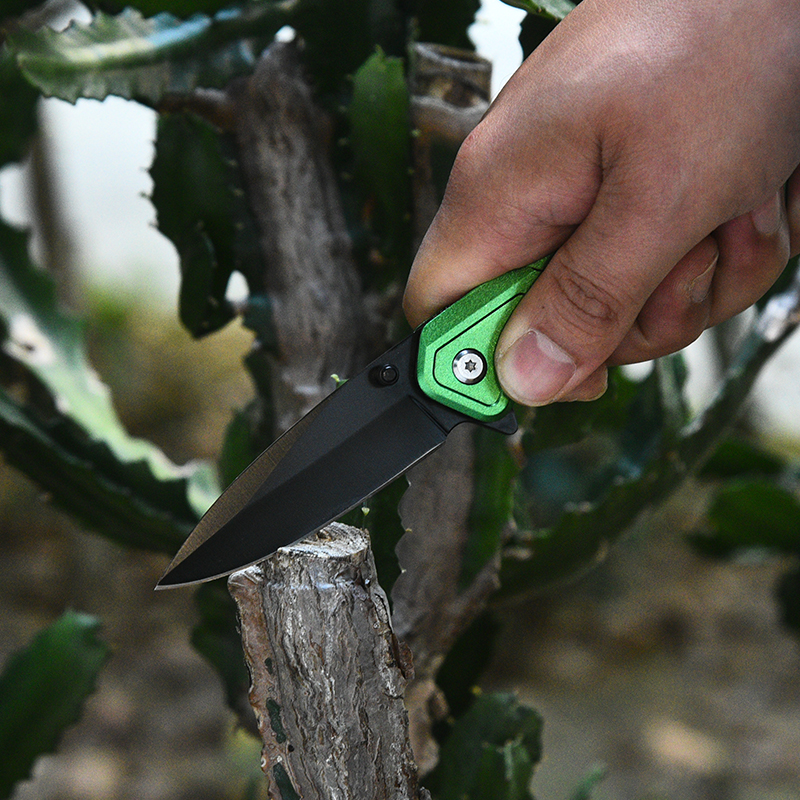
A folding knife manufacturer owns or directly manages the processes required to turn raw materials into finished products. Depending on the supplier's capabilities, this may include product design, mold development, blade processing, heat treatment coordination, handle production, assembly, sharpening, inspection, packaging, and export support.
A trading company generally acts as an intermediary. It sources products from one or more factories, combines product categories, manages communications, and sells the finished goods to overseas buyers. Some trading companies maintain strong supplier networks and can provide genuine value. Others add an extra layer between the buyer and the production source.
The key issue is not whether one model is always "good" and the other is always "bad." The question is: which supplier model gives you the right level of control for your importing project?
Yangjiang is one of China's best-known hardware and knife-production clusters. Its concentrated supply chain supports multiple knife categories, including folding knives, everyday-carry pocket knives, multi-tools, kitchen knives, utility knives, camping tools, and outdoor accessories. The cluster benefits buyers because specialized materials, components, tooling, assembly capabilities, and packaging resources are available within the same regional ecosystem.
The following comparison shows the practical differences importers should evaluate before selecting a supplier.
| Sourcing Factor | China Folding Knife Manufacturer | Trading Company |
|---|---|---|
| Product knowledge | Usually has deeper knowledge of blade geometry, handle construction, lock systems, materials, and assembly | Knowledge can vary widely and may depend on information provided by factories |
| Customization | Better suited to OEM and ODM programs, including design changes, tooling, logo placement, packaging, and component selection | Often limited to changes accepted by the underlying factory |
| Pricing transparency | Typically fewer intermediary markups when buying direct | May include service margins and supplier-management fees |
| Communication speed | Technical questions can reach production, engineering, and quality teams faster | Questions may pass through multiple people before reaching the factory |
| Quality control | More direct access to production-stage inspection and corrective action | May rely on supplier reports, third-party inspection, or occasional factory visits |
| Minimum order quantity | Can be high for fully custom designs, molds, and special components | May offer lower quantities by combining existing factory stock or catalog products |
| Product range | May focus on specific categories and production strengths | Can source a broader mixed catalog from several factories |
| Supply-chain convenience | Best for focused, repeatable knife programs | Useful when purchasing knives plus unrelated categories from multiple regions |
| Design confidentiality | Direct agreements and controlled development processes can reduce unnecessary information sharing | Product files may circulate between buyer, trader, and one or more factories |
| Problem resolution | Factory teams can investigate root causes on the production line | Resolution can take longer if the trader must negotiate with another supplier |
For a buyer importing a standard catalog item in a small quantity, a trading company may provide a convenient shortcut. For a buyer building a branded folding knife line, launching exclusive models, or preparing a serious retail program, direct factory cooperation usually provides greater control.
Importers should not dismiss trading companies automatically. A competent trader can be valuable when its services solve a real operational problem.
A retailer may want folding knives, kitchen shears, camping accessories, flashlights, tool bags, and other outdoor goods in one consolidated order. A trading company can coordinate suppliers and simplify the purchasing process.
This is especially useful when:
- Your order contains several unrelated product categories.
- You do not have time to communicate with multiple factories.
- Your team needs consolidated payment and shipment coordination.
- You are testing small quantities across several product lines.
- You require local sourcing assistance in multiple Chinese manufacturing regions.
If you are validating demand before investing in custom development, a trader may offer ready-made pocket knife models with lower minimum order quantities. This can help a new brand test price points, packaging styles, and customer response before committing to tooling or custom components.
However, buyers should confirm whether the product is truly available for private labeling, whether another customer already uses the same design, and whether the trader can provide reliable documentation about materials and production origin.
A trader with strong quality-control staff, proven export experience, and transparent supplier disclosure can act as an outsourced sourcing office. The value comes from expertise, not simply from reselling a factory catalog.
Before appointing a trading company, ask direct questions:
1. Which factory will manufacture the product?
2. Can I visit the factory or conduct a remote audit?
3. Will the factory name appear on production and quality documents?
4. Who controls tooling and design files?
5. Who approves changes to blade steel, handle material, lock construction, or packaging?
6. Can I communicate with the technical team when needed?
7. How are inspection failures, rework, and claims handled?
If the trader cannot answer these questions clearly, the buyer may be taking unnecessary supply-chain risk.
A direct manufacturer is generally more suitable for buyers who consider the knife itself to be a strategic product rather than a simple commodity.
A folding knife is a functional item with multiple technical variables. A small design change can affect safety, usability, cost, appearance, and buyer satisfaction.
For example, a buyer may need to specify:
- Blade steel grade and thickness
- Blade finish, such as stonewash, satin, black coating, or polished finish
- Blade shape and grind
- Lock type, including liner lock, frame lock, lockback, button lock, or slip joint
- Opening mechanism and opening force
- Handle material, texture, color, and ergonomics
- Pivot construction and fasteners
- Pocket clip position and retention
- Logo engraving, laser marking, or printing
- Retail packaging, warning labels, inserts, and barcodes
- Carton marks, shipping cartons, and drop-test requirements
When these details are handled directly between an importer and a factory's development or production team, there is less risk of specification loss during communication.
A manufacturer with in-house research and development support can also assess whether a requested design is practical for production. This is important because a concept drawing may look attractive but still create machining difficulties, weak lock engagement, uncomfortable handling, or unstable assembly tolerances.
The real value of a manufacturer is often most visible before mass production begins.
A factory-based product-development team can evaluate:
- Whether the blade profile can be stamped, laser-cut, or machined efficiently
- Whether handle parts require new molds or revised tooling
- Whether the lock mechanism has sufficient engagement and release consistency
- Whether the selected material matches the intended retail price
- Whether the packaging can protect the product during international shipping
- Whether the requested finish is repeatable across large production batches
This feedback helps importers avoid an expensive mistake: approving a sample that looks acceptable but cannot be reproduced consistently at scale.
Quality is not only the final inspection result. It begins with material selection and continues through each production stage.
A professional folding knife manufacturer should be able to discuss the control points that matter for the product category:
- Incoming steel and component checks
- Blade profile consistency
- Edge condition and sharpening quality
- Blade centering when folded
- Opening and closing smoothness
- Lock engagement and lock-release function
- Fastener torque and pivot adjustment
- Handle fit, gaps, burrs, and surface defects
- Logo position and packaging accuracy
- Final visual inspection and random-function testing
For utility knives, the control points may include blade stability, slider function, blade-change safety, handle assembly, spare-blade count, and warning labels.
Importers should request a written quality checklist before placing the purchase order. A clear inspection standard prevents vague arguments later. Instead of saying, "The folding action feels too loose," the buyer can define an agreed test method, acceptance range, sample reference, and inspection quantity.
A direct factory quote is not automatically the lowest quote. But it is often easier to understand.
When working with a manufacturer, importers can discuss the cost drivers openly:
- Steel grade and blade thickness
- Handle material and machining complexity
- Hardware and lock design
- Surface treatment
- Tooling investment
- Assembly labor
- Packaging structure
- Order quantity
- Inspection level
- Shipping-carton configuration
This visibility matters because the lowest initial quote can become expensive if the supplier changes materials, reduces quality checks, misses delivery windows, or cannot support repeat orders.
The most effective buyers compare total landed risk, not only unit price. A reliable supplier can reduce the financial impact of returns, safety complaints, emergency air shipments, customer dissatisfaction, and brand damage.
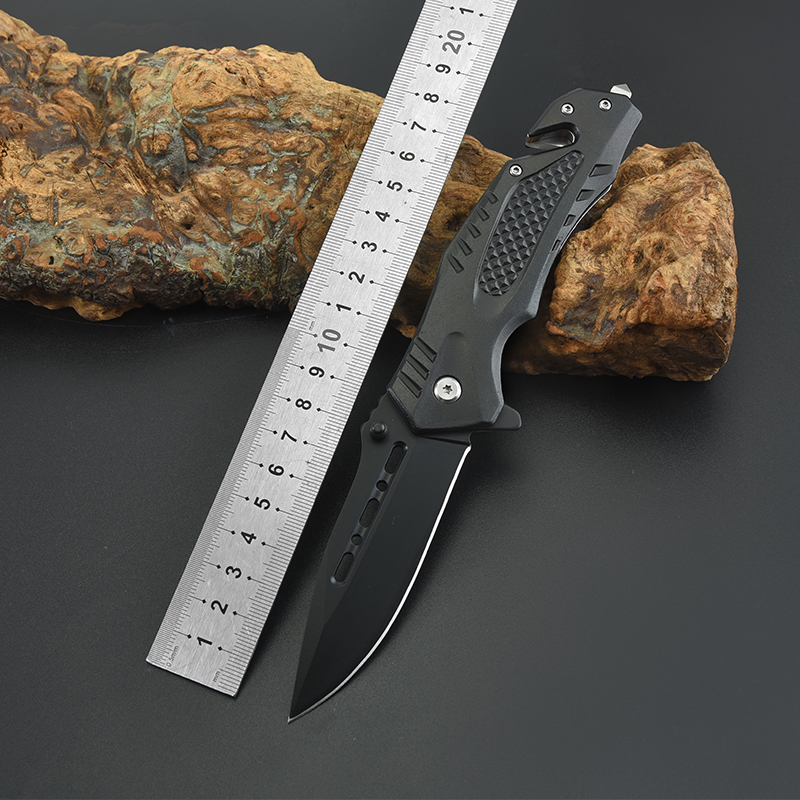
Importers often use "OEM" and "ODM" interchangeably, but they represent different sourcing paths.
| Development Model | What It Means | Best For |
|---|---|---|
| OEM | The factory produces a knife according to the buyer's specifications, design, materials, branding, and packaging requirements | Brands with an existing product concept, technical drawings, or distinctive market position |
| ODM | The factory provides an existing product design that the buyer can adapt with branding, colors, finishes, packaging, or selected modifications | Buyers seeking a faster launch with lower development risk |
| Private label | An existing product is sold under the buyer's brand, often with limited product changes | Retailers and distributors testing a category or expanding a catalog quickly |
An ODM folding knife can be an efficient starting point. The importer may select an existing platform, add a logo, choose handle colors, customize packaging, and order a production run without paying for a fully new design.
An OEM project makes more sense when differentiation is central to your brand. For example, an outdoor retailer may require a proprietary handle shape, a special blade profile, unique packaging, and a defined quality standard for a premium pocket knife collection.
At Yangjiang Holin Industrial Co., Ltd., importers can evaluate both paths: adapt a suitable existing product platform or develop a custom knife and outdoor-tool program from design through batch production. The right choice should be based on market strategy, target price, expected annual volume, and the level of exclusivity required.
Knives are practical tools, but they can also create safety and regulatory exposure. Importers must understand their own responsibilities in the destination market.
In the European Union, the General Product Safety Regulation applies to consumer products, including products sold online, and requires stronger risk assessment and accountability across the supply chain. An EU-based responsible economic operator must be designated for covered products.
In the United States, product recalls demonstrate why functional testing matters. A recent recall involving button-lock folding knives identified a locking mechanism failure that could create a laceration hazard.
For importers, this means supplier selection should include more than catalog review. Ask the manufacturer or trading company how it manages:
- Lock-function testing
- Sharp-edge and burr control
- Product traceability by batch or production date
- Warning labels and user instructions
- Packaging protection
- Product-change approval
- Complaint investigation
- Corrective actions after defects are found
Legal restrictions can also vary by destination country, state, city, sales channel, and knife type. Automatic-opening knives, butterfly knives, gravity knives, concealed-blade products, and certain tactical designs may face specific restrictions. Online marketplaces can impose additional product rules beyond national law.
A good supplier supports documentation and production consistency. However, the importer should verify local import rules, product-safety obligations, labeling requirements, customs classifications, and sales-channel policies before ordering.
Whether you work with a China folding knife manufacturer or a trading company, use a structured decision process.
Provide a clear request for quotation that includes:
- Product category and intended use
- Target market and sales channel
- Reference images or technical drawings
- Blade and handle requirements
- Estimated order quantity and reorder forecast
- Logo and packaging requirements
- Target quality level and price range
- Sample deadline and delivery target
- Required testing and inspection points
The clearer the brief, the more comparable the supplier quotations will be.
Ask for evidence of relevant experience rather than relying on generic claims.
Useful evidence includes:
- Product photos and videos of similar folding knives
- Sample products
- Drawings or specification sheets
- Material options and finish samples
- Production process explanations
- Quality-control checklists
- Packaging examples
- Documentation for prior export markets, where appropriate
A supplier that cannot explain its own product structure may not be the actual production source.
A sample should be evaluated as a functional product, not as a marketing photo.
Test the following:
1. Blade centering in the closed position.
2. Opening and closing action.
3. Lock engagement, release, and repeatability.
4. Sharpness and edge consistency.
5. Handle comfort and grip.
6. Clip strength and screw stability, if applicable.
7. Surface finish and logo quality.
8. Packaging fit and transit protection.
For a custom product, approve a golden sample before mass production. This physical sample becomes the agreed reference for quality, color, assembly, packaging, and appearance.
For custom folding knives, document who owns:
- Product drawings
- CAD files
- Tooling
- Molds
- Logo artwork
- Packaging files
- Design improvements
- Remaining inventory and spare components
Also define how changes are approved. The factory should not substitute steel, alter a handle material, modify a lock component, or change packaging without written authorization from the buyer.
The first order is only the beginning. A reliable import program needs repeatability.
Create a simple supplier file containing:
- Approved specifications
- Golden-sample photos
- Inspection criteria
- Packaging requirements
- Artwork files
- Production lead time
- Shipping marks
- Defect-history records
- Approved change requests
This process helps prevent "sample quality, mass-production difference," one of the most common frustrations in international sourcing.
Choose a China folding knife manufacturer when you need:
- A custom folding knife, pocket knife, utility knife, multi-tool, or outdoor-tool project
- Direct access to product development and production teams
- Greater control over materials, functions, appearance, and packaging
- Scalable batch production
- Faster technical troubleshooting
- Transparent quality discussions
- Long-term OEM or ODM cooperation
- A supplier relationship built around your brand rather than a one-time transaction
Choose a trading company when you need:
- A mixed-category order from several factories
- Small-volume test purchases
- Ready-made products with limited customization
- Consolidated sourcing and logistics support
- A local purchasing partner with proven technical and quality-management capability
For many serious importers, the best approach is not simply "factory versus trading company." It is choosing the partner that can provide the right combination of product expertise, transparent communication, reliable quality systems, and commercial accountability.
If your goal is to build a differentiated folding knife, pocket knife, utility knife, or outdoor-tool range, direct collaboration can give you better control from concept to shipment.
Yangjiang Holin Industrial Co., Ltd. supports global buyers with product development, manufacturing, OEM/ODM customization, private-label options, and scalable production for knife and outdoor-tool programs. Share your product concept, reference images, target market, expected order volume, logo requirements, and packaging needs to begin a focused evaluation.
Request a product consultation and sample plan to turn your knife concept into a market-ready product.
It can be more cost-effective because there may be fewer intermediary markups. However, the lowest factory quote is not always the best commercial result. Importers should compare product quality, tooling costs, inspection standards, packaging, shipping terms, lead time, and expected reorder reliability.
Yes. A capable manufacturer with an in-house development team can assist with product feasibility, material selection, blade and handle structure, tooling, sampling, branding, packaging, and batch production. Buyers should confirm the supplier's actual development capabilities before starting a custom project.
OEM folding knives are produced according to the buyer's defined specifications and are usually suitable for original or exclusive designs. ODM folding knives start from an existing factory design, which can be adapted with branding, finishes, colors, packaging, and selected modifications.
Check the supplier's production capability, sample quality, lock performance, blade alignment, materials, packaging, inspection process, order lead time, product traceability, destination-market restrictions, and applicable safety and labeling requirements.
In most cases, yes. Common branding options include laser engraving, screen printing, embossed handle logos, metal badges, customized packaging, hangtags, instruction inserts, and carton marks. The available option depends on the handle material, product structure, artwork, and order volume.
Approve a golden sample, define written specifications, identify measurable inspection points, require approval for material or design changes, inspect pre-production samples, conduct in-process checks when appropriate, and arrange final inspection before shipment.
No. Rules vary by country, region, state, city, product type, and sales channel. Importers should check local laws and marketplace policies before ordering, particularly for automatic-opening, butterfly, gravity, concealed, or tactical-style knives.
1. [Yangjiang Knife Manufacturing Industry Overview]
2. [OEM/ODM Knife Manufacturing in Yangjiang Buyer Guide]
3. [ISO 9001:2015 Quality Management Systems Requirements]
4. [ISO Quality Management Principles]
5. [European Commission: General Product Safety Regulation]
6. [European Commission: Trade Regime and General Product Safety]
7. [U.S. Consumer Product Safety Commission: Knives Recalls]


