


Views: 277 Author: Holin Knife Publish Time: 2026-08-23 Origin: Site


Content Menu
● Why Damascus Blades Need Different Care
>> Factors That Raise Corrosion Risk
● The Daily Damascus Knife Care Routine
>> Step 1: Clean the Blade Promptly
>> Step 2: Dry Every Surface Completely
>> Step 3: Apply a Thin Protective Layer
● How to Remove Light Rust From Damascus Steel
>> A Safe Spot-Cleaning Process
>> When Re-Etching May Be Necessary
● Proper Storage for Damascus Folding Knives
>> Best Practices for Long-Term Storage
>> Storage Checklist for Retailers and Distributors
● Maintaining the Edge Without Damaging the Pattern
>> Edge-Maintenance Guidelines
● Choosing the Right Damascus Knife for Its Intended Use
● Work With a Custom Knife Manufacturer
● FAQ
>> 1. Does Damascus steel rust easily?
>> 2. What oil should I use on a Damascus knife?
>> 3. Can I wash a Damascus knife in the dishwasher?
>> 4. How often should I oil a Damascus folding knife?
>> 5. Can rust be removed from a Damascus blade?
>> 6. Can I store a Damascus knife in a leather sheath?
>> 7. Does sharpening remove the Damascus pattern?
A Damascus folding knife can be a daily-use tool, a premium retail product, or a long-term collectible—but its patterned blade needs purposeful care. The most effective Damascus knife maintenance routine is simple: clean promptly, dry completely, apply a light protective coating, and store in a low-humidity environment.
For brands, distributors, and private-label buyers, clear care guidance also protects product appearance, reduces avoidable corrosion claims, and helps customers enjoy the distinctive pattern-welded finish for longer. At Yangjiang Holin Industrial Co., Ltd., our product-development and manufacturing teams consider maintainability alongside blade design, lock selection, handle materials, packaging, and OEM/ODM requirements.

"Damascus" is commonly used for blades with a visible layered or patterned surface. Depending on the steel construction and finishing process, the pattern may be created through forging, layering, etching, or modern stainless pattern-welded steel production.
The visual contrast often comes from steels or layers that react differently during the finishing process. That contrast is what makes the blade distinctive—but it may also mean that certain areas of the surface require more attention than a uniform stainless-steel blade.
Not all Damascus blades have the same corrosion resistance. A blade made with carbon-rich materials generally demands more frequent protection than a stainless Damascus blade. Even stainless options, however, can show surface staining or corrosion when exposed to moisture, salt, acids, residue, or improper storage for extended periods.
For end users, the key principle is straightforward:
> A clean, dry, lightly protected blade is far easier to maintain than a blade restored after rust has formed.
A Damascus pocket knife is more likely to develop corrosion when it is exposed to:
- Water, rain, sweat, or high humidity
- Fingerprints and skin oils left on the blade
- Acidic food residue, including fruit juice or meat residue
- Saltwater or coastal air
- Damp leather sheaths or wet fabric pouches
- Long-term storage without a protective oil or wax layer
- Aggressive cleaners, abrasive pads, or dishwasher detergents
A folding knife also has internal areas that are easy to overlook. Moisture can remain around the pivot, liner, backspacer, lock interface, and handle scales even after the visible blade appears dry.
The best Damascus knife care routine takes only a few minutes. It is especially important after outdoor use, food contact, wet-weather carry, or handling in humid conditions.
After use, remove visible dirt, residue, moisture, and fingerprints as soon as practical. Use a soft microfiber cloth for light cleaning. If a more thorough wash is required, use warm water with a small amount of mild dish soap.
For folding knives, avoid soaking the entire knife. Instead, clean the blade carefully and keep water from entering the pivot and internal mechanism whenever possible.
Avoid these cleaning methods:
- Dishwasher cleaning
- Steel wool or harsh scouring pads
- Strong acidic or alkaline cleaners
- Chloride-containing cleaning products
- Long soaking in water
- High-pressure water directed into the pivot
Abrasive cleaning can scratch the blade surface, weaken the clarity of the etched pattern, and remove protective finishes. Harsh chemicals may also affect metal, coatings, handle materials, or lubricants.
Drying is not optional. Use a clean, absorbent cloth to wipe both sides of the blade, the spine, the edge area, and the blade tang. Open and close a folding knife carefully during drying so you can check for trapped water around the pivot area.
If the knife was exposed to heavy rain, saltwater, or significant moisture, allow it to air-dry in a safe, open position before applying protection or returning it to storage.
Do not put a damp knife into a pocket, pouch, box, or sheath. A small amount of trapped moisture can cause corrosion to develop where it is least visible.
Once the blade is fully dry, apply a very light layer of suitable oil or wax. The goal is not to leave the blade greasy. The goal is to create a thin barrier that limits contact between the blade surface and moisture.
For food-contact knives, use a food-safe mineral oil. For EDC, tactical, outdoor, or collectible knives, manufacturers may recommend a compatible blade oil, corrosion inhibitor, or protective wax based on the intended use and steel type.
Apply a few drops to a soft cloth, wipe the blade evenly, then remove excess product with another clean cloth.
| Use scenario | Recommended protection | Care frequency |
|---|---|---|
| Food-prep Damascus knife | Food-safe mineral oil | After washing and before storage |
| Everyday-carry folding knife | Light knife oil or corrosion inhibitor | Weekly or after moisture exposure |
| Outdoor or camping knife | Protective oil plus pivot lubrication as needed | After each field trip |
| Display or collection knife | Museum-grade wax or suitable protective wax | Every few months, or as needed |
| Humid or coastal storage | Oil or wax plus humidity control | Inspect every 2–4 weeks |
Rust should be addressed early. Small orange spots are often easier to manage than deep corrosion or pitting. Acting quickly can help preserve both the surface pattern and the blade's service life.
1. Inspect the blade under good lighting. Confirm whether the mark is residue, staining, surface rust, or deeper pitting.
2. Clean the area gently. Use a soft cloth, mild cleaner, or a cotton swab for small spots.
3. Use minimal abrasion. If needed, use a non-aggressive rust eraser or manufacturer-approved product with gentle pressure.
4. Wipe away all residue. Do not leave cleaning agents on the blade.
5. Dry thoroughly. Pay close attention to the etched pattern and pivot area.
6. Reapply protective oil or wax. This step reduces the chance of rapid recurrence.
Do not aggressively sand or polish a Damascus blade without understanding the finish. Heavy abrasion can blur the contrast, scratch the pattern, or remove material unevenly. If corrosion is deep, widespread, or visibly pitted, professional service is usually the safer option.
Over time, heavy use, polishing, corrosion removal, or repeated sharpening can reduce the definition of an etched Damascus pattern. Re-etching can sometimes restore visual contrast, but it is not a routine maintenance step.
The process can remove material and should be completed by an experienced specialist. It may not be appropriate for every blade, especially if the knife has deep corrosion, structural damage, thin geometry, discontinued components, or a finish that cannot be reliably reproduced.
For OEM knife programs, product managers should define the expected finish lifecycle early. This includes deciding whether the product is positioned as a working tool, a premium gift knife, an outdoor collectible, or a display-focused item.
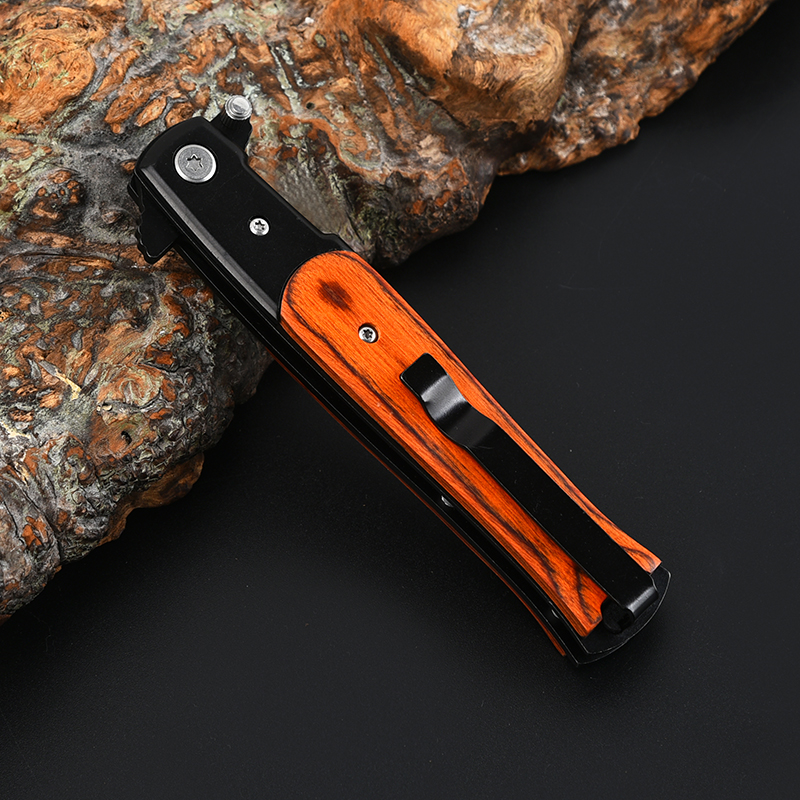
Storage conditions matter as much as cleaning. A clean blade can still corrode if it sits for months in a damp drawer, sealed wet pouch, or humid warehouse.
- Store the knife in a dry, ventilated location.
- Keep it away from bathrooms, basements, damp garages, and direct coastal airflow.
- Wipe fingerprints from the blade before storage.
- Apply a thin oil or wax layer before storing for an extended period.
- Use silica-gel desiccant packs in storage boxes or display cases where appropriate.
- Inspect stored knives periodically rather than leaving them untouched for years.
- Keep knives separated so blades do not contact other metal tools.
Leather can be an attractive carrying material, but it is not always ideal for long-term storage. Leather may hold moisture and may contain tanning chemicals that can contribute to staining or corrosion over time. For extended storage, a dry protective sleeve, blade guard, ventilated case, or carefully managed storage box is often a better choice.
For knife brands, importers, and wholesalers, care instructions should be supported by practical packaging decisions:
- Use moisture-conscious packaging for sea freight and long warehouse cycles.
- Include a blade-care insert for Damascus or high-carbon blade products.
- Consider desiccant packs for humid shipping routes where appropriate.
- Keep knives dry before final packaging.
- Avoid packaging materials that can retain moisture against the blade.
- Specify protective oil or wax requirements in quality-control procedures.
- Test packaging under realistic transport and storage conditions.
This is particularly relevant for global OEM/ODM projects. A knife can leave the factory in excellent condition, but moisture exposure during shipping, storage, or retail display can undermine the customer experience if packaging and care guidance are not planned together.
Damascus blades should be sharpened according to the blade geometry, edge angle, steel composition, and intended application—not only according to the visual pattern.
For routine edge maintenance, use a quality sharpening system that gives you consistent angle control. Ceramic rods, guided sharpeners, whetstones, and fine abrasive systems can all be effective when used correctly.
- Maintain the edge before it becomes severely dull.
- Use light pressure and consistent angles.
- Keep the sharpening process focused on the cutting bevel.
- Avoid unnecessary polishing of the blade flats.
- Clean away sharpening residue after finishing.
- Dry and protect the blade before returning it to use or storage.
A working outdoor knife may benefit from a durable, easy-to-maintain edge geometry. A premium gentleman's pocket knife may prioritize refined cutting performance and presentation. A utility knife may require efficient re-sharpening in high-volume use. These design decisions should be aligned with the end user before production begins.
Good maintenance begins before the knife reaches the customer. Buyers should choose blade materials, finishes, handles, locking systems, and packaging based on the actual use environment.
| Buyer requirement | Product-development consideration |
|---|---|
| Everyday carry | Compact profile, corrosion-conscious blade selection, reliable lock, easy-clean construction |
| Outdoor use | Durable handle, secure grip, field-maintainable edge, weather-conscious materials |
| Gift or collector market | High-contrast Damascus pattern, refined finish, premium packaging, clear care card |
| Kitchen or food contact | Food-safe maintenance guidance, corrosion resistance, easy-clean handle construction |
| Promotional or private label | Logo placement, custom packaging, target price, compliance needs, repeatable production quality |
| Wholesale program | Stable specifications, inspection standards, consistent lead times, scalable batch production |
For a custom knife project, the strongest result comes from balancing visual appeal with real-world care requirements. A dramatic Damascus pattern can create strong shelf appeal, but the final product should also be easy for customers to clean, store, carry, and maintain.
Damascus knife care is part of the overall product experience. From blade material and finish selection to moisture-resistant packaging and user instructions, every detail affects how the knife performs after delivery.
Yangjiang Holin Industrial Co., Ltd. supports global buyers with one-stop OEM/ODM knife development and production services for folding knives, pocket knives, utility knives, outdoor tools, and customized knife programs. Our in-house development team and scalable manufacturing capabilities can support product design, sample development, bulk production, branding, packaging, and quality requirements tailored to your market.
Contact our team to discuss your custom Damascus folding knife, pocket knife, utility knife, or outdoor tool project—and build a product that is designed for both visual impact and dependable long-term use.
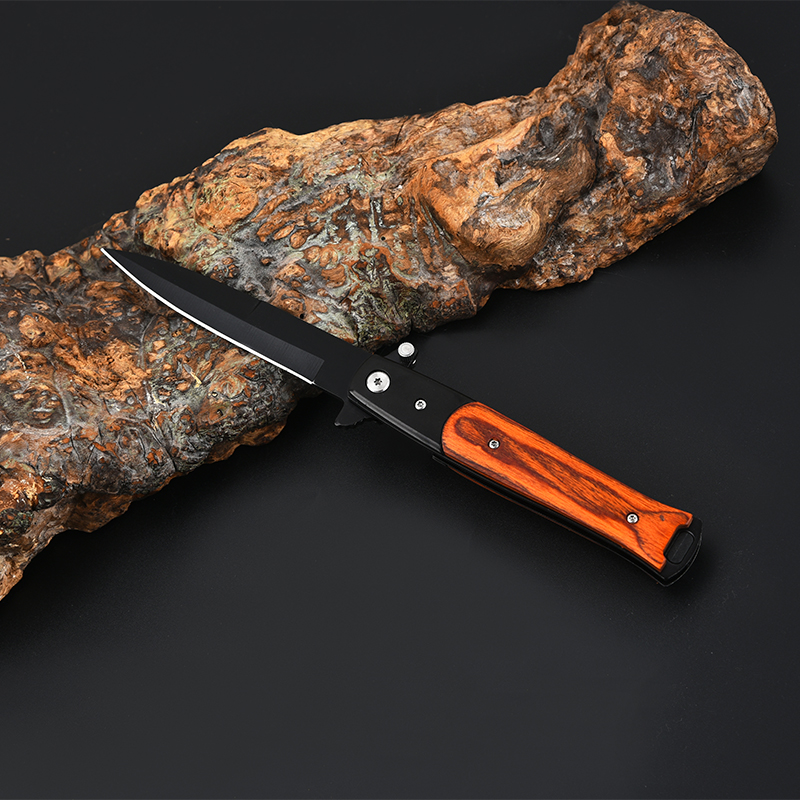
It depends on the steel composition, finishing process, use conditions, and maintenance routine. Carbon-rich Damascus generally has a higher corrosion risk than standard stainless steel, while stainless Damascus still benefits from cleaning, drying, and light protection.
For knives that may contact food, use food-safe mineral oil. For EDC, outdoor, or collection knives, use a suitable knife oil, corrosion inhibitor, or protective wax recommended for the blade and its intended use.
No. Dishwasher heat, detergent, moisture exposure, and contact with other utensils can damage the edge, pattern, handle, pivot, and protective finish. Hand-clean the knife and dry it immediately.
Oil it after exposure to moisture, after cleaning, and before long-term storage. In a humid environment or during frequent outdoor carry, inspect and protect it more often.
Light surface rust can often be removed with careful spot cleaning, followed by complete drying and oiling. Deep corrosion or pitting may need professional assessment to avoid damaging the blade pattern or removing excessive material.
A leather sheath is suitable for carry when kept dry, but it is usually not ideal for long-term storage. Leather can retain moisture and may contribute to corrosion. Store the knife in a dry, controlled environment instead.
Normal sharpening should primarily affect the cutting bevel, not the blade flats where the pattern is most visible. Excessive polishing, sanding, or aggressive resurfacing can reduce pattern contrast.
1. Chris Reeve Knives. "[How to Care for Damascus Blades]." Guidance on moisture control, rust spot treatment, protective oil, edge maintenance, and cautious re-etching.
2. Made In Cookware. "[Does Damascus Steel Rust?]." Guidance on hand cleaning, thorough drying, avoiding abrasives and dishwashers, protective mineral oil, and storage considerations.
3. Damasteel®. "[Our Steel]." Information on modern stainless Damascus steel, corrosion resistance, toughness, strength, and edge retention.
4. Tharwa Valley Forge. "[Care and Maintenance of Damascus Steel]." Guidance on moisture avoidance, mild cleaning, food-safe oil, dry storage, and avoiding prolonged leather contact.
5. Georgian Blades. "[Damascus Knife Care]." Consumer maintenance guidance on mild washing, immediate drying, mineral oil, corrosion prevention, and periodic inspection.
6. Damas Knives. "[Damascus Folding Knife: 3 Maintenance Tips]." Guidance on cleaning, dry storage, early rust treatment, and appropriate use.


