


Views: 255 Author: Holin Knife Publish Time: 2026-10-13 Origin: Site


Content Menu
● EDC Knife vs Utility Knife: The Essential Differences
>> What EDC Knife Customers Value
>> Common Utility Knife Designs
>> What Utility Knife Customers Value
● Blade Geometry and Materials: Compare Performance, Not Labels
>> EDC Knife Steel: Balancing Competing Properties
>> Utility Knife Blades: Match the Blade to the Material
● Safety and Control: Neither Category Is Automatically Safer
>> Practical Safety Requirements
>> Design Features Need Real-Task Evaluation
● Customer Segments: Who Needs Which Knife?
>> Everyday Users and Outdoor-Oriented Retail Customers
>> Warehouse, Retail, and Packaging Teams
>> Tradespeople, Installers, and Maintenance Users
● A Practical Buyer Scorecard for Knife Selection
● Total Cost of Ownership: Look Beyond the Purchase Price
● OEM/ODM Knife Development: Turning Customer Needs Into Specifications
>> Specifications for an EDC Knife Project
>> Specifications for a Utility Knife Project
● Prototype Validation: Test the Job Before Approving Production
● Build a Knife Range Around Your Customers
>> Is an EDC Knife the Same as a Pocket Knife?
>> Is a Utility Knife Better for Cutting Cardboard?
>> Can a Folding Utility Knife Replace an EDC Knife?
>> Which Knife Is Easier to Maintain?
>> Can Both Knife Categories Be Customized for Private Labels?
Choosing an EDC knife vs utility knife starts with one question: what does the customer need to cut, and how often? An everyday carry knife supports varied daily tasks, while a utility knife typically prioritizes replaceable blades and repeatable cutting work. However, these categories overlap. A compact folding utility knife can also become someone's everyday carry tool.
For retailers, distributors, and private-label brands, understanding this distinction helps build a product range around real customer needs rather than appearance alone. For manufacturers, it translates those needs into practical decisions about blade geometry, materials, mechanisms, and maintenance.
At Yangjiang Holin Industrial Co., Ltd., our in-house development team and production factory support folding knives, pocket knives, utility knives, and outdoor tools through OEM/ODM services. Our product-development perspective is straightforward: task-fit should lead the specification, with styling and branding supporting—not replacing—functional performance.

EDC describes a carrying habit, not one standardized knife construction. In this comparison, "EDC knife" means a conventional reusable-blade pocket knife. "Utility knife" means a cutting tool designed primarily around replaceable blades.
| Comparison factor | Conventional EDC knife | Replaceable-blade utility knife |
|---|---|---|
| Main purpose | Varied everyday cutting | Repetitive, material-specific cutting |
| Typical blade | Reusable blade maintained by sharpening | Replaceable trapezoid, segmented, or proprietary blade |
| Common tasks | Packages, cord, and light outdoor cutting | Cartons, film, flooring, and sheet materials |
| Maintenance | Cleaning, sharpening, and mechanism care | Cleaning, blade replacement, and holder inspection |
| Edge restoration | Sharpen the existing blade | Replace, reverse, or advance the blade as designed |
| Customer priorities | Versatility, portability, feel, and appearance | Cutting consistency, blade access, control, and operating cost |
| Main purchasing question | "Will this suit my daily routine?" | "Will this perform my repeated cutting task efficiently?" |
Neither category is automatically better. The right choice depends on the material, working environment, maintenance preferences, and applicable rules.
An everyday carry knife is a tool someone keeps readily available for routine cutting. Many are folding pocket knives because the blade closes into the handle for storage.
Typical applications include:
- Opening packages and cutting tape.
- Trimming cord or small lengths of rope.
- Completing light cutting tasks while camping.
- Handling occasional household or workshop jobs.
EDC customers often evaluate the entire ownership experience. Cutting performance matters, but so do pocket comfort, handle shape, opening action, appearance, and ease of maintenance.
A customer carrying a knife occasionally may prioritize low weight and straightforward operation. Someone using it throughout the day may care more about grip comfort and edge durability.
From a product-planning perspective, this means an EDC range should not rely on cosmetic differences alone. A meaningful product tier should offer a clear functional benefit, such as improved corrosion resistance, easier maintenance, or better ergonomics.
A conventional pocket knife needs sharpening when its edge wears. Repeated abrasive cutting can make that maintenance more frequent.
It is also not a substitute for every outdoor or workshop tool. Prying, driving screws, and other unintended uses can damage a knife. Buyers should match the model to its intended cutting applications rather than assume that a thick blade makes it suitable for misuse.
A utility knife typically uses a replaceable blade held in a reusable body. Common formats include retractable knives, folding utility knives, snap-off cutters, and specialized safety cutters.
The commercial advantage is straightforward: users can restore cutting performance without sharpening the blade themselves.
Different mechanisms serve different needs:
- Retractable knives allow users to adjust or withdraw the blade.
- Folding utility knives combine a replaceable blade with folding storage.
- Snap-off cutters expose a fresh segment when the worn section is removed correctly.
- Concealed-blade cutters restrict access to the edge for selected materials.
- Automatic-retraction designs withdraw the blade according to their specific mechanism.
These formats are not interchangeable. A concealed-blade cutter may suit film and strapping but not thick sheet material. A snap-off cutter can support detailed cutting, but its suitability depends on the workplace and task.
Professional buyers usually emphasize repeatable performance:
- Secure blade retention.
- Comfortable grip during repeated cutting.
- Accessible, compatible replacement blades.
- Predictable blade-changing procedures.
- Suitable blade exposure.
- Practical storage and disposal arrangements.
For these customers, a knife is part of a working system. Replacement-blade availability and training can matter as much as the handle itself.
A useful EDC knife vs utility knife comparison looks beyond blade steel names. Geometry, heat treatment, blade support, and the cutting material all influence performance.
Knife-steel selection involves balancing edge retention, toughness, corrosion resistance, and sharpening requirements.
For example, a customer working in humid conditions may value corrosion resistance more than maximum wear resistance. Another user may accept more sharpening effort to obtain longer edge retention.
A steel designation alone does not prove finished-product quality. Manufacturers also need to control heat treatment, grinding, edge finishing, and assembly.
Private-label buyers should therefore ask for material specifications and agreed inspection criteria rather than rely entirely on phrases such as "premium steel."
Utility blades differ in shape, thickness, coating, and intended use. Compatibility should be confirmed for the exact holder.
A trapezoid blade, hook blade, and segmented blade solve different cutting problems. A blade that physically fits is not necessarily appropriate for the task.
Thin edges can cut efficiently, but unsupported exposure increases vulnerability to damage. Users should expose only the amount of blade required and follow the tool manufacturer's instructions.
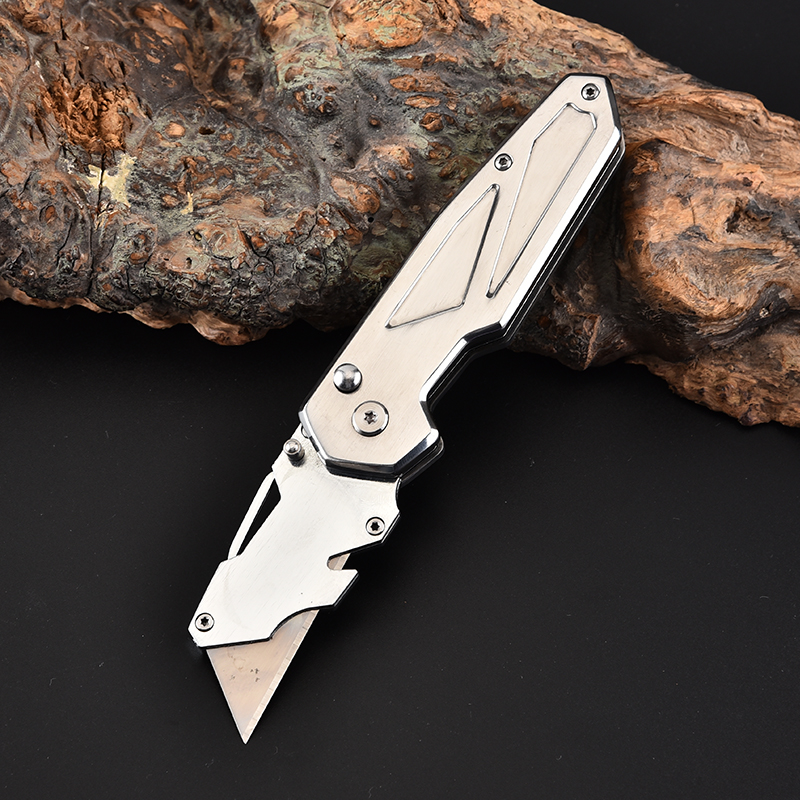
Safety depends on the design, condition, task, and user behavior—not simply whether the knife folds or uses disposable blades.
A folding lock helps keep an opened blade in position, but it does not eliminate cutting hazards. Similarly, a retractable utility knife still presents an exposed edge while cutting.
For both categories:
1. Inspect the knife before use.
2. Secure the material against unexpected movement.
3. Keep hands and other people outside the cutting path.
4. Cut away from the body where the task permits.
5. Replace or sharpen a dull edge as appropriate.
6. Store the tool with the blade safely enclosed.
7. Use protective equipment required by the task or workplace.
Used utility blades also require suitable disposal. Loose blades should not be placed where cleaners, coworkers, or waste handlers could contact them.
A textured handle may improve grip, but its comfort should be assessed during repeated use. A large control may help gloved users, yet interfere with another grip position.
For procurement teams, the important question is not "Does it have a safety feature?" It is "Does that feature work reliably in the intended task?"
A conventional EDC pocket knife can suit customers who perform varied, occasional cutting and value a reusable tool.
Their purchase may combine functional and personal preferences. Handle finish, pocket clip placement, size, and visual identity can influence satisfaction alongside cutting performance.
Outdoor positioning should remain specific. Light camping cutting is different from demanding wood processing, and product descriptions should not blur those applications.
For repeated carton opening, a utility knife often deserves first consideration because blades can be changed as part of routine work.
However, carton opening also raises a separate concern: damaging the contents. Appropriate blade exposure, cutting direction, and cutter selection should be evaluated using actual packaging.
Where suitable, a restricted-depth or concealed-blade design may offer a better fit than an unrestricted general-purpose knife.
These customers may need both categories.
A utility knife can handle repeated sheet-material cutting, while a reusable pocket knife serves varied incidental tasks. Retailers can therefore position them as complementary tools instead of forcing a false either-or choice.
A useful evaluation begins with tasks rather than product names. The following scorecard is a proposed procurement framework, not a published industry benchmark.
| Evaluation area | Questions to ask |
|---|---|
| Cutting material | What materials, thicknesses, and conditions are involved? |
| Frequency | Is cutting occasional or repeated throughout a shift? |
| Environment | Will the tool encounter moisture, dust, adhesive, or gloves? |
| Maintenance | Can users sharpen blades, or do they need replacements? |
| Handling | Does the grip remain comfortable during actual work? |
| Supply | Are replacement parts or blades readily available? |
| Restrictions | What workplace, transport, and destination-market rules apply? |
Assign greater importance to the criteria that affect the intended customer most. A warehouse tool and an outdoor retail product should not receive identical scoring weights.
This approach makes purchasing decisions easier to explain and helps prevent attractive but poorly matched products from entering the range.
A low purchase price does not necessarily mean a low operating cost.
For a reusable-blade knife, relevant costs may include sharpening equipment, maintenance time, and replacement after damage or loss.
For a utility knife, they may include replacement blades, blade-changing time, safe disposal, and availability of compatible consumables.
A practical comparison can use:
Cost per completed task=(tool cost + consumables + maintenance labor)/completed tasks
Use a defined evaluation period and comparable tasks. Record damaged materials separately rather than hiding them inside a general cost estimate.
There is no universal cost winner. Occasional users and high-frequency cutting teams have different maintenance and consumption patterns.
For private-label buyers, the most valuable starting point is a clear product brief.
Yangjiang Holin Industrial Co., Ltd. supports product design, development, and batch manufacturing through its own development team and factory. Buyers can use this integrated approach to align the knife's function, appearance, and production requirements.
Define:
- Intended cutting tasks and customer segment.
- Blade material, geometry, and maintenance expectations.
- Handle dimensions, finish, and grip requirements.
- Opening, locking, and pocket-carry configuration.
- Branding, packaging, and care instructions.
Define:
- Blade format and exact compatibility.
- Retraction, folding, or blade-exposure mechanism.
- Blade retention and replacement procedure.
- Grip requirements, including gloved operation where relevant.
- Replacement-blade packaging and disposal guidance.
Avoid requesting features solely because competing products advertise them. Each feature should answer a customer need and have an agreed verification method.
A practical prototype trial can reveal problems that photographs and specification sheets miss.
1. Select representative cutting materials.
2. Define the intended cutting method and blade exposure.
3. Compare samples under equivalent conditions.
4. Record cutting quality, grip comfort, and maintenance effort.
5. Inspect blade retention and mechanism operation.
6. Document findings and approve a reference sample.
This is a recommended development process, not a claim that any particular Holin model has completed these tests.
Before production, buyers and manufacturers should agree on inspection criteria, acceptable variation, packaging requirements, and relevant market documentation. Product-specific compliance must be verified rather than inferred from a general company description.
The strongest product range connects each knife to a clear use case. EDC products should deliver convenient, versatile ownership; utility knives should address defined cutting workflows and maintenance needs.
Contact Yangjiang Holin Industrial Co., Ltd. with your target market, customer tasks, expected order volume, and customization requirements. Request an OEM/ODM discussion covering product specifications, prototype development, packaging, and batch-production planning.
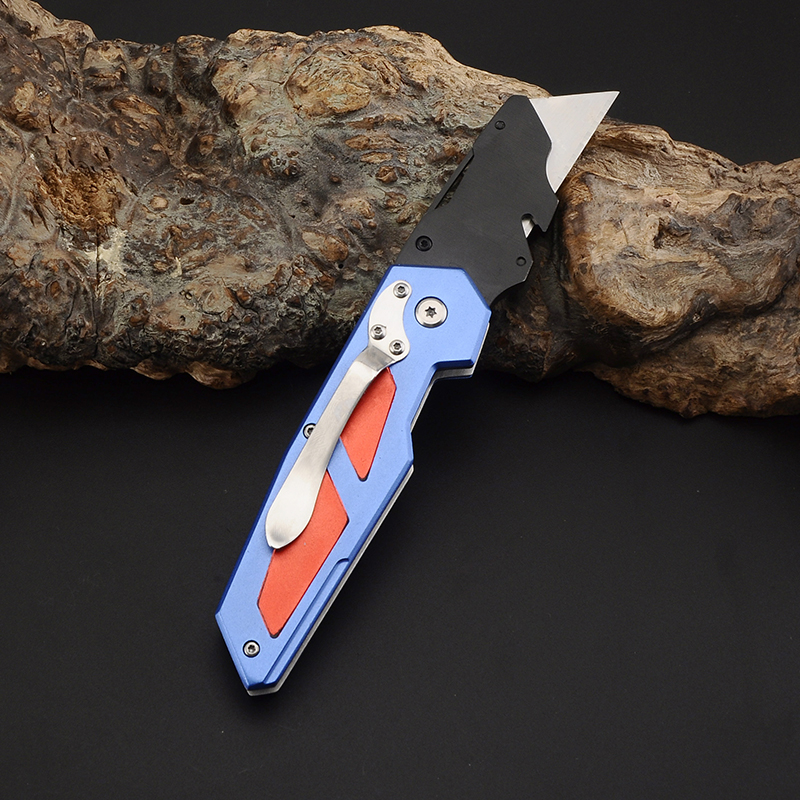
Not exactly. EDC describes everyday carry, while pocket knife describes a portable knife format. Many pocket knives are used for EDC, but a compact utility knife can also be carried daily.
For repeated cardboard cutting, a replaceable-blade utility knife is often practical. The appropriate blade, exposure, and cutting method still depend on carton construction and the need to protect its contents.
It can meet some customers' everyday needs, particularly packaging-related tasks. However, blade geometry, supported applications, and handling differ, so it is not automatically an equivalent replacement.
Utility knives avoid sharpening because worn blades are replaced. Conventional EDC knives require edge maintenance, but do not depend on disposable cutting blades. Both require cleaning and mechanical inspection.
Yes. Customization can address branding, handle design, packaging, and functional specifications. Feasibility, development costs, minimum quantities, and validation requirements should be confirmed for each project.
1. [Benchmade — "Ultimate Guide to Knife Blade Steel"]. Manufacturer guidance on edge retention, corrosion resistance, toughness, and steel-selection trade-offs. [benchmade]
2. [Benchmade Support — "Blade Steels"]. Explains the performance properties considered when selecting blade materials. [support.benchmade]
3. [OLFA — "The History of the Snap-Off Blade Cutter"]. Primary manufacturer background on segmented blades and renewing the cutting edge. [olfa]
4. [J. J. Keller Compliance Network — "A Sharp Reminder on Utility Knife Safety"]. Published December 27, 2023. Guidance on inspection, cutting technique, blade replacement, storage, and disposal. [jjkellercompliancenetwork]
5. [Iowa Association of Municipal Utilities — "Toolbox Talk: Utility Knife Safety"]. Published July 18, 2018. Workplace guidance covering blade seating, cutting paths, misuse, and disposal. Its workplace-specific restrictions should not be treated as universal rules. [iamuinformer]


