


Views: 212 Author: Holin Knife Publish Time: 2026-08-29 Origin: Site


Content Menu
● What Is a Liner Lock Folding Knife?
>> Advantages of a Liner Lock Knife
● What Is a Frame Lock Folding Knife?
>> Advantages of a Frame Lock Knife
● Liner Lock vs Frame Lock: Key Differences
● Which Lock Is More Reliable?
>> Reliability in Everyday Carry
● Why Manufacturing Quality Matters More Than Lock Type Alone
>> Critical Factors in Lock Reliability
>>> 3. Material and Heat Treatment
>>> 4. Pivot and Blade Centering
>>> 5. Final Assembly Inspection
● Frame Lock vs Liner Lock for OEM and ODM Knife Projects
● Practical Buyer Checklist Before Ordering
● Safe Use and Maintenance Tips
● Final Verdict: Liner Lock or Frame Lock?
>> Is a frame lock stronger than a liner lock?
>> Are liner lock folding knives safe?
>> Which is better for everyday carry: liner lock or frame lock?
>> Do frame locks wear out over time?
>> Can a liner lock be used for outdoor knives?
>> Can I customize a liner lock or frame lock folding knife?
>> What should buyers check when sourcing folding knives from a manufacturer?
When comparing a folding knife with liner lock vs frame lock, the most accurate answer is not simply that one mechanism is always better. A well-engineered frame lock will usually offer greater structural rigidity and higher resistance to heavy-duty use, while a precisely manufactured liner lock can deliver excellent reliability, lighter carry weight, better handle design flexibility, and strong everyday cutting performance.
For global knife buyers, distributors, outdoor brands, and private-label product developers, the right choice depends on the intended application, handle material, blade size, user expectations, manufacturing consistency, and target price point. At Yangjiang Holin Industrial Co., Ltd., our product-development perspective is straightforward: a lock is only as reliable as the engineering, materials, tolerances, assembly process, and quality control behind it.
A frame lock may appear stronger on paper. However, a poorly designed frame lock is not automatically safer than a carefully engineered liner lock. The most dependable folding knife is the one that combines appropriate lock construction with controlled manufacturing standards, correct lock-bar engagement, stable pivot adjustment, durable materials, and real-world testing.

A liner lock folding knife uses a spring section cut from one of the internal handle liners. When the blade opens, the flexible lock bar moves sideways and rests against the blade tang, helping prevent the blade from closing unintentionally during normal use.
The locking liner is usually made from stainless steel, although titanium may also be used in premium applications. It sits inside the handle scales, which may be made from G10, aluminum, micarta, carbon fiber, wood, stainless steel, or other materials.
The operating principle is simple:
1. The user opens the blade.
2. The blade tang rotates past the lock bar.
3. The spring tension pushes the liner lock inward.
4. The lock bar contacts the blade tang.
5. The blade remains open until the user moves the liner lock aside and closes the knife.
This mechanism is popular because it is compact, familiar, cost-effective, and suitable for many types of EDC pocket knives, tactical folding knives, work knives, and promotional knife programs.
A liner lock is not merely a lower-cost alternative. It offers practical benefits that make it highly valuable for many OEM and ODM knife projects.
- Lower overall weight than many full-metal frame-lock designs
- More handle-material options, including G10, micarta, FRN, wood, and composite scales
- Good one-hand operation for many right-handed users
- Strong value-to-performance ratio
- Efficient assembly structure for large-volume production
- More design freedom for branded EDC and outdoor knife collections
- Comfortable grip options because the locking component remains inside the handle
For daily cutting tasks such as opening packages, cutting rope, preparing food outdoors, trimming plastic, processing cardboard, and handling light utility work, a well-made liner lock can provide dependable performance.
A frame lock folding knife uses a section of the handle frame itself as the locking bar. Instead of relying on a separate internal liner, the knife's metal handle scale is cut and shaped to flex inward behind the blade tang.
A frame lock is often called an integral lock because the lock bar is integrated into the knife frame. The mechanism shares the same basic operating concept as a liner lock, but it typically uses a thicker and more substantial piece of metal as the locking component.
A frame lock generally operates in the following way:
1. The blade rotates into the open position.
2. The lock-bar section of the handle frame flexes inward.
3. The lock bar moves behind the blade tang.
4. The frame holds the blade open through spring tension and tang contact.
5. The user pushes the lock bar outward to release the blade and close the knife.
Many frame locks are made with stainless steel or titanium handles. Modern premium designs may also include a hardened steel lock-bar insert, which can improve wear resistance and reduce the risk of lock-face deformation over time.
Frame locks have become especially popular in premium EDC knives, tactical folders, work-focused folding knives, and minimalist metal-handle designs.
- Thicker locking structure in many designs
- High rigidity for demanding cutting tasks
- Fewer separate handle components on the lock side
- Excellent long-term durability when correctly designed
- Strong visual appeal for premium metal-handle knives
- Suitable for larger blades and heavy-use models
- Potential for steel lock-bar inserts to improve wear performance
Because the frame itself becomes the lock bar, a frame lock can create a direct and robust connection between the handle and the blade tang. This is why many buyers associate frame locks with heavy-duty reliability. Industry guidance commonly identifies the frame lock as a liner-lock-derived mechanism that uses the handle frame rather than an internal liner; the larger lock structure generally gives it more potential resistance to force when properly engineered.
The table below compares the two mechanisms from a product-development, buyer, and end-user perspective.
| Feature | Liner Lock Folding Knife | Frame Lock Folding Knife |
|---|---|---|
| Locking component | Internal metal liner | Portion of the handle frame |
| Typical lock-bar thickness | Thinner | Usually thicker |
| Handle construction | Handle scales over metal liners | Metal frame acts as both scale and lock |
| Overall knife weight | Often lighter | Often heavier, especially in steel |
| Structural rigidity | Good when well designed | Usually higher in robust metal-frame designs |
| Handle material flexibility | Very high | More limited on the locking side |
| Manufacturing cost | Often more economical | Can be higher due to machining and finishing |
| One-hand closure | Convenient but fingers may enter blade path | Convenient but fingers may enter blade path |
| Best fit | EDC, light work, outdoor utility, branded collections | Heavy-use EDC, tactical, premium metal folders |
| Customization potential | High for colors, textures, overlays, and scales | High for machining, titanium finishes, and metal detailing |
| Long-term lock wear | Depends on liner material and tang geometry | Can benefit from hardened lock-bar inserts |
| Buyer positioning | Broad-market, practical, value-focused | Premium, rugged, performance-focused |
The central distinction is simple: a liner lock is an internal locking system, while a frame lock uses the knife handle itself as the lock.
For high-force and heavy-duty use, a properly built frame lock is generally more reliable from a structural standpoint. Its lock bar is commonly wider or thicker than a liner lock bar, and the frame construction can provide greater stiffness.
However, this conclusion needs important context.
A frame lock does not automatically outperform every liner lock. Reliability depends on multiple engineering variables:
- Lock-bar thickness and heat treatment
- Lock-face geometry
- Blade-tang angle and surface finish
- Lock engagement percentage
- Pivot hardware and assembly tension
- Handle rigidity
- Material selection
- Manufacturing tolerances
- Surface contamination and maintenance
- User technique and intended cutting task
A premium liner lock can outperform a poorly assembled frame lock. Conversely, a heavy-duty frame lock may be the better option for a large folding knife intended for demanding utility or outdoor work.
For ordinary EDC use, both mechanisms can be highly dependable when produced by an experienced manufacturer. Typical daily tasks do not usually require the maximum theoretical lock strength of a heavy frame lock.
A liner lock may be the better option when the customer wants:
- A lighter pocket knife
- A compact blade profile
- A comfortable G10, micarta, wood, or composite handle
- More color and branding possibilities
- A cost-effective private-label product
- A versatile knife for general everyday use
A frame lock may be the better choice when the customer wants:
- A robust metal-handle folding knife
- Stronger premium positioning
- A hard-use work knife
- A tactical or outdoor-focused product
- Greater structural confidence under load
- A minimalist titanium or stainless-steel appearance
Both lock systems use a spring-loaded metal bar that engages the blade tang after opening. The primary construction difference is whether that locking bar comes from an internal liner or the handle frame.
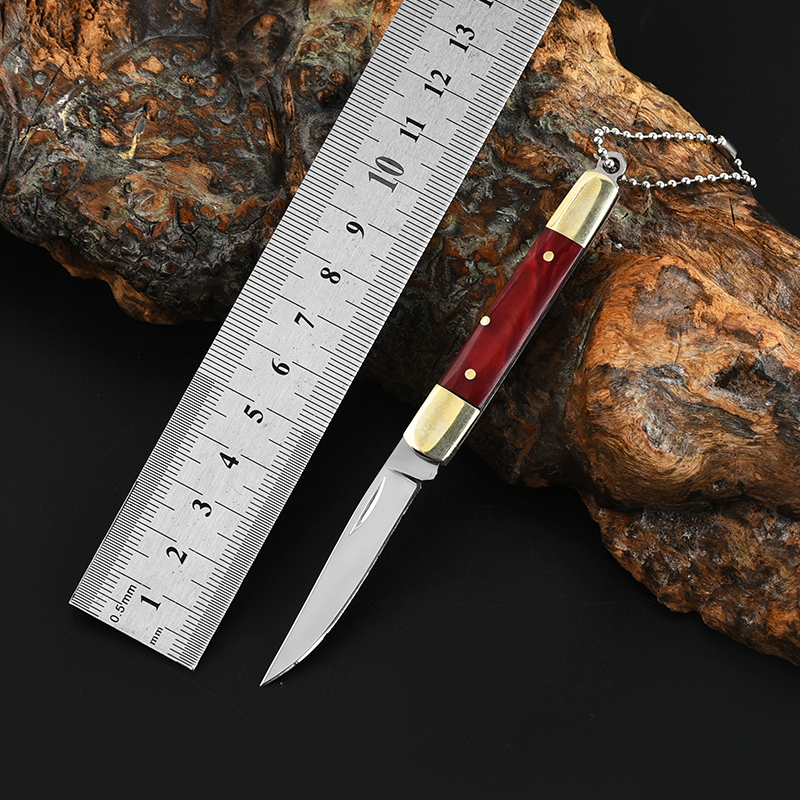
From a knife-manufacturing perspective, choosing a lock mechanism is only the first decision. The real performance difference comes from how the mechanism is developed, produced, assembled, and inspected.
At Yangjiang Holin Industrial Co., Ltd., this is particularly relevant for OEM/ODM folding knife programs. A customer may provide a reference design, a target price, a desired blade steel, a handle material, a logo requirement, and a market position. Our development team must then turn those requirements into a product with practical lock geometry, controlled assembly quality, and repeatable batch performance.
Lock-bar engagement describes how the liner or frame lock contacts the blade tang when the knife is open.
Too little engagement can create concerns about stability. Too much engagement can make the knife difficult to unlock. An appropriate engagement position helps balance security, smooth operation, and long-term wear.
A reliable folding knife should not rely on excessive lock-bar pressure alone. It should use well-matched lock-face geometry and stable tang contact.
The blade tang is one of the most important parts of a folding knife lock system. It must be machined or finished accurately because it directly contacts the locking bar.
If the tang angle is inconsistent, the lock can feel sticky, unstable, or difficult to disengage. For both liner locks and frame locks, proper tang geometry supports predictable lockup.
A lock mechanism requires a material with the correct balance of strength, elasticity, fatigue resistance, and wear resistance.
For example:
- Stainless-steel liners can provide practical strength and corrosion resistance.
- Titanium frame locks offer a lightweight premium feel but often benefit from hardened steel lock-bar inserts.
- Steel lock-bar inserts can help reduce wear and improve consistent engagement over repeated use.
- Handle material thickness affects the stiffness and feel of a frame lock.
The wrong material treatment can lead to excessive flex, weak lock tension, lock stick, premature wear, or poor long-term performance.
A strong lock is not enough if the pivot system is inconsistent. The blade should open smoothly, remain centered when closed, and avoid excessive side-to-side movement.
A well-controlled pivot system supports the entire user experience:
- Smooth opening
- Consistent lock engagement
- Better perceived quality
- Reduced blade play
- Longer service life
In mass production, repeatability is essential. A knife sample may perform well, but the customer needs the same experience across the full order.
For this reason, production inspection should evaluate:
- Blade centering
- Opening and closing action
- Lock engagement
- Lock release force
- Blade play
- Cosmetic finish
- Sharpness
- Hardware installation
- Logo accuracy
- Packaging condition
For importers, knife brands, wholesalers, and outdoor retailers, the lock decision should align with the product's commercial strategy.
| Product Goal | Recommended Lock | Reason |
|---|---|---|
| Affordable EDC pocket knife | Liner lock | Good usability, broad handle choices, efficient cost structure |
| Lightweight outdoor folding knife | Liner lock | Supports lighter handle materials and comfortable carry |
| Premium titanium EDC knife | Frame lock | Matches a minimalist high-end metal construction |
| Heavy-duty work folding knife | Frame lock | Typically provides greater structural stiffness |
| Branded promotional knife | Liner lock | Supports flexible materials, colors, logos, and pricing |
| Tactical-style folding knife | Frame lock or reinforced liner lock | Depends on blade size, handle construction, and target price |
| Wooden-handle folding knife | Liner lock | Allows traditional scale materials while retaining a modern locking system |
| Custom collector knife | Frame lock | Strong premium identity and refined machining possibilities |
For many private-label buyers, a liner lock is often the smarter commercial choice because it offers a strong balance of reliability, cost control, customization, and design flexibility. For a premium or hard-use collection, a frame lock can create greater product differentiation and a more robust market story.
Before confirming a folding knife OEM or ODM project, buyers should ask the manufacturer specific technical questions.
1. What material is used for the liner or frame lock?
2. What is the thickness of the locking liner or frame section?
3. How is lock-bar tension controlled during production?
4. What lock engagement standard is used?
5. Does the design include a steel lock-bar insert?
6. What blade steel and heat-treatment specification are recommended?
7. How is blade centering checked?
8. What inspection process is used for blade play and lock stability?
9. Can the handle material, logo, blade finish, clip, and packaging be customized?
10. Can the factory provide pre-production samples before mass production?
These questions help buyers move beyond appearance and evaluate the actual engineering behind a folding knife.
No folding knife lock should be treated as a substitute for safe cutting habits. Even a robust frame lock should not be used as a pry bar, screwdriver, chisel, or fixed-blade replacement.
To maintain reliable performance:
- Keep the pivot area clean and free of dirt.
- Remove moisture after outdoor use.
- Apply a suitable light lubricant when needed.
- Check pivot screws periodically.
- Avoid striking the spine of the blade.
- Avoid twisting the blade in hard material.
- Use the knife only for tasks within its intended design range.
- Keep fingers clear of the blade path during closing.
A folding knife lock is designed to reduce accidental closure during normal cutting. It is not designed to make every folding knife suitable for extreme impact or prying applications.
A frame lock is usually the more structurally robust choice for a heavy-duty folding knife, particularly when the design uses a properly engineered metal frame, stable lock geometry, and durable lock-bar contact surfaces. It is a strong fit for premium EDC knives, tactical folders, work-oriented products, and metal-handle outdoor tools.
A liner lock remains highly reliable for everyday use when it is made with suitable materials, accurate tolerances, effective lock engagement, and strict quality control. It is lighter, more versatile, more cost-efficient, and often better suited to customized knife programs with G10, micarta, wood, or composite handles.
The best decision is not "frame lock versus liner lock" in isolation. The better question is: Which lock system best matches your target user, blade size, handle construction, market position, and quality expectations?
Yangjiang Holin Industrial Co., Ltd. supports global customers with folding knife, pocket knife, utility knife, outdoor tool, and custom cutlery development. With an in-house R&D team, stable production capacity, and one-stop OEM/ODM capability, we can help turn your concept into a practical, market-ready knife product—from design development and material selection to branding, sampling, bulk manufacturing, and packaging customization.
Contact Yangjiang Holin Industrial Co., Ltd. today to discuss your custom liner lock or frame lock folding knife project and request a tailored OEM/ODM solution.
In many designs, yes. A frame lock typically uses a thicker portion of the handle frame as the lock bar, which can provide greater rigidity and strength. However, overall reliability still depends on material quality, lock geometry, assembly accuracy, and product design.
Yes. A well-manufactured liner lock folding knife can be safe and dependable for normal cutting tasks. Users should choose a knife from a capable manufacturer, inspect the lock before use, and avoid abusive tasks such as prying or striking the blade spine.
A liner lock is often better for lightweight and versatile everyday carry, especially for knives with G10, micarta, wood, or composite handles. A frame lock may be better for users who prefer a stronger metal-handle knife and a more rugged feel.
All mechanical lock systems can show wear after extensive use. Frame locks with hardened steel lock-bar inserts may offer improved wear resistance and more consistent long-term engagement, particularly on titanium-frame designs.
Yes. Liner locks are widely used in outdoor and camping folding knives. The key is choosing an appropriate blade size, liner thickness, handle construction, steel specification, and quality level for the intended use.
Yes. OEM/ODM customization can include blade steel, blade shape, blade coating, handle materials, handle texture, logo, pocket clip, screws, packaging, color options, and accessory configuration. The best lock choice should be determined during product development based on the target market and expected use.
Buyers should review sample quality, blade centering, lock engagement, opening action, blade play, material specifications, finishing consistency, logo quality, packaging, inspection standards, and the manufacturer's ability to maintain quality across bulk orders.
1. Benchmade. "Understanding Knife Mechanisms: A Complete Guide." [https://www.benchmade.com/blogs/beyond-the-bench/knife-mechanisms-guide]
2. Blade HQ. "Knife Lock Types: The Complete Guide." [https://www.bladehq.com/blog/knife-lock-types-guide]
3. Urban EDC. "Frame Lock vs Liner Lock: Key Differences." [https://urbanedc.com/blogs/analog-field-guide/frame-lock-vs-liner-lock]
4. Colonel Blades. "Comparing Blade Lock Mechanisms: Which One Is Right for You?" [https://colonelblades.com/blog/comparing-blade-lock-mechanisms/]
5. Artisan Cutlery. "Frame Lock vs. Liner Lock: Which Is Better?" [https://artisancutlery.net/blogs/knife-knowledge/knife-safety-frame-vs-liner-lock]
6. Damned Designs. "Liner Lock vs Frame Lock: EDC Guide." [https://www.damneddesigns.com/blog/liner-lock-vs-frame-lock/]


