


Views: 289 Author: Holin Knife Publish Time: 2026-10-02 Origin: Site


Content Menu
● What Is a Gas Station Knife, Really?
● Why Do Cheap Pocket Knives Disappoint?
>> Unspecified blade steel makes performance hard to predict
>> Loose assembly can undermine the lock and grip
>> Dull edges and awkward handles encourage poor technique
>> Counterfeit styling creates another purchasing risk
● How Can You Inspect a Pocket Knife Before Buying?
● Which Knife Fits the Actual Job?
● What Should Wholesale Buyers Require From a Knife Manufacturer?
>> Turn product claims into a written specification
>> Verify samples with a repeatable checklist
>> Make batch consistency part of the purchase order
● Can an OEM/ODM Knife Avoid the "Gas Station" Trap?
● How Should You Maintain and Use Your Knife Safely?
● Build a Knife Line Around Trust
● Frequently Asked Questions About Gas Station Knives
>> Are all gas station knives bad?
>> Is a cheap pocket knife always unsafe?
>> What blade steel should I ask for?
>> Is a utility knife better than a folding knife for boxes?
>> Can a private-label knife be both affordable and dependable?
>> What should I request before placing a bulk order?
A gas station knife can look like a bargain: an aggressive blade, eye-catching handle, and a price that invites an impulse purchase. But the real question is not where the knife is sold. It is whether the blade, lock, handle, and quality checks make it dependable for the job you need to do. This guide explains the risks behind poorly specified pocket knives and shows both individual buyers and wholesale buyers how to assess a better alternative.

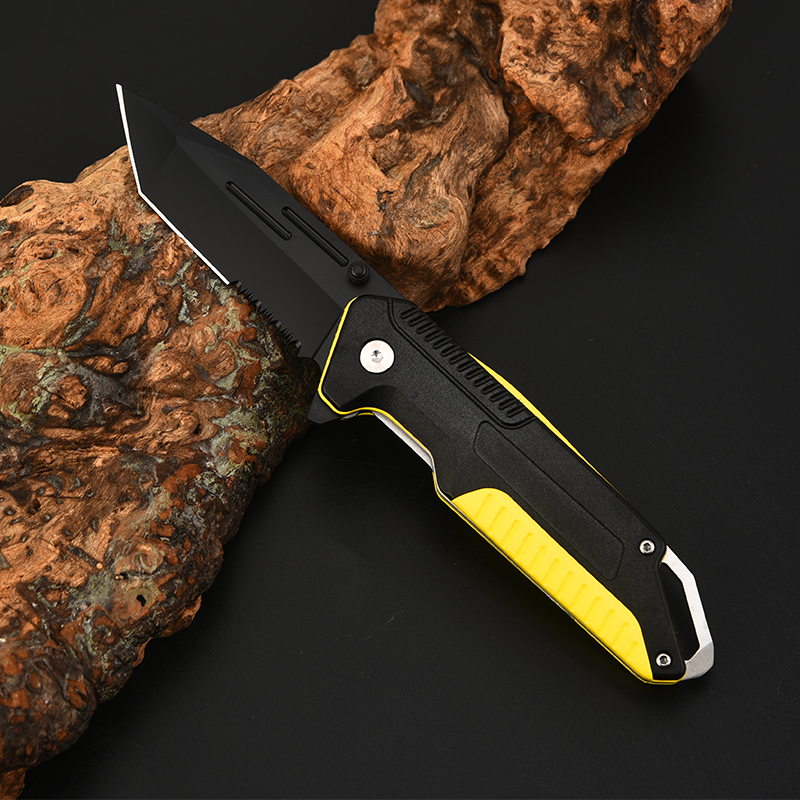
The phrase describes a type of product, not a manufacturing location. It usually means a low-cost folding knife that prioritizes appearance or a long feature list while providing little trustworthy information about materials, construction, or inspection. You might find one at a fuel stop, market stall, or online marketplace. Conversely, a well-specified knife does not become inferior merely because a convenience store sells it.
In Blade HQ's original account, a flashy wrench-shaped knife bought for just over $20 looked useful but disappointed in practice. That example is memorable because the supposed wrench was more prominent than the knife's cutting function. The lesson is not that unusual designs are always bad. It is that every added feature should earn its place through usable geometry, secure assembly, and clear specifications.
Knife enthusiasts make a similar distinction. In a public discussion about gas station knives, commenters described blade play, rough non-cutting edges, flexible steel, and locks they did not trust. Those are individual observations, not failure-rate data for an entire product category. They do, however, identify the right questions to ask before buying.
A package marked only "stainless steel" tells you little about the actual alloy or its treatment. Similarly, a decorative coating is not a substitute for identifying the blade material. If the seller cannot state the steel grade, intended hardness range, and suitable use, comparing two knives becomes guesswork.
Steel name alone is not a performance guarantee. Metallurgical analysis shows that heat treatment affects hardness, edge deformation, and toughness. Edge geometry matters too: an overly thick edge can cut poorly even when the steel is respectable. A useful product specification therefore connects material selection to heat treatment and the cutting task, rather than relying on dramatic names or cosmetic finishes.
A folding knife is a small mechanical system. Its pivot, stop pin, fasteners, handle scales, and locking parts all have to work together. Noticeable side-to-side blade movement, loose screws, sharp burrs on the handle, or an unreliable lock should prompt you to stop using the knife until it is assessed.
Do not assume that a strong-sounding lock type makes every finished knife safe. Execution and consistency matter. A lock that engages cleanly on one sample but poorly on another is a procurement problem, even if the catalog specification is identical. More importantly, a folding-knife lock is not permission to pry, twist, or treat the tool as a fixed blade.
A dull or damaged edge can demand more pressure. That may make a slip harder to control. An ornate handle can also create pressure points or put fingers close to the cutting path. Workplace guidance recommends keeping knives sharp and in good condition, removing damaged tools from service, and choosing a knife appropriate to the task.
This does not mean every cheap knife will injure its owner or that every expensive knife is safe. Safe use still depends on grip, workpiece control, cutting direction, maintenance, and the user's attention. Price is a clue, not a safety test.
Some questionable knives mimic established products or use confusing branding. Buyers should verify the seller, markings, packaging, and authorization rather than assuming a familiar silhouette proves authenticity. For brand owners, original designs and documented design approvals matter as much as the physical specifications. Avoiding copied shapes is a practical way to protect a long-term product line.
You do not need laboratory equipment to screen out obvious defects. You do need a careful, controlled process. Keep your fingers out of the blade path, and never test a lock by striking the spine or applying force that could cause it to close.
1. Check the description. Look for a named blade steel, blade dimensions, handle material, lock type, intended use, and a clear seller identity.
2. Inspect the closed knife. Check for protruding edges, exposed blade tips, loose fasteners, and a clip that feels secure.
3. Open it carefully. Confirm that the blade opens without grinding or unexpected movement and that the lock appears to engage consistently.
4. Check for blade play gently. With the blade open and your hands clear of the edge, look for obvious movement. Do not use your body or a hard surface as a test fixture.
5. Assess the grip. Make sure your normal working grip does not place your fingers in the cutting path or on an uncomfortable hot spot.
6. Inspect the edge visually. Look for chips, large burrs, irregular grinds, or a tip that appears damaged. Do not run a finger along the cutting edge.
7. Walk away when details are missing. Vague materials, inconsistent samples, or a seller unable to answer basic questions are reasons to keep shopping.
An online buyer cannot perform every check before delivery. In that case, request close-up photographs, read the return terms, and inspect the knife promptly when it arrives. If the lock seems unreliable, do not try to prove its strength through risky use. Return or replace the product.
An impulse purchase often fails because the shape catches your eye before you define the task. Compare the tool's mechanism and maintenance needs first.
| Task | Better starting point | What to verify |
|---|---|---|
| Opening cartons repeatedly | Retractable or purpose-designed utility knife | Secure blade retention, controlled exposure, compatible replacement blades |
| General everyday cutting | Compact folding pocket knife | Comfortable grip, dependable opening and locking, manageable size |
| Outdoor food preparation or camp chores | Suitable outdoor knife | Easy cleaning, corrosion care, grip when hands are wet |
| Work that applies twisting or heavy force | A tool made for that force | Do not substitute a folding blade for a pry bar or screwdriver |
A replaceable-blade utility knife may be more economical for frequent cardboard cutting because you can change a worn blade rather than force a dull edge. A pocket knife may be more convenient for occasional varied cuts. Neither is universally safer: the right choice depends on the task, blade exposure, condition, and handling.
For workplace use, set rules for inspection, blade replacement, storage, and training. In the United States, the general workplace-tool rule places responsibility on employers for the safe condition of tools used by employees, including employee-supplied tools. That is not a blanket certification or a design standard for every pocket knife; it is a reminder that an attractive purchase price does not remove responsibility for tool condition.

A retail shopper can reject one loose knife. An importer or private-label buyer must prevent the same defect from appearing across an entire order. The most effective step is to define measurable acceptance criteria before sampling, then agree on how the factory will document and check them.
Start with the intended user and cutting task. Then document blade length and geometry, declared steel grade, target hardness range where appropriate, handle material, pivot construction, lock mechanism, coating or finish, branding, packaging, and maintenance instructions. For utility knives, specify blade-retention design, replacement-blade compatibility, and how the blade is protected when not in use.
Do not copy a competitor's specification without checking whether its choices suit your customers. A thin cutting edge that works for light slicing may be the wrong choice for tougher tasks. Similarly, a steel selected for easy sharpening may not meet an edge-retention target. Define the trade-off openly and ask for a sample that represents the final manufacturing route.
Approval should extend beyond a product photograph. Request a pre-production sample and compare it with the drawing and specification. Record actual dimensions, markings, fit, opening feel, visible edge condition, handle finish, and whether the lock engages as intended. If performance claims matter, agree in advance on the test method, sample quantity, pass criteria, and who performs the test.
For an order with several variants, test each meaningful combination of blade, handle, and mechanism. A color change may be largely cosmetic; a change to a pivot, lock component, or blade stock is not. Retain an approved reference sample so later production can be compared against something concrete.
A good sample does not guarantee a good production run. Ask how the manufacturer records material identity, heat-treatment batches, in-process inspections, and final checks. Require a documented process for nonconforming units, corrective action, and reinspection. Agree on inspection scope and acceptance criteria with your supplier; do not assume either party uses the same meaning of "quality checked."
This is where total cost matters more than the lowest unit quote. A cheaper knife that produces returns, complaints, or repeated sorting work may cost more to sell. Keep claims proportional to evidence: a factory should be able to show the records behind a stated material, process, or test result, rather than asking buyers to accept a promise on trust.
Yes—if customization starts with function and verification, not simply a new logo on an existing handle. OEM and ODM projects can address the shortcomings associated with novelty knives by giving buyers control over specifications, prototypes, production decisions, and inspection criteria. A custom design is not automatically a better knife; the discipline behind it makes the difference.
Yangjiang Holin Industrial Co., Ltd. describes itself as a manufacturer of folding knives, pocket knives, utility knives, and outdoor tools, with an in-house development team, its own factory, scalable production, and one-stop OEM/ODM support. Those capabilities are useful to a buyer planning a private-label line, but specific steel grades, certifications, minimum order quantities, lead times, test results, and warranty terms should be confirmed for the project rather than inferred from this company description.
A practical development conversation might begin with: "Our customers open shipping cartons daily, need a secure grip with gloves, and expect easy blade replacement." From there, the buyer and manufacturer can discuss a utility-knife concept, safe blade storage, sample evaluation, packaging instructions, and the inspection plan. That is more productive than requesting a dramatic silhouette and hoping it performs well.
For a folding-knife line, start instead with intended grip, blade shape, legal sales markets, ease of maintenance, and reliable lock behavior. Ask for original design work where applicable and document who owns the drawings, tooling, and approved branding. These details reduce misunderstandings during scale-up and give the finished product a clearer reason to exist.
Even a well-made knife needs appropriate care. Inspect the blade, handle, and moving parts before use. Replace a dull or damaged utility blade using the maker's instructions; maintain a reusable blade with a suitable sharpening method. Keep the workpiece stable, use controlled pressure, and cut away from your body and other people. Retract or cover the blade when it is not in use, and dispose of used blades in a suitable sharps container.
For folding knives, keep the pivot reasonably clean and follow the maker's maintenance guidance. If fasteners work loose or the lock stops engaging normally, stop using the tool until the problem is resolved. Do not improvise a repair to a suspect locking mechanism and then return the knife to service without appropriate assessment.
Travel and local carry rules deserve a separate check. For example, U.S. aviation screening does not allow pocket knives or utility knives in carry-on bags; checked-bag rules and safe packing still apply. Laws governing possession and carry vary by location. A product suited to a job is not automatically lawful in every place the buyer might carry it.
The best alternative to a questionable impulse-buy knife is not necessarily the most expensive model. It is a product whose materials, design, intended use, and quality expectations are clear. If you are sourcing a folding knife, pocket knife, utility knife, or outdoor tool for your brand, contact Yangjiang Holin Industrial Co., Ltd. with your target use, desired specifications, expected order volume, and market requirements. Request a development discussion and sample-review plan before committing to bulk production.
No. The phrase describes a pattern of poor specifications and execution, not every knife sold at a particular shop. Judge the individual product by materials, fit, function, seller transparency, and intended use.
No. Low price alone cannot establish safety or danger. A knife with excessive blade play, an unreliable lock, damaged parts, or an unsuitable grip should not be used, regardless of its price.
Ask first for a clearly identified grade and a performance target suited to your task. Also ask how heat treatment and edge geometry will be controlled. A familiar steel name without consistent processing tells only part of the story.
Often, a purpose-designed utility knife is convenient for repetitive carton opening because blades can be replaced. Check blade retention and retraction, use only as much exposed blade as needed, and follow workplace rules when applicable.
It can, provided the buyer chooses sensible materials and features, approves representative samples, and sets written inspection criteria. Removing decorative features that do not improve use can leave more room in the budget for reliable construction.
Request a written specification, representative samples, agreed test and inspection criteria, packaging details, and clarity about design ownership and after-sales handling. Verify any claimed certification or performance data before using it in your own marketing.
1. Blade HQ, "[Cutting Corners: The Risk of Buying a Gas Station Knife – Knife Rants]." Original anecdote, product example, and framing of the term.
2. r/knives, "[Why don't we like gas station knives?]" Public user comments about blade play, finishes, materials, and perceived safety; anecdotal opinions, not representative data.
3. Dr. Larrin Thomas, Knife Steel Nerds, "[Introduction to Knife Steel Heat Treating from a Metallurgist]." Technical background on heat treatment, hardness, and toughness.
4. Dr. Larrin Thomas, Knife Steel Nerds, "[Knife Steels Rated by a Metallurgist: Toughness, Edge Retention, and Corrosion Resistance]." Technical background on steel-property trade-offs.
5. Occupational Safety and Health Administration, "[Cuts & Lacerations]." Guidance on tool condition, appropriate knife choice, and sharp blades.
6. Occupational Safety and Health Administration, "[29 CFR 1910.242: Hand and Portable Powered Tools and Equipment, General]." U.S. workplace rule concerning safe tool condition.
7. Edwin Zalewski, J. J. Keller & Associates, "[A Sharp Reminder on Utility Knife Safety]." Practical handling, inspection, replacement, and storage guidance.
8. Transportation Security Administration, "[Pocket Knife]" and "[Utility Knives/Knife]." U.S. air-travel screening guidance.


