


Views: 289 Author: Holin Knife Publish Time: 2026-10-09 Origin: Site


Content Menu
● 1. Choose a Tactical Folder by Task
>> Match the Knife to Its Environment
>> Check Carry Requirements Before Buying
● 2. Compare Blade Steel and Geometry
>> Understand the Main Steel Trade-offs
>> Choose a Practical Blade Shape
>> Select Plain or Serrated Edges
● 3. Evaluate Locks, Opening, and Handling
>> Compare Common Locking Mechanisms
>> Choose Opening Features Deliberately
>> Examine the Handle and Pocket Clip
● 4. Test Samples and Specify Production
>> Follow a Safe Sample Checklist
>> Turn User Feedback into Requirements
>> Build an OEM/ODM Specification
● 5. Maintenance and Frequently Asked Questions
● Start Your Custom Knife Project
● FAQs
>> 1. What Makes a Good Tactical Folding Knife?
>> 2. Is D2 Suitable for a Tactical Folder?
>> 3. Which Folding Knife Lock Is Strongest?
>> 4. Should I Choose a Plain or Serrated Edge?
>> 5. Can a Tactical Folding Knife Replace a Pry Bar?
>> 6. What Should Buyers Prepare for Custom Development?
Choosing a tactical folding knife starts with understanding your cutting tasks—not finding the most aggressive-looking blade. The right tactical folder should combine reliable locking, useful blade geometry, manageable maintenance, and a handle that feels secure during everyday work.
At Yangjiang Holin Industrial Co., Ltd., we approach knife development from a manufacturing perspective. Our in-house research and development team, production factory, and scalable manufacturing capabilities support OEM/ODM projects from product design through bulk production.
For individual users, the challenge is choosing a dependable tool. For brands and importers, it is turning those same requirements into a product that performs consistently across an entire order.
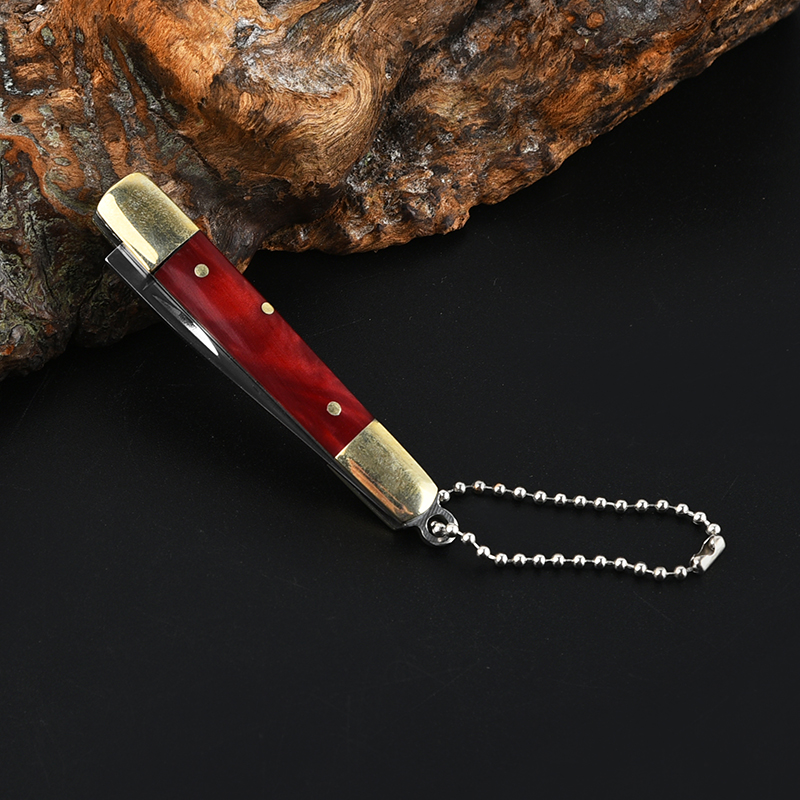
"Tactical" is a product description, not proof of cutting performance or manufacturing quality. A black coating, oversized handle, or fast-opening mechanism cannot establish whether a knife suits your needs.
My starting point would be simple: define what the knife must cut, where it will be carried, and how it will be maintained.
| Primary use | Features to prioritize | Trade-offs to consider |
|---|---|---|
| Everyday carry | Comfortable handle, practical blade, secure clip | Excess thickness can make pocket carry uncomfortable |
| Outdoor utility | Corrosion resistance, dependable grip, serviceable edge | A folding mechanism requires cleaning |
| Worksite cutting | Useful edge geometry, accessible controls, repeatable lock engagement | Abrasive materials increase maintenance needs |
| Gloved use | Adequate handle space, accessible opening and locking controls | Larger controls can increase bulk |
| Private-label retail | Clear specifications, consistent assembly, suitable packaging | Attractive samples do not establish batch consistency |
A tactical folding knife should remain a cutting tool. Do not treat its lock as permission to pry, hammer, or apply sideways force to the blade.
For repeated heavy-duty tasks beyond normal cutting, select a tool specifically designed for that work.
Knife rules vary by destination and can distinguish between blade length, opening mechanism, locking design, and carrying circumstances.
Before ordering, check the requirements applicable to possession, importation, sale, and carry in your intended market. Do not assume that a knife sold online is lawful to carry everywhere.
For commercial buyers, this check belongs at the beginning of development—not after packaging and production are complete.
A premium steel name does not automatically produce a better knife. Cutting performance also depends on heat treatment, hardness, blade thickness, edge geometry, and finishing.
The useful question is not "Which steel is best?" It is "Which combination fits this application?"
Four properties deserve separate attention:
- Toughness describes resistance to cracking and chipping.
- Edge retention describes how long the blade maintains useful cutting ability.
- Corrosion resistance matters around moisture, sweat, and demanding storage conditions.
- Sharpenability affects how easily the user can restore the edge with available equipment.
These properties involve trade-offs. High wear resistance can support longer cutting performance but may make sharpening more demanding. Toughness is not the same as hardness, and neither should be confused with corrosion resistance.
D2 illustrates why precise language matters. It offers useful wear resistance, but its corrosion resistance is limited compared with many stainless knife steels. It should not be presented as maintenance-free.
For buyers, the process matters alongside the material. Request the specified steel grade, target hardness range, heat-treatment controls, and appropriate verification records.
A steel designation alone cannot establish consistent finished-blade performance.
| Blade shape | Practical advantages | Selection considerations |
|---|---|---|
| Drop point | Versatile profile for general cutting | Tip strength and slicing ability depend on actual geometry |
| Tanto | Distinct tip geometry and secondary edge | The angular transition can complicate sharpening |
| Wharncliffe | Straight edge for controlled utility cuts | Tip geometry requires attention |
| Clip point | Fine tip suited to detailed work | Thin tips should not receive sideways loading |
For a general-purpose tactical pocket knife, a drop-point blade is a sensible starting point. It provides a useful balance of tip control and curved cutting edge.
Blade shape, however, is only part of the decision. A thick blade with a heavy edge may feel robust while cutting cardboard less efficiently than a thinner design.
Compare thickness behind the edge, grind consistency, and actual cutting results—not photographs alone.
A plain edge suits many everyday tasks and is generally straightforward to maintain with conventional sharpening equipment.
Serrations can suit particular cutting materials, but they require suitable sharpening methods. A partially serrated blade divides the available cutting length between two edge styles.
Choose it because your tasks justify that compromise, not because it looks more tactical.
For brands, offering clearly differentiated edge options can be more useful than assuming every buyer wants the same configuration.
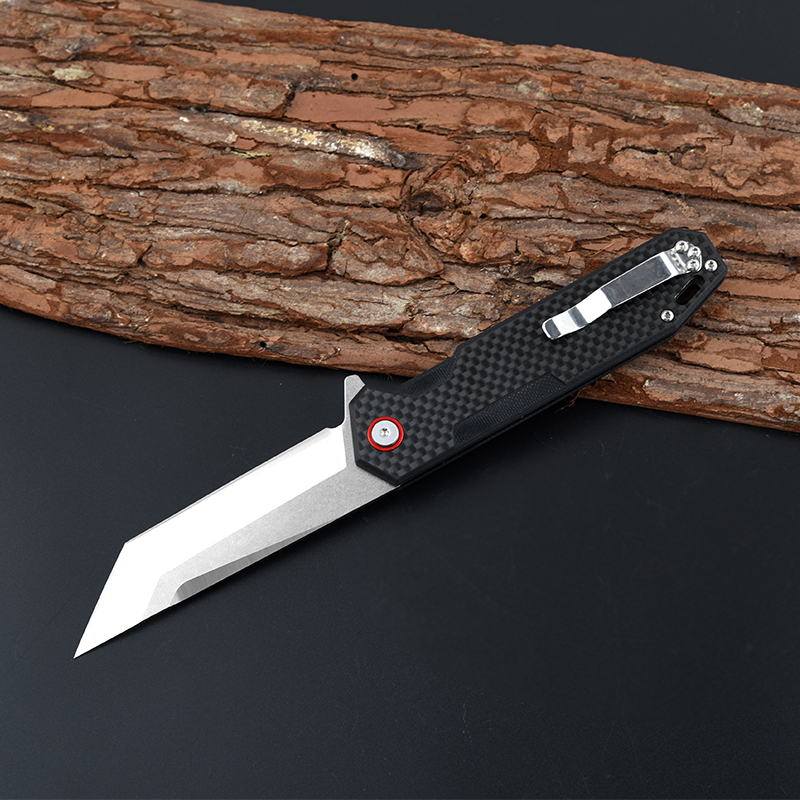
A smooth opening action is appealing, but it does not prove that a knife locks reliably.
The opening mechanism moves the blade into position. The lock helps keep it there. Evaluate them separately.
| Lock type | Operating principle | What buyers should examine |
|---|---|---|
| Liner lock | An internal liner engages the blade tang | Engagement consistency, release access, and blade movement |
| Frame lock | Part of the handle frame engages the tang | Lock interface, grip interaction, and release comfort |
| Crossbar lock | A sliding bar secures the blade through its tang geometry | Spring function, control access, and consistent engagement |
| Button lock | A plunger engages the blade mechanism | Engagement, release behavior, and accidental activation risks |
| Compression Lock | A locking element wedges between the tang and stop pin | Operation, engagement, and authorized design use |
No lock category guarantees quality. Execution depends on geometry, materials, tolerances, and assembly.
A well-made liner lock may be more suitable than a poorly executed mechanism advertised as premium.
Commercial buyers should also distinguish generic mechanisms from proprietary names and protected designs. A functional preference is not permission to copy another manufacturer's product.
Manual, assisted, and automatic knives offer different operating experiences and maintenance considerations.
For a general utility project, I would first evaluate a manual design. It can provide practical operation without making speed the central product promise.
Thumb studs, thumb holes, and flipper tabs should be assessed with the intended user's hand size and work environment in mind.
A control that feels convenient at a desk may be harder to operate with gloves. Likewise, rapid opening does not compensate for unreliable lock engagement.
Handle comfort deserves the same attention as blade steel.
G-10, aluminum, polymers, and other materials can all support effective designs. Their value depends on texture, shape, construction, and finishing.
Check for:
- Pressure points during a firm grip.
- Sharp transitions around liners or handle scales.
- Interference between the pocket clip and the palm.
- Adequate access to the lock release.
- Suitable clip placement for the intended carrying side.
Independent pocket-knife testing highlights how carry comfort and clip configuration can change the user experience. A knife may cut well yet remain inconvenient in the pocket.
Do not evaluate weight alone. Thickness, clip tension, exposed handle length, and overall shape also affect everyday comfort.
The most useful improvement to a buying guide is a repeatable evaluation process. Specifications tell you what a knife is intended to be; sample inspection helps determine whether it delivers.
Use a controlled workspace and keep fingers clear of the blade path.
1. Inspect the closed knife for exposed edge, damaged hardware, uneven finishing, and unsuitable clip tension.
2. Open it normally and confirm that the lock engages consistently.
3. Check for unexpected blade movement without using destructive force.
4. Hold the knife in normal cutting positions and identify uncomfortable pressure points.
5. Perform controlled cuts on representative materials, using a stable surface and safe cutting direction.
6. Close it according to the manufacturer's instructions and check for scraping or irregular resistance.
7. Record observations, photographs, and acceptance decisions for comparison.
Do not improvise lock tests by striking the blade spine or applying excessive force.
If engagement is incomplete, movement is unexpected, or operation changes suddenly, stop using the sample and request technical assessment.
User comments become valuable when they identify a repeatable problem.
"Great knife" offers little development guidance. "The clip creates a pressure point during extended cutting" suggests something specific to investigate.
Organize feedback around:
- Cutting performance.
- Handle comfort.
- Opening and closing.
- Carry convenience.
- Maintenance.
- Durability concerns.
Treat individual reviews as signals, not universal findings. Hand size, sharpening ability, cutting materials, and expectations differ.
For example, one user may prefer a strong clip for retention, while another finds it difficult to attach to thick trousers. The design question is which users and garments the product must accommodate.
A commercial specification should go beyond appearance and steel grade.
Define blade dimensions, edge configuration, handle material, lock mechanism, opening controls, clip position, finish, branding, packaging, and inspection criteria.
Also document the intended application and prohibited uses. Avoid promises such as "indestructible" or "maintenance-free."
At Yangjiang Holin Industrial Co., Ltd., our OEM/ODM services support product design, development, and bulk production. Buyers can bring an existing concept or discuss requirements for a new folding knife, pocket knife, utility knife, or outdoor tool.
A practical development sequence is:
1. Confirm the target market and product application.
2. Agree on materials, construction, and commercial requirements.
3. Evaluate prototypes against documented criteria.
4. Approve a reference sample and specification.
5. Define production inspection and packaging requirements.
This is a proposed project framework, not a substitute for agreed testing or contractual acceptance criteria.
The objective is repeatability: production units should match the approved requirements, rather than merely resemble the sample.
Routine care supports dependable operation. Wipe away residue, dry the knife thoroughly, and use a small amount of suitable lubricant where the manufacturer recommends it.
Avoid soaking folding knives or putting them in a dishwasher. Excess lubricant can retain debris, so wipe away surplus after application.
Inspect the knife regularly. Unusual movement, incomplete engagement, or altered operation calls for attention—not continued use.
The right tactical folder combines purpose, materials, geometry, and consistent manufacturing—not simply a dramatic appearance.
For a custom knife project, contact Yangjiang Holin Industrial Co., Ltd. with your target market, preferred specifications, expected order quantity, and packaging requirements. Our team can discuss design, development, and scalable production for your purchasing needs.

A good tactical folding knife matches its intended cutting tasks. Prioritize dependable locking, useful geometry, comfortable handling, secure carry, and maintainable materials. Appearance and opening speed should remain secondary.
D2 can suit users who value wear resistance and accept regular care. It is not highly corrosion-resistant compared with many stainless alternatives. Consider moisture exposure, sharpening equipment, and finished-blade quality before choosing it.
There is no dependable universal ranking based only on lock names. Geometry, materials, tolerances, and construction influence performance. Evaluate the specific design and supporting test evidence rather than relying on category-wide claims.
Choose a plain edge for versatile utility work and straightforward maintenance. Consider serrations when your cutting materials justify them and you have suitable sharpening equipment. Partial serrations reduce the length available for each edge style.
No. A folding knife is a cutting tool. Prying introduces loading that can damage the blade or mechanism and create an injury risk. Use a purpose-built pry tool instead.
Prepare the target market, intended tasks, blade dimensions, material preferences, opening and lock requirements, branding, packaging, order expectations, and acceptance criteria. Reference images help communicate appearance, but measurable specifications guide production more effectively.
- Blade HQ — [How to Choose a Tactical Folding Knife]. Original article used as the reconstruction baseline. It covers materials, opening systems, locks, blade shapes, weight, and product examples. Its CRKT M16 section contains conflicting descriptive text and specification bullets, so those specifications were not reused. Its suggestions concerning prying were also excluded. [bladehq]
- Larrin Thomas, Knife Steel Nerds — [Knife Steels Rated by a Metallurgist: Toughness, Edge Retention, and Corrosion Resistance], October 19, 2021. Technical foundation for distinguishing steel properties and explaining why performance involves trade-offs. [knifesteelnerds]
- Larrin Thomas, Knife Steel Nerds — [How to Estimate Knife Steel Properties], July 13, 2026. Supports the discussion of hardness, carbide structure, toughness, and D2's limited corrosion resistance relative to its chromium content. [knifesteelnerds]
- Benchmade — [Knife Care 101: A Guide to Maintaining Your Knife], February 6, 2026. Manufacturer guidance supporting careful cleaning, thorough drying, limited lubrication, and avoiding prolonged soaking. [benchmade]
- Benchmade Customer Support — [Use and Care]. Manufacturer guidance supporting the warning against dishwasher cleaning. [support.benchmade]
- OutdoorGearLab — [The Best Pocket Knives], updated September 28, 2026. Independent testing observations used to inform the discussion of pocket comfort, clip configuration, and left-handed usability. These observations are not presented as Holin customer testimonials. [outdoorgearlab]
- Yangjiang Holin Industrial Co., Ltd. — Company information supplied for this assignment. Source for statements about the in-house development team, production factory, scalable manufacturing, product categories, and OEM/ODM capabilities. No company webpage or customer-review dataset was supplied; no independent certifications, test results, production volumes, or customer quotations are claimed.[holintools]


