


Views: 277 Author: Holin Knife Publish Time: 2026-10-07 Origin: Site


Content Menu
>> Check Legality Before Buying
● Choose Practical OTF Knife Features
>> Compare Steel and Geometry Together
>> Evaluate Switch Comfort and Ergonomics
● Evaluate Reliability and Manufacturing
>> Turn Feedback Into Requirements
>> Diagnose Misfires Conservatively
>> Maintain the Mechanism Properly
● Plan OEM/ODM Projects Carefully
>> 1. What Is the Best OTF Knife for Everyday Carry?
>> 2. Are All OTF Knives Automatic?
>> 3. Is Some Blade Play Normal?
>> 4. Why Does an OTF Knife Misfire?
>> 5. Can an OTF Knife Handle Outdoor Work?
>> 6. What Should Buyers Verify Before Bulk Orders?
Choosing an OTF knife means looking beyond fast deployment and an impressive appearance. If you want to understand how to choose an OTF knife, start with your cutting tasks, local regulations, blade geometry, operating comfort, and maintenance expectations. For brands and distributors, manufacturing consistency and after-sales support matter just as much.
An out-the-front knife can offer convenient one-handed operation. However, its enclosed mechanism introduces considerations that do not apply in quite the same way to a conventional folding knife.
My recommendation is simple: evaluate the knife as a cutting tool first and a mechanical product second. A satisfying action is valuable, but it should never replace reliable locking, comfortable handling, and practical cutting performance.

An OTF knife has a blade that extends through an opening at the front of its handle rather than rotating outward around a pivot.
The term describes the blade's movement, not necessarily its operating mechanism. Although automatic models dominate the category, buyers should confirm how a particular knife opens and closes instead of relying on the product name.
A typical double-action automatic OTF uses a sliding switch to extend and retract the blade. A single-action automatic model deploys automatically but requires a separate manual resetting or retracting procedure.
| Feature | Double-action OTF | Single-action OTF |
|---|---|---|
| Opening | Automatic switch activation | Automatic activation |
| Closing | Automatic switch activation | Separate manual procedure |
| Everyday convenience | Convenient one-handed operation | Less convenient repeated closing |
| Buying priority | Switch comfort and reliable cycling | Resetting procedure and handling requirements |
For ordinary utility tasks, double-action operation is often the more convenient arrangement. Nevertheless, the best choice depends on the actual design and whether ownership and use are permitted in your market.
An OTF pocket knife can suit users who frequently open packaging, trim cord, or perform short, controlled cuts.
Its main attraction is accessibility: the blade can deploy and retract without the sweeping movement of a conventional folding blade. That convenience still requires disciplined handling and a clear blade path.
For prolonged cutting sessions, compare the handle with a conventional folder. A compact, rectangular chassis may carry neatly but feel less comfortable during sustained work.
For demanding outdoor activities, do not confuse deployment speed with structural suitability. Prying, twisting, chopping, and striking are not appropriate ways to evaluate an everyday OTF knife.
Confirm whether your destination permits ownership, carry, sale, and importation of the specific knife.
These are separate questions. Permission to possess an automatic knife does not automatically establish permission to carry it concealed, import it, or distribute it commercially.
In the United States, state and local restrictions can differ, while federal law also addresses switchblade knives in interstate commerce, subject to statutory exceptions.
Commercial buyers should obtain destination-specific advice before arranging shipments. Check mechanism classifications, blade-length rules, double-edged blade restrictions, customs requirements, and sales-channel policies.
For general utility work, begin with the cutting jobs you perform most often.
Opening cartons requires controlled tip work. Cutting cord benefits from a useful edge profile. Longer slicing tasks depend heavily on geometry rather than an aggressive blade appearance.
| Blade shape | Practical advantage | Selection consideration |
|---|---|---|
| Drop point | Versatile profile with a controllable tip | A useful starting point for general utility |
| Clip point | Fine tip for precise cuts | Compare tip thickness and intended workload |
| Tanto | Distinct secondary point for certain draw cuts | Sharpening involves separate edge sections |
| Dagger | Symmetrical pointed profile | Double edges reduce safe finger-placement options |
| Single-edged spear point | Central tip with one cutting edge | Confirm which side is sharpened |
For many buyers, a single-edged blade is the more straightforward everyday option. An unsharpened spine provides additional handling options, provided fingers remain safely behind the tip and away from the edge.
A dagger profile should not be selected simply because it looks characteristic of an OTF. Consider its handling limitations and any additional legal restrictions.
Steel selection involves trade-offs among edge retention, toughness, corrosion resistance, and sharpening effort.
Toughness describes resistance to fracture and chipping. Edge retention concerns how well cutting ability is maintained. These properties are related, but they are not interchangeable.
More wear-resistant steel is not automatically tougher. Likewise, a premium alloy name does not prove that the finished blade has appropriate heat treatment.
Ask about:
- The specified steel grade.
- The target hardness range.
- Heat-treatment control and inspection.
- Blade thickness and edge geometry.
- Recommended sharpening methods.
- Corrosion-care requirements.
For packaging work, useful geometry and manageable sharpening can matter more than a prestigious steel designation.
For humid environments, corrosion resistance deserves additional attention. Remember that a stainless blade does not make the entire mechanism maintenance-free.
From a procurement perspective, a named alloy should be treated as a specification, not a complete quality guarantee.
A switch should provide secure thumb contact without causing unnecessary discomfort during ordinary operation.
Public owner discussions illustrate why this matters: users can value different switch designs even when they appreciate the same knife's overall build quality.
That feedback is subjective, not controlled evidence of reliability. Use it to identify questions worth checking on a sample.
Evaluate switch reach, texture, resistance, and placement with the knife held naturally. If gloves are part of the intended use, test with representative gloves rather than assuming aggressive texturing solves every problem.
Check the pocket clip as well. Retention, pocket entry, exposed handle length, and pressure against the palm influence everyday usability.
Painful operation should not automatically be dismissed as a necessary break-in experience. Compare another sample or design before committing.
Some OTF designs exhibit perceptible blade movement because their mechanisms require operating clearance.
However, acceptable movement is design-specific. There is no universal consumer rule stating that every OTF must have a particular amount of play.
Distinguish minor, consistent movement from sudden changes, incomplete engagement, or unreliable locking. Do not assume a high price alone establishes acceptable performance.
Ask the supplier how movement is checked, whether acceptance criteria are documented, and how samples compare across units.
Never test lock strength through improvised impacts, twisting, or forceful pressure on the blade.
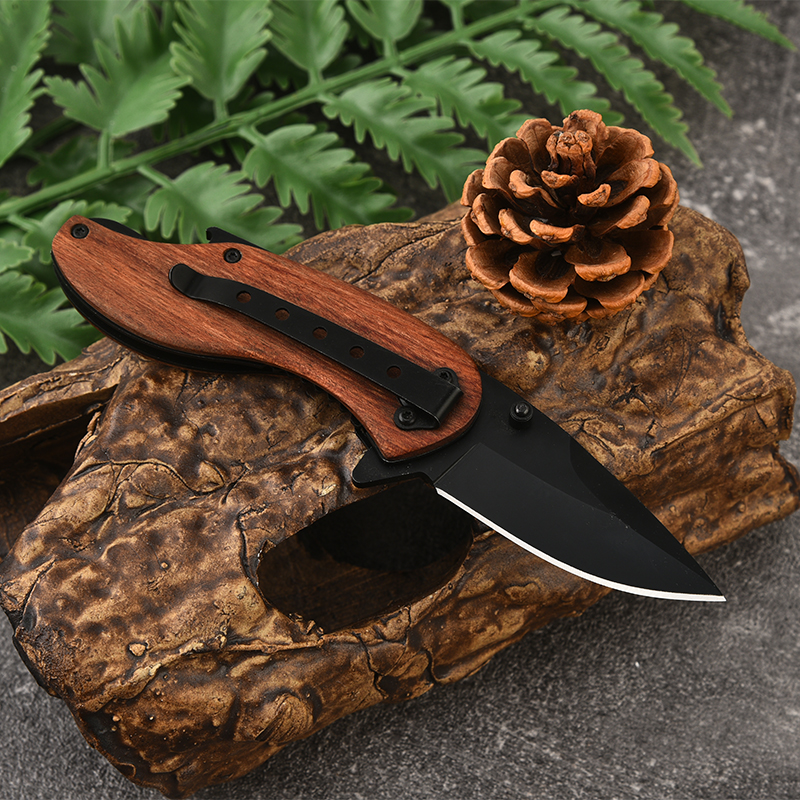
Before ordering an OTF knife in quantity, establish a repeatable inspection process.
A useful sample review should separate cosmetic observations from functional concerns. An attractive finish cannot compensate for unreliable deployment or locking.
1. Confirm the model, dimensions, materials, and mechanism against the specification.
2. Inspect the chassis, blade opening, screws, clip, and exposed edges.
3. Operate the knife in a clear area, following the manufacturer's instructions.
4. Check that deployment and retraction complete consistently.
5. Assess switch comfort and ordinary handling.
6. Compare blade movement across multiple samples.
7. Perform controlled cutting tests on suitable everyday materials.
8. Record faults, photographs, and sample identifiers.
This is a proposed purchasing workflow, not a universal certification standard. Buyers should agree appropriate acceptance criteria with the supplier before inspection begins.
For example, a distributor developing a packaging-oriented pocket knife might compare cutting performance, switch comfort, and maintenance instructions across several samples. The strongest candidate is not necessarily the one with the loudest deployment.
Reviews become more useful when comments are converted into measurable purchasing questions.
A statement such as "the switch feels better" identifies an ergonomic preference. It does not prove that a product has superior service life.
Similarly, "almost no blade play" describes one owner's impression unless the assessment includes a defined method and multiple units.
| Feedback theme | Follow-up question | Useful purchasing evidence |
|---|---|---|
| Comfortable switch | Is operating resistance consistent? | Agreed force measurements and sample comparison |
| Reliable deployment | Under what conditions was it evaluated? | Documented test conditions and recorded failures |
| Little blade movement | How was movement assessed? | Defined inspection method and acceptance criteria |
| Good cutting performance | What materials were cut? | Repeatable tasks using representative materials |
| Easy maintenance | Are instructions clear and model-specific? | Written care guidance and support procedures |
The important distinction is between preference and performance. Both matter, but they require different evidence.
This approach also helps brands avoid turning isolated online comments into unsupported product claims.
Incomplete deployment or retraction should prompt a careful assessment.
Debris, adhesive residue, or unsuitable lubrication can interfere with operation. Persistent failures may require professional service rather than repeated home troubleshooting.
Stop using the knife if it does not lock reliably, develops unexpected movement, or behaves unpredictably. Keep hands and other objects away from the blade path.
An obstructed blade that disengages from its drive mechanism is not proof that contact is harmless. The edge can still cause injury.
Do not intentionally fire the blade against your body or objects to demonstrate a supposed safety feature. Follow the manufacturer's model-specific resetting instructions instead of generic online techniques.
Before retracting the blade, remove moisture, dirt, and adhesive residue where practical.
Use only manufacturer-approved cleaning products and lubricants. Excess oil can leave unwanted residue, while unsuitable products may interfere with the mechanism or damage finishes.
A practical routine includes:
- Inspecting the exposed blade and opening.
- Removing surface contamination safely.
- Using approved air-cleaning methods where instructed.
- Applying the specified lubricant sparingly.
- Checking operation after maintenance.
- Contacting support if problems persist.
Avoid unapproved disassembly. Warranty terms, internal construction, and service procedures differ between manufacturers.
The manual should take priority over general advice, especially for internal cleaning or resetting a disengaged blade.
For private-label buyers, OTF development involves more than selecting a blade color and adding a logo.
The purchasing brief should define the intended user, destination market, cutting tasks, target price, and service expectations.
Before approving production, discuss:
- Product drawings and critical dimensions.
- Steel specification and material traceability.
- Heat-treatment and hardness verification.
- Mechanism tolerances and operating-force targets.
- Functional testing and sampling plans.
- Finish consistency and corrosion evaluation.
- Packaging, warnings, and maintenance instructions.
- Warranty responsibilities and replacement procedures.
A functioning prototype demonstrates that a design can work. It does not establish that every production unit will perform consistently.
That makes repeatability a central commercial requirement. Ask how production changes are controlled and how nonconforming units are identified.
Yangjiang Holin Industrial Co., Ltd. manufactures folding knives, pocket knives, utility knives, and outdoor tools, supported by an in-house development team and its own production factory.
Its stated one-stop OEM/ODM services cover product design, development, and volume production. Buyers considering an OTF project should discuss mechanism feasibility, destination-market requirements, sample validation, and available support before assuming a particular configuration is production-ready.
For a tailored sourcing discussion, send Holin your target market, intended application, preferred dimensions, material requirements, and anticipated order volume. Use those details to establish a practical development brief and identify what must be verified before production.
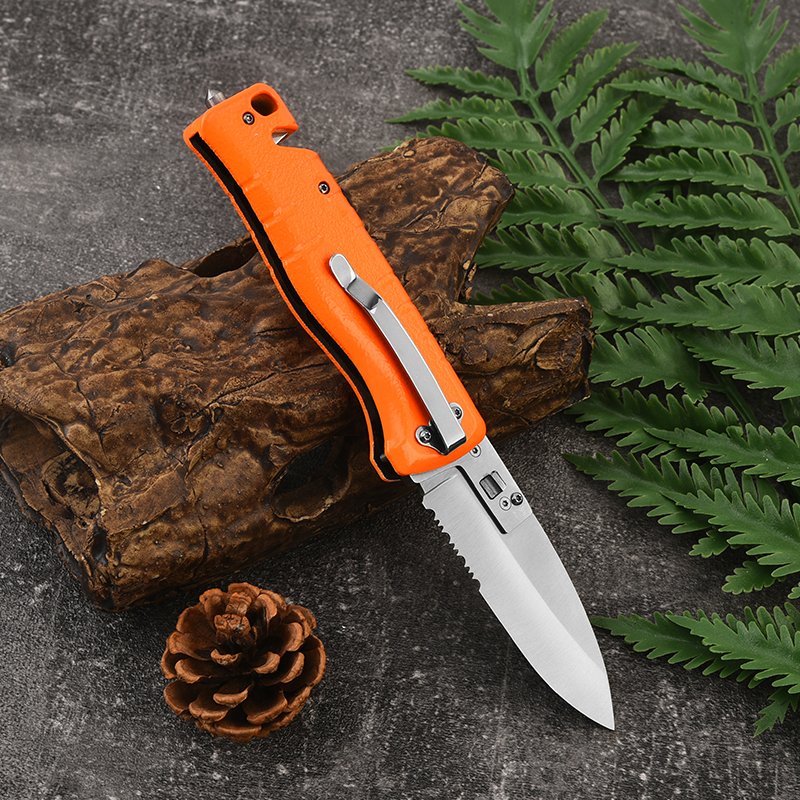
The best OTF knife for everyday carry is one that is lawful in your location, comfortable to operate, reliable in normal use, and suited to your cutting tasks. A practical single-edged blade, manageable switch, and clear maintenance support provide a useful starting point.
No. OTF describes a blade that extends through the front of its handle. Automatic versions are common, but buyers should verify the actual operating mechanism. Double-action automatic models extend and retract through switch operation; other designs work differently.
Some designs have perceptible movement associated with operating clearance. Evaluate it against the manufacturer's specification and consistent sample behavior. Increasing movement, uncertain engagement, or unreliable locking should not be dismissed as normal.
Possible causes include debris, residue, lubrication problems, obstruction, or a mechanical fault. Follow the manufacturer's maintenance guidance and stop using a knife that does not lock reliably. Persistent issues require supplier or manufacturer support.
An appropriate model can perform controlled utility cuts, but an OTF mechanism does not make the knife suitable for prying, batoning, or chopping. Choose tools according to the workload, operating environment, and manufacturer's stated limitations.
Verify destination-market requirements, approved specifications, sample consistency, materials, functional acceptance criteria, packaging instructions, and after-sales arrangements. Agree these points before production, rather than relying only on appearance, alloy names, or a single successful prototype.
- Blade HQ — "OTF Knives Buyer's Guide – How to Choose an OTF Knife." The original article supplied for reconstruction; supports the discussion of OTF terminology, mechanisms, ergonomics, blade shapes, blade movement, and maintenance considerations. [bladehq]
- Larrin Thomas, Knife Steel Nerds — "Knife Steels Rated by a Metallurgist – Toughness, Edge Retention, and Corrosion Resistance," October 19, 2021. Supports the distinction between toughness and edge retention, steel-property trade-offs, and the importance of hardness and carbide characteristics.[knifesteelnerds]
- Microtech Knives Support — "Maintenance Quick Guide." Manufacturer guidance supporting debris removal, light lubrication, and avoidance of over-lubrication. These recommendations remain model-dependent. [support.microtechknives]
- Microtech Knives Support — "My Knife Is Not Deploying Correctly. How Can I Fix This?" Supports the discussion of contamination and lubrication as possible contributors to deployment problems. [support.microtechknives]
- Cornell Law School, Legal Information Institute — 15 U.S. Code § 1242. Statutory source for the discussion of federal restrictions involving switchblade knives and interstate commerce; not a substitute for destination-specific legal advice.[law.cornell]
- American Knife and Tool Institute — "State Knife Laws." Supports the distinction between possession, carry, sale, manufacture, concealment, and location-specific restrictions. [akti]
- AR15.com — "Kershaw Livewire OTF? Magnacut?" Public owner discussion used qualitatively to identify switch preference, pocketability, and perceived blade movement as evaluation themes. Participants' comments are anecdotal, not verified testing or Holin customer testimonials. [ar15]
- Yangjiang Holin Industrial Co., Ltd. — Company information supplied for this article. Source for the stated product categories, in-house development team, owned factory, scalable production capability, and OEM/ODM services. No official company URL or independent supporting documentation was supplied; these statements have therefore not been independently verified.[Yangjiang Holin Industrial Co., Ltd.]


