


Views: 287 Author: Holin Knife Publish Time: 2026-10-14 Origin: Site


Content Menu
● What Is a Hunting Knife Used For?
● Types of Hunting Knives and Their Best Applications
● Fixed Blade vs. Folding Hunting Knife: Which Should You Choose?
>> Fixed-Blade Hunting Knives for Easier Cleaning
>> Folding Hunting Knives for Compact Carry
● How to Choose Hunting Knife Steel and Blade Geometry
>> Balance Edge Retention, Toughness, and Corrosion Resistance
>> Choose Cutting Geometry Before Decorative Features
● Wet-Grip Performance: The Handle Detail Buyers Often Miss
● Replaceable-Blade Hunting Knives: What User Feedback Reveals
● Field Dressing Hygiene: A Sharp Knife Is Only Part of the System
>> A Practical Preparation and Cleanup Checklist
● An OEM/ODM Hunting Knife Specification Buyers Can Actually Use
>> Validate Samples Before Approving Bulk Production
● Develop a Custom Hunting Knife Range with Holin
● Frequently Asked Questions About Hunting Knives
>> What Is the Best Hunting Knife for Field Dressing Deer?
>> Is a Fixed Blade Better Than a Folding Hunting Knife?
>> What Blade Length Should a Hunting Knife Have?
>> Are Replaceable-Blade Hunting Knives Worth Buying?
>> Which Steel Is Best for a Hunting Knife?
>> Can a Manufacturer Customize Hunting Knives for a Private-Label Brand?
Hunting knives should make game processing controlled, efficient, and easier to manage—not simply look impressive in a sheath. Whether you need a hunting knife for field dressing deer, a compact skinning knife, or a custom hunting knife range for your brand, start with the cutting task, cleaning requirements, and maintenance plan.
My recommendation is to evaluate the complete system: blade geometry, steel, handle, carry method, and upkeep. A prestigious steel name cannot compensate for poor grip or an edge that is too thick for precise slicing. For commercial buyers, the same principle applies: define the user's job before approving the product specification.
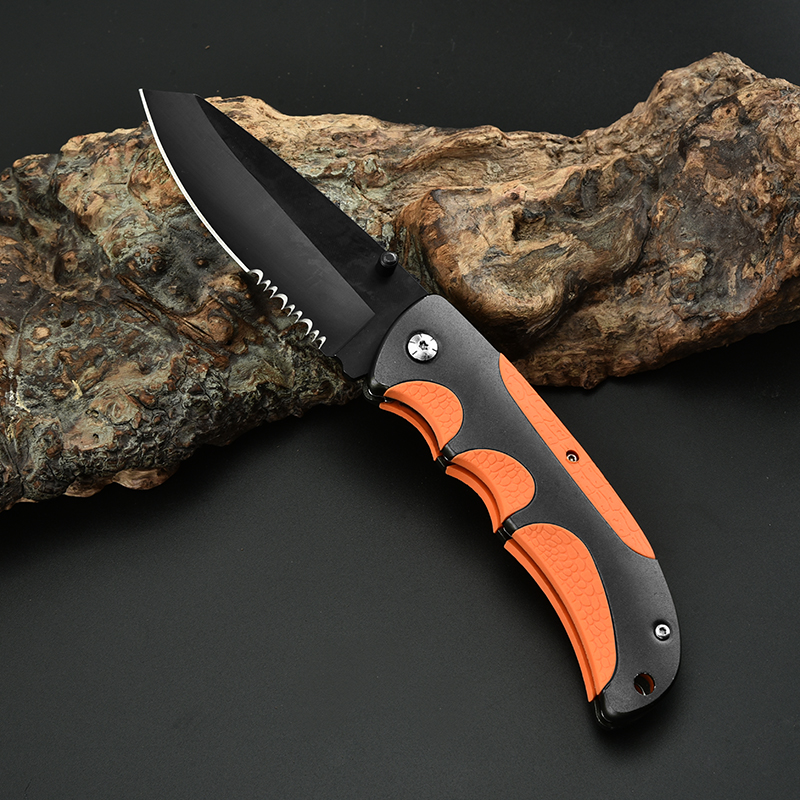
A hunting knife is primarily a game-processing tool. Typical jobs include field dressing, removing hide, separating meat, and preparing a cape for taxidermy. It is not primarily a weapon or a substitute for every tool in a camping kit.
These jobs demand different levels of precision. A broad, curved edge can help with skinning, while a narrow blade improves access around bones. Detailed caping benefits from a small, controllable point. The best hunting knife is therefore the one that matches your intended work, not necessarily the largest or most expensive option.
Use this comparison to build a practical kit rather than buying several tools that perform the same job.
| Knife type | Main application | Selection priority | Important limitation |
|---|---|---|---|
| General-purpose hunting knife | Field dressing and general processing | Controllable point and effective slicing edge | Less specialized for detailed work |
| Skinning knife | Separating hide from tissue | Curved belly and secure grip | Broad shapes may restrict tight access |
| Boning knife | Separating meat around bones | Narrow blade and maneuverability | Not intended for prying or chopping bone |
| Caping knife | Detailed trophy preparation | Small blade and precise tip | Technique matters as much as size |
| Bird and trout knife | Small game and fish | Compact, slender blade | Limited reach for larger processing jobs |
| Replaceable-blade knife | Fine cutting without field sharpening | Secure blade attachment and safe replacement | Spare blades require careful storage and disposal |
A gut hook can assist with opening hide, but it does not eliminate the risk of damaging underlying organs. A bone saw handles appropriate sawing tasks; it should not encourage using a knife as a lever against bone.
A fixed blade generally offers a simpler cleaning layout because it lacks a folding pivot and locking mechanism. It can be a practical main processing tool when sheath carry is acceptable.
However, fixed blades are not automatically hygienic. Handle joints, exposed fasteners, textured surfaces, and sheath interiors can retain contamination. Evaluate the actual construction, not just the knife category.
Check whether the sheath holds the knife securely and allows controlled withdrawal. Carry comfort matters too: an excellent blade becomes frustrating if the sheath interferes with walking, sitting, or a backpack waist belt.
A folding hunting knife reduces packed length and can suit hunters who prioritize compact equipment. Its tradeoff is additional cleaning attention around the pivot, blade channel, and lock.
Before buying, check lock engagement, blade play, and access for cleaning. Follow the maker's maintenance instructions rather than assuming that every folder can be submerged or disassembled. A folding knife should not be treated as a pry bar simply because its lock feels strong.
Steel selection involves competing properties:
- Edge retention affects how long the edge continues cutting under particular conditions.
- Toughness describes resistance to cracking and chipping.
- Corrosion resistance reduces, but does not eliminate, maintenance demands.
- Sharpening effort influences how easily you can restore performance with your available equipment.
Metallurgical testing places AEB-L and 14C28N among useful high-toughness stainless options. Higher-wear-resistance steels can offer different advantages, but steel rankings are not finished-knife rankings. Heat treatment, hardness, blade geometry, and edge preparation influence the result.
For a custom product, ask the manufacturer to document the steel grade, target hardness range, and inspection method. Avoid claims such as "never needs sharpening" or "completely rustproof" unless their exact scope is supported by appropriate evidence.
A drop-point profile is a sensible starting point for an all-purpose hunting knife because its lowered point supports controlled work. A curved belly supports sweeping skinning cuts, while a narrower blade improves access during boning.
Blade length alone is an incomplete specification. Buyers should also review thickness behind the edge, grind consistency, point shape, and sharpening angle. A thick outdoor blade may resist certain loads yet feel inefficient during delicate meat processing.
I would prioritize control over dramatic styling. Decorative serrations, oversized guards, and aggressive textures should earn their place through practical evaluation rather than appearance alone.
A handle that feels comfortable in a showroom may behave differently with gloves, moisture, or repeated cutting. Evaluate the combination of shape, texture, and balance rather than relying on the material label.
Rubberized surfaces, textured composites, and shaped synthetic handles can each be useful, depending on their execution. Deep texture may improve purchase but also create cleaning challenges. Pronounced finger grooves may suit one hand and feel restrictive in another.
For sample evaluation:
1. Compare several hand sizes and the gloves your customers normally use.
2. Check for pressure points during controlled, repeated cutting.
3. Assess grip with safely simulated wet conditions, away from live processing tasks.
4. Inspect handle seams and recesses for cleaning access.
5. Record the knife's weight together with its sheath or spare-blade holder.
These observations create a stronger specification than descriptions such as "ergonomic" or "non-slip" without a defined test.

Public hunting discussions show a meaningful tradeoff. Some users appreciate readily available sharp edges and compact spare blades. Others report cleaning difficulties or blades breaking when bent against bone.
These comments are individual experiences, not representative failure-rate data. Their value is identifying questions that buyers should investigate: Can the attachment area be cleaned? Is replacement manageable with gloves? Does the instruction sheet clearly prohibit twisting and prying?
Do not assume that every replaceable hunting blade uses a surgical-scalpel mounting system. Compatibility, attachment geometry, and replacement procedures vary by design.
A practical setup includes compatible spares, the manufacturer's replacement instructions, and a rigid, puncture-resistant container for used blades. Never leave discarded blades in a carcass, gut pile, or campsite. Account for every blade before leaving.
The original selection question should extend beyond sharpness. Meat quality also depends on contamination control and prompt cooling. Careful handling remains important whether the final meat becomes steaks or ground venison.
Before the hunt, pack disposable gloves, suitable cleaning supplies, clean towels, and a realistic cooling plan. Inspect the cutting edge and carry system before entering the field.
During processing:
- Wear disposable gloves and maintain hand hygiene.
- Avoid puncturing the stomach and intestines.
- Clean the knife frequently to limit transferring contamination.
- Remove visible contamination and keep meat away from dirty equipment.
- Follow local wildlife guidance for handling and testing requirements.
Penn State's deer-handling guidance recommends refrigerating the carcass below 40°F as soon as possible after reaching home or camp. That temperature is a handling target, not a guarantee that previously mishandled meat is safe.
Afterward, clean the blade, handle, accessible mechanisms, and contaminated equipment according to their instructions. Dry thoroughly before storage. Use lubricants only where appropriate for the design and intended food contact. Never place a dirty knife into a clean sheath and consider the cleanup complete.
For brands, importers, and distributors, a product photograph is not a manufacturing brief. Convert your intended customer experience into documented requirements before requesting quotations.
| Specification area | What to define |
|---|---|
| User and application | Game size, processing tasks, carry environment |
| Blade | Profile, length, thickness, grind, edge geometry |
| Material | Steel grade, heat-treatment requirements, hardness range |
| Handle | Material, dimensions, texture, glove compatibility |
| Mechanism | Lock or replaceable-blade attachment, where applicable |
| Carry system | Retention, mounting arrangement, drainage, packed weight |
| Maintenance | Cleaning access, care instructions, replacement procedure |
| Commercial requirements | Branding, packaging, order quantities, target market |
| Acceptance criteria | Inspection methods, agreed limits, sample approval process |
A disciplined sample review connects the specification to the delivered product:
1. Confirm dimensions, materials, finish, and identification against the agreed brief.
2. Compare cutting performance using consistent, documented conditions.
3. Evaluate grip, cleaning access, sheath retention, and relevant mechanisms safely.
4. Document defects and revisions with photographs and measurable criteria.
5. Approve a reference sample and define production inspection requirements.
A few successful cuts do not establish long-term durability. Likewise, checking one sample's hardness does not demonstrate consistency across an entire shipment. Testing scope and sampling expectations should be agreed before production, not negotiated after a problem appears.
Yangjiang Holin Industrial Co., Ltd. manufactures folding knives, pocket knives, utility knives, and outdoor tools. With its own research and development team and production factory, the company provides one-stop OEM/ODM support covering product design, development, and batch production.
For a proposed hunting-oriented range, begin with your target customer, blade format, preferred materials, branding requirements, order quantity, and destination market. Product-specific feasibility, testing, and commercial terms should then be confirmed during development.
Send Holin your product brief and reference requirements to discuss a custom knife project. A clear brief helps align design decisions, sample evaluation, and bulk production around the performance your customers actually need.

A controllable general-purpose blade is a practical starting point. Prioritize a secure grip, suitable slicing geometry, and easy cleaning. Add specialist tools if your processing or trophy requirements justify them.
A fixed blade usually has fewer mechanisms to clean. A folder offers compact carry but requires closer attention around the pivot and lock. Choose according to maintenance habits and carry requirements.
There is no universal optimum. A medium-sized blade suits many general tasks, while smaller blades support detailed caping and small-game work. Evaluate reach, maneuverability, and geometry together.
They can be useful when immediate edge replacement matters. Consider spare availability, attachment security, replacement technique, cleaning access, and used-blade storage. They do not eliminate maintenance or safe handling responsibilities.
The right choice balances toughness, edge retention, corrosion resistance, and sharpening effort. Ask about heat treatment and blade geometry as well as grade. No steel performs best in every application.
OEM/ODM development can cover design, materials, handles, branding, and packaging, subject to supplier capability and project agreement. Define acceptance criteria early and approve samples before committing to bulk production.
1. [Blade HQ — Hunting Knives: Everything You Need to Know]. Background on hunting knife types, applications, and selection considerations. [bladehq]
2. [Larrin Thomas, Knife Steel Nerds — Knife Steels Rated by a Metallurgist: Toughness, Edge Retention, and Corrosion Resistance]. Published October 19, 2021. Technical background on steel properties and performance tradeoffs. [knifesteelnerds]
3. [Penn State Extension — Proper Field Dressing and Handling of Wild Game and Fish]. Guidance on contamination prevention, equipment hygiene, cooling, and storage. [extension.psu]
4. [Penn State Extension — Field Dressing Deer Pocket Guide]. Practical guidance on prompt field dressing, safe handling, and carcass cooling. [extension.psu]
5. [Washington Department of Fish and Wildlife — Food Safety Guidelines for Game Meat]. Public-agency recommendations on protective gloves, carcass handling, and game meat safety. [wdfw.wa]
6. [Reddit, r/Hunting — Replaceable Blade Knife]. Published February 2018. Anecdotal user feedback on spare blades, cleaning, and blade durability; not representative testing data or verified customer testimonials. [reddit]


