


Views: 220 Author: Holin Knife Publish Time: 2026-08-27 Origin: Site


Content Menu
● OEM Folding Knife vs Branded Knife: Core Difference
● Why OEM Folding Knives Can Deliver Higher Margins
>> 1. Control Your Retail Positioning
>> 2. Build a More Defensible Price
>> 3. Reduce Layered Distribution Costs
>> 4. Own the Customer Relationship
● The Real Margin Formula for Folding Knife Buyers
>> Illustrative Margin Scenario
● When a Branded Knife May Be More Profitable
>> Branded Products Work Well When
● When OEM Folding Knives Are the Better Business Model
● Product Development Decisions That Affect Profitability
>> High-Value Customization Areas
>> Customization That Requires Extra Caution
● Quality Control Is a Margin-Protecting Investment
>> Recommended Pre-Production Checklist
● How to Evaluate an OEM Folding Knife Manufacturer
● A Practical OEM Margin Roadmap
● OEM Folding Knife or Branded Knife?
● FAQ
>> 1. Is an OEM folding knife cheaper than a branded knife?
>> 2. What is the difference between OEM and ODM folding knives?
>> 3. What is the typical MOQ for custom folding knives?
>> 4. Can I add my logo to folding knives and packaging?
>> 5. How can I protect the quality of a custom pocket knife order?
>> 6. Are folding knives suitable for all global markets?
>> 7. How long does OEM folding knife development take?
For distributors, outdoor retailers, promotional-product companies, and emerging knife brands, the OEM folding knife vs branded knife decision is ultimately a margin decision. A branded knife may offer immediate consumer recognition, but an OEM folding knife can create stronger long-term gross-margin potential when a buyer controls product positioning, design differentiation, pricing, and repeat purchasing.
At Yangjiang Holin Industrial Co., Ltd., we work with buyers who need more than a standard folding knife supplier. They need a manufacturing partner capable of turning a market concept into a consistent, retail-ready product line—whether the requirement is a pocket knife, utility knife, outdoor tool, or a fully customized private-label folding knife.
The key question is not simply, "Which option costs less?" It is: Which business model gives you more control over your profit, customer relationship, and category growth?

A branded knife is a finished product sold under an existing manufacturer's trademark. The buyer typically purchases inventory at wholesale price and resells it with limited control over product specifications, packaging, intellectual property, or market positioning.
An OEM folding knife is produced by a manufacturer for sale under the buyer's own brand. The buyer may customize the knife design, blade material, handle construction, logo, packaging, accessory configuration, and target price point.
| Factor | OEM Folding Knife | Existing Branded Knife |
|---|---|---|
| Brand ownership | Buyer owns the market-facing brand | Original brand owner retains control |
| Product customization | High, depending on project scope | Usually limited to no customization |
| Retail price control | Strong | Often constrained by market pricing |
| Product differentiation | Can be designed into the product | Often identical to competitors' offerings |
| Initial development effort | Higher | Lower |
| Upfront investment | Tooling, sampling, packaging, and MOQ may apply | Mainly inventory purchase |
| Long-term margin potential | Often higher | Often more limited |
| Customer loyalty | Built around the buyer's brand | Built around another brand |
| Speed to launch | Can require development time | Usually faster |
| Supply-chain control | Direct manufacturer relationship | Dependent on brand distributor policies |
A branded knife can be appropriate for retailers that need recognized products immediately. However, an OEM folding knife is usually more attractive for companies aiming to establish a proprietary product range and improve margin control over time.
The strongest financial advantage of OEM manufacturing is not necessarily the factory price alone. It is the buyer's ability to create a product that is difficult to compare directly with competing listings.
When multiple retailers sell the same branded folding knife, price competition becomes intense. Customers can compare the SKU, model number, product images, and reviews within seconds. That often forces resellers to compete through discounts, bundled promotions, or lower margins.
With a customized folding knife, the buyer can create a distinct commercial offer.
A private-label knife can be positioned around a specific buyer segment:
- Everyday carry folding knives for urban users
- Compact outdoor pocket knives for hikers
- Heavy-duty work knives for industrial users
- Utility knives for hardware and DIY channels
- Gift-box folding knife sets for promotional campaigns
- Branded camping tools for outdoor retailers
- Tactical-inspired tools for specialty markets, where permitted by local rules
This positioning allows the product to compete on design, practical use, packaging, service, and brand story, rather than on unit price alone.
For example, two folding knives may use a similar blade length and locking structure. But one may be sold as a generic low-price item, while another is presented as an EDC tool with a textured handle, upgraded packaging, laser-engraved logo, care instructions, and a clear target customer. The second product may command a higher retail price because the customer perceives a more complete solution.
A branded knife has a public reference price. Buyers can easily search the model and compare sellers.
An OEM folding knife can use unique combinations of:
- Blade profile and finish
- Handle material and color
- Locking mechanism
- Pocket clip style
- Thumb stud, flipper, or opening-hole configuration
- Custom logo placement
- Retail packaging
- Multi-tool features
- Gift accessories
- Product naming and collection design
These details make direct price comparison more difficult. They also help a buyer justify a premium.
Margin improves when the product is not a commodity.
When purchasing an established brand, the factory's price is usually only one part of the final cost structure. The product may pass through a brand owner, regional importer, master distributor, and local wholesaler before reaching the retailer.
Direct OEM cooperation can simplify the purchasing chain. The buyer works with the manufacturer and invests in its own branding rather than paying for another company's trademark and distribution structure.
That does not mean OEM is automatically cheaper in every order. Development, packaging, testing, shipping, compliance work, tooling, and inventory management all affect the real landed cost. But for repeat orders and scalable product lines, direct production can provide more room for commercial planning.
A customer who buys an existing branded knife may remember the knife manufacturer's name—not the reseller's name.
A customer who buys a private-label folding knife interacts with your brand. This creates opportunities to sell related products such as:
- Fixed-blade outdoor knives
- Multi-tools
- Utility knife blades
- Sharpeners
- Sheaths and pouches
- Camping accessories
- Gift sets
- Replacement parts, where applicable
The first product sale may produce a modest margin. The brand relationship can generate greater value through repeat purchases and category expansion.
Many purchasing teams focus too heavily on FOB price. That can create expensive mistakes.
A better approach is to calculate expected margin using total commercial cost:
Gross Margin=(Net Selling Price−Total Landed Cost)/Net Selling Price×100
For an OEM folding knife, total landed cost may include:
- Product unit price
- Sample and development costs
- Tooling amortization
- Custom packaging
- Freight and insurance
- Import duty and taxes
- Quality inspection
- Compliance documentation
- Warehousing
- Marketplace fees
- Marketing and promotional costs
- Returns and warranty allowances
For a branded knife, additional costs may include:
- Higher wholesale price
- Minimum advertised price restrictions, if applicable
- Limited price flexibility
- Distributor markups
- Competitive discounting
- Lower ability to create exclusive bundles
The following example is hypothetical. Actual costs depend on material selection, product complexity, order volume, destination, and commercial terms.
| Item | OEM Folding Knife | Branded Knife |
|---|---|---|
| Landed cost per unit | $8.50 | $15.00 |
| Typical retail price | $29.99 | $29.99 |
| Gross profit per unit | $21.49 | $14.99 |
| Gross margin | 71.7% | 50.0% |
| Product uniqueness | High | Low to medium |
| Price comparison pressure | Lower | Higher |
In this scenario, the OEM option creates more gross profit per unit. However, the buyer must still cover branding, product development, inventory risk, and marketing. The model works best when the buyer has a clear sales channel and can place repeat orders.
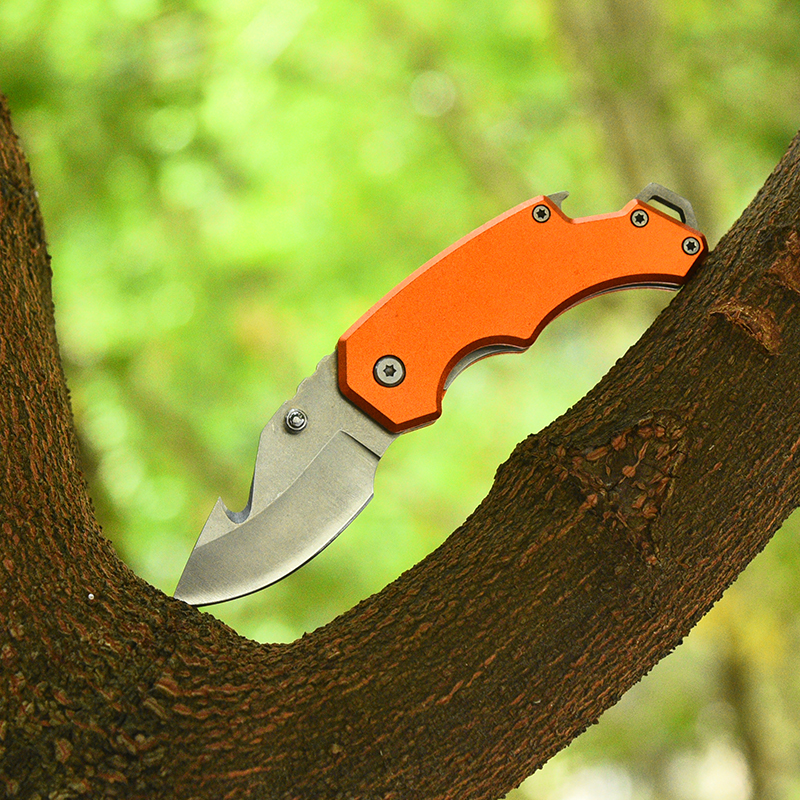
OEM manufacturing is not the right answer for every buyer. A branded knife can deliver better practical returns in specific circumstances.
- You need inventory immediately.
- Your store relies on established brand recognition.
- You are testing a new category with limited capital.
- You do not have a marketing team or brand strategy.
- Your sales volume is too low to support custom packaging or minimum order quantities.
- You need proven products with established customer reviews.
- You sell through a channel where branded search demand is already strong.
For a small retailer, purchasing a recognized knife brand may reduce operational complexity. The retailer can benefit from existing demand, known product specifications, and established consumer trust.
However, this model usually has a ceiling. When the same product is available through multiple sellers, margin can erode quickly.
OEM folding knives are especially valuable when the buyer wants to create an asset—not only resell inventory.
Choose OEM or private-label knife manufacturing when you want to:
1. Develop a proprietary folding knife collection.
2. Enter a specific market niche with tailored features.
3. Build a recognizable brand identity.
4. Offer exclusive products to distributors or retail partners.
5. Improve control over packaging and customer experience.
6. Create product bundles unavailable from competitors.
7. Scale repeat orders with more predictable specifications.
8. Protect margins through differentiated designs and branded presentation.
For instance, an outdoor retailer may identify demand for compact, corrosion-resistant folding knives with an earth-tone handle, lightweight carry clip, branded sheath, and premium gift box. A standard branded knife may not match every requirement. An OEM project lets the retailer build the exact product specification around its customer profile.
Not all customization adds value. Some changes increase cost without meaningfully improving customer willingness to pay.
The most successful OEM folding knife projects balance product performance, visual distinction, manufacturability, and target retail pricing.
- Handle material: G10, aluminum, stainless steel, wood, ABS, and other options affect appearance, grip, durability, and price position.
- Blade finish: Satin, stonewashed, black-coated, mirror-polished, and coated finishes can change perceived value.
- Logo application: Laser engraving, printing, embossing, and packaging branding create stronger product ownership.
- Packaging: A retail box, gift box, blister card, pouch, or custom insert can substantially influence shelf appeal.
- Blade design: Blade geometry should fit the intended use, whether for daily carry, utility work, outdoor activities, or collection.
- Functional features: A pocket clip, lanyard hole, liner lock, frame lock, back lock, or assisted-opening design should be selected based on the user, market, and applicable requirements.
- Complex mechanisms with insufficient testing
- Overly decorative designs that reduce usability
- Unusual materials with inconsistent supply
- Features that may create market-access or safety concerns
- Designs copied too closely from existing market products
- Premium packaging that does not match the target retail price
A profitable knife product is not the one with the most features. It is the one that delivers a clear customer benefit at a price the target market accepts.
Quality problems can destroy the advantage of a low manufacturing cost. In folding knives, common issues may include inconsistent blade centering, weak lock engagement, uneven grinding, sharp handle edges, coating defects, loose screws, poor opening action, or packaging damage.
A reliable OEM project should establish measurable quality expectations before mass production.
- Confirm blade material and hardness target.
- Approve blade profile, thickness, and edge configuration.
- Define handle material, color standard, and surface finish.
- Confirm lock type and functional performance requirements.
- Approve logo artwork and placement.
- Confirm packaging artwork, barcode, warnings, and carton marks.
- Establish acceptable quality limits for inspection.
- Review pre-production samples before bulk production.
- Define product-testing requirements for the target market.
- Confirm shipping method, carton dimensions, and loading plan.
For European sales, businesses placing consumer products on the market must account for the EU General Product Safety Regulation. The framework includes product-safety obligations, technical documentation, risk assessment, product identification, safety information, and responsible-person requirements in relevant cases.
For U.S. sales, product businesses should also review applicable consumer-product requirements and relevant rules administered by the U.S. Consumer Product Safety Commission.
Compliance planning is not an administrative detail. It is a margin-protection tool. Product holds, returns, relabeling, recalls, and rejected shipments can cost far more than careful preparation before production.
A strong supplier should do more than quote a unit price. The manufacturer should be able to support development decisions and maintain stable output across production runs.
When evaluating an OEM folding knife manufacturer, ask these questions:
- Does the manufacturer have an internal design and development team?
- Can it provide samples based on your drawings, ideas, or target-market requirements?
- What materials, locks, finishes, and handle options can it produce?
- Can it support custom packaging and private-label branding?
- What is the normal minimum order quantity for standard and customized projects?
- How are incoming materials, assembly, and final products inspected?
- Can the supplier support third-party inspection?
- How does it handle specification changes after sample approval?
- Can it provide production photos, sample confirmation, and batch traceability?
- What export markets has it served?
- Can it help identify product information, labeling, or packaging needs for the destination market?
At Yangjiang Holin Industrial Co., Ltd., our approach is to move from concept to production through a structured process: product discussion, specification review, sampling, confirmation, mass production, quality control, and delivery coordination. This helps buyers reduce ambiguity before they commit to volume.
A disciplined launch process can reduce financial risk while preserving the upside of private-label ownership.
1. Define the target customer. Identify who will buy the knife, where they shop, how they use it, and what price range they accept.
2. Set a target retail price first. Work backward from the intended selling price to determine the maximum sustainable landed cost.
3. Choose only meaningful custom features. Prioritize changes that improve usability, visual identity, or perceived value.
4. Request a detailed quote. Separate unit cost, tooling, packaging, sample fees, and other project costs.
5. Build and approve samples. Do not move to mass production based only on product photos or verbal confirmation.
6. Plan compliance and labeling early. Product documents, warnings, traceability, and local requirements should be considered before packaging is finalized.
7. Inspect before shipment. Confirm key dimensions, function, finish, logo accuracy, packaging, and carton condition.
8. Track sell-through and returns. Use real customer feedback to improve the next production run rather than guessing.
This process makes OEM manufacturing more predictable and helps protect the margin advantage created by a differentiated product.
If your priority is speed, low complexity, and immediate access to recognized demand, a branded knife may be the practical choice.
If your goal is to build a differentiated product line, control your market position, create repeat-purchase opportunities, and improve long-term gross-margin potential, an OEM folding knife is usually the stronger strategic option.
The most profitable path is often a phased model: begin with a focused custom product, validate sales through a defined channel, then expand into a coordinated collection of folding knives, pocket knives, utility knives, and outdoor tools under your own brand.
Ready to develop a folding knife that fits your market instead of competing on someone else's product? Contact Yangjiang Holin Industrial Co., Ltd. with your target market, expected order volume, preferred materials, feature requirements, and packaging concept. Our team can help turn your idea into an OEM or ODM knife project built for scalable production.
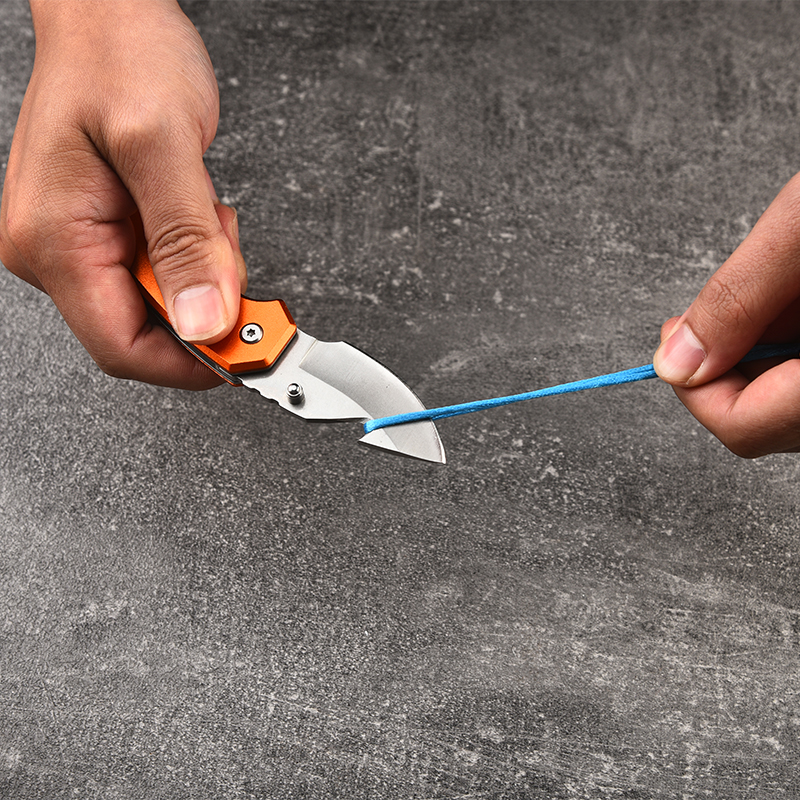
Not always at the beginning. Custom development, packaging, tooling, and minimum order quantities can increase the initial investment. However, OEM folding knives often provide better long-term margin potential because buyers control the brand, product positioning, and retail price.
OEM usually means the manufacturer produces a knife based on the buyer's specification, design, or branding requirements. ODM typically means the buyer selects or modifies an existing manufacturer-developed design and sells it under their own brand.
MOQ depends on the knife structure, materials, customization level, packaging, and production requirements. Standard models with logo and packaging customization may have lower requirements than fully new designs requiring dedicated tooling.
Yes. Common options include laser engraving on the blade or handle, printed logos, custom retail boxes, gift boxes, pouches, inserts, hang tags, labels, and carton markings.
Start with a detailed product specification, approve samples before mass production, define inspection standards, confirm packaging requirements, and arrange inspection before shipment. Keep approved samples and technical records as the production reference.
No. Product laws, import restrictions, carrying rules, blade restrictions, labeling, and safety requirements vary by country and region. Buyers should verify the requirements of the destination market before confirming a design or placing an order.
Timing depends on whether the project uses an existing model or a completely new design. Sampling, material sourcing, tooling, artwork approval, packaging development, production scheduling, and quality inspection all influence the lead time.
1. [U.S. Consumer Product Safety Commission: Regulations, Laws & Standards]
2. [U.S. Consumer Product Safety Commission overview — USA.gov]
3. [EU General Product Safety Regulation guidance — U.S. International Trade Administration]


