


Views: 258 Author: Holin Knife Publish Time: 2026-10-01 Origin: Site


Content Menu
● Camping Pocket Knife vs Everyday Carry Pocket Knife: Quick Comparison
● What Changes When You Take a Pocket Knife Camping?
>> Cutting Tasks and Grip Matter More Than Blade Size
>> A Folding Knife Has Outdoor Limits
● What Makes an Everyday Carry Pocket Knife Practical?
>> Comfort Determines Whether You Carry It
>> Public Carry Is a Design Constraint, Not an Afterthought
● Blade Steel, Geometry, and Lock: What Actually Matters?
>> Select Steel for the Environment and Maintenance Habits
>> Match the Lock and Opening Method to Use and Law
● Can One Pocket Knife Handle Camping and Daily Carry?
● A Five-Step Field Test Before You Buy
● What Should OEM/ODM Buyers Specify?
>> Build Separate Briefs for Camping and Daily Use
● Care and Responsible Use in Both Settings
● Final Verdict: Choose the Work, Then the Knife
>> Is a Camping Pocket Knife Stronger Than an EDC Knife?
>> What Blade Shape Works for Both Camping and Daily Use?
>> How Long Should an Everyday Carry Blade Be?
>> Can I Use One Knife for Camp Food and Cardboard Boxes?
>> Is a Locking Blade Always the Best Choice?
>> Can I Pack a Pocket Knife for a Flight to a Camping Destination?
A pocket knife for camping vs a pocket knife for everyday carry is less a contest between two blade types than a choice between two working environments. At camp, wet hands, cordage, food, and dirt shape the job. In daily life, comfort, quick access, cardboard, and local carry rules often matter more. Some folding knives can do both. The right choice begins with what you actually cut—and where you can lawfully carry it.
From a product-development perspective, specifications should follow use, not the other way around. A larger blade does not automatically make a better camping knife; an ultralight handle does not automatically make a better daily tool. This guide compares the features that change the user experience and offers a practical framework for buyers and product teams.

| Buying factor | Pocket knife for camping | Pocket knife for everyday carry |
|---|---|---|
| Typical work | Cut cord, open food packaging, make light repairs, prepare snacks | Open parcels, trim tape, cut tags, handle small household tasks |
| Design priority | Wet-hand grip, easy cleaning, dependable cutting outdoors | Slim carry, low weight, accessible clip, comfortable daily use |
| Blade profile | Versatile drop point or food-friendly broad cutting edge | Drop point for general use; straight edge for precise package work |
| Handle | Enough length and texture for controlled cuts | Thin enough to ride comfortably in a pocket |
| Maintenance challenge | Moisture, grit, food residue | Adhesive, cardboard dust, pocket lint |
| Common compromise | Bulk and harder pocket carry | Less grip or cutting capacity during longer camp tasks |
These are design tendencies, not fixed categories. A compact, well-made folder may work on both sides. Your trip length, clothing, hand size, and local rules can matter more than the label on the box.
At a campsite, a folder earns its place through ordinary work: opening meal packets, trimming cord ends, slicing fruit, or cutting repair tape. Those tasks reward a controllable edge and a handle that feels secure when your hands are damp. They do not require a dramatic blade shape or the longest blade you can carry.
A drop-point blade is a sensible starting point because it balances useful cutting edge with a relatively robust tip. A plain edge is simple to maintain and works across food and general camp chores. If rope is a frequent task, consider whether a partially serrated edge offers enough benefit to justify the more involved sharpening. Test the actual materials your users cut rather than assuming that a feature will help.
Handle geometry deserves equal attention. A thin handle can disappear in a pocket but may feel cramped during repeated cuts. A fuller, textured handle can improve control, yet aggressive texture may catch on clothing. The goal is secure grip without unnecessary bulk.
A pocket knife is convenient because its edge folds into the handle. The pivot and lock, however, add moving parts that can collect grit. Even a locking folder is not a substitute for a fixed-blade knife, saw, or hatchet when the task involves splitting wood, chopping, or forceful twisting.
Avoid prying with the tip or striking the spine. Such use can damage the edge, pivot, or lock and raise the risk of injury. For a weekend of light camp chores, a folder may be enough. For repeated wood processing, choose a tool designed for that job. The most useful camping kit is not the one with the most aggressive-looking knife; it is the one that matches the planned work.
A daily-use pocket knife spends far more time in your pocket than in your hand. Closed length, weight, thickness, and clip position therefore affect its value. A published buying guide suggests roughly 2.5–3.5 inches of blade and about 4 inches closed as a general everyday-use range, but these are shopping guidelines, not universal targets or legal thresholds.
Start with your clothing and routine. A thick handle may be fine in work trousers but uncomfortable in lighter clothing. A deep-carry clip can reduce how much of the handle protrudes; an overly stiff clip can make retrieval frustrating. Left-handed users should check whether the clip can be reversed and whether the opening method and lock release work comfortably with either hand.
For cardboard and tape, a clean-cutting edge and easy access often matter more than maximum blade thickness. A slim drop point is versatile. A straight-edged profile can suit controlled package cuts, provided the tip and edge fit your other tasks. Do not confuse fast opening with safe use: clear your cutting path and close the blade deliberately.
A knife can be excellent on a workbench and unsuitable for lawful public carry. Rules differ by destination, blade design, opening mechanism, and context. In the UK, government guidance says its public-carry exception applies to folding pocketknives whose cutting edge is no longer than 3 inches and which do not lock. Other knives may require a good reason, and prohibited designs have separate restrictions. Do not treat a short blade alone as proof that a product is lawful everywhere.
Travel adds another layer. For US flights, the Transportation Security Administration lists pocket knives as not permitted in carry-on bags but permitted in checked bags. Check destination and carrier requirements before packing. A camping trip does not erase restrictions encountered on the way there.
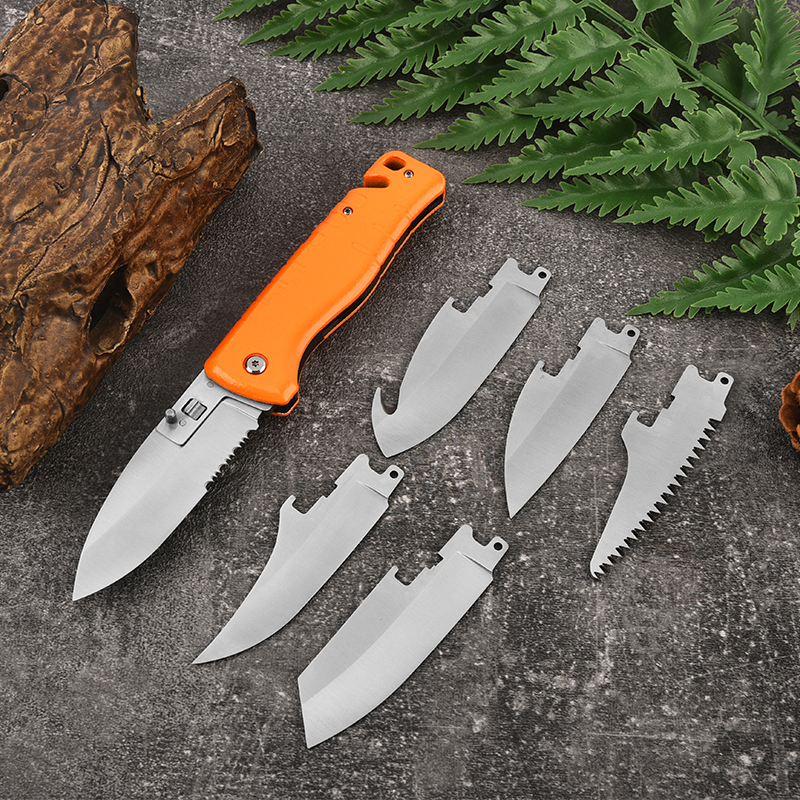
A steel name is not a complete performance specification. Edge retention describes how long a blade keeps cutting; toughness relates to resistance to cracking or chipping; corrosion resistance matters when a knife meets rain, sweat, or food acids. Metallurgical comparisons show meaningful trade-offs among these properties. Heat treatment, edge geometry, and sharpening can change how two knives made from the same steel perform.
For wet or coastal camping, corrosion resistance and a design that dries easily deserve attention. A non-stainless steel may still be useful for an attentive owner, but it calls for more care. For frequent cardboard cutting, edge life may move higher on the list. For either use, insist on a consistent heat-treatment specification rather than choosing on alloy name alone.
A practical buyer should ask: How easily can the edge be sharpened with the tools available? Does the chosen finish hide residue around the pivot? Can the manufacturer document the specified steel and hardness range? A premium alloy cannot compensate for a slippery handle, poor edge finish, or inconsistent assembly.
A functioning lock can help keep a blade open during normal cutting, but no lock makes careless technique safe. Liner locks, frame locks, back locks, and other mechanisms differ in operation, cleaning access, and hand placement during closure. The relevant question is not simply which sounds strongest. It is whether the user can open, control, and close the knife reliably with the intended grip and conditions.
Check each sample for full lock engagement, unwanted blade movement, and consistent opening effort. If a target market restricts locking knives or certain opening mechanisms, design the product line around those rules before investing in tooling. Regulatory fit is part of functional fit.
Yes, if the outdoor work is moderate and you accept a few compromises. Consider a folding knife with a comfortable but not oversized handle, a versatile plain-edge blade, a secure carry method, and materials suited to the expected moisture. It should be easy to clean after camp and comfortable enough to carry during an ordinary day.
Imagine two users. One commutes all week and takes occasional overnight trips, mainly cutting food packets and cord. A compact, corrosion-resistant folder could cover both settings. Another spends long periods preparing materials at camp and wears light office clothing on weekdays. A bulkier camp-oriented folder may frustrate daily carry, while a very small daily knife may tire the hand outdoors. Two purpose-built tools may be the better purchase for the second user.
The answer is also shaped by hygiene. If your daily knife opens shipping cartons and accumulates adhesive, clean it before it touches food. If your camp knife is exposed to grit and moisture, dry the blade and pivot before storage. Carrying one knife for two contexts works best when its owner maintains it for both.
Rather than ranking knives by appearance, run a short, repeatable trial. This is a suggested evaluation method, not a published performance standard or a claim about any particular factory's test results.
1. List real tasks. Write down five cuts the intended user makes most often, such as opening cartons, slicing fruit, or trimming cord. Separate daily tasks from camp tasks.
2. Check carry conditions. Measure the sample's closed length, thickness, and weight. Carry it in the intended pocket or pack position, with the blade safely closed, to assess comfort and clip retention.
3. Test controlled cuts. Use identical material and a safe cutting surface for each sample. Note grip security, cutting effort, and whether the handle creates pressure points. Never use your hand as a backing surface.
4. Inspect operation. Open and close the knife according to its instructions. Check for reliable lock engagement where applicable, excessive blade play, rough movement, and whether fingers stay clear during closure.
5. Clean and retest. After permitted use, remove residue, dry the knife, and check whether the action or grip changes. Record observations instead of relying on first impressions.
For a purchasing team, this method turns vague labels such as "outdoor ready" into observable requirements. A sample that cuts well but is uncomfortable to carry should not automatically win an everyday-use brief. A light folder with poor grip should not automatically win a wet-weather brief.
For brands and importers, the camping-versus-EDC decision should appear in the product brief, not merely the finished packaging. Yangjiang Holin Industrial Co., Ltd. describes its offering as in-house R&D, factory production, and one-stop OEM/ODM support spanning design, development, and volume manufacturing. Buyers can use that scope to define two distinct product directions and request samples before committing to a bulk order. No product-specific performance or certification is implied here; each proposed specification should be verified against samples and documents.
A camping brief might prioritize a textured handle, corrosion-conscious material selection, easy cleaning, and secure handling with damp hands. An everyday-carry brief might prioritize slimness, clip comfort, predictable one-handed operation where lawful, and a blade profile suited to packages. A shared platform can reduce unnecessary variation, but only if both audiences accept the resulting compromises.
Before approving a design, ask the manufacturer to confirm the intended steel and heat-treatment range, dimensions and weight, edge finish, opening and lock construction, handle material, clip orientation, and packaging. Agree on measurable sample-acceptance criteria for blade play, opening consistency, fit, finish, and labeling. Then verify what can be produced repeatably at the proposed order volume.
Destination-market requirements should be reviewed separately. A design acceptable for one retail channel or country may need a different blade, lock, or warning label for another. Treat artwork, legal review, and physical testing as parts of the same launch plan.
A sharp, clean knife is easier to control than a neglected one, but careful technique remains essential. Cut away from your body, use a stable surface, and keep the non-cutting hand clear. Do not ask a folding blade to do the work of a screwdriver, pry bar, or saw.
After handling food or dirty camp materials, clean the blade and reachable surfaces according to the maker's instructions. Dry the pivot area thoroughly and use only a lubricant appropriate to the knife's intended use. Remove tape residue and pocket lint before they interfere with movement. If the lock does not engage reliably, stop using the knife until it is inspected or repaired.
Outdoors, responsible use also means leaving the campsite as you found it. Pack out food wrappers, offcuts, and other waste. Check site rules before collecting materials or cutting vegetation. A knife is a cutting tool, not permission to alter the landscape.
For occasional outdoor chores, a comfortable, corrosion-resistant folder may serve as both a camping pocket knife and an everyday carry pocket knife. Choose a dedicated camping tool when extended wet-hand work or heavier tasks exceed what a compact folder does safely. Choose a slimmer daily model when all-day comfort and lawful carry are your main constraints.
Planning a private-label knife range? Send Yangjiang Holin Industrial Co., Ltd. your target markets, intended tasks, preferred dimensions, materials, projected order volume, and branding requirements. Request separate camping and everyday-carry concepts, physical samples, and documented acceptance criteria before approving mass production.
Not necessarily. "Camping" and "EDC" describe intended use, not a standardized strength rating. Compare blade geometry, pivot construction, lock operation, handle grip, and the work you plan to do. For forceful wood processing, use a suitable fixed blade or dedicated camp tool rather than assuming a folder is stronger because of its label.
A plain-edge drop point is a versatile starting point. It can handle routine camp repairs, food packaging, and daily parcel opening. If precise box cuts dominate your work, another profile may feel better; if specialized tasks dominate, choose around those tasks instead.
There is no universal answer. A 2.5–3.5-inch blade is a commonly suggested shopping range, not a legal safe harbor. Assess hand fit, pocket comfort, actual cutting needs, and the rules where you plan to carry it. Some destinations also regulate lock types or opening methods.
Yes, but clean it between tasks. Cardboard dust and tape adhesive can contaminate a blade intended for food. A knife used outdoors also needs careful drying before storage, especially around the pivot. If you frequently handle food, a separate food-preparation tool may be more convenient.
No. A lock can improve stability during ordinary cutting, but its design and operation must suit the user. Laws may also treat locking knives differently from non-locking folders. Never rely on a lock as a reason to twist, pry, or put fingers in the blade's path.
For flights screened by the US Transportation Security Administration, a pocket knife is not allowed in carry-on baggage but can be placed in checked baggage. Secure the blade for safe handling and check airline, destination, and local carry rules before travel.
- REI Co-op, "How to Choose Knives and Tools." Overview of folding versus fixed blades, handles, blade shapes, locks, and camp tasks. [Read the guide].
- Larrin Thomas, Knife Steel Nerds, "Knife Steels Rated by a Metallurgist – Toughness, Edge Retention, and Corrosion Resistance." Metallurgical analysis of steel properties, edge geometry, and heat treatment. [Read the analysis].
- Ben Dawson, CleverHiker, "Best Pocket Knives of 2026." Field-tested knife evaluations and general size and weight guidance; updated June 23, 2026. [Read the guide].
- UK Government, "Selling, Buying and Carrying Knives and Weapons." Official public-carry guidance, exceptions, and prohibited designs. [Read the guidance].
- US Transportation Security Administration, "Pocket Knife." Official carry-on and checked-bag guidance. [Read the rule].
- US National Park Service, "Leave No Trace Seven Principles." Campsite care, waste disposal, and outdoor conduct. [Read the principles]. [rei]


