


Views: 224 Author: Holin Knife Publish Time: 2026-10-03 Origin: Site


Content Menu
● Slip Joint vs Locking Mechanisms
>> What Is a Slip Joint Pocket Knife?
>> What Is a Locking Pocket Knife?
>> Core Differences at a Glance
● Which Pocket Knife Is More Popular?
>> What Public Evidence Actually Shows
>> Popularity Depends on the Buyer
>> A Practical Demand Validation Method
● Choosing and Developing Your Knife
>> Cutting Performance and Everyday Safety
>> Legal Suitability and Destination Markets
>> Durability, Maintenance, and Ownership
>> Cost and Manufacturing Priorities
>> An Illustrative Two-Market Product Brief
>> Sample Approval Before Bulk Production
● Develop Your OEM/ODM Range With Holin
>> Is a Slip Joint Knife Safer?
>> Are Locking Pocket Knives More Popular?
>> Can a Slip Joint Handle Camping?
>> Does a Half-Stop Lock the Blade?
>> Is a Locking Knife Always Automatic?
>> Which Mechanism Should Private-Label Buyers Choose?
A slip joint pocket knife and a locking pocket knife appeal to different buyers, so neither can credibly claim universal popularity. Locking designs suit buyers prioritizing blade security and convenient operation, while slip joints remain compelling for traditional styling, everyday cutting, and markets where non-locking construction matters.
For retailers, outdoor brands, and private-label buyers, the useful question is not simply which mechanism attracts more attention. It is which design fits your customers, intended applications, and destination-market requirements.
At Yangjiang Holin Industrial Co., Ltd., our focus includes folding knives, pocket knives, utility knives, and outdoor tools. With an in-house development team, our own factory, and OEM/ODM capabilities, we approach this comparison as a product-development decision—not a contest with one automatic winner.

A slip joint pocket knife uses a tensioned backspring pressing against the blade tang. This spring provides resistance as the blade opens and closes, helping it remain in position during appropriate cutting tasks.
Crucially, it does not lock the blade open. Sufficient closing force can overcome the spring resistance without operating a separate release.
Traditional examples often feature nail nicks and two-handed opening. However, those features are not the definition of a slip joint; modern designs can use different opening arrangements.
Some models include a half-stop, where the blade pauses partway through closing. This can make handling more deliberate, but it is not a lock and does not guarantee injury prevention.
A well-designed slip joint should balance opening resistance, controlled closing, comfortable handling, and secure closed-blade retention.
A locking pocket knife incorporates a mechanism that mechanically blocks the blade from folding until the user disengages it.
Common mechanisms include:
- Lockback: A spring-loaded locking element engages the blade tang.
- Liner lock: A flexible section of the internal liner moves behind the tang.
- Frame lock: Part of the handle frame acts as the locking element.
- Crossbar lock: A spring-loaded bar interacts with the tang to secure the blade.
Opening method and locking mechanism are separate specifications. A manually opened knife can lock, and a locking knife is not necessarily automatic or assisted.
Many locking models support one-handed operation, but this depends on the complete design. Buyers should assess the actual sample rather than infer usability from the mechanism name.
| Factor | Slip joint pocket knife | Locking pocket knife |
|---|---|---|
| Open-blade retention | Spring resistance without a positive lock | Mechanical engagement blocks folding |
| Closing method | Controlled pressure overcomes spring tension | User disengages the locking mechanism |
| Common positioning | Traditional, compact, gift-oriented, everyday carry | Practical utility, modern everyday carry, outdoor |
| Operational priorities | Manageable spring tension and deliberate handling | Reliable engagement and accessible release |
| Safety limitation | Closing force can overcome spring resistance | Damage, poor engagement, or misuse can compromise retention |
| Legal considerations | Non-locking construction may matter in certain jurisdictions | Locking construction can affect carry classification |
| Purchasing focus | Spring consistency, fit, finish, and closed retention | Lock engagement, release operation, fit, and finish |
Neither mechanism determines blade sharpness, corrosion resistance, edge retention, or overall manufacturing quality.
The available sources do not establish a comparable global sales split between slip joint pocket knives and locking pocket knives. A worldwide percentage claim would therefore overstate the evidence.
One useful historical indicator comes from Victorinox. In its 2022 anniversary release, the company reported producing approximately 10 million Swiss Army Knives annually. It also identified the Classic pocket knife as its best-selling model historically.
That demonstrates substantial demand for the Swiss Army Knife category. However, Victorinox offers different mechanisms, and its total production figure is not a slip-joint-only sales count. It cannot establish which mechanism leads globally.
Meanwhile, manufacturers such as Benchmade offer multiple locking systems alongside slip-joint products. Their mechanism guides demonstrate product diversity and different intended applications—not audited market share.
The defensible conclusion is straightforward: both categories have established commercial relevance, but their relative popularity depends on the audience and market being measured.
For a customer seeking controlled package opening, compact carry, and traditional appearance, a slip joint may offer everything required.
For someone who values positive blade retention and convenient repeated operation, a locking model may be the more attractive choice.
These are product-fit judgments, not verified sales rankings.
A specialist outdoor retailer, a heritage accessories shop, and a corporate-gift distributor can each encounter different preferences. Their customers are solving different problems, even when all three businesses sell pocket knives.
My recommendation is to define popularity before using it to guide procurement. Units sold, revenue, repeat purchases, and customer satisfaction answer different questions.
A premium model can generate more revenue while selling fewer units. A low-priced gift knife can achieve high volume without becoming the preferred everyday tool.
Before committing to a large OEM order, test matched product concepts in your own channels.
1. Select one slip joint and one locking design with similar positioning.
2. Keep blade material, finish, photography quality, and price reasonably comparable.
3. Present both to the same intended customer group.
4. Track qualified inquiries, sample requests, conversions, and return reasons.
5. Review results by destination market and customer segment.
Also record why buyers choose each knife. Comments about appearance, opening effort, lock confidence, or legal concerns often explain results better than a single conversion rate.
This method produces decision-relevant evidence without pretending that one retailer's experience represents the entire global market.
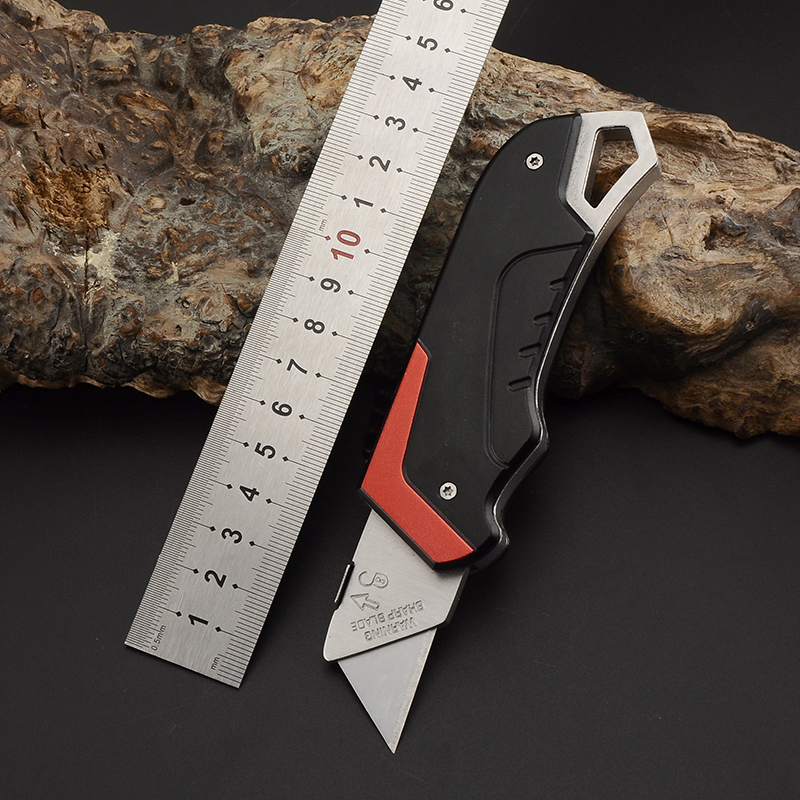
For ordinary slicing, blade geometry and edge condition deserve as much attention as the mechanism. A lock does not make a thick blade slice efficiently, and a slip joint does not automatically limit cutting quality.
A slip joint requires particular care around forces that push the blade toward closure. Avoid pressing on the spine, twisting the blade, or using it as a pry tool.
A locking knife provides positive retention when properly engaged, but it is not fail-proof. Check engagement before cutting, and stop using a knife that develops looseness, damaged components, or unreliable operation.
For either design, keep fingers away from the closing path. Cut away from the body where practical, use stable support, and select a dedicated tool for prying or other non-cutting tasks.
Mechanism choice should support safe technique rather than substitute for it.
Carry rules can materially influence product selection.
UK government guidance identifies an exception for folding pocketknives with a cutting edge no longer than 3 inches, provided they are not lock knives. Locking knives do not fall within that particular exception.
This does not mean every small slip joint is acceptable in every situation. Threatening use remains illegal, and specific locations, circumstances, and other restrictions still matter.
For international purchasing, distinguish ownership, importation, sale, and public carry. These are separate compliance questions.
Before approving a market-specific design, obtain current local guidance covering blade dimensions, locking construction, opening method, age restrictions, and intended distribution.
Avoid blanket claims such as "legal worldwide" or "travel-safe." Non-locking construction alone cannot support either promise.
Neither mechanism is automatically more durable. Material selection, heat treatment, tolerances, assembly, and user behavior influence service life.
Slip joints need consistent spring behavior and well-fitted contact surfaces. Locking knives need dependable engagement and release, with particular attention to interacting components.
For routine care:
- Remove debris from the blade, pivot, and accessible mechanism surfaces.
- Dry the knife after exposure to moisture.
- Follow the manufacturer's lubrication and maintenance instructions.
- Inspect for corrosion, looseness, abnormal resistance, or incomplete engagement.
- Discontinue use when operation becomes unreliable.
Do not encourage customers to modify springs or locking surfaces. Those changes can alter retention and handling.
Accessible cleaning and understandable care instructions should be part of the product brief, not an afterthought.
A simpler mechanism does not guarantee a cheaper finished product.
Premium handle materials, decorative finishes, complex blade grinding, and demanding cosmetic standards can make a slip joint expensive. A standardized locking design may be economical at suitable volumes.
Request quotations against the same specification framework. Include blade steel, handle construction, finish, packaging, inspection requirements, tooling, and order quantity.
For slip joints, prioritize consistent opening effort, backspring alignment, blade clearance, and closed retention.
For locking models, prioritize engagement consistency, release accessibility, component fit, and performance across production tolerances.
The best comparison is based on specifications, not assumptions about mechanism complexity.
Consider a hypothetical brand developing two pocket knives. This is a planning example, not a reported Holin customer project.
Its first concept targets buyers who want understated styling and light everyday cutting. The brief specifies a compact slip joint, comfortable spring resistance, straightforward care instructions, and dimensions reviewed for the destination market.
Its second concept targets buyers who prioritize repeated utility cutting and positive blade retention. The brief specifies a manually opened locking knife, secure grip geometry, accessible release, and documented inspection criteria.
The designs might share visual branding without sharing identical mechanisms.
This approach lets a brand serve distinct needs while avoiding the unsupported assumption that one knife should suit every customer.
A useful approval process examines more than appearance.
1. Confirm blade dimensions, materials, finishes, and packaging against the agreed brief.
2. Review opening and closing with the intended user group, including relevant hand sizes.
3. Evaluate spring behavior or lock engagement using an agreed controlled procedure.
4. Check alignment, blade clearance, handle edges, fasteners, and closed retention.
5. Review repeated operation and representative cutting tasks.
6. Record acceptance criteria and compare production samples with the approved reference.
Potentially destructive testing belongs with qualified personnel using suitable fixtures. Informal impact demonstrations should not replace a documented test plan.
For both mechanisms, define the expected use and limitations before setting performance criteria.
Yangjiang Holin Industrial Co., Ltd. supports product design, development, and bulk production through its in-house team and factory.
Whether your range needs a traditional slip joint pocket knife or a modern locking pocket knife, begin with the customer's needs and the destination market.
Send Holin your target market, intended applications, blade and handle preferences, estimated order quantity, packaging requirements, and target price range. Request an OEM/ODM discussion to turn that brief into a practical development and sampling plan.

Not inherently. A slip joint lacks a positive lock, so appropriate technique and controlled handling are essential. A locking knife adds blade retention but still requires correct engagement and careful closing.
The reviewed evidence does not establish a worldwide winner. Locking designs address positive-retention needs, while slip joints serve traditional, everyday, and market-specific preferences. Measure demand within your intended segment.
A suitable model can perform light camp tasks such as food preparation and controlled cord cutting. Do not treat it as a substitute for tools designed for chopping, prying, or forceful work.
No. A half-stop provides an intermediate resting position during blade movement. It does not mechanically lock the blade open or eliminate the need to keep fingers clear.
No. Locking describes open-blade retention. Automatic describes an opening system. Many locking pocket knives open manually through a thumb stud, hole, nail nick, or other feature.
Choose according to customer tasks, local rules, handling preferences, target price, and verified sample performance. If your buyers have distinct needs, develop separate concepts rather than forcing one mechanism across the range.
- Victorinox. "[Victorinox Celebrates a Very Special Anniversary]" (2022). Source for the historical annual production figure and Classic model statement. The reported total is not a slip-joint-only count or a current global market-share estimate. [victorinox]
- Benchmade. "[Knife Mechanisms Explained: Features, Uses, and Tips]." Manufacturer explanation of slip-joint, lockback, liner-lock, frame-lock, and AXIS mechanisms. Used for operating principles, not independent market-share or comparative strength claims. [benchmade]
- UK Government. "[Selling, Buying and Carrying Knives and Weapons]." Official guidance supporting the discussion of the non-locking folding-pocketknife exception and cutting-edge limit. This article does not replace jurisdiction-specific legal advice. [gov]
- Blade HQ. "[Knife Lock Types: How to Close Every Pocket Knife]." Supplementary retailer explanation of locking systems, slip joints, and operating differences. [bladehq]


