


Views: 281 Author: Holin Knife Publish Time: 2026-08-31 Origin: Site


Content Menu
● Why China Is a Major Outdoor EDC Knife Sourcing Base
● How We Evaluated Manufacturers
>> What a Qualified EDC Knife Factory Should Understand
● Top 10 Outdoor EDC Knife Manufacturers in China
>> 1. Yangjiang Holin Industrial Co., Ltd.
>> 2. Yangjiang Grand Harvest Industrial Co., Ltd.
>> 4. Yangjiang Deng Knives Group
>> 5. Yangjiang Winbow Industry and Trade Co., Ltd.
>> 6. Yangjiang Zhiyuan Hardware & Plastic Products Co., Ltd.
>> 7. Yangjiang Vast State Industrial & Trade Co., Ltd.
>> 8. Tangforge
>> 9. Yangjiang Sun-Young Hardware Factory
>> 10. Kegani / Yangjiang Premium EDC-Oriented Suppliers
● Manufacturer Comparison Table
● Materials and Technical Standards for Outdoor EDC Knives
>> Heat Treatment Matters More Than Many Buyers Expect
>> Handle Materials and Hardware
● Certifications and Compliance Considerations
>> Common Documents to Request
>> How to Verify an ISO Certificate Is Still Valid
● The Hidden Risks Buyers Often Miss
>> 2. Sample Quality Does Not Match Mass Production
>> 3. The Factory Is Actually a Trader
>> 4. Coating and Finish Failures
>> 5. Lock Reliability Is Not Fully Checked
● An Industry Insider Tip: Check the "Invisible" Parts
● Buyer's Guide: How to Source Outdoor EDC Knives Safely
>> Step 1: Build a Detailed RFQ
>> Step 2: Request Comparable Samples
>> Step 3: Evaluate Samples Systematically
>> Step 4: Approve a Golden Sample
>> Step 5: Use Third-Party Inspection
>> Step 6: Plan Logistics and Customs Early
>> 1. How can I verify whether a Chinese knife factory is a real manufacturer?
>> 2. How do I know whether the supplier really uses D2, 440C, 8Cr13MoV, or 14C28N steel?
>> 3. What MOQ should I expect for a custom Outdoor EDC Knife?
>> 4. How can I verify whether an ISO 9001 certificate has expired or belongs to the actual factory?
>> 5. Should I ask for CE or RoHS documentation for a manual folding knife?
China remains one of the world's most important sourcing bases for folding knives, pocket knives, utility knives, multi-tools, and outdoor cutting tools. For buyers building an EDC brand or expanding an outdoor-tool portfolio, the key question is not simply where to find a low-cost knife factory—it is how to identify a manufacturer that can consistently deliver the specified steel, lock structure, finish, packaging, compliance documentation, and shipment schedule.
Yangjiang, Guangdong Province, is the country's central knife-and-scissors manufacturing cluster. Official regional data reported that Yangjiang's hardware, knife, and scissors sector accounts for about 70% of China's production and approximately 85% of the country's export value in this category. In the first four months of 2025, the city's knife-and-scissors exports reached RMB 1.33 billion, up 8% year on year.
At the national level, China exported approximately USD 1.66 billion in knives in 2024, with the United States, Germany, and France among its largest destination markets. This manufacturing depth makes China particularly suitable for buyers seeking private-label folding knives, affordable-to-midrange outdoor knives, utility knives, multi-tools, and customized EDC programs.
However, supplier selection requires careful due diligence. A factory that can produce a visually appealing sample may not necessarily have the internal engineering, material control, inspection discipline, export experience, or capacity planning needed for a stable long-term program.
This article reviews 10 manufacturers and sourcing options that global buyers may consider when developing an Outdoor EDC Knife program in China.

The Chinese knife supply chain is not concentrated in one single product type. It includes factories focused on folding knives, fixed-blade outdoor knives, multi-tools, kitchen knives, utility knives, scissors, tactical-style tools, camping tools, and gift sets.
For Outdoor EDC Knife buyers, China offers several sourcing advantages:
- Mature supply chains for blade steel, handle materials, screws, pivots, liners, clips, sheaths, packaging, and surface treatments.
- Competitive production costs for private-label and promotional knife programs.
- Access to stainless-steel, tool-steel, aluminum, G10, wood, ABS, PP, nylon, micarta-style, and metal-handle configurations.
- Strong OEM and ODM capacity for custom logos, blade profiles, lock mechanisms, handle colors, retail packaging, and accessory sets.
- Existing export experience in North America, Europe, Australia, Japan, and other international markets.
- Manufacturing clusters that make it easier to source matching accessories, including tool pouches, nylon sheaths, gift boxes, display packaging, and outdoor-tool bundles.
Yangjiang is especially important because the city combines knife-making labor, component suppliers, production machinery, polishing capacity, packaging vendors, and export-oriented trading infrastructure. Products from the region are sold to more than 130 countries and regions.
For buyers, this concentration can shorten development time. A folding knife project may require blade blanking, grinding, heat treatment, CNC machining, handle molding, assembly, sharpening, laser marking, packaging, and final inspection. When these resources are available within the same manufacturing ecosystem, the project becomes easier to coordinate than when components must be sourced across multiple distant regions.
This list is not based on marketing claims alone. Professional buyers should assess knife suppliers across several operational dimensions before committing to tooling, purchase orders, or an exclusive product design.
The following criteria were used to identify manufacturers suitable for an Outdoor EDC Knife sourcing shortlist:
| Evaluation Area | What Buyers Should Check | Why It Matters |
|---|---|---|
| Manufacturing focus | Folding knives, pocket knives, fixed blades, utility knives, multi-tools, outdoor tools | A specialist factory usually understands the construction, tolerances, and failure points of its core products |
| OEM/ODM depth | Product development, CAD support, tooling, logo work, packaging, custom finishes | Determines whether the supplier can move beyond simple logo printing |
| Material transparency | Steel grade, handle material, heat treatment records, coating specification | Reduces the risk of receiving lower-grade substitutes |
| Quality control | Incoming inspection, in-process checks, final AQL inspection, functional testing | Essential for lock safety, blade centering, sharpness, and corrosion resistance |
| Export readiness | Test reports, labeling support, carton marks, customs documents, packaging compliance | Helps prevent costly delays and destination-market issues |
| MOQ flexibility | Sample support, pilot orders, repeat-order capability | Important for emerging brands and product-market testing |
| Communication efficiency | English communication, specification confirmation, revision control, response speed | Prevents misunderstandings during development |
| Delivery stability | Production scheduling, raw-material management, shipment history | Particularly important for seasonal outdoor and retail programs |
A reliable Outdoor EDC Knife manufacturer should be able to discuss more than blade shape and logo placement. During supplier conversations, ask whether the factory can clearly explain the following technical subjects:
- Blade-steel grade and its intended use.
- Heat-treatment target and hardness range.
- Blade thickness and grind geometry.
- Lock type and lock engagement consistency.
- Pivot construction, washers, bearings, and adjustment process.
- Blade-centering tolerance.
- Handle material durability and color consistency.
- Corrosion resistance of blade, screws, liners, and pocket clips.
- Coating process, adhesion, and scratch resistance.
- Salt-spray or corrosion-testing approach where required.
- Drop-test, open-close cycle, and lock-function testing.
- Packaging, labeling, warning-label, and carton-mark requirements.
A factory that cannot provide clear answers at this stage may be acting primarily as a trading company, may rely heavily on subcontracting, or may not have sufficient engineering control over the finished product.
The manufacturers below serve different buyer profiles. Some are better suited to flexible private-label projects, while others are more appropriate for established brands, larger purchasing volumes, premium material programs, or multi-tool development.
Best fit for: Small-to-mid-sized brands, distributors, importers, private-label programs, and buyers seeking flexible OEM/ODM support for folding knives, pocket knives, utility knives, and outdoor tools.
Yangjiang Holin Industrial Co., Ltd. is a Yangjiang-based knife manufacturer focused on folding knives, pocket knives, utility knives, and outdoor cutting tools. The company positions itself as an OEM/ODM partner for brands, distributors, and importers that need more than a standard catalog product with a printed logo.
One practical advantage for growing outdoor brands is Holin's product-development orientation. Its public company information states that it has a team of five designers and 12 technical experts supporting OEM and ODM development. For buyers with an early-stage concept, this type of in-house coordination can be valuable when working through blade profile changes, handle construction, color matching, branding placement, packaging, and production feasibility.
Rather than positioning itself solely as a high-volume commodity supplier, Holin is a reasonable option for customers that value communication efficiency, product customization, and a controlled transition from idea to bulk production. Its services are relevant for projects such as:
- Private-label folding knives for outdoor retailers.
- EDC pocket knives for lifestyle brands.
- Utility knives for hardware, industrial, and promotional channels.
- Outdoor-tool product lines requiring customized packaging.
- Small-to-medium-scale brand programs that need development support.
- Buyer-supplied designs requiring engineering review before production.
Core strengths
- Focus on folding knives, pocket knives, utility knives, and outdoor tools.
- Flexible OEM/ODM support for product design, development, and batch manufacturing.
- Suitable for importers and smaller brands that require responsive communication.
- Internal design and technical team supporting customized projects.
- A practical option for buyers who need a supplier willing to discuss specifications in detail rather than only quote catalog models.
Suggested buyer questions
- Which blade steels are recommended for the target retail price and market?
- Can the factory provide hardness verification for each production batch?
- What is the minimum order quantity for a customized handle, blade shape, or packaging box?
- Can the supplier support a pre-production sample and a golden sample approval process?
- How are folding action, lock engagement, blade centering, and sharpness checked before shipment?
For buyers entering the Outdoor EDC Knife category, Holin is worth considering when flexibility, product-development communication, and scalable private-label manufacturing are more important than ordering the largest possible volume from day one.
Best fit for: Buyers seeking multi-tools, multi-function knives, pocket knives, bicycle tools, and outdoor gift sets.
Yangjiang Grand Harvest Industrial Co., Ltd. has specialized in custom multi-tool pliers, multi-function knives, pocket knives, camping products, and EDC-related tools since 1993. The company presents itself as an OEM/ODM multi-tools manufacturer with more than three decades of experience.
This company is particularly relevant if your brand strategy includes tool-based EDC products rather than only single-blade folding knives. Multi-tool development involves more moving parts, more tolerance points, and more potential safety failures than a simple liner-lock folding knife. Buyers should therefore prioritize suppliers with demonstrated experience in pliers, folding tools, screwdrivers, bottle openers, saws, and other integrated mechanisms.
Core strengths
- Long manufacturing history in multi-function tools and pocket knives.
- Product range includes multi-tool pliers, folding knives, camping products, EDC tools, and bicycle tools.
- Suitable for outdoor, fishing, cycling, camping, promotional, and gift-market programs.
- Relevant for buyers seeking multi-tool sets with branded packaging.
Suggested buyer questions
- What open-close cycle testing is performed on pliers and folding tools?
- Are spring tension and pivot torque checked during final inspection?
- Can the factory provide component-level material specifications?
- Does the product meet the intended market's safety and labeling requirements?
- Can replacement components or after-sales spare parts be supplied?
Best fit for: Outdoor, tactical-style, survival, hunting, and EDC folding-knife programs.
Svega Outdoor was founded in 2002 and is headquartered in Yangjiang. It is positioned as a folding-knife manufacturer serving tactical, hunting, survival, and EDC product categories.
For buyers targeting the outdoor and tactical-style segment, a supplier's familiarity with lock mechanisms, grip ergonomics, clip construction, blade finishes, and sheath pairing is especially important. Products marketed in these categories often receive more demanding user feedback than basic promotional pocket knives, particularly around edge retention, corrosion resistance, lock reliability, and one-handed operation.
Core strengths
- Established manufacturer with a stated founding year of 2002.
- Focus on folding knives for tactical, hunting, survival, and EDC markets.
- Relevant for brands that need a broader range of outdoor-style configurations.
- Emphasizes customization and quality control in its product positioning.
Suggested buyer questions
- Which lock types are available: liner lock, frame lock, lockback, button lock, or slip joint?
- What steel grades are offered for entry-level, midrange, and higher-value programs?
- Can the supplier provide blade centering and lock-engagement inspection standards?
- What coatings are offered, and are there abrasion or corrosion test records?
- Can clip retention and screw torque be verified during final inspection?
Best fit for: Buyers seeking established stainless-steel knife production capability and a larger manufacturing base.
Yangjiang Deng Knives Group was established in 1971 and is recognized as a long-standing knife producer with a focus on stainless-steel blades and ergonomic design.
While Deng is widely associated with domestic knife production, its manufacturing scale and long history make it relevant to buyers evaluating established Yangjiang suppliers. Larger manufacturers can offer mature production systems, more standardized quality procedures, and greater capacity stability. However, they may also have higher MOQs, more formal development requirements, or less flexibility for very small private-label programs.
Core strengths
- Established in 1971.
- Long-term knife manufacturing experience.
- Known for stainless-steel knife production and ergonomic-oriented product design.
- Suitable for buyers seeking established production infrastructure.
Suggested buyer questions
- Does the factory accept custom outdoor or EDC projects beyond its standard product categories?
- What are the MOQ requirements for custom handles, blade finishes, and retail packaging?
- Can the supplier provide traceable specifications for blade steel and hardness?
- What inspection methods are used for each production stage?
- Is an on-site audit available before tooling approval?
Best fit for: Buyers seeking kitchen knives, scissors, and selected knife products from an export-oriented Yangjiang supplier.
Yangjiang Winbow Industry and Trade Co., Ltd. was founded in 2011 and specializes in kitchen knives and scissors. Although its public positioning centers on kitchenware, buyers sourcing outdoor and EDC products may still consider such suppliers when their product line includes crossover tools, utility products, compact cutting tools, or bundled outdoor-kitchen programs.
The main consideration is whether the supplier has genuine experience with Outdoor EDC Knife construction. A factory that performs well with kitchen knives may not automatically have equal expertise with folding mechanisms, pocket clips, lock systems, or outdoor-use corrosion requirements.
Core strengths
- Founded in 2011.
- Located in Yangjiang's knife-manufacturing cluster.
- Experienced in kitchen knives and scissors.
- Potential fit for brands combining outdoor culinary tools, camp-kitchen products, and cutting accessories.
Suggested buyer questions
- Does the factory manufacture folding or pocket knives in-house?
- Which production steps are subcontracted?
- Can it provide samples of existing outdoor or utility knife projects?
- Does the facility have experience with custom blade locks and pivot assemblies?
- What testing is used to validate handle durability and blade sharpness?
Best fit for: Buyers seeking a broader mix of pocket knives, kitchen knives, outdoor multifunctional tools, and hardware-based products.
Yangjiang Zhiyuan Hardware & Plastic Products Co., Ltd. is listed as a supplier producing pocket knives, kitchen knives, and outdoor multifunction products. Public marketplace information also identifies ISO 9001 certification among suppliers in the relevant category, but buyers should always verify the exact certificate holder, scope, issuing body, and expiration date directly with the factory.
The company may be a useful sourcing candidate for buyers that want to build a mixed product catalog rather than source EDC knives alone. For example, a retailer may combine pocket knives with outdoor cooking tools, compact multi-tools, and gift-set products.
Core strengths
- Product mix includes pocket knives, kitchen knives, and outdoor multifunctional tools.
- Located in Yangjiang, allowing access to the local knife-and-hardware supply chain.
- Potential fit for broad product assortments and mixed-category outdoor programs.
Suggested buyer questions
- Is the ISO certificate issued to the operating factory or a related company?
- What is the certificate scope—manufacture, trading, or another business activity?
- Can the factory provide current audit reports and production-site details?
- What specific knife categories are made in-house?
- Can the factory share a batch inspection report for a similar product?
Best fit for: Buyers seeking outdoor knives, tools, and factory-direct OEM/ODM sourcing.
Yangjiang Vast State Industrial & Trade Co., Ltd. presents itself as a B2B manufacturer of outdoor knives and tools, offering OEM/ODM solutions for global customers.
For buyers, the most important next step is to determine the depth of the company's direct manufacturing role. The phrase "industrial and trade" can describe an integrated manufacturer-exporter, but it can also refer to a business that combines in-house production with sourcing from partner factories. Neither model is inherently negative, but the buyer should know exactly who controls tooling, incoming materials, assembly, quality inspection, and shipment release.
Core strengths
- Focus on outdoor knives and tools.
- Offers OEM/ODM-oriented sourcing support.
- Potential fit for brands needing factory-direct outdoor-tool programs.
Suggested buyer questions
- Which product processes are completed in-house?
- Who owns the tooling for custom knife designs?
- Can the buyer inspect production during blade grinding, assembly, and final QC?
- Does the factory maintain material certificates for steel and handle components?
- Can the company provide a customer reference or third-party audit report?
Best fit for: Buyers seeking a custom-project supplier with stated capacity for pocket, folding, outdoor, hunting, Damascus, and gift-set knife categories.
Tangforge states that it was founded in 2008 and operates a 12,000-square-meter facility with more than 240 employees. Its published product mix includes kitchen knives, pocket/folding knives, outdoor/hunting knives, Damascus products, and gift sets. The company also states that it operates six production lines and two QC laboratories.
This broader manufacturing profile can be useful for buyers that want multiple knife categories from one supplier. For example, an outdoor brand may want a folding EDC knife, a fixed-blade camp knife, a gift set, and a kitchen-oriented camp accessory range under one brand identity.
However, buyers should independently validate all stated scale, workforce, facilities, and quality-control claims through a video audit, on-site audit, third-party inspection, or documented factory visit.
Core strengths
- Founded in 2008, according to its published company information.
- Stated 12,000-square-meter facility and more than 240 employees.
- Product coverage includes pocket/folding knives, outdoor/hunting knives, Damascus products, and gift sets.
- Stated six production lines and two QC laboratories.
Suggested buyer questions
- Are premium steels heat-treated in-house or by an external specialist?
- Can the company provide hardness results for each blade material?
- How is Damascus pattern consistency controlled across batches?
- What sample lead time applies to a custom folding knife?
- Does the factory provide pre-shipment inspection photos, reports, and AQL results?
Best fit for: Buyers looking for catalog-based folding knife, camping knife, survival knife, and multifunction knife options.
Yangjiang Sun-Young Hardware Factory publicly lists folding knives, EDC outdoor knives, multifunction camping knives, tactical-style products, and survival-oriented knife designs.
This may be suitable for buyers seeking a faster market-entry strategy based on existing models. Catalog products can reduce the time and cost required for new tooling, especially where customization is limited to logo engraving, color adjustment, packaging, and bundled accessories.
The trade-off is differentiation. If the base model is widely available, competing brands may sell a visually similar product. Buyers should therefore ask whether the supplier can provide exclusive configurations, proprietary handle molds, custom blade shapes, or restricted distribution arrangements.
Core strengths
- Existing folding, outdoor, camping, and multifunction knife offerings.
- Potential fit for faster private-label projects.
- Suitable for buyers that prefer modifying existing platforms instead of developing a product from zero.
Suggested buyer questions
- Is the selected model exclusive or sold to multiple buyers?
- Can the handle mold, blade profile, or clip shape be modified?
- Are logos laser-marked, etched, stamped, or printed?
- Can exclusive packaging and SKU-level artwork be used?
- What is the MOQ for custom colors and private-label boxes?
Best fit for: Buyers pursuing mid-to-high-end EDC products with premium-steel positioning.
Kegani is identified in an industry overview as a supplier focused on mid-to-high-end EDC products, including premium folding and fixed-blade knife OEM/ODM programs. For brands targeting enthusiast-level consumers, supplier evaluation should shift from general factory scale to material traceability, grind quality, heat-treatment consistency, precision machining, and assembly tolerances.
Premium EDC buyers often request steels such as D2, 14C28N, VG-10, 440C, or more advanced imported steel options. However, a steel name on a product page does not prove that the delivered product uses that grade. Material verification must be built into the purchase process.
Core strengths
- Mid-to-high-end EDC positioning.
- Relevant for buyers seeking premium folding and fixed-blade knife development.
- Potential fit for projects requiring more material and finish differentiation than entry-level commodity knives.
Suggested buyer questions
- Can the factory provide mill certificates or third-party material verification?
- What hardness range is targeted for each steel grade?
- What is the allowed variation in blade thickness and edge angle?
- Is CNC machining used for handles, liners, clips, or backspacers?
- Can the factory support serialized production, premium boxes, and collector-style packaging?
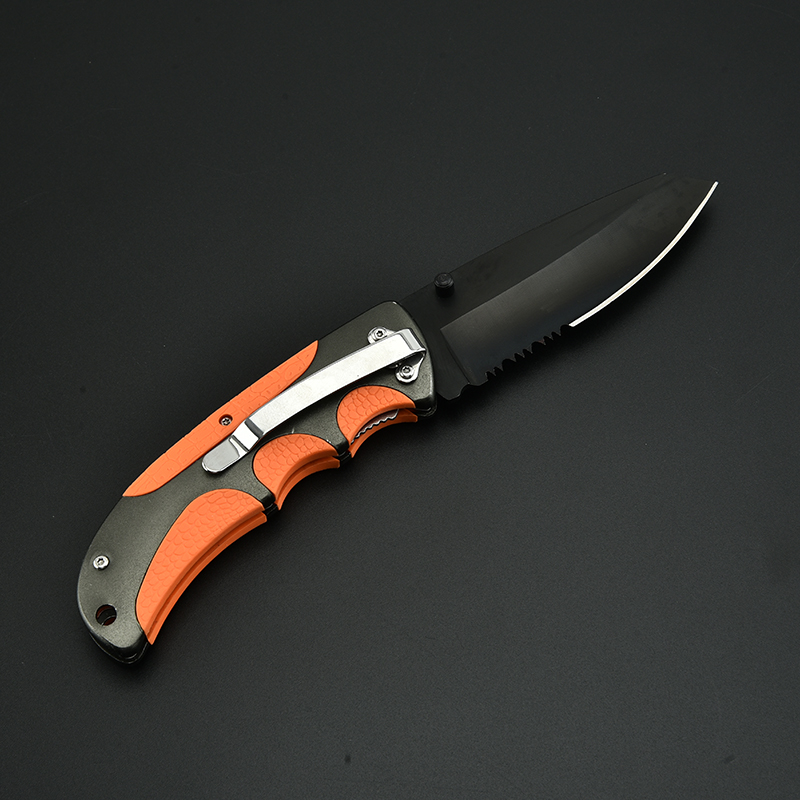
The figures below should be treated as a procurement-planning framework, not final factory commitments. Actual capacity, MOQ, lead time, and certification scope vary by SKU, steel grade, tooling, season, packaging complexity, and order schedule. Confirm all details directly in writing before issuing a purchase order.
| Manufacturer | Main Product Focus | Typical Buyer Fit | OEM/ODM Scope | Likely MOQ Position | Certification / Verification Focus |
|---|---|---|---|---|---|
| Yangjiang Holin Industrial Co., Ltd. | Folding knives, pocket knives, utility knives, outdoor tools | Small-to-mid-sized brands, importers, private-label programs | Product development, design support, branding, packaging, batch production | Flexible for development-oriented projects; confirm by SKU | Verify factory audit, material specification, QC process, and export documents |
| Yangjiang Grand Harvest Industrial | Multi-tools, pliers, pocket knives, camping tools | Outdoor, cycling, fishing, gift, and tool brands | Multi-tool development, OEM/ODM, branded sets | Moderate; depends on tool complexity | Verify function-cycle tests, tool safety checks, and production controls |
| Svega Outdoor | Folding, tactical-style, survival, hunting, EDC knives | Outdoor and tactical-style product brands | Custom folding knife options and branding | Moderate | Verify blade centering, lock testing, coatings, and corrosion control |
| Yangjiang Deng Knives Group | Stainless-steel knife products | Larger distributors and established programs | Larger-scale manufacturing and product customization | Often higher for custom projects | Verify capability for folding/outdoor products, quality systems, and custom-project terms |
| Yangjiang Winbow | Kitchen knives, scissors, related cutting products | Camp-kitchen, kitchenware, crossover-tool buyers | Product customization and sourcing support | Moderate | Verify in-house folding-knife capability before ordering |
| Yangjiang Zhiyuan Hardware & Plastic | Pocket knives, kitchen knives, outdoor multifunction tools | Mixed-category distributors | Broad product assortment and customization | Moderate | Verify exact ISO certificate holder, scope, and validity |
| Yangjiang Vast State | Outdoor knives and tools | Buyers seeking OEM/ODM outdoor-tool programs | Outdoor-tool customization | Confirm directly | Verify manufacturing vs. trading role, factory ownership, and QC responsibility |
| Tangforge | Folding, outdoor, hunting, Damascus, gift sets | Brands seeking multiple knife categories | Custom knife projects, multi-category production | Moderate to higher for complex custom designs | Verify stated facility data, QC labs, material/heat-treatment records |
| Yangjiang Sun-Young Hardware Factory | Folding, camping, survival, multifunction knives | Buyers seeking catalog-based private-label products | Logo, packaging, selected model modifications | Often lower for existing models; confirm directly | Verify design exclusivity and material consistency |
| Kegani / Premium EDC suppliers | Premium folding and fixed-blade EDC knives | Higher-value EDC brands | Premium-material and finish-oriented development | Often higher for premium specifications | Verify steel certificates, hardness testing, machining tolerances, and inspection reports |
A buyer should avoid selecting an Outdoor EDC Knife based only on product photos, blade color, or advertised steel name. Knife performance is determined by the combination of material, heat treatment, geometry, hardware, assembly, and quality control.
| Steel Category | Common Examples | Typical Use | Buyer Considerations |
|---|---|---|---|
| Entry-level stainless steel | 3Cr13, 5Cr15, 7Cr17 | Promotional knives, basic utility knives, lower-price retail products | Suitable for cost-sensitive programs, but confirm corrosion resistance and hardness |
| Midrange stainless steel | 8Cr13MoV, 9Cr18MoV, 440C, 7Cr17MoV | General outdoor, camping, folding knives | Offers a practical balance between cost, corrosion resistance, and edge retention |
| Tool steel | D2 | Midrange EDC and outdoor knives | Better wear resistance but may require stronger corrosion-control measures |
| Premium stainless steel | 14C28N, VG-10, S35VN, M390 | Higher-end EDC, enthusiast, collector, and premium-brand programs | Requires reliable steel sourcing, controlled heat treatment, and stronger documentation |
| Pattern-welded steel | Damascus-style steel | Gift, collector, premium, and visual-design products | Confirm whether it is genuine layered steel, core material, corrosion protection, and pattern consistency |
The steel grade alone is not enough. Two knives labeled as "D2" can perform very differently if the heat-treatment process, blade thickness, edge geometry, and final hardness differ.
A common sourcing mistake is to select a knife based on a promised steel name without setting an agreed hardness range. For example, an EDC blade may look correct, pass a basic visual inspection, and still disappoint users because it is too soft to hold an edge or too brittle for the intended use.
When sending a request for quotation, specify:
- Blade steel grade.
- Target hardness range, usually shown in HRC.
- Blade thickness.
- Grind type: flat grind, hollow grind, saber grind, or other design.
- Edge angle or sharpening specification.
- Finish: stonewash, satin, black oxide, PVD, titanium-style coating, bead blast, or other.
- Corrosion-resistance expectations.
- Required test method and inspection frequency.
For custom projects, request a written product specification sheet. This should become the reference document for samples, mass production, inspection, and claims handling.
Outdoor EDC knives may use aluminum, G10, FRN, ABS, nylon, stainless steel, wood, micarta-style composites, titanium, or combinations of these materials.
Buyers should assess handle materials based on the product's actual use case:
- G10 and micarta-style handles: Often selected for grip, durability, and a premium outdoor appearance.
- Aluminum: Suitable for lightweight EDC designs, but surface finishing and scratch resistance should be assessed.
- Stainless steel: Durable and cost-effective, but can add weight and become slippery without texture.
- FRN, nylon, ABS, or PP: Useful for lightweight and cost-efficient models, particularly when molded texture is needed.
- Wood: Appropriate for traditional, gift, hunting, and lifestyle designs, but requires moisture-control and color-consistency checks.
For folding knives, ask about pivot hardware, washers, bearings, screws, pocket clips, liners, and lock interfaces. These details frequently determine whether the product feels smooth and durable—or loose and inconsistent.
Not every Outdoor EDC Knife requires the same compliance documentation. The correct requirements depend on the target market, product construction, packaging, materials, and whether the knife includes electronic components or related accessories.
- Business license and legal company name.
- Factory address and production-site photos.
- ISO 9001 certificate, if claimed.
- Certificate scope and expiration date.
- Test reports for restricted substances when applicable.
- Material declarations for blade steel, handle materials, coatings, and packaging.
- Product inspection reports.
- Packaging artwork approval.
- Country-of-origin information.
- Commercial invoice, packing list, bill of lading, and customs classification support.
- Third-party inspection report for the final shipment.
RoHS is commonly associated with electrical and electronic equipment. A conventional manual knife may not automatically fall within its scope. However, buyers may still request restricted-substance testing for coatings, pigments, plastic handles, packaging inks, or accessory components to meet retailer or brand requirements.
CE marking is also not a universal "quality certificate" for manual knives. It applies only when a product falls within a relevant EU directive or regulation. Buyers should not ask a factory for CE documentation simply because the product is being sold in Europe. Instead, determine whether the specific knife, accessory, or product set falls within a legal scope requiring it.
Do not accept a PDF certificate at face value. Follow this process:
1. Check that the company name on the certificate exactly matches the legal entity on the business license.
2. Confirm that the factory address matches the production location.
3. Review the certificate scope to ensure it covers manufacturing activities relevant to the product.
4. Check the issue date and expiration date.
5. Identify the certification body that issued the document.
6. Search the certification body's public database, if available.
7. Contact the certification body directly if the certificate cannot be verified online.
8. Confirm whether the certificate covers the operating factory or only an affiliated trading company.
9. Request the most recent audit or surveillance record where appropriate.
10. Combine document checks with an on-site or third-party factory audit.
A valid ISO certificate does not guarantee that every knife is well made. It only provides information about the supplier's stated management system. Product-level inspection remains essential.
The Outdoor EDC Knife category has several sourcing risks that are not always obvious in online product listings.
A supplier may quote 440C, D2, 8Cr13MoV, or another specified steel, then use a lower-cost alternative when production starts. The finished knife may look nearly identical, but edge retention, corrosion resistance, and hardness can be significantly different.
How to reduce the risk
- Specify steel grade in the purchase order.
- Require material certificates where feasible.
- Retain a sealed, approved golden sample.
- Use third-party testing for higher-value orders.
- Randomly test blades from the final production batch.
- Do not approve production only from photos.
A factory may spend extra time on the first sample because it is being evaluated. Later production may show looser blade centering, inconsistent edge sharpness, rougher finishes, or less stable locks.
How to reduce the risk
- Approve a sealed golden sample.
- Create a written specification sheet with acceptable tolerances.
- Conduct a pre-production meeting before mass manufacturing.
- Arrange during-production inspection for larger orders.
- Use final random inspection based on a defined AQL standard.
- Require the factory to photograph or record key inspection checkpoints.
A trading company may provide useful sourcing services, but it may not control the production process. This becomes a risk when there are material disputes, tooling questions, quality claims, or delivery delays.
How to reduce the risk
- Ask for a live factory video tour.
- Request photos of manufacturing processes, not only finished products.
- Check whether the supplier can show grinding, assembly, sharpening, QC, and packing areas.
- Confirm who owns tooling and who manages quality inspection.
- Request a third-party audit for strategic suppliers.
- Compare the registered business address with the claimed factory location.
Black coatings, stonewash finishes, painted handles, and decorative treatments can look attractive in samples but wear quickly in field use if the process is not controlled.
How to reduce the risk
- Specify finish type and visual standard.
- Ask for adhesion and abrasion test information.
- Request salt-spray testing where corrosion resistance is important.
- Review samples after repeated opening, closing, cleaning, and handling.
- Assess color consistency across multiple samples, not just one sample.
For folding knives, lock engagement and release are safety-critical. A knife with poor lock geometry can develop blade play, inconsistent lockup, or accidental closure risk.
How to reduce the risk
- Specify the lock type.
- Request open-close cycle testing.
- Test lock engagement on multiple samples.
- Check blade play in open and closed positions.
- Test left- and right-hand operation where relevant.
- Confirm that factory inspectors verify lock function before packaging.
One of the most overlooked areas in Outdoor EDC Knife sourcing is not the blade, handle, or logo. It is the hidden hardware and assembly control.
A buyer may spend weeks approving blade steel, handle color, engraving, and packaging, then receive a shipment where the visible appearance is acceptable but the user experience is poor because of low-grade screws, weak pocket clips, inconsistent washers, unlubricated pivots, or unstable liner-lock contact.
This issue is easy to miss because it may not appear during a quick visual inspection.
When approving a folding-knife project, include these "invisible" details in your specification:
- Pivot screw type and material.
- Washer or bearing construction.
- Screw thread-locking method.
- Pocket-clip thickness and retention force.
- Liner thickness.
- Lockbar engagement range.
- Blade centering tolerance.
- Open-close action standard.
- Maximum allowed blade play.
- Lubrication method.
- Torque-check requirements.
- Inspection frequency per production lot.
For a brand selling knives through e-commerce, outdoor retailers, or specialty distributors, these details can have a larger effect on reviews and returns than a more expensive logo treatment or upgraded box.
A professional RFQ should include more than a product photo. It should clearly state:
- Product type and intended use.
- Blade shape and dimensions.
- Blade steel grade.
- Target hardness.
- Handle material and finish.
- Lock mechanism.
- Blade thickness.
- Surface treatment.
- Logo position and marking method.
- Packaging requirements.
- Destination market.
- Estimated annual volume.
- Target MOQ.
- Target price range.
- Required delivery date.
- Testing and compliance expectations.
If your project is still at concept stage, provide reference images and explain the design direction. A qualified OEM/ODM supplier should be able to identify potential engineering issues before tooling begins.
Do not request only one "best sample." Ask for several relevant models that demonstrate the supplier's capabilities.
For example:
- One entry-level folding knife.
- One midrange EDC pocket knife.
- One outdoor fixed-blade knife.
- One multi-tool or utility knife.
- One product with a custom logo and retail packaging.
This gives you a more realistic picture of the factory's workmanship across different price levels.
Use a sample scorecard instead of relying on general impressions.
| Inspection Item | What to Check |
|---|---|
| Blade centering | Is the blade centered when closed? |
| Blade play | Is there side-to-side or vertical movement when open? |
| Lock engagement | Does the lock engage consistently and safely? |
| Opening action | Is opening smooth without excessive looseness? |
| Edge condition | Is sharpening consistent along the blade? |
| Grind symmetry | Are bevels even and visually balanced? |
| Handle finish | Are there gaps, rough edges, color differences, or molding defects? |
| Hardware | Are screws aligned, secure, and free from stripping? |
| Clip performance | Does the clip retain properly without sharp edges? |
| Corrosion resistance | Are blade and hardware protected for the intended environment? |
| Packaging | Does it protect the knife and meet retail requirements? |
A golden sample is the mutually approved physical reference for mass production. It should be signed, dated, photographed, and retained by both the buyer and supplier.
The golden sample should define:
- Blade steel and finish.
- Handle material and color.
- Logo placement.
- Lock function.
- Packaging.
- Included accessories.
- Product dimensions.
- Visual acceptance standard.
- Functional acceptance standard.
Without this reference, disputes become much harder to resolve after production begins.
For larger orders, consider independent pre-shipment inspection. The inspection company can check quantity, workmanship, dimensions, packaging, logos, function, carton marks, and random samples against the approved specification.
For more complex orders, add a during-production inspection. This is especially valuable when the project includes custom molding, new blade tooling, premium steel, special coatings, or retailer-specific packaging.
Outdoor knives are regulated differently across markets. Before shipment, confirm:
- Correct HS classification.
- Product description on commercial documents.
- Country-of-origin marking.
- Import restrictions in the destination country.
- Retail packaging and warning labels.
- Whether the knife is considered a folding knife, fixed-blade knife, utility knife, multi-tool, or restricted item.
- Shipping carrier restrictions.
- Insurance requirements.
- Battery or electronic-tool rules if the product includes accessories.
Knives with cutting blades are generally classified under HS heading 8211, with more specific classifications depending on the knife type. The World Bank's WITS trade database provides product-level categories, including pocket and pen knives under HS 821193.
China offers a deep and competitive supply base for Outdoor EDC Knife sourcing, particularly in Yangjiang, where knife, scissors, hardware, and related export manufacturing have developed into a major industrial cluster. The region's scale, supplier network, and export experience can provide substantial advantages for global brands, distributors, and importers.
But low unit price should never be the only selection criterion. The right manufacturing partner should be evaluated through material transparency, heat-treatment control, lock reliability, quality inspection, project communication, packaging capability, certification verification, and delivery consistency.
For a buyer building an outdoor or EDC brand, the strongest sourcing strategy is usually to begin with a clear product specification, request comparable samples, approve a golden sample, verify factory capability, and inspect the first bulk production order carefully.
If you are developing a private-label folding knife, pocket knife, utility knife, or outdoor-tool collection, Yangjiang Holin Industrial Co., Ltd. can be considered as a development-oriented manufacturing partner for buyers that need flexible OEM/ODM support, responsive communication, customized product design, and scalable production coordination. Its design and technical team structure can be particularly relevant for small-to-mid-sized brands seeking to move from an idea or reference design into stable batch production.
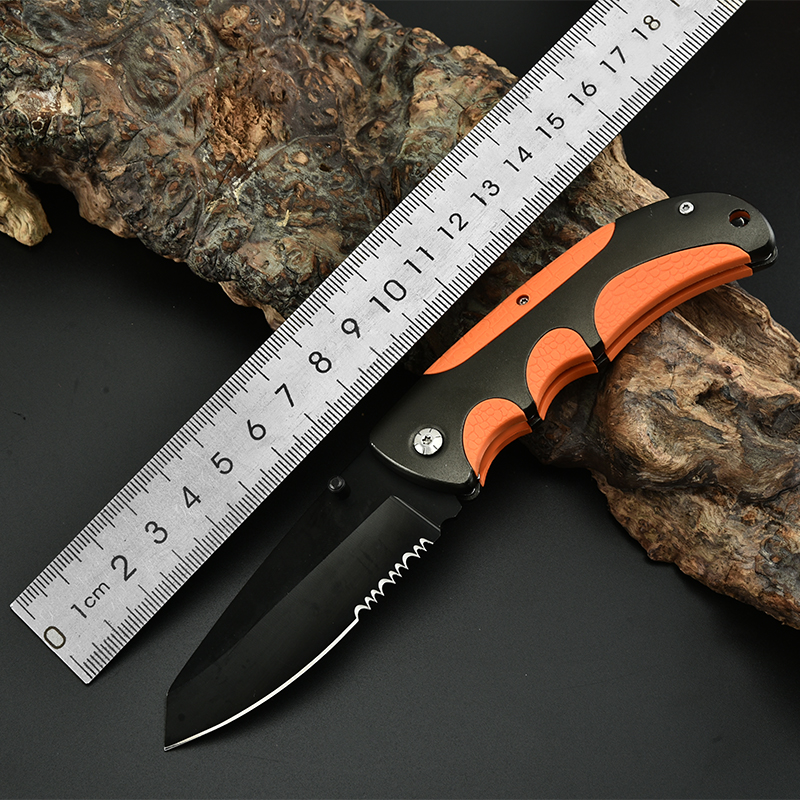
Request the business license, factory address, workshop photos, production-process videos, employee information, equipment list, and export records where available. Then conduct a live video audit or third-party inspection. Ask the supplier to show raw-material storage, blade grinding, handle assembly, QC, packaging, and warehouse operations—not only a showroom.
A real manufacturer should be able to explain where each process occurs and who controls the quality standard.
Ask for a material certificate, steel purchase documentation, and a hardness report. For high-value projects, arrange independent material testing on random samples. Your purchase order should state the agreed steel grade and target hardness range. Keep an approved golden sample and test final-production units rather than relying only on pre-production samples.
MOQ depends on whether you select an existing model or create a new one. A catalog knife with logo engraving and customized packaging usually has a lower MOQ than a fully custom knife requiring new blade tooling, handle molds, coatings, and retail packaging.
Ask suppliers to quote separately for:
- Existing model with logo only.
- Existing model with custom handle color.
- Existing model with private-label packaging.
- Modified blade or handle.
- Fully custom OEM/ODM design.
This allows you to compare the commercial impact of each customization level.
First, compare the certificate's legal company name and factory address with the supplier's business license. Then check the certificate expiration date, certification body, scope, and registration number. Search the issuing body's database if available or contact the certification body directly. Also confirm whether the certificate applies to manufacturing operations rather than only trading activities.
Finally, use a factory audit and product inspection. Certification status alone does not prove product quality.
Not automatically. CE marking is not a general quality label and does not apply to every manual knife. RoHS is mainly associated with electrical and electronic equipment, although brands may request restricted-substance documentation for coatings, pigments, plastics, or packaging materials.
The correct approach is to identify your destination market, sales channel, product composition, and legal requirements first. Then ask the supplier for the specific documents relevant to your product—not generic certificates that may not apply.
- [China Customs official trade statistics information] [english.customs.gov]
- [UN Comtrade international trade database] [comtrade.un]
- [World Bank WITS: Trade statistics by HS product] [wits.worldbank]
- [Guangdong Foreign Affairs Office: Yangjiang hardware, knives, and scissors industry] [en.gdfao.gov]
- [Guangdong news report: Yangjiang knife and scissors exports in 2025] [newsgd]
- [OEC: China knife trade profile] [oec]
- [Fortune Business Insights: Global knife market overview] [fortunebusinessinsights]
- [Grand View Research: Knife market report] [grandviewresearch]


